
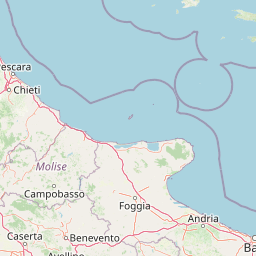
Wetlands
Park geography
Analyzing the terrain, coastal landscapes, and forest coverage of this Italian protected area
Detailed Geographic Profile and Mapped Boundaries of Gargano National Park in Apulia
This geographic record provides a structured overview of Gargano National Park, detailing its 1181.44 square kilometer footprint across the Province of Foggia. Access comprehensive data on mixed relief, coastal environments, and specific natural features including mountain peaks, valleys, and subterranean cave entrances found within the protected territory.
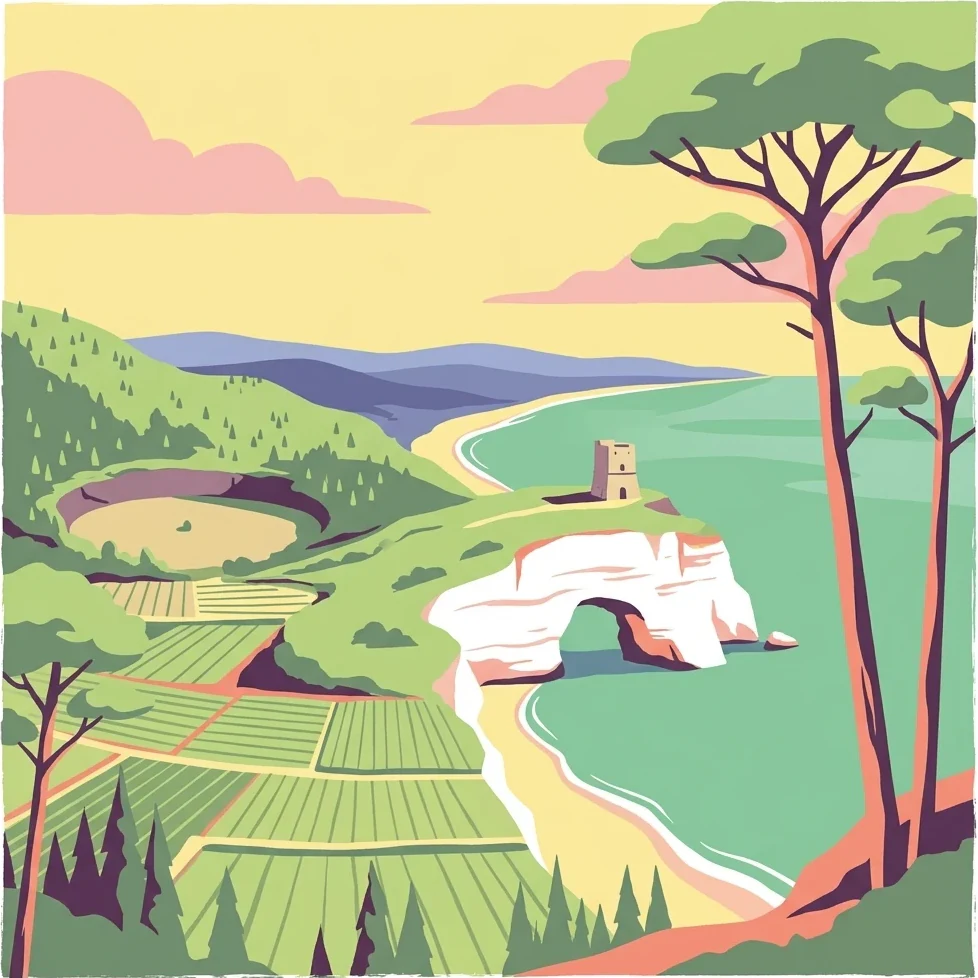
Mediterranean promontory wilderness with ancient forests and coastal islands
Gargano National Park
Gargano National Park is a vast protected area in southern Italy spanning the Gargano promontory, its offshore archipelago, and adjacent wetlands in the region of Apulia. Established in 1991, it covers approximately 118,000 hectares, making it the largest national park in Apulia and one of the most ecologically significant protected areas in Western Europe. The park encompasses the rugged limestone mountains of the Gargano headland, the ancient beech woodlands of the Foresta Umbra, the Tremiti Islands in the Adriatic Sea, and the coastal wetland complex of Lago Salso. This extraordinary concentration of Mediterranean, forest, and wetland habitats within a single protected landscape creates one of Italy's most biologically diverse territories.
- Location
- Italy
- Park type
- National park
- Established
- 1991
- Area
- 1,181.4 km²
Location overview
Map placement and coastal distribution within Italy's Apulia region
Geographic Location and Coastal Setting of Gargano National Park
Gargano National Park is situated in the Apulia region within the Province of Foggia in southeastern Italy. The protected coastal territory features a defined geographic footprint managed entirely within Italian borders.
- Countries
- Italy
- Regions
- Apulia, Province of Foggia
- Primary location
- Apulia
- Geographic setting
- Coastal
Boundary and coordinates
Mapping the 1,181 square kilometer spatial footprint and regional extent
Geographic Boundary Map and Spatial Limits of Gargano National Park
Interactive geometry outlines the regional footprint of Gargano National Park to provide clear spatial context. Accompanying geographic facts outline estimated metrics including total area, coordinate limits, and center points.
- Boundary area
- 1,242.5 km²
- Boundary perimeter
- 684.9 km
- Northernmost point
- 42.2283° N
- Southernmost point
- 41.529° N
- Easternmost point
- 16.1999° E
- Westernmost point
- 15.2208° E
- Geographic centre
- 41.7872° N, 15.8206° E
- North–south span
- 77.7 km
- East–west span
- 81.3 km
Terrain and natural features
Explore recorded caves, wetlands, beaches, and valleys across the protected landscape
Gargano National Park Terrain Classifications and Named Natural Features
Stored terrain classifications outline the mixed relief profile alongside various recorded natural formations located within the protected boundary. Linked feature cards provide names, types, measurements, and spatial relationships where documented.
Selected named natural features
Natural arches
L'Architiello
Cave entrances
Grotta dell'Angelo
Beaches
Braico
Islands
San Clemente
Streams
Torrente Varcaro
Environmental setting
Interpreting recorded landscape features, habitats, relief, and forest cover
Gargano National Park Environmental Classifications and Physical Setting
Recorded landscape features, temperate broadleaf habitats, and mixed relief classifications provide complementary frameworks for reading the physical setting of Gargano National Park. Connected atlas destinations link these structured categories directly to related protected areas and regional geography.
- Relief
- Mixed relief
- Water
- Minor water
- Forest cover
- Mostly forested
- Seasonality
- Year-round
Landscape features
Mountains · Forest · Wetland · Coast · Islands
Habitat types
Temperate broadleaf forest · Wetland · Coastal habitat
Park atlas
Compare diverse protected landscapes and park geography within Italy's Apulia region.
Explore Nearby National Parks and Protected Areas Surrounding Gargano National Park
Continue your discovery of protected areas by mapping other national parks and protected landscapes near Gargano National Park. Explore their diverse terrain, from mountainous ridges to ancient woodlands, to gain valuable regional context for Italy's varied protected lands.
National parkItaly
44 km away#1 closest
South

Alta Murgia National Park: National Park Exploration and Protected Landscape Context
Explore mapped terrain and regional geography.
Alta Murgia National Park is a designated national park offering unique opportunities for geographic discovery. Delve into its protected landscape, understand its mapped boundaries, and situate it within the broader Italian atlas. This entry provides essential context for exploring the park's terrain and regional significance.
- Area
- 677.39 km²
- Established
- 2004
- IUCN
- II
- Relief
- Mixed relief
Nature reserveAbruzzo
About 45 km away#2 closest
West
Riserva naturale regionale Marina di Vasto: Coastal Nature Reserve in Abruzzo, Italy
Mapping protected Adriatic dune and wetland ecosystems
This nature reserve protects a vital 3-kilometer strip of the Adriatic coastline in Abruzzo, acting as a rare sanctuary for specialized flora and fauna. By managing a delicate ecotone of shifting sand dunes and brackish wetland basins, the area maintains a high degree of ecological significance within the regional landscape. The geography provides an important look at integrated coastal conservation at the meeting point of urbanized hinterlands and the Adriatic sea.
- Area
- 0.57 km²
- Established
- 2007
- Relief
- Lowland
- Climate
- Mediterranean
Nature reserveAbruzzo
About 81 km away#3 closest
Northwest
Punta dell'Acquabella Nature Reserve: Adriatic Coastal Landscape and Geography
Protected Mediterranean shoreline in the Abruzzo region of Italy
Punta dell'Acquabella is a distinct nature reserve on the Adriatic coast of Abruzzo, characterized by its promontory, cliff habitats, and clear coastal waters. The area serves as a significant intersection of natural heritage and cultural landscape within the Trabocchi coast, offering a deep look into the regional geography and environmental features that define this protected territory.
- Area
- 0.28 km²
- Established
- 2007
- Relief
- Upland
- Climate
- Mediterranean
National parkAbruzzo
81 km away#4 closest
West
Maiella National Park: Abruzzo's Protected Landscape and Regional Geography
Explore mapped park boundaries and natural terrain.
Delve into the protected landscape of Maiella National Park, situated within the Abruzzo region of southern Italy. This page offers detailed atlas-level insights into its mapped boundaries, allowing for a clear understanding of its geographic setting. Discover how this national park contributes to the regional natural terrain and protected area context, providing a foundation for structured geographic exploration.
- Area
- 628.38 km²
- Established
- 1991
- IUCN
- II
- Relief
- Mountain
Protected areaCroatia
83 km away#5 closest
Northeast
Lastovo Nature Park: Discover the Adriatic Karst Archipelago's Protected Landscape
Mapped karst terrain, ancient architecture, and natural island geography.
Lastovo Nature Park protects a remote Croatian archipelago characterized by its striking karst landscape, featuring 46 hills and 46 karstic fields. This protected area offers significant natural biodiversity and remarkably preserved cultural heritage, with extensive Holm Oak and Aleppo Pine forests covering over 60% of the island. Explore Lastovo's unique geography, mapped terrain, and its distinct place within the Adriatic region.
- Area
- 46.87 km²
- Established
- 2006
- IUCN
- V
- Relief
- Upland
National parkBasilicata
105 km away#6 closest
South
Appennino Lucano - Val d'Agri - Lagonegrese National Park: Protected Mountain Landscape in Basilicata, Italy
Explore its geography, mapped terrain, and ecological role.
Gain insight into Appennino Lucano - Val d'Agri - Lagonegrese National Park, a significant protected mountain landscape in the heart of Basilicata. This detailed page focuses on the park's distinct geographic features, its role as a crucial ecological corridor connecting major southern Italian protected areas, and the mapped contours of its diverse terrain. Understand its place within the Lucano Apennine range and the broader natural atlas of Italy.
- Area
- 689.96 km²
- Established
- 2007
- IUCN
- II
- Relief
- Mountain
National parkItaly
About 114 km away#7 closest
West
Abruzzo, Lazio and Molise National Park
Protected landscape in Italy's Apennines.
Explore the mapped boundaries and protected status of Abruzzo, Lazio and Molise National Park. This historic Italian national park offers a detailed look at Apennine mountain geography and landscape.
- Established
- 1923
- IUCN
- II
National parkItaly
115 km away#8 closest
Northwest
Gran Sasso and Monti della Laga National Park: Italy's National Park Geographic Context
Mapped protected areas and regional natural landscape details.
Delve into the geography of Gran Sasso and Monti della Laga National Park, a prominent national park in Italy. This resource provides essential context for understanding its protected landscape, mapped boundaries, and integration within the regional geography. Ideal for users seeking detailed atlas-style information on protected areas and their natural terrain, it serves as a foundational point for exploring the park's unique geographic character and landscape significance.
- IUCN
- II
MoriAtlas Explorer
Continue your exploration of Gargano National Park's protected landscape and Apulia geography
Deepen your understanding of Gargano National Park by examining its mapped terrain and protected landscape features. This detailed view of Apulia's geography provides essential context for appreciating the park's unique place within the Italian atlas. Continue your structured discovery journey into this significant protected area and its surrounding natural context.
Browse next
Global natural geography
Explore related park routes
Explore MoriAtlas Global ParksBrowse All MoriAtlas ParksGlobal Park Map DiscoveryMoriAtlas: Browse All CountriesBrowse All MoriAtlas ContinentsNational Park Environment AtlasGrand Canyon National Park AtlasYellowstone National Park AtlasYosemite National Park Atlas and GeographySerengeti National Park AtlasGalápagos National Park Protected LandscapeBanff National Park Geography and AtlasKruger National Park Atlas EntryUluṟu-Kata Tjuṯa National Park AtlasExplore Uluru-Kata Tjuta National Park GeographyPlitvice Lakes National Park AtlasFiordland National Park Protected LandscapeGreat Smoky Mountains National Park AtlasAfghanistan National Parks and Protected AreasAlbania National Parks and Protected AreasAlgeria National Parks and Protected AreasAmerican Samoa National Parks and Protected AreasAndorra National Parks and Protected AreasAngola National Parks and Protected AreasAntarctica National Parks and Protected AreasAntigua and Barbuda Park List