
Why Gobustan State Reserve stands out
Gobustan is best known for the extraordinary density of its prehistoric petroglyphs, carved over thousands of years into desert cliffs and rock shelters along the Caspian. The carvings document a vanished world of hunting scenes, ritual dance, reed boats, camel caravans, and tribal life, and they preserve some of the earliest visual evidence of human activity in the Caucasus. Just as distinctive is the reserve's geological drama: the surrounding terrain holds roughly 300 of the roughly 700 mud volcanoes known on Earth, alongside natural musical stones whose hollow resonance is tied to microscopic cavities in the rock. These three elements, ancient art, mud volcanism, and lithophonic stones, together give Gobustan a profile that is rare even at a global scale.
Gobustan State Reserve history and protected-area timeline
Gobustan's protective history began in 1966, when the Council of Ministers of the Azerbaijan SSR established the Gobustan State Historical Artistic Preserve to safeguard the region's rock art and distinctive terrain. The site had already been the focus of systematic archaeological work: in June 1948, archaeologist Ishag Jafarzadeh, leading an expedition from the Institute of History of the Academy of Sciences of the Azerbaijan SSR, discovered the Latin inscription of the Roman centurion Lucius Julius Maximus on the southeastern slope of Boyuk-Dash mountain. That find, the easternmost known Latin inscription in the ancient world, drew international scholarly attention and underlined the area's exceptional heritage value.
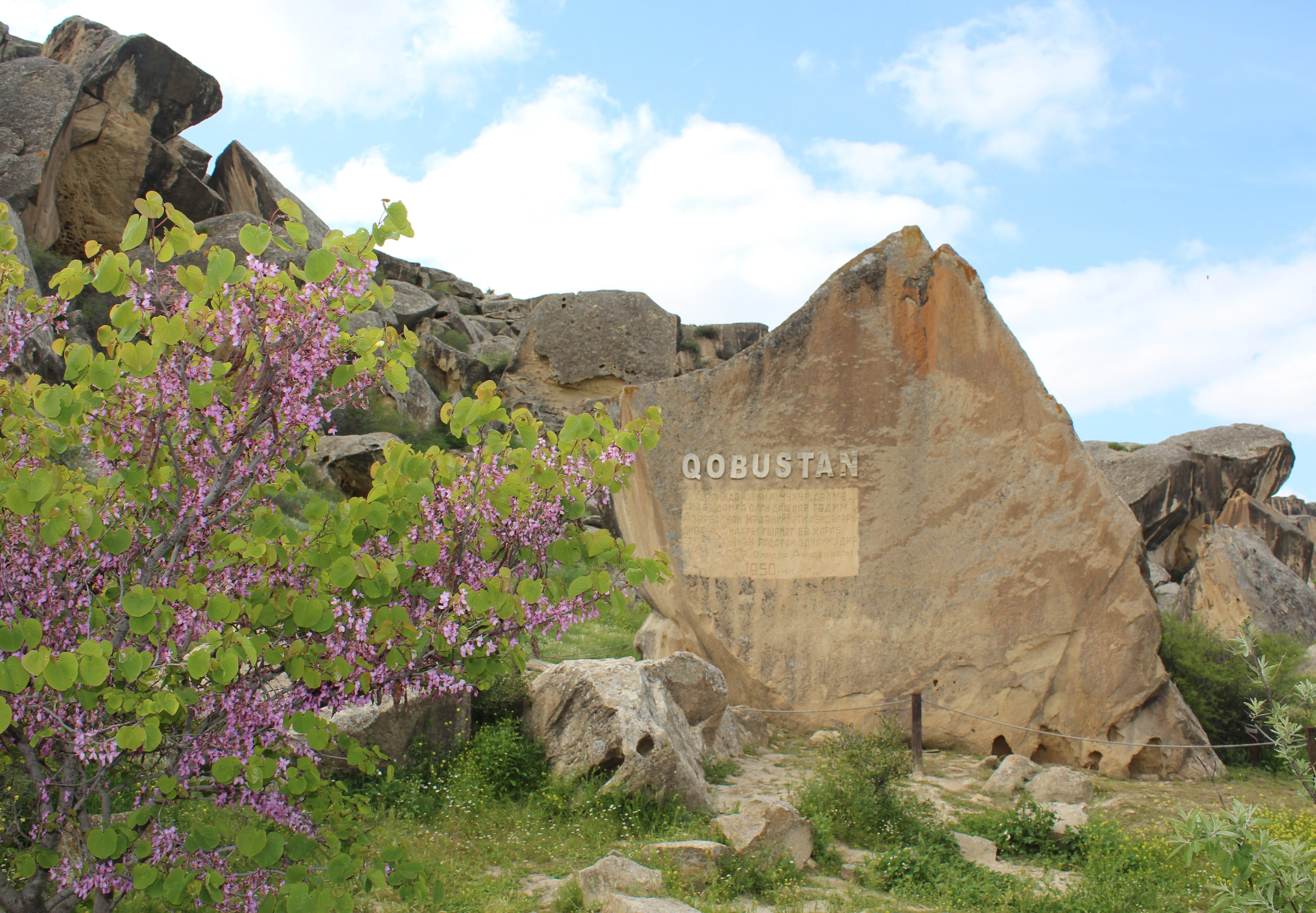
A long period of study, fieldwork, and rock art documentation followed, supported by visits from outside researchers including the Norwegian anthropologist Thor Heyerdahl, who made repeated trips to Azerbaijan between 1981 and his death in 2002 to investigate the petroglyphs as part of his "Search for Odin" project. The reserve's profile rose sharply in 2007, when the Gobustan Rock Art Cultural Landscape was inscribed on the UNESCO World Heritage List under cultural criterion (iii). The same year, a presidential decree formally redesignated the site as a National Reserve and gave it the name Gobustan State Historical and Cultural Reserve.
In the years since, the reserve has expanded its public infrastructure. The Petroglyph Museum began operating within the reserve in 2011, and construction of the Mud Volcanoes Tourism Complex was marked with a groundbreaking ceremony in April 2021 before opening in June 2024, anchoring a broader Baku-Gobustan-Mud Volcanoes tourism cluster. A roughly 20-kilometer road extension links the reserve with the Gilinj mud volcano area and nearby cones, formalizing the site as a destination for both research and public visitation.
Gobustan State Reserve landscape and geographic character
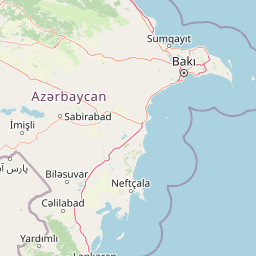
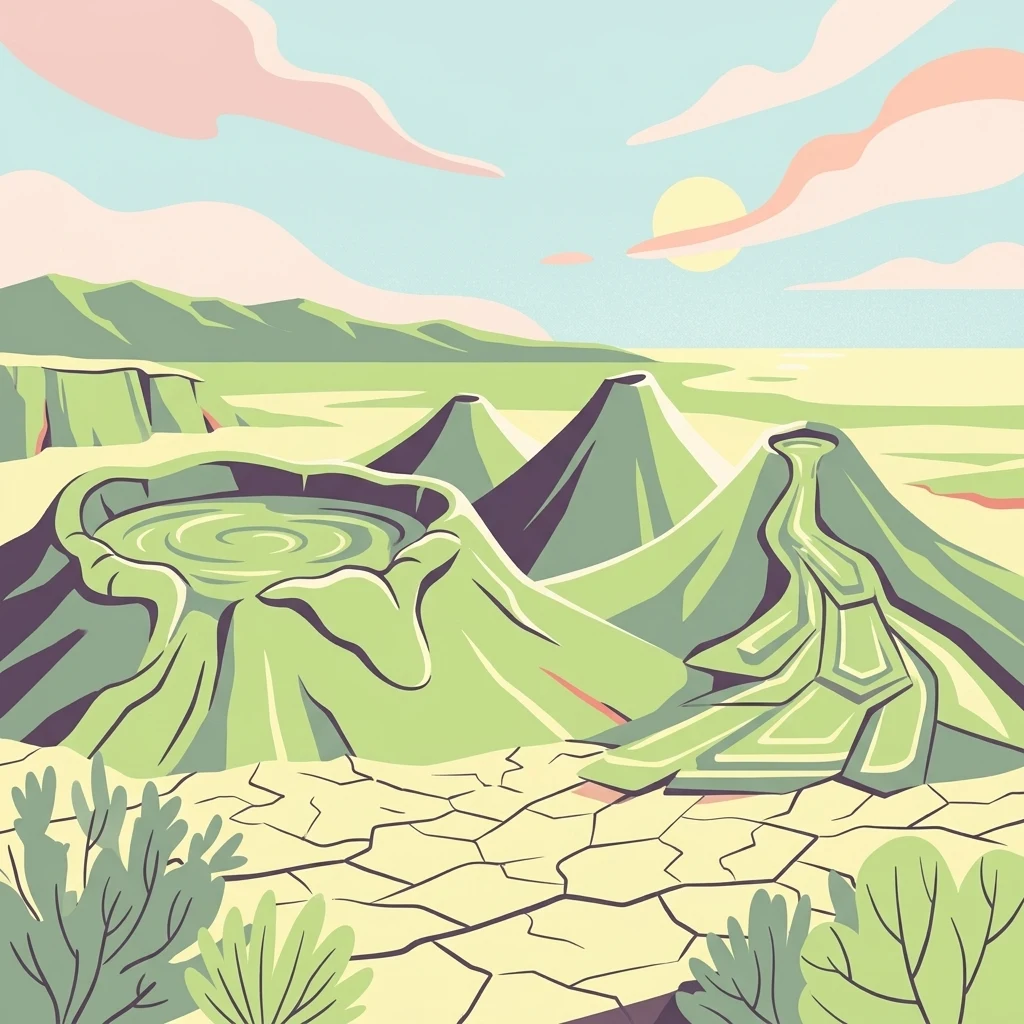
The landscape of Gobustan is a semi-desert plateau cut by dry ravines, low ridges, and exposed rocky slopes that rise gently before dropping toward the Caspian shoreline. The terrain is dominated by weathered sandstone and limestone outcrops, with broad flat gravel stretches between them, and the sky typically opens wide above the bare rock surfaces. Vegetation is thin and patchy, made up of drought-tolerant grasses, low shrubs, and scattered wild specimens of juniper, wild rose, and pomegranate, which together create the impression of a steppe in transition to desert.
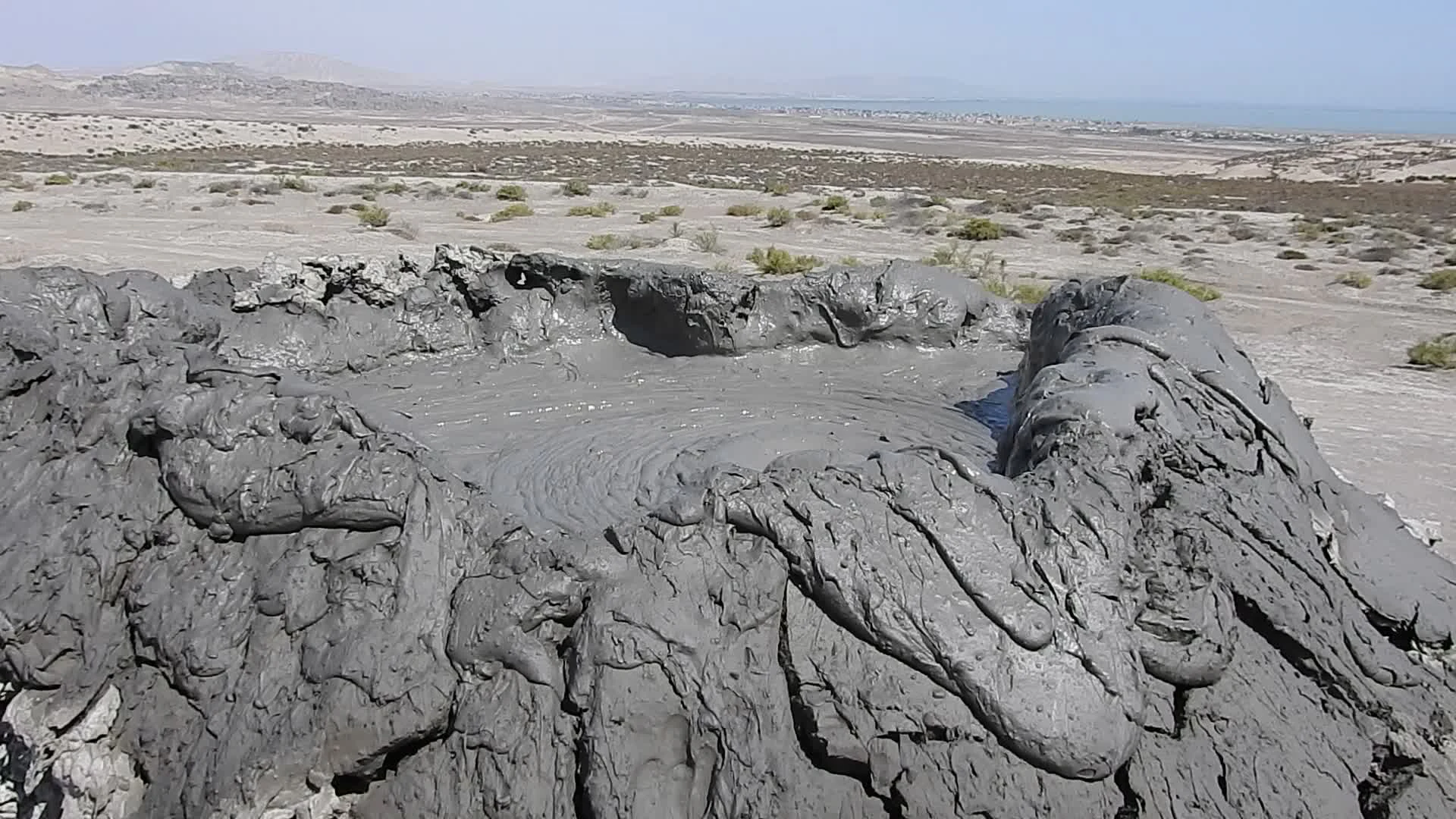
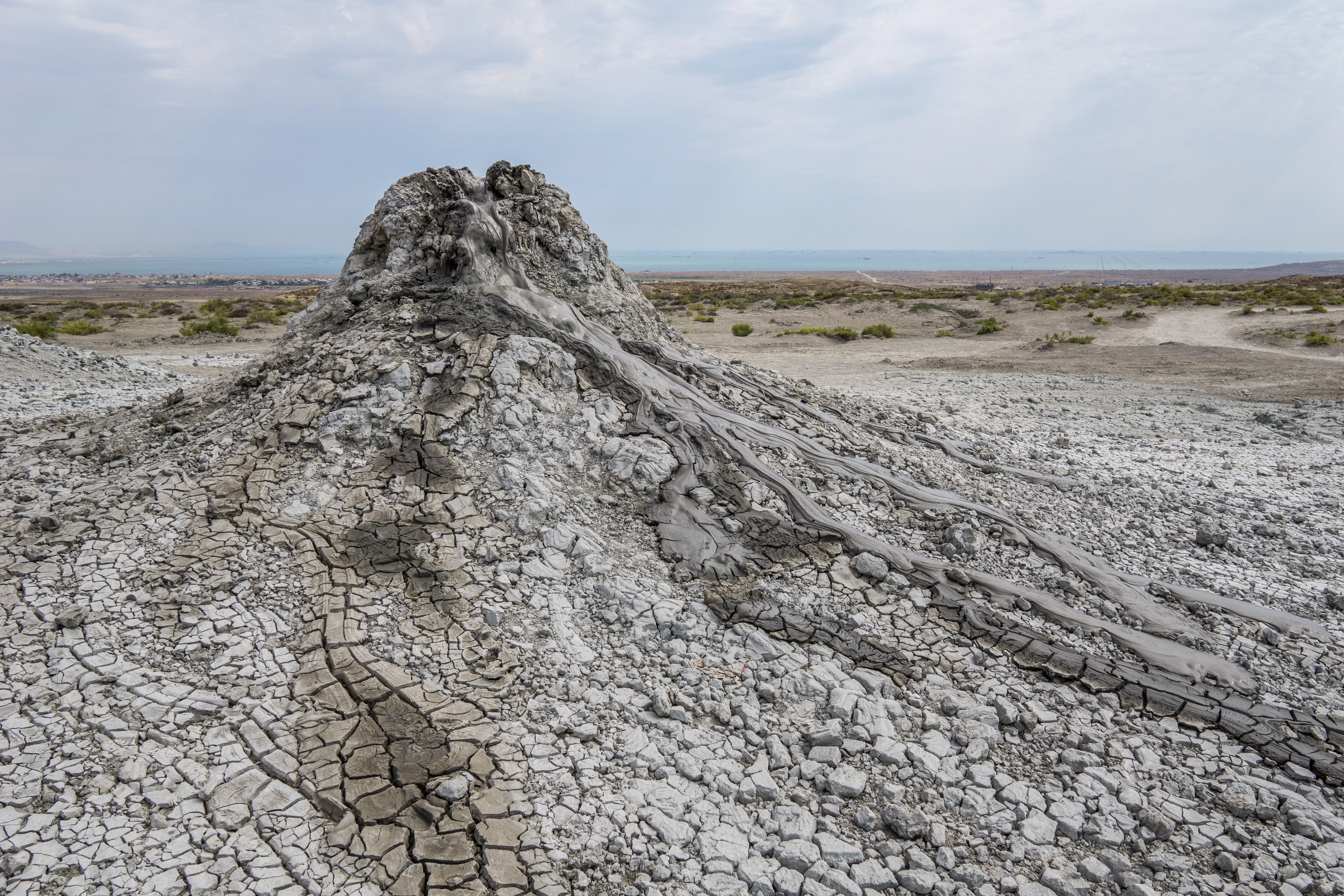
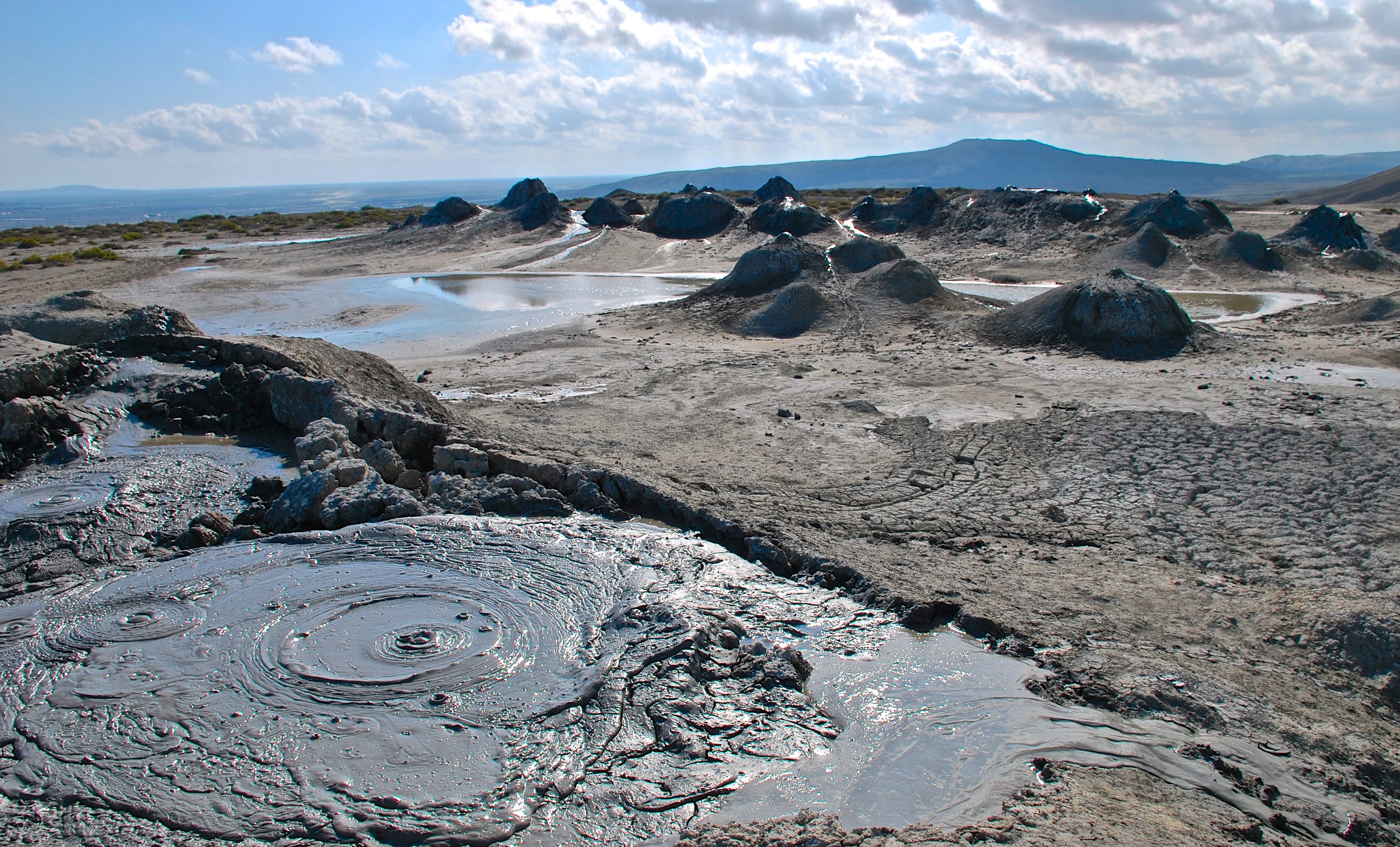
The most visually arresting feature of the reserve is the field of mud volcanoes that rings and overlaps with the archaeological zones. Conical mounds, often only a few meters tall, dot the plain, their flanks streaked with grayish clay and capped by small craters from which cold mud and gas periodically erupt. Because the ground around them frequently shifts, the surrounding terrain has an otherworldly, lunar cast that contrasts with the smooth Caspian horizon visible from the highest points. The natural musical stone known as Gaval Dash sits at the entrance to the reserve, a flat slab about two meters long whose resonant tone arises from microscopic cavities formed by the local dry climate and natural gas activity.
Climatically and geologically, the area is markedly different from what it was in prehistoric times. Twenty thousand to twenty-five thousand years ago, Gobustan supported forests, flowing springs, and a richer animal community; today it presents a sparse, sun-baked surface where water is scarce and seasonal extremes are sharp. That visible ecological shift is itself part of the landscape story, encoded both in the rock art and in the barren character of the modern terrain.
Gobustan State Reserve ecosystems, habitats, and plant life
Ecologically, Gobustan reflects the semi-arid edge of the Caspian region's transition zone between steppe and desert. Sparse grasses and low shrubs cover much of the ground, while hardy woody plants, including juniper, wild rose, and wild pomegranate, cling to rocky pockets where slightly more moisture collects. The climate is hot and dry for much of the year, and the visible vegetation is a clear indicator of how much drier the area is now than it was during the prehistoric era, when rock carvings depicted abundant rainfall, lush vegetation, and a richer fauna.
The reserve's most unusual ecological features are geological rather than biological. Mud volcanoes, natural seeps of clay and gas that shape both the surface and the soils around them, contribute to specialized microhabitats found across the property. These mud systems are also the practical starting point of the reserve's interpretive work: a mineral exhibition within the tourism complex showcases nearly 80 types of minerals found in Azerbaijan, and a Nature History Exhibition Hall presents animal skeletons that situate Gobustan's deep-time fauna within a broader regional and global context.
Wildlife within the modern reserve is modest. Mammals such as foxes, jackals, wolves, hares, and wild cats move through the broken terrain, reptiles occupy the warmer rocky slopes, and birdlife follows seasonal patterns tied to the Caspian coast nearby. The reserve does not function as a wilderness refuge in the conventional sense; its ecological significance lies more in preserving the geological and climatic record written into its rocks, mud, and sparse vegetation than in hosting large, intact animal communities.
Gobustan State Reserve wildlife and species highlights
Gobustan today supports a reduced but characteristic Caspian semi-desert fauna. Mammals still encountered in and around the reserve include foxes, jackals, wolves, hares, and wild cats, while reptiles occupy the rocky slopes and sheltered ravines. The thin vegetation and open terrain limit cover, so the visible wildlife is generally sparse and crepuscular, and large mammal populations are far smaller than those implied by the prehistoric record.
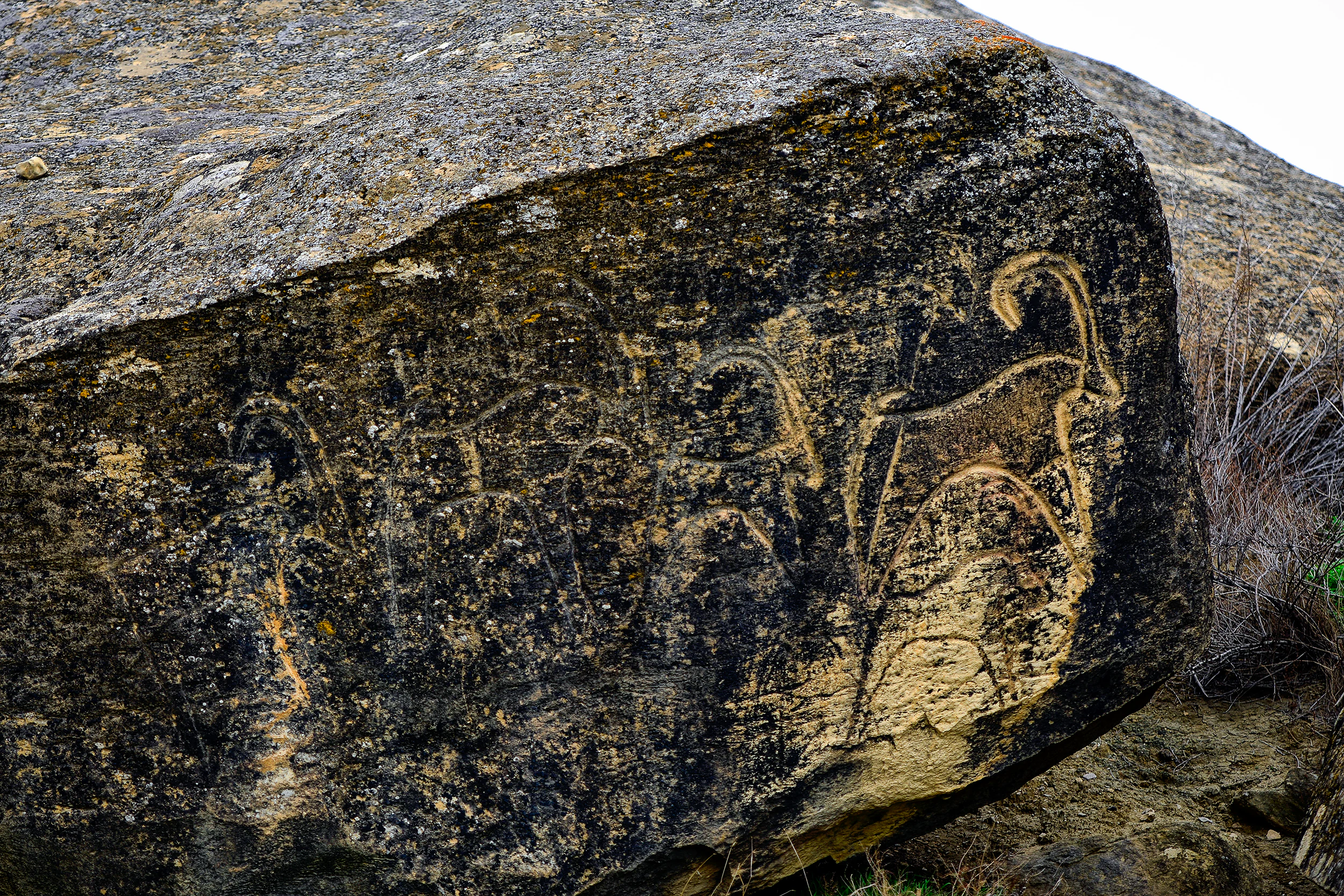
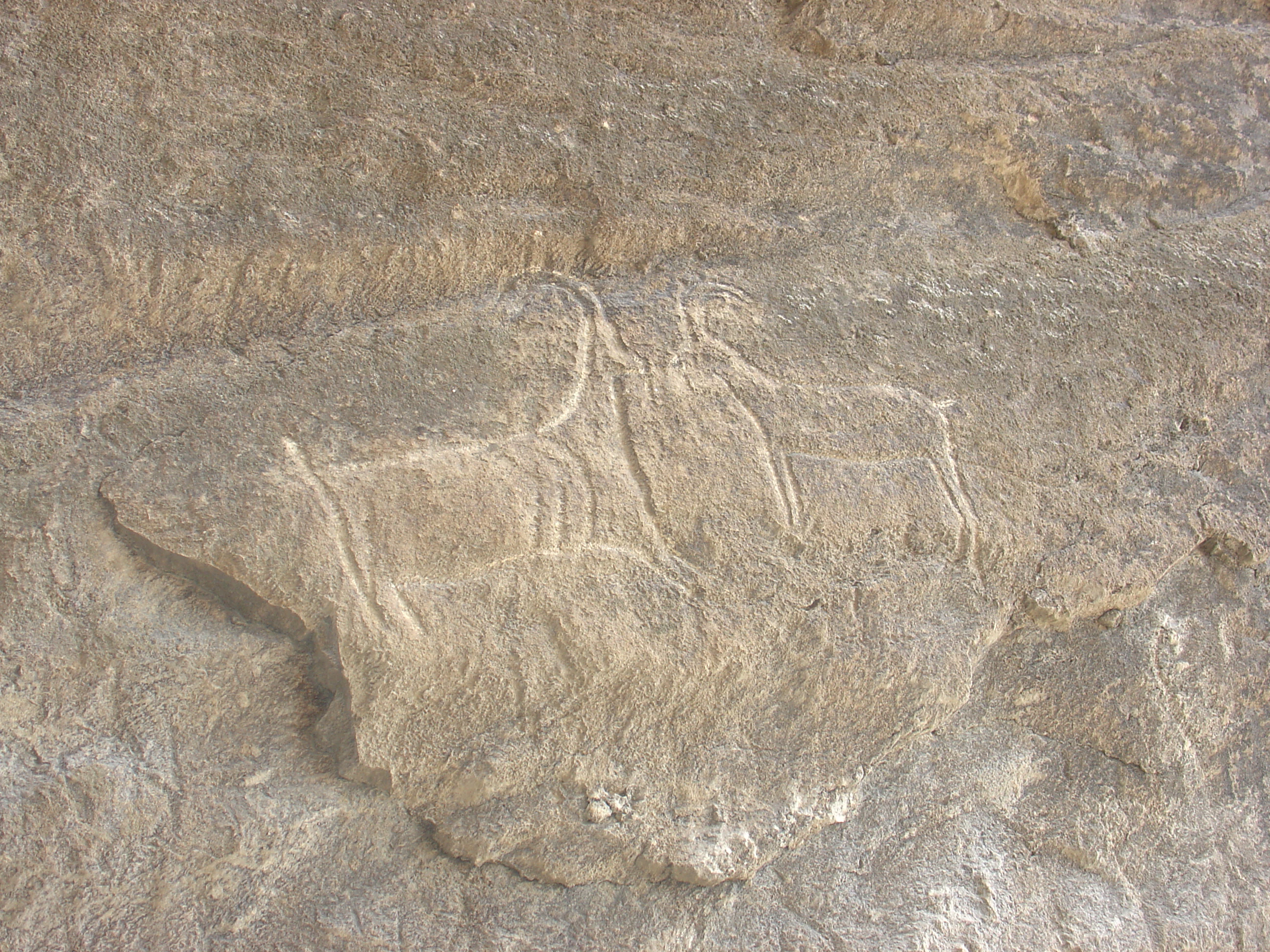
The reserve's wildlife story is, for the most part, a story told through rock art rather than through direct observation. Petroglyphs depict bulls, horses, deer, wild goats, and other animals that once roamed the area, alongside hunting scenes and scenes of ritual dance, providing a freeze-frame of an Ice Age ecosystem that no longer exists locally. The carvings also suggest the presence of predators such as tigers, an ecological detail that signals the dramatic climatic shift Gobustan has undergone.
A tangible fossil link to that vanished fauna was uncovered in 1968, when the cervical vertebrae of a southern mammoth were found about three meters underground near Atbulaq. The find confirmed that Gobustan once supported large Ice Age megafauna and gave the reserve an additional paleontological anchor alongside its rock art and mud volcano heritage.
Gobustan State Reserve conservation status and protection priorities
Gobustan's conservation significance rests on its combined cultural and natural value. UNESCO's inscription of the Gobustan Rock Art Cultural Landscape in 2007 recognized more than 6,000 petroglyphs as an outstanding record of human graphic activity, covering themes from hunting and ritual dance to early seafaring and tribal conflict, and spanning an exceptionally long time depth from Upper Paleolithic through medieval periods. Inscription under cultural criterion (iii) gave the site formal international protection and tied its long-term management to UNESCO standards.
National-level protection began earlier. The reserve was first established in 1966 by decree of the Council of Ministers of the Azerbaijan SSR, and it was redesignated as a national reserve in 2007 by presidential decree, the same year as the World Heritage inscription. National park designation frames the property explicitly as a unified historic and natural reserve, ensuring that prehistoric rock art, mud volcanoes, and natural musical stones are managed as a single integrated landscape rather than as separate sites.
The reserve is also a focal point for research into Quaternary climate change. Comparative study of the rock art, the now-dried springs and watercourses visible in the terrain, and shifts in the depicted fauna together document a transition from a wetter Ice Age habitat to today's semi-arid Caspian landscape. In that sense, Gobustan functions as a long-term environmental archive, where conservation is less about preserving a flourishing ecosystem than about protecting a cultural and geological record that cannot be replicated.
Gobustan State Reserve cultural meaning and human context
Gobustan sits within a deep Caucasus cultural continuum, and its rock art captures an extraordinary range of human expression from the Upper Paleolithic through medieval times. The carvings depict scenes of communal ritual, hunting, dance, and travel, including images of camel caravans and reed boats with armed oarsmen that suggest long-distance connections across the Caspian region and farther south. The Seven Beauties cave in particular preserves imagery that scholars read as evidence of women's participation in hunting and other group activities, complicating older assumptions about prehistoric gender roles.
A distinct cultural layer is added by the Roman-era Latin inscription left by the centurion Lucius Julius Maximus of Legio XII Fulminata between A.D. 84 and 96, the easternmost Latin inscription ever found and the only one recorded within the territory of ancient Caucasian Albania. The inscription is widely read as evidence of late first-century Roman military presence in eastern Transcaucasia, though some researchers have proposed a more limited diplomatic or intelligence mission. Either way, the rock ties Gobustan into a far wider imperial and Mediterranean narrative that extends well beyond the Caucasus.
Modern cultural life at the reserve has grown steadily since independence. The Petroglyph Museum, in operation within the reserve since 2011, presents Gobustan's carvings in a curated institutional context, while the Mud Volcanoes Tourism Complex, opened in 2024, frames the site as part of a broader national heritage and tourism identity. Norwegian anthropologist Thor Heyerdahl's repeated visits, including studies tied to his "Search for Odin" project, also made Gobustan a recognized touchstone in international scholarly discussion of prehistoric seafaring and cultural diffusion.
Top sights and standout views in Gobustan State Reserve
Among the standout features of Gobustan State Reserve, the rock art landscape itself is the most concentrated. More than 6,000 carvings document ancient hunting, ritual dance, boat building, and tribal encounters, with later images frequently carved over earlier ones in a layered visual archive. The reserve also holds one of the densest mud volcano fields on Earth, with cones that hiss, burp, and slowly reshape the surrounding plain, plus a small family of natural musical stones whose ringing tone ties local geology to ancient Azerbaijani musical imagery.
Equally notable is the reserve's role as a historical archive of climate change, from a wetter Ice Age landscape populated by bulls, horses, deer, wild goats, and even tigers to today's sparse semi-desert. The discovery of southern mammoth vertebrae near Atbulaq in 1968 gives that ecological turn a tangible paleontological anchor. Layered with the Roman centurion's Latin inscription carved into Boyuk-Dash mountain, these features make Gobustan a place where deep prehistory, classical antiquity, and modern heritage management all meet in a single landscape.
Best time to visit Gobustan State Reserve
Gobustan's semi-arid Caspian climate makes spring and autumn the most comfortable windows for visiting. In spring, after winter precipitation, the sparse grasses and shrubs regain a touch of green, temperatures are moderate, and the mud volcanoes and rock art are easier to reach on the cooler ground. Autumn brings stable, dry weather, soft light across the bare cliffs, and typically fewer crowds than the peak summer months.
Summer can be intensely hot, and the reserve's exposed terrain offers little shade, so visits during that season tend to be short and visually harsh. Winter is the quietest period, when visitor infrastructure is calmer but temperature swings and occasional frost can make exploration less pleasant. The interior museum and exhibition halls operate year round, so the archaeological content remains accessible in any season even when outdoor conditions are less favorable.