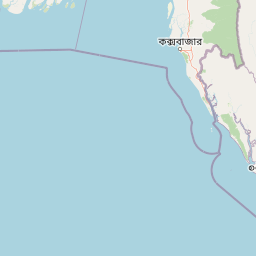
Why Himchari National Park stands out
Himchari National Park is best known for its distinctive broken hills landscape, where a series of eroded and fragmented hillocks create a striking visual terrain unlike typical Bangladesh geography. The park's row of Christmas trees has become an iconic feature visible in photographs of the area. The protected area is significant for its primate populations, particularly the Hoolock gibbon, which represents one of Bangladesh's few remaining ape species in the wild. The park also protects one of the few coastal hill forest ecosystems in the country, where evergreen forest descends directly to meet the marine environment of the Bay of Bengal.
Himchari National Park history and protected-area timeline
Himchari National Park was established on February 15, 1980, as part of Bangladesh's growing commitment to biodiversity conservation during the late twentieth century. The designation came at a time when the country was systematically identifying and protecting significant natural areas that represented its ecological diversity. The park was classified under IUCN Category IV, which designates protected areas focused on habitat and species management rather than strict wilderness preservation or cultural landscape protection. The choice of Category IV reflected the park's characteristics as a managed forest ecosystem with ongoing human presence and the need for active conservation interventions. Following establishment, the park fell under the jurisdiction of the Cox's Bazar South Forest Division, which continues to manage the protected area through its network of forest beats. The park's establishment also coincided with broader regional development in Cox's Bazar, where tourism infrastructure was expanding and the area's natural attractions were increasingly recognized as assets worth protecting.
Himchari National Park landscape and geographic character
The landscape of Himchari National Park is defined by a series of hills that rise from the coastal plain and descend toward the Bay of Bengal. These hills, often described as broken hills, present an eroded and fragmented topography that creates a distinctive visual character unique among Bangladesh's protected areas. The hill terrain is covered in dense evergreen forest that blankets the slopes and valleys between the hillocks. The forest floor features dense undergrowth typical of tropical evergreen systems, making walking through the park challenging even on established trails. The park's western boundary meets the waters of the Bay of Bengal, where the forest-covered hills descend directly to the beach zone without an intermediate coastal plain. This configuration creates dramatic views where verdant forest meets the sea. The Kolatoli, Chainda, Jhilongja, and Link Road forest beats represent different sections of this hilly terrain, each with slightly different character and accessibility.
Himchari National Park ecosystems, habitats, and plant life
The ecological character of Himchari National Park is defined by its mixed evergreen forest ecosystem, which represents a habitat type that is limited in Bangladesh. The forest contains approximately 117 tree species belonging to 37 families, creating a complex and layered vegetation structure. Several plant species recorded in the park are considered near-endangered, including Elaeis guineensis, Garcinia lanceifolia, Elaeocarpus tectorius, Elaeocarpus floribundus, Suregada multiflora, Lithocarpus elegans, and Acronychia pedunculata. This botanical diversity supports a correspondingly diverse animal community. The park's location at the boundary between terrestrial forest and coastal marine environments creates ecological conditions that support species from both habitats. The evergreen forest provides continuous canopy cover throughout the year, supporting species that depend on stable forest conditions. The combination of hill forest and coastal access creates a mosaic of habitats within a relatively compact protected area.
Himchari National Park wildlife and species highlights
Himchari National Park supports notable wildlife diversity with 286 bird species, 26 mammal species, and sea turtle populations recorded within its boundaries. The mammal community includes several species of significant conservation concern. The Hoolock gibbon represents the only ape species found in Bangladesh, and Himchari provides important habitat for this primate. Predators present in the park include the tiger, Asian black bear, and sloth bear, reflecting the area's role as one of the few locations in Bangladesh where large carnivores persist. Smaller carnivores include the leopard cat and fishing cat, both species adapted to forest environments. The Asian elephant population represents a remnant of larger herds that historically ranged through the region. Other mammals include the wild boar, Rhesus macaque, and various mongoose species. Birdlife is particularly diverse, with species such as the barn swallow and Asian palm swift commonly observed. The park also serves as habitat for the Ridley sea turtle, a marine species that uses coastal beaches for nesting.
Himchari National Park conservation status and protection priorities
Himchari National Park faces several conservation challenges despite its protected status. The park contains approximately 4,000 people living within its boundaries, primarily migrants engaged in fishing and cultivation. This human presence creates ongoing pressure on the forest ecosystem through activities such as fuel wood collection, minor forest produce extraction, and agricultural encroachment. Invasive weed species threaten the native plant community, while cattle grazing impacts forest regeneration. Infrastructure development, including road expansion projects, fragments habitat and creates edge effects that penetrate into the core protected area. Fire hazards add another layer of risk to the forest ecosystem. The loss of tree diversity and population represents a measurable conservation concern, with the combination of threats potentially altering the park's ecological character over time. Conservation management focuses on balancing the needs of local communities with the imperative to protect the park's biodiversity values.
Himchari National Park cultural meaning and human context
The human dimension of Himchari National Park includes approximately 4,000 residents living within the protected area boundaries. These inhabitants are primarily migrants who have settled in the area, with their livelihoods centered on fishing and cultivation. The presence of human communities within a formally designated national park creates complex management considerations, as conservation objectives must be balanced with community needs. The park's location near Cox's Bazar, Bangladesh's primary seaside tourist destination, means that the protected area experiences visitor pressure from tourism activities in addition to the pressures from resident communities. The relationship between the park's natural resources and local livelihoods represents a recurring theme in the park's management and conservation planning.
Top sights and standout views in Himchari National Park
Himchari National Park stands out for its distinctive broken hills landscape, a rare topographical feature in Bangladesh's generally flat terrain. The park protects significant primate populations including the Hoolock gibbon, Bangladesh's only ape species. The combination of hill forest and coastal shoreline creates a unique ecosystem where evergreen forest meets the Bay of Bengal. The iconic row of Christmas trees has become synonymous with the park's visual identity. Notable mammal species including tigers, Asian elephants, Asian black bears, and sloth bears persist in the forest. The area supports 286 bird species and serves as nesting habitat for Ridley sea turtles. The park represents one of Bangladesh's most ecologically diverse protected areas, combining multiple habitat types within a relatively compact area.
Best time to visit Himchari National Park
The optimal period for visiting Himchari National Park falls during the dry season from November through March, when rainfall is minimal and trail conditions are most favorable for forest exploration. During these months, the park's evergreen forest remains lush while visibility along trails improves and the hilly terrain becomes more accessible. The winter months may offer opportunities to observe certain bird species that are more active during cooler periods. The park can be visited year-round, though the monsoon season from June to September brings heavy rainfall that makes trail navigation difficult and increases the risk of landslides on the hill slopes. Summer months from April to May feature high temperatures and humidity that can make physical activity in the forest challenging. Visitors interested in wildlife viewing should note that animal activity patterns are influenced by temperature and rainfall, with early morning and late afternoon periods generally offering the best observation opportunities.