Why Karijini National Park stands out
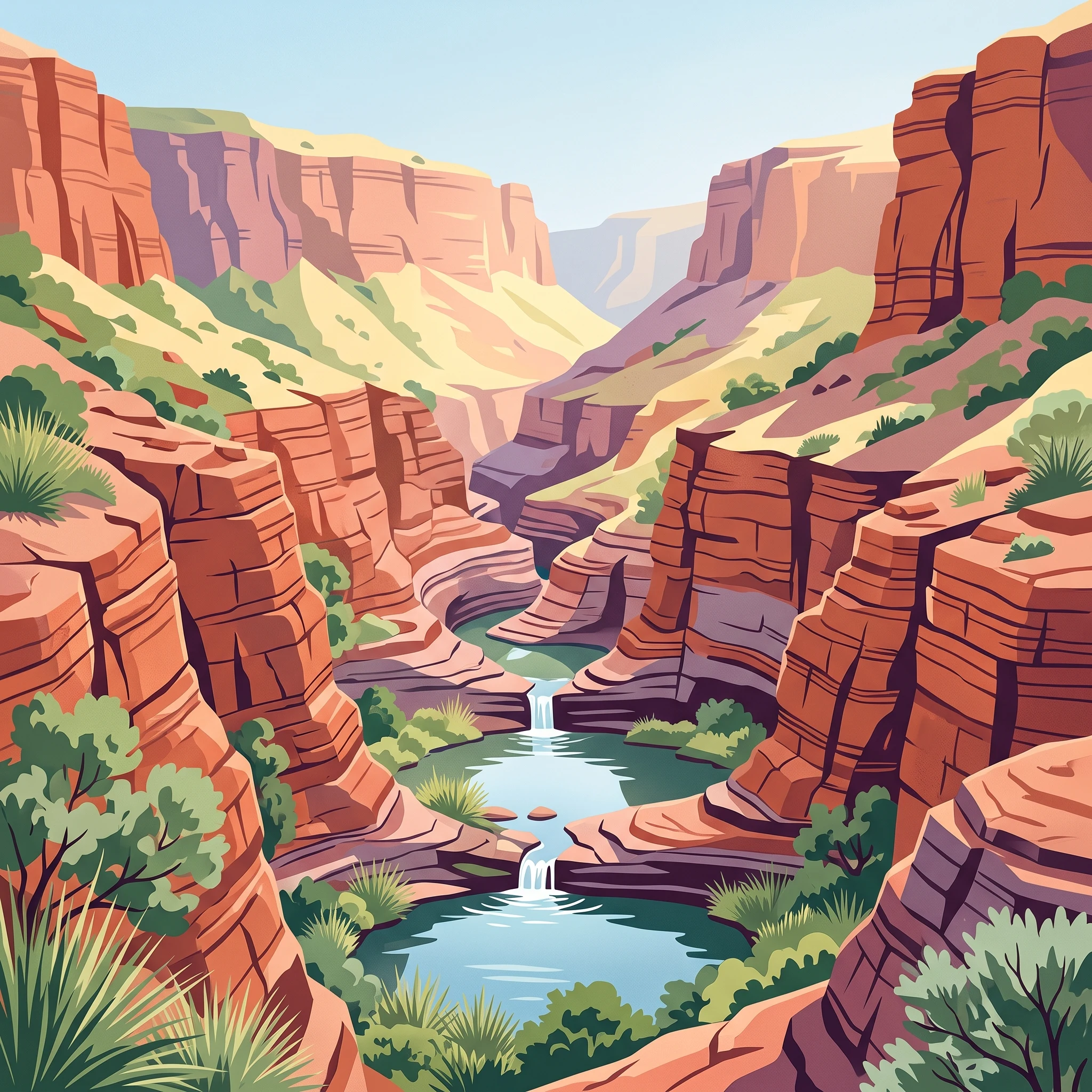
Karijini is most renowned for its spectacular gorge system, which includes Dales Gorge, Weano Gorge, Hamersley Gorge, Joffre Gorge, Hancock Gorge, and Knox Gorge, among others. These deep, ancient gorges contain slot canyons, cascading waterfalls, and inviting water holes where visitors can swim in crystalline cold pools surrounded by towering red rock walls. The park's geological significance is extraordinary, with exposed rock formations representing some of the oldest on Earth, including the Brockman iron formation, Wittenoom dolomite, and Mount McRae Shale. The contrast between the rust-red cliff faces, deep green vegetation around water pools, and the clear blue skies creates one of Australia's most visually striking natural landscapes. The park also contains significant asbestos deposits in Yampire and Wittenoom Gorges, for which visitors are appropriately warned.
Karijini National Park history and protected-area timeline
The history of Karijini National Park is deeply intertwined with the long human occupation of the Pilbara region by Aboriginal peoples. The Banyjima, Kurrama, and Innawonga peoples have maintained traditional connections to this Country for more than 20,000 years, with archaeological evidence demonstrating continuous habitation and land management practices throughout this extensive period. These Indigenous land management practices, including fire-stick farming, shaped the diverse vegetation patterns and ecological communities found in the park today. The European discovery of the area came in 1861 when explorer Francis Thomas Gregory led an expedition into the region, naming the Hamersley Range after his friend Edward Hamersley. The park was formally established in 1969 as Hamersley Range National Park, making it one of the earlier protected areas in Western Australia's conservation estate. In 1991, the park was officially renamed Karijini National Park, adopting the Banyjima name for the range, thereby acknowledging the deep cultural significance of the area and the traditional owners' connection to the land. This renaming represented a broader movement in Australian conservation to recognise and incorporate Indigenous heritage into the naming and management of protected areas.
Karijini National Park landscape and geographic character
The landscape of Karijini National Park is defined by its ancient and dramatically eroded mountain terrain within the Hamersley Ranges. The park showcases an extraordinary array of geological formations, with rock strata estimated at 2.5 billion years old among the oldest on the planet. The most visually striking features are the deep gorges that have been carved through the ranges by water erosion over millions of years, creating narrow slot canyons, cascading waterfalls, and deep natural pools. Dales Gorge, one of the most accessible and visited areas, features the spectacular Fortescue Falls and the circular DH. Lawrence Gorge. Weano Gorge offers challenging walks through narrow passages past Handrail Pool, while Hamersley Gorge in the northwest provides dramatic views of tumbling waterfalls. The northern section of the park contains the majority of these gorges, including Joffre, Hancock, Knox, Red, and Munjina Gorges, each offering unique geological displays and scenery. The landscape is characterised by the distinctive red and orange hues of iron-rich rock formations, with banded iron formation creating striking horizontal stripes across cliff faces. The underlying geology includes the Brockman iron formation, Wittenoom dolomite, and Mount McRae Shale, each contributing to the visual diversity of the terrain.
Karijini National Park ecosystems, habitats, and plant life
The nature of Karijini reflects the semi-arid tropical environment of the Pilbara, supporting biodiversity adapted to harsh conditions with seasonal water availability. The park's vegetation varies from spinifex grasslands on the plateau areas to denser shrublands and eucalyptus woodlands along drainage lines and in gorges where water persists. The riparian zones surrounding the gorges and waterholes support richer plant communities than the surrounding landscape, with river red gums and ghost gums providing shade and habitat. The park's position north of the Tropic of Capricorn places it in a tropical semi-arid climate zone characterised by high summer temperatures frequently exceeding 40 degrees Celsius, winter nights that can bring frost, and an annual rainfall of 250 to 350 millimetres delivered primarily through summer thunderstorms and cyclones. This climate pattern creates dramatic seasonal variation in the park's appearance, with the wet season bringing temporary waterfalls and flowing streams while the dry season reveals the park's more permanent water sources in the deeper pools and gorges. The geological diversity of the park, with its different rock types and soil formations, contributes to habitat variation that supports the park's array of plant and animal species.
Karijini National Park wildlife and species highlights
Karijini National Park supports a range of wildlife adapted to the semi-arid Pilbara environment, with the most visible large mammals including red kangaroos and euros (common wallaroos) that are commonly seen throughout the park, particularly in cooler parts of the day. Rock-wallabies, including Rothschild's rock-wallaby, are well adapted to the rocky gorge environments and can be observed navigating the steep cliff faces and boulders. Predators include dingos, while the park also supports echidnas, various reptile species including geckos, goannas, legless lizards, and a variety of snakes including pythons. The bat population includes several species that roost in the caves and crevices of the gorges. Birdlife is particularly abundant around water sources and in the gorge environments, with numerous species adapted to the arid conditions. The park's wildlife has evolved to cope with the extreme temperature variations and seasonal water scarcity that characterise the Pilbara, with many species exhibiting nocturnal or crepuscular activity patterns to avoid the intense heat of midday.
Karijini National Park conservation status and protection priorities
Karijini National Park holds significant conservation value as one of Western Australia's largest and oldest national parks, protecting a representative sample of the Pilbara's unique landscapes, geological heritage, and biodiversity. The park's IUCN Category II designation recognises its primary purpose of protecting natural ecosystems while allowing for sustainable visitor use and enjoyment. The protection of the Hamersley Ranges' ancient geological formations preserves not only visual landscape values but also significant scientific and educational resources that illustrate Earth's early geological history. The conservation of the park also maintains important habitat for the species that have evolved in this semi-arid environment, including the endangered and restricted-range species that depend on the specific rocky gorge habitats. The continued management of the park by the Department of Parks and Wildlife Western Australia addresses challenges including visitor safety in areas containing asbestos, fire management, and the maintenance of access infrastructure while preserving the park's natural values.
Karijini National Park cultural meaning and human context
Karijini National Park holds profound cultural significance for the Banyjima, Kurrama, and Innawonga Aboriginal peoples whose traditional Country encompasses the Hamersley Ranges and surrounding landscapes. The name Karijini itself derives from the Banyjima language, meaning 'hilly place', reflecting the Indigenous understanding and naming of this dramatic landscape that has been passed down through generations. Archaeological evidence of Aboriginal occupation in the area dates back more than 20,000 years, demonstrating one of the longest continuous cultural associations with any landscape in Australia. Traditional land management practices, particularly fire-stick farming, played a significant role in shaping the vegetation patterns and ecological diversity found in the park today, representing sophisticated ecological knowledge developed over millennia of careful country management. The park therefore represents not only a significant natural protected area but also a living cultural landscape where Indigenous heritage and contemporary conservation values intersect.
Top sights and standout views in Karijini National Park
The most outstanding highlights of Karijini include the spectacular gorge system, where deep red cliffs frame cascading waterfalls and inviting swimming pools such as Fortescue Falls in Dales Gorge and Handrail Pool in Weano Gorge. The geological significance of the park cannot be overstated, with 2.5-billion-year-old rock formations offering a window into Earth's ancient past. The visual drama of the landscape, with its contrast of rust-coloured rock, emerald-green vegetation around water, and blue skies, creates one of Australia's most photographed natural environments. The opportunity to swim in cold, clear water surrounded by ancient rock walls in the heart of a vast, remote landscape provides a truly unique wilderness experience. Visitors should be aware that certain areas, particularly Yampire and Wittenoom Gorges, contain blue asbestos in rock formations, and appropriate safety warnings are in place for these locations.
Best time to visit Karijini National Park
The ideal time to visit Karijini National Park is between May and September, during Australia's late autumn, winter, and early spring months. This period offers warm daytime temperatures that are comfortable for hiking and exploring the gorges, with clear skies and minimal rainfall providing ideal conditions for sightseeing and photography. The nights during these months can be cold, so visitors should come prepared with warm layers for evening temperatures. Summer months from October to April bring extremely high temperatures regularly exceeding 38 degrees Celsius, with additional risk of bushfires making outdoor activities dangerous and impractical. Summer also brings the wet season, with thunderstorms and cyclones common, which can create flash flood dangers in the gorges and may cause road closures. The winter months offer the most reliable and safe conditions for exploring all areas of the park, though the spectacular waterfalls may be reduced in flow as the dry season progresses.