
Mori Atlas logo
National parkManuel Antonio National Park

Atlas exploration of national park boundaries and terrain in Puntarenas Province.

Manuel Antonio National Park: Protected Landscape and Geographic Context

Manuel Antonio National Park stands as a significant protected area within Costa Rica's Puntarenas Province. This page offers an atlas-driven exploration of its protected landscape, focusing on its mapped boundaries and regional geographic setting. Discover the essence of this national park through structured geographic data and detailed landscape context, providing a clear understanding of its place within the broader natural atlas.

Tropical ForestPacific CoastBeachesWildlife ViewingMarine Protected AreaCosta Rica

Manuel Antonio National Park

National park

Park overview

Structured park overview, official facts, and landscape profile for Manuel Antonio National Park

Manuel Antonio National Park park facts, protected area profile, and essential visitor context
Review the core facts for Manuel Antonio National Park, including designation, size, terrain, visitor scale, habitats, and operating context in one park-focused overview.

About Manuel Antonio National Park

Manuel Antonio National Park represents one of Costa Rica's most successful conservation stories, born from grassroots community action in the early 1970s. Local residents who sought to protect their coastal environment from development and foreign-owned beach restrictions successfully lobbied for formal protected area status, establishing the park in 1972. The park's location within the Central Pacific Conservation Area places it within a region of significant ecological importance along Costa Rica's Pacific coastline. Despite its relatively small terrestrial footprint of 1,983 hectares, the park protects an extensive marine area of 25,634 hectares, creating a comprehensive coastal and marine protected system. The landscape features a dramatic transition from mountainous tropical forest down to sea level, with several coves containing white-sand beaches separated by rocky headlands and offshore islands. The park's trail network has been developed with accessibility considerations, including adapted routes for wheelchair users, rest areas, and scenic overlooks that minimize visual impact on the natural environment. Infrastructure within the park, including the Visitor Centre and ranger stations, has been designed using bioclimatic architectural principles to harmonize with the surrounding landscape and meet environmental protection standards.

Quick facts and research context for Manuel Antonio National Park

Manuel Antonio National Park is situated along Costa Rica's Central Pacific coast in the Central Pacific Conservation Area, with the town of Quepos serving as the primary access point. The park was established in 1972 following community activism that successfully prevented commercial development along the coastline and opposed beach restrictions imposed by foreign property owners. The protected area contains four named beaches: Manuel Antonio, Espadilla Sur, Tesoro, and Playita, separated by rocky coves and connected by a tombolo formation. The park's tropical forest ecosystem supports 109 mammal species and 184 bird species, including three of Costa Rica's four monkey species and both two-toed and three-toed sloths. Governance falls under the National System of Conservation Areas (SINAC), which now manages all park admissions through an online reservation system.

Park context

Deeper park guide and search-rich context for Manuel Antonio National Park

Manuel Antonio National Park history, landscape, wildlife, and travel context
Explore Manuel Antonio National Park through its history, landscape character, ecosystems, wildlife, conservation priorities, cultural context, and seasonal travel timing in a structured park guide built for atlas discovery and search intent.

Why Manuel Antonio National Park stands out

Manuel Antonio is renowned for its exceptional combination of accessible tropical beach scenery and wildlife viewing opportunities within a compact protected area. The park's defining features include its white-sand beaches set against backdrop mountains covered in primary tropical forest, the network of hiking trails that traverse various habitats from coastal plain to ridgeline, and the remarkable diversity of wildlife that includes howler monkeys, squirrel monkeys, capuchin monkeys, and both two-toed and three-toed sloths commonly visible from trail areas. The park's beach coves and tidal pools provide snorkeling opportunities, while the surrounding marine waters host dolphins and seasonal whale migrations. In 2011, Forbes magazine recognized Manuel Antonio among the world's twelve most beautiful national parks, highlighting its visual appeal and ecological significance.

Manuel Antonio National Park history and protected-area timeline

The establishment of Manuel Antonio National Park in 1972 marked a significant moment in Costa Rica's conservation history, representing an early example of community-driven environmental protection. The park's creation emerged from local community concerns about coastal development pressures and the imposition of beach access restrictions by foreign property owners who had acquired land along the shoreline. Residents successfully advocated for government intervention to preserve the natural environment and maintain public access to the beaches. This grassroots initiative resulted in the designation of the area as a national park, creating a protected area that has since become a cornerstone of Costa Rica's nature-based tourism industry. The park's governing body, the National System of Conservation Areas (SINAC), now manages the protected area under the country's unified conservation area system, which divides responsibility for protected areas across several regional conservation areas based on ecological and geographic criteria.

Manuel Antonio National Park landscape and geographic character

The physical landscape of Manuel Antonio National Park features a distinctive coastal topography where steep forested slopes meet the Pacific Ocean along a series of crescent-shaped beaches and rocky coves. The park's terrain rises from sea level to approximately 100 meters at the highest points along the coastal ridges, with the tropical forest covering the mountain slopes and descending directly to the beach margins. Four beaches are contained within the park boundaries: Manuel Antonio Beach, Espadilla Sur, Tesoro, and Playita. These beaches are separated by rocky headlands and connected in some cases by tombolo formations, where sand accumulation creates natural land bridges between landmasses and offshore features. The park also includes several small rocky islands offshore that add to the coastal scenic diversity. The combination of white-sand beaches, turquoise waters, dark volcanic rock formations, and lush green forest creates a visually striking landscape that has become one of Costa Rica's most recognizable protected areas.

Manuel Antonio National Park ecosystems, habitats, and plant life

Manuel Antonio National Park protects a transition zone between tropical moist forest and coastal ecosystems, creating a habitat mosaic that supports remarkable biodiversity despite the park's relatively small land area. The park's vegetation includes primary tropical forest that covers the mountainous interior, transitioning through secondary forest and transitional zones before meeting the beach environments. This vertical zonation from mountain to sea creates multiple distinct habitat types within a compact area. The diversity of ecosystems present includes beach strand vegetation, coastal scrub, primary forest, and the marine environment of the shallow coastal waters. The park's location along the Pacific coast places it within a region that experiences seasonal variations in precipitation and temperature typical of tropical climates, influencing the overall character of the forest and the seasonal patterns of wildlife activity and visibility.

Manuel Antonio National Park wildlife and species highlights

The wildlife population within Manuel Antonio National Park is remarkably diverse for the park's relatively small size, with 109 mammal species and 184 bird species documented within its boundaries. The primate species present include three of Costa Rica's four monkey species: the mantled howler monkey, the Central American squirrel monkey, and the Panamanian white-faced capuchin, all of which are commonly observed by visitors along the park's trails. Both the brown-throated three-toed sloth and Hoffmann's two-toed sloth are present and frequently visible in the forest canopy. The reptile population includes the black spiny-tailed iguana, green iguana, and common basilisk, with the former frequently observed basking on the park's beaches. Bird species include toucans, woodpeckers, potoos, motmots, tanagers, turkey vultures, parakeets, and various hawk species. The surrounding marine environment supports dolphin populations and seasonal migrating whales, while the park's tidal pools provide habitat for various intertidal species.

Manuel Antonio National Park conservation status and protection priorities

Manuel Antonio National Park holds significant conservation importance as Costa Rica's most visited protected area and as a demonstration of successful community-initiated conservation. The park protects a critical coastal ecosystem that includes both terrestrial tropical forest and significant marine areas, creating a comprehensive conservation approach that addresses the interconnected nature of coastal and inland habitats. The success of the park in maintaining its natural values while accommodating high visitor numbers reflects both the resilience of the ecosystem and the effectiveness of management approaches that emphasize environmental protection standards. The park's designation as an IUCN Category II protected area reflects its management as a national park with the dual objectives of protecting ecological integrity while providing opportunities for public enjoyment and environmental education.

Manuel Antonio National Park cultural meaning and human context

The establishment of Manuel Antonio National Park emerged directly from local community concerns about environmental preservation and public access to coastal resources. The community activism that led to the park's creation in 1972 reflected broader patterns of environmental consciousness in Costa Rica that would eventually develop into the country's extensive national park system and global reputation for conservation leadership. The nearby town of Quepos has historically served as the primary gateway community for the park, and the relationship between the park and the surrounding area has shaped both regional economic development oriented around nature tourism and the cultural identity of the coastal community.

Top sights and standout views in Manuel Antonio National Park

Manuel Antonio National Park offers visitors an exceptional combination of accessible tropical nature, wildlife viewing, and beach recreation within a compact and manageable protected area. The park's four beaches provide opportunities for swimming, sunbathing, and snorkeling in tidal pools, while the trail network traverses multiple habitats offering chances to observe monkeys, sloths, and diverse bird species. The dramatic visual contrast between the white-sand beaches and the forested mountain backdrop creates a scenic landscape that has earned international recognition. The park's accessibility from Quepos and its well-developed trail system with universal accessibility facilities make it suitable for visitors with varying mobility levels. The combination of terrestrial and marine protected areas creates opportunities for multiple recreational activities including hiking, wildlife observation, beach activities, and marine exploration.

Best time to visit Manuel Antonio National Park

Manuel Antonio National Park can be visited year-round given its tropical setting, though the character of a visit changes with the seasons. The dry season from December through April typically offers more sunny days and clearer conditions for beach activities and wildlife observation, with reduced rainfall making outdoor exploration more comfortable. The green season from May through November brings increased rainfall to the region, which can result in lusher forest conditions but also more challenging trail conditions and reduced beach time. The park is open daily except Tuesdays, and visitors should note that online advance booking through SINAC is required for park entry. Early morning visits typically offer better wildlife viewing opportunities as animals are more active during cooler parts of the day.

Park location guide

Geography guide, regional context, and park location map for Manuel Antonio National Park

Manuel Antonio National Park park geography, regions, and map view in Costa Rica
Understand where Manuel Antonio National Park sits in Costa Rica through a broader geographic reading of the surrounding landscape, nearby location context, and its mapped position within the national park landscape.

How Manuel Antonio National Park fits into Costa Rica

Costa Rica is a Central American country with coastlines on both the Caribbean Sea and Pacific Ocean. It gained independence from Spain in 1821 and operates as a unitary presidential republic with no standing military. The economy has diversified from agriculture into finance, pharmaceuticals, and ecotourism.

Wider geography shaping Manuel Antonio National Park in Costa Rica

Costa Rica is located in Central America, bordered by Nicaragua to the north, the Caribbean Sea to the northeast, Panama to the southeast, and the Pacific Ocean to the southwest. It shares a maritime boundary with Ecuador. The terrain includes coastal plains, mountain ranges, and volcanic landscapes.

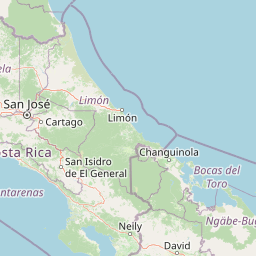
Map view of Manuel Antonio National Park

Use this park location map to pinpoint Manuel Antonio National Park in Costa Rica, understand its exact geographic position, and read its mapped placement within the surrounding landscape more clearly.

Pigeon | © OpenStreetMap contributors

Location context for Manuel Antonio National Park

Puntarenas Province
Park atlas

Browse the diverse protected landscapes and coastal geography surrounding Manuel Antonio, tracing the regional spread of conservation.

Explore Other National Parks and Protected Areas Near Manuel Antonio National Park
After exploring Manuel Antonio National Park's unique coastal forests and beaches, delve into nearby national parks and protected areas to compare diverse conservation landscapes across the region. This geographic exploration allows for a deeper understanding of Costa Rica's protected-area network, tracing how different ecosystems are safeguarded.
National parkCosta Rica

Los Quetzales National Park: Costa Rica National Park Landscape and Mapped Geography

Explore protected area boundaries and regional terrain context.

Los Quetzales National Park, a designated national park within Costa Rica, offers a focused entry point for exploring protected landscapes. This page provides detailed insight into the park's geographic setting, emphasizing its mapped boundaries and its role within the national atlas. Users can discover the specific landscape characteristics and regional terrain that define Los Quetzales National Park, enriching their understanding of Costa Rican protected areas.

Area
50 km²
Established
2006
IUCN
II
Relief
Mountain
National parkSan José Province

La Cangreja National Park: Costa Rican National Park with Distinct Protected Landscape Identity

Explore its mapped boundaries and regional geographic context in San José Province.

La Cangreja National Park serves as a key protected area within the geography of San José Province, Costa Rica. This page facilitates a deeper understanding of its specific landscape character and mapped terrain, crucial for users interested in the structured discovery of national parks and their geographic significance. Examine the park's identity as a protected national park and its placement within the broader atlas of natural landscapes.

Area
19 km²
Established
1987
IUCN
II
Relief
Mountain
National parkCosta Rica

Tapantí National Park: Costa Rica National Park Atlas and Mapped Landscape Exploration

Explore protected boundaries and natural terrain within its geographic setting.

Tapantí National Park is a designated national park in Costa Rica, offering specific insights into the country's protected natural landscapes. This page provides an atlas-style view of its geographic placement, the extent of its protected area, and the character of its natural terrain. Users can investigate the park's mapped context and understand its significance within the broader geography of Costa Rica, facilitating focused exploration of protected lands and regional landscape features.

Area
583.2 km²
Established
1982
IUCN
II
Relief
Mountain
National parkCosta Rica

Carara National Park: Protected Landscape Geography in Costa Rica

Explore the mapped terrain and park boundaries.

Carara National Park offers a focused exploration of protected landscape geography within Costa Rica. As a National Park, its mapped boundaries are integral to understanding its role in the country's natural atlas. This detail page provides specific geographic context and details relevant to atlas-based discovery, highlighting the park's unique position and protected-area identity for users interested in detailed mapping and regional natural context.

Area
52 km²
Established
1978
IUCN
II
Relief
Mixed relief
National parkCartago Province

Chirripó National Park: A Protected Landscape within Cartago Province's Geography

Explore its mapped boundaries and natural terrain.

This page provides detailed geographic context for Chirripó National Park, a designated national park located in the Cartago Province of Costa Rica. It focuses on the park's protected landscape identity, its position within the regional geography, and its distinct mapped boundaries. Understanding Chirripó National Park through its geographic and atlas-centric attributes offers a foundational insight into its natural significance.

Area
508.49 km²
Established
1975
IUCN
II
Climate
Alpine
National parkCartago Province

Irazú Volcano National Park: National Park Protected Area Atlas

Mapped Boundaries and Volcanic Terrain

Irazú Volcano National Park stands as a distinct protected area within the landscape of Cartago Province, Costa Rica. This page provides an atlas-centric view, detailing the park's mapped boundaries and its identity as a national park. Explore the volcanic geography and regional context, understanding its contribution to the protected lands of Central America.

Area
20 km²
Established
1955
IUCN
II
Relief
Mountain
National parkCosta Rica

Turrialba Volcano National Park: Mapped Geography and Protected Landscape Context in Costa Rica

Explore the protected area's natural terrain and regional atlas placement

Turrialba Volcano National Park is a key protected landscape in Costa Rica, offering distinct geographic features and environmental context for atlas exploration. This page details the park's mapped boundaries and its significance as a national park, providing a foundation for understanding its place within the country's diverse natural terrain. Discover the unique geographic identity of this protected area and its role in the regional landscape.

Area
16 km²
Established
1955
IUCN
II
Relief
Mountain
National parkHeredia Province

Braulio Carrillo National Park: Costa Rica's Protected Landscape in Heredia Province

National Park Boundaries and Regional Geography Exploration

Braulio Carrillo National Park represents a vital protected area, offering deep insights into its geographic setting within Heredia Province. This entry provides a focused view on the park's mapped boundaries and its identity as a national park, contributing essential data for regional geography and landscape atlas exploration. Understand the character of its protected terrain and its place within the broader mapped context.

Area
475.8 km²
Established
1978
IUCN
II
Relief
Mountain

Common questions about visiting, size, designation, and location context for Manuel Antonio National Park

Manuel Antonio National Park FAQs for park facts, access, geography, and protected area context
Find quick answers about Manuel Antonio National Park, including protected-area facts, park geography, trail and visitor context, and how the park fits into its surrounding country and regional landscape.
MoriAtlas Explorer

Continue Your Protected Areas Search Across the Global Atlas

Deepen your exploration by continuing the structured search for national parks and protected areas worldwide. Utilize the comprehensive filtering capabilities to compare different conservation landscapes and refine your understanding of global park geography. Discover more about the distribution and characteristics of protected natural areas.

Global natural geography