Why Chirripó National Park stands out
Chirripó National Park is best known for housing Cerro Chirripó, the highest peak in Costa Rica and the 38th most prominent mountain in the world. The park is renowned for its extraordinary vertical ecological gradient, allowing visitors to traverse through five distinct life zones in a single hike. The subalpine páramo ecosystem, with its distinctive tussock grasses and elfin forest, represents one of the most unusual landscapes in Costa Rica and is a critical conservation priority. The Valle de los Lagos (Valley of Lakes) within the park offers stunning alpine scenery with its chain of glacial lakes. The area is also recognized as part of the Turberas de Talamanca Ramsar Wetland, protecting important high-altitude peat bog ecosystems.
Chirripó National Park history and protected-area timeline
Chirripó National Park was officially established on August 19, 1975, when the Costa Rican government recognized the extraordinary ecological and scenic value of the Talamanca highlands. The creation of the park came during a period when Costa Rica was developing its national conservation strategy, building upon earlier protected areas established in the 1940s and 1950s. Prior to formal protection, the Chirripó region had been used for limited agricultural and pastoral activities, though the harsh climate and difficult terrain prevented extensive development. The park's establishment was reinforced when the Talamanca Range-La Amistad Reserves were designated as a UNESCO World Heritage Site in 1983, placing international recognition on the region's global significance. This World Heritage status was expanded in 1990 to include additional protected areas, creating one of the largest transboundary protected area complexes in Central America. In 2003, the Turberas de Talamanca wetland received Ramsar designation, further cementing international recognition of the park's unique water conservation and wetland values.
Chirripó National Park landscape and geographic character
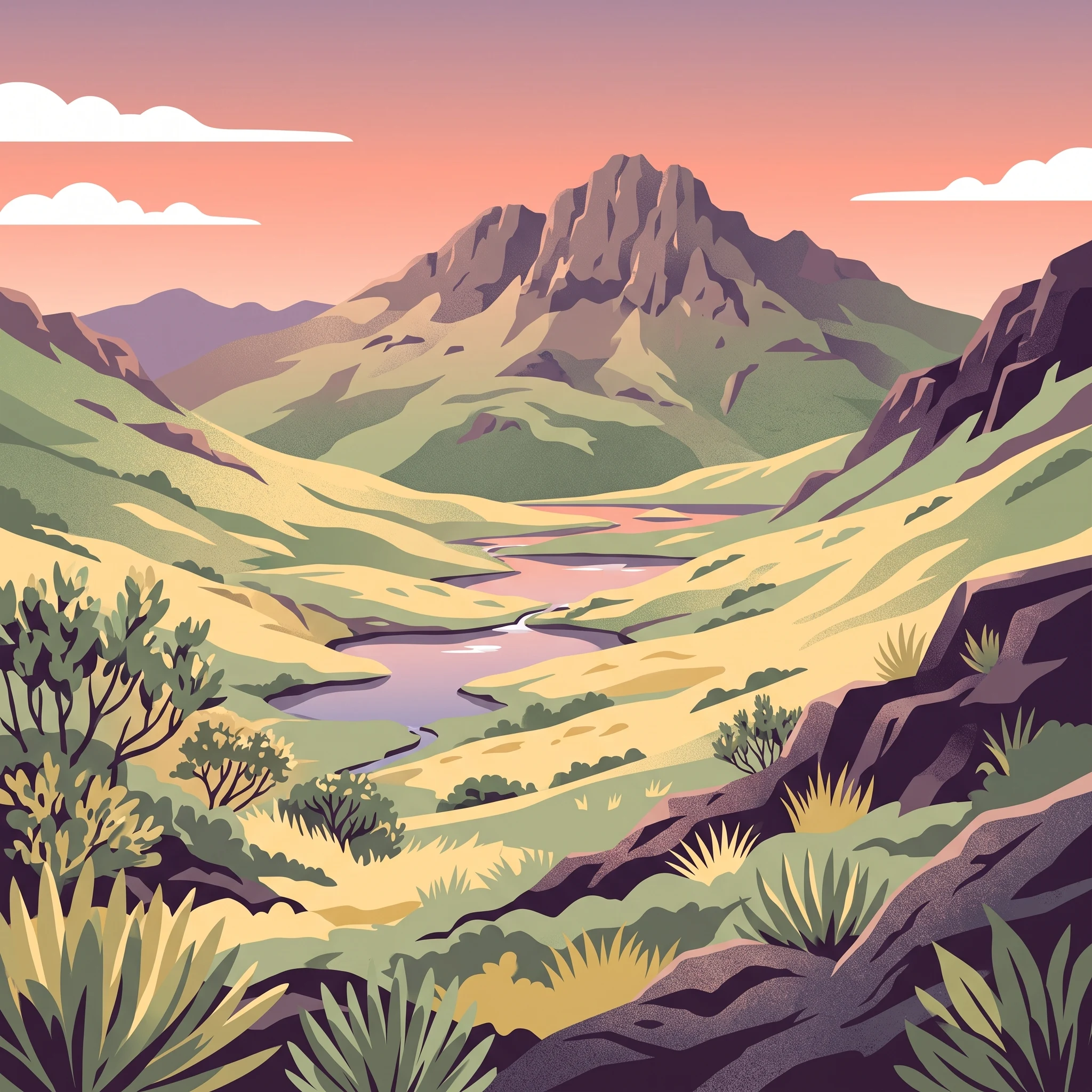
The landscape of Chirripó National Park is defined by the rugged, glaciated terrain of the Talamanca Range. Cerro Chirripó rises as a massive granite dome, its steep flanks carved by ancient glacial processes that left behind a landscape of cirques, arêtes, and U-shaped valleys. The summit region displays extensive boulder fields and rock outcrops typical of alpine environments. Below the main peaks, the terrain drops through a series of steep ridges and valleys that channel water toward the Pacific and Caribbean slopes. The Valle de los Lagos represents one of the most scenic areas, containing a chain of glacial lakes nestled in hanging valleys beneath the high peaks. The park's hydrography is particularly interesting, with streams flowing in opposite directions from the Continental Divide toward both the Pacific and Caribbean coasts. The upper elevations feature characteristic páramo terrain with rolling grasslands, cushion plants, and scattered elfin forest patches that create a tundra-like appearance unlike any other landscape in Costa Rica.
Chirripó National Park ecosystems, habitats, and plant life
The ecological complexity of Chirripó National Park is extraordinary, with the park protecting five distinct Holdridge life zones within its boundaries. At the lowest elevations, lowland tropical wet forest covers the slopes with a dense canopy of broad-leaved evergreen trees, lianas, and epiphytes. As elevation increases, the forest transitions through premontane and lower montane wet forest zones, each characterized by changes in species composition and forest structure. Cloud forests dominate at middle elevations, where persistent mist and high humidity support a luxuriant growth of epiphytic ferns, bromeliads, orchids, and mosses. Near 2,740 meters, the forest gives way to a unique wet desert environment characterized by stunted vegetation and exposed rock. The páramo zone at the highest elevations represents the most distinctive ecosystem, featuring bunch grasses, dwarf shrubs, and herbaceous plants adapted to the harsh alpine conditions including intense UV radiation, freezing temperatures, and strong winds. The Turberas de Talamanca Ramsar site within the park protects important peat bog ecosystems that store significant carbon and regulate water flow.
Chirripó National Park wildlife and species highlights
Chirripó National Park supports a remarkable diversity of wildlife despite its high-elevation location. The lower forest zones harbor populations of tapirs, peccaries, and several species of monkeys including howler and spider monkeys. Predators including jaguars, pumas, and ocelots roam the park's forests, though they are rarely encountered by visitors. Birdlife is particularly diverse, with numerous species of trogons, quetzals, tanagers, and hummingbirds found throughout the elevational gradient. The páramo zones support specialized bird species adapted to open grassland environments, including several species of ground finches and high-elevation raptors. The park's streams and wetlands provide habitat for amphibians and aquatic organisms, with several endemic species found only in the highland streams of the Talamanca Range. The isolated nature of this highland habitat has allowed for evolutionary divergence, creating unique species found nowhere else on Earth.
Chirripó National Park conservation status and protection priorities
Chirripó National Park occupies a critical position in Costa Rica's conservation framework. As part of the Talamanca Range-La Amistad World Heritage Site, the park contributes to one of the largest protected area complexes in Central America, creating essential habitat corridors that allow wildlife to move between different elevations and ecosystems. The páramo ecosystems within the park are considered globally significant because this habitat type is extremely limited in extent outside of the South American Andes, making the Chirripó páramo an important isolated example of this biome. The Turberas de Talamanca Ramsar designation recognizes the importance of the park's peatland ecosystems for water regulation, carbon storage, and biodiversity conservation. Conservation challenges include managing fire risk during the dry season, as evidenced by significant fires in 1992 that burned over 20 square kilometers and forced a four-month park closure. Climate change poses an emerging threat as species migrate upward in response to warming temperatures, potentially compressing the already limited páramo habitat.
Chirripó National Park cultural meaning and human context
The Talamanca Range has been inhabited by indigenous peoples for millennia, with the region historically inhabited by the Cabécar and other indigenous groups. These communities maintained traditional relationships with the highland environment, using the area for hunting, gathering, and ceremonial purposes. The name Chirripó derives from indigenous terminology, reflecting the cultural heritage of the region. The park area was historically referred to by some as the Cerro de la Muerte (Mountain of Death) due to the dangerous conditions travelers faced crossing the high-altitude route between the Central Valley and the Caribbean lowlands before modern roads were constructed. Today, the park remains important for local communities in the Pérez Zeledón area, who value both the ecological services and the tourism opportunities the protected area provides.
Top sights and standout views in Chirripó National Park
Chirripó National Park offers hikers the opportunity to summit the highest peak in Costa Rica, with Cerro Chirripó providing a challenging but rewarding ascent through dramatically changing ecosystems. The Valley of Lakes (Valle de los Lagos) presents some of the most spectacular alpine scenery in Central America, with its chain of glacial tarns set against the backdrop of the high peaks. The transition through five distinct life zones in a single hike provides an unparalleled ecological experience, allowing visitors to walk from tropical rainforest to páramo grassland within a day's journey. The unusual páramo ecosystem, more commonly associated with the Andes, makes this park a unique destination for understanding high-altitude tropical ecology. The chance to experience the coldest temperatures recorded in Costa Rica and stand in a landscape unlike anywhere else in the country distinguishes this park from all other protected areas in the nation.
Best time to visit Chirripó National Park
The optimal time to visit Chirripó National Park depends on visitor priorities and tolerance for different conditions. The dry season from December to April offers more stable weather and clearer skies, making it ideal for summit attempts and panoramic views from the high peaks. However, this period carries elevated fire risk, and the park management has occasionally closed areas during extreme fire danger. The wet season from May to November brings higher precipitation and more frequent cloud cover, which while limiting summit views, creates spectacular cloud forest conditions and ensures the waterfalls and streams are flowing strongly. The páramo zones can be foggy at any time of year, and temperatures at the summit regularly drop below freezing, particularly during the dry season when the coldest temperature in Costa Rica history was recorded at negative nine degrees Celsius. Many visitors prefer the transition periods at the start or end of the dry season to balance weather stability with reduced crowds.