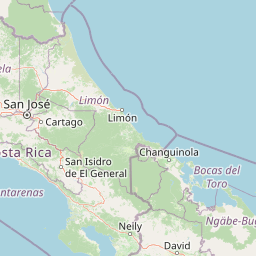
Why La Amistad International Park stands out
La Amistad International Park is best known for its extraordinary biodiversity and status as Central America's largest wilderness preserve. The park is one of the few places in Central America displaying evidence of Quaternary glaciation, which has created diverse habitats that support remarkable rates of speciation. It hosts more than 10,000 flowering plant species, over 600 bird species including the iconic resplendent quetzal and three-wattled bellbird, and five species of big cats including jaguars and pumas. The park also protects critical habitat for endangered species such as the ornate spider monkey, Central American tapir, and the splendid poison frog, with at least seven amphibian species found nowhere else on Earth.
La Amistad International Park history and protected-area timeline
La Amistad International Park emerged from the recognition that the natural resources of the Talamanca mountain range transcended national boundaries and required cooperative management. The area was originally protected as separate national parks in Costa Rica and Panama before being recognized as a single ecological unit. In 1983, UNESCO designated the Talamanca Range-La Amistad Reserves as a World Heritage Site, making it one of the first transboundary World Heritage properties in the Americas. Following this designation, both countries agreed to establish unified management through the creation of La Amistad International Park in 1988. The park was formerly known as La Amistad National Park before being renamed to reflect its international character. Scientific exploration of the park's remote interior has been limited due to challenging terrain, with significant research efforts only beginning in the early 2000s through partnerships with the Natural History Museum London, Costa Rica's INBio, and the University of Panama.
La Amistad International Park landscape and geographic character
The landscape of La Amistad International Park is defined by the rugged terrain of the Cordillera de Talamanca, a mountain range that rises dramatically from the surrounding lowlands to elevations exceeding 3,800 meters. The park encompasses both Pacific and Caribbean watersheds, creating diverse environmental conditions across its vast expanse. The highest peaks, including Cerro Chirripó at 3,820 meters, bear the marks of past glacial activity—a rare feature in Central America that has created unique alpine and subalpine habitats. The terrain ranges from steep mountain slopes and deep valleys to rolling highlands, with numerous rivers cascading down from the heights to the lowlands below. The combination of high elevation, steep gradients, and varied aspect creates a mosaic of microclimates and vegetation zones that contributes to the park's exceptional habitat diversity.
La Amistad International Park ecosystems, habitats, and plant life
The ecological character of La Amistad International Park is defined by its position at a biogeographic crossroads and its remarkable elevational range, which supports multiple distinct life zones. The park contains significant areas of cloud forest, where persistent mist and moisture support lush vegetation and specialized adaptations. The legacy of Quaternary glaciation has influenced the development of unique habitats that have driven speciation, resulting in high concentrations of endemic species. More than 10,000 flowering plant species have been documented within the park, along with approximately 250 reptile and amphibian species and 115 freshwater fish species. The park's designation as an Important Bird Area by BirdLife International reflects its significance for bird conservation, with over 600 species recorded including numerous threatened and endemic taxa.
La Amistad International Park wildlife and species highlights
La Amistad International Park supports an impressive assembly of wildlife, including five species of large cats: jaguars, pumas, ocelots, margay, and jaguarundis. The park provides critical habitat for several endangered mammal species, including the ornate spider monkey and the Central American tapir, the largest land mammal in Central America. The amphibian fauna is exceptionally significant, with at least seven species entirely restricted to park boundaries, including the Chiriquí fire salamander. The park's avifauna includes spectacular species such as the resplendent quetzal, considered one of the most beautiful birds in the Americas, the three-wattled bellbird, and the bare-necked umbrellabird. Scientific expeditions conducted since 2003 have revealed remarkable discoveries, including 12 plant species, 15 amphibian species, and three reptile species new to science, demonstrating that the park continues to yield new biological knowledge.
La Amistad International Park conservation status and protection priorities
La Amistad International Park represents a landmark in transboundary conservation, demonstrating how international cooperation can protect ecological systems that transcend political borders. Its designation as a UNESCO World Heritage Site recognizes its outstanding universal value as one of the most important biodiversity reservoirs in Central America, with the park and its buffer zone representing approximately 20 percent of the region's species diversity. The park forms a core component of the Mesoamerican Biological Corridor, a regional initiative to maintain ecological connectivity across fragmented landscapes. The Darwin Initiative, funded by the United Kingdom, supported a three-year collaborative project from 2006 to generate baseline biodiversity information and mapping for the park. Conservation challenges include managing the interface between protected core areas and the surrounding agricultural landscape, as well as addressing the needs of indigenous communities whose traditional territories overlap with park boundaries.
La Amistad International Park cultural meaning and human context
Three indigenous peoples—the Naso, Bribri, and Ngöbe-Buglé—maintain communities within the boundaries of La Amistad International Park, preserving traditional ways of life that are intimately connected to the landscape. These groups inhabit small villages scattered throughout the park and its surrounding buffer zone, practicing subsistence agriculture and maintaining cultural traditions tied to the forest and mountain environments. The presence of indigenous communities adds cultural depth to the park's identity, representing human relationships with the land that predate modern conservation frameworks. The buffer zone surrounding the core protected area includes a mix of coffee producers, beef cattle operations, and indigenous agricultural lands, creating a cultural landscape where conservation objectives must be balanced with sustainable livelihoods and traditional land use practices.
Top sights and standout views in La Amistad International Park
La Amistad International Park stands as Central America's premier wilderness preserve, offering unparalleled opportunities to experience pristine tropical forest ecosystems in a transboundary setting that exemplifies international conservation cooperation. The park's exceptional biodiversity includes over 10,000 plant species, more than 600 bird species, and significant populations of keystone species including jaguars, tapirs, and quetzals. The presence of glacial features in a tropical setting creates unique high-elevation habitats found nowhere else in Central America. The discovery of numerous species new to science in recent decades highlights how much remains to be learned from this remarkable landscape.
Best time to visit La Amistad International Park
The optimal time to visit La Amistad International Park depends on the specific area and activities planned, but the dry season from December through April generally offers more accessible conditions for hiking and wildlife observation. Higher elevations can experience significant fog and moisture year-round due to cloud forest conditions, while the Caribbean slope tends to be wetter overall. The wet season from May to November brings heavier rainfall but also offers the opportunity to experience the park's ecosystems at their most lush and to observe migratory bird species. Visitors should be prepared for variable conditions and the challenging terrain that characterizes much of the park's interior.