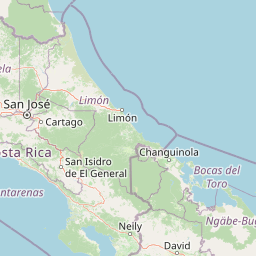
Why Piedras Blancas National Park stands out
Piedras Blancas is renowned for its exceptional biodiversity within the Osa Conservation Area, one of the most biologically intense regions in the world. The park protects significant populations of Neotropical predators including five feline species: jaguars, ocelots, margays, jaguarundis, and pumas, though these elusive animals remain difficult for visitors to observe. The mammal surveys conducted by Austrian researchers in 2003 and 2004 documented 96 species, with bats representing the richest group at 53 species. The amphibian and reptile diversity is equally impressive, with 37 amphibian species and 42 reptile species recorded in the Esquinas rainforest, including brightly colored species like red-eyed leaf frogs and poison-arrow frogs. The transition from a heavily logged landscape to a protected sanctuary represents one of the park's notable conservation success stories in Central America.
Piedras Blancas National Park history and protected-area timeline
The formal protection history of Piedras Blancas began in 1991 when the area was established as the Esquinas Sector of Corcovado National Park, reflecting the initial recognition of the forest's ecological significance within the broader Osa region. The park achieved independent status as a separate national park in 1999, distinguishing its conservation identity from the larger Corcovado protected area. Prior to and during the early years of protection, the forest faced severe threat from logging operations that endangered much of the vegetation cover through the mid-1990s. Conservation intervention intensified during the 2000s, with ranger numbers increasing from 6 to 16 between 2005 and 2007, significantly improving on-the-ground protection and reducing poaching. Parallel to government efforts, the Austrian charitable organization Regenwald der Osterreicher (Rainforest of the Austrians) launched fundraising and land purchase initiatives, acquiring 37 square kilometers of private land within the broader park area by 2008. Additional land purchases by the Costa Rican government, the hydroelectric company Tenaska (through carbon offset programs), The Nature Conservancy, and the Gordon and Betty Moore Foundation have expanded the total protected territory to more than 80 percent of the park's area.
Piedras Blancas National Park landscape and geographic character
The physical geography of Piedras Blancas features rugged mountainous terrain carved by the watersheds of the Esquinas and Piedras Blancas rivers, which descend from the interior highlands toward the Golfo Dulce on the Pacific coast. The park's elevation gradient creates diverse microclimates and supports the dense evergreen forest that characterizes the landscape. The terrain includes steep slopes, forest-lined watercourses, and the transition zone where rainforest meets coastal mangrove systems near the gulf. The Golfo Dulce itself represents a distinctive marine feature, a tropical inlet that provides important habitat for marine species and contributes to the overall ecological complexity of the protected area. The combination of mountain forest and coastal wetland environments within a relatively compact protected area creates a landscape of considerable topographical and ecological diversity.
Piedras Blancas National Park ecosystems, habitats, and plant life
The ecological character of Piedras Blancas is defined by its position within the Osa Conservation Area, one of the most biodiversity-rich regions in the Americas. The dense evergreen forest that blankets the mountains and valleys supports exceptional species diversity across multiple taxonomic groups. The forest composition includes numerous rare tropical tree species that represent significant botanical value. The ecosystem supports complex food webs and habitat structures that sustain the documented 96 mammal species, 37 amphibian species, and 42 reptile species recorded within the park boundaries. The interaction between terrestrial forest ecosystems and the adjacent marine and mangrove environments of the Golfo Dulce creates additional ecological complexity and supports species that depend on multiple habitat types. The documented decline of the giant anteater from the park illustrates both the historical pressures on the ecosystem and the conservation challenges facing sensitive species.
Piedras Blancas National Park wildlife and species highlights
The mammalian fauna of Piedras Blancas ranks among the most diverse in Central America, with comprehensive surveys identifying 96 species including 14 carnivore species and 53 bat species. The feline community is particularly notable, with five species present: jaguars, ocelots, margays, jaguarundis, and pumas, though these secretive predators remain largely hidden from casual observation. Primate populations include white-faced capuchin monkeys, Central American squirrel monkeys, howler monkeys, and spider monkeys, with the latter species increasingly observed since 2006. The park supports populations of two-toed sloths, northern tamanduas, silky anteaters, and various opossum species including the Mexican mouse opossum, gray four-eyed opossum, and common opossum. Rodent diversity includes agoutis, pacas, and multiple species of mice, squirrels, and rats. The amphibian and reptile communities feature prominently colored species such as red-eyed leaf frogs and poison-arrow frogs, along with tree frogs, glass frogs, rain frogs, and cane toads. Reptile diversity encompasses basilisks, iguanas, anoles, geckos, and multiple snake species including the fer-de-lance, coral snakes, boa constrictors, and pit vipers. Spectacled caimans inhabit pond environments while American crocodiles can be observed in larger rivers and mangrove areas.
Piedras Blancas National Park conservation status and protection priorities
Piedras Blancas represents a significant conservation achievement in Costa Rica's protected area network, particularly given the severe logging pressures that threatened the forest through the mid-1990s. The transformation of a heavily exploited landscape into a protected sanctuary demonstrates the effectiveness of integrated conservation approaches combining government protection, NGO land acquisition, and private partnership. The expansion from initial park establishment to more than 80 percent protected territory through systematic land purchases by organizations including Regenwald der Osterreicher, The Nature Conservancy, and the Gordon and Betty Moore Foundation illustrates successful conservation financing models. The increase in ranger staffing from 6 to 16 personnel between 2005 and 2007 directly contributed to reduced poaching pressure and improved habitat protection. The park's integration into the Osa Conservation Area creates connectivity with adjacent protected lands including Corcovado National Park, supporting broader landscape-level conservation objectives for the region.
Piedras Blancas National Park cultural meaning and human context
The park exists within a landscape of small communities including La Gamba, which serves as the nearest settlement and provides access infrastructure for visitors. The Esquinas Lodge serves as a research and accommodation facility that has facilitated scientific study of the park's biodiversity while providing visitor services. Local communities have historical relationships with the forest landscape that predate formal protection, though the transition to national park status has necessarily reshaped land use patterns and resource access. The involvement of international organizations in land acquisition, particularly the Austrian charitable group Regenwald der Osterreicher, reflects the global interest in conserving this biologically significant region.
Top sights and standout views in Piedras Blancas National Park
The exceptional feline diversity featuring five Neotropical cat species, the remarkable bat fauna with 53 documented species representing the richest mammal group, the spectacular amphibian community including red-eyed leaf frogs and poison-arrow frogs, the transition from logging threat to successful conservation model, and the integration of mountain rainforest with coastal gulf ecosystems at the Golfo Dulce.
Best time to visit Piedras Blancas National Park
The optimal visiting period corresponds with the dry season, which typically runs from December through April, offering easier trail conditions and clearer weather for forest exploration. The wet season from May to November brings heavier rainfall that maintains the forest's lush appearance but can make trails more challenging. The monsoon season from May to November corresponds with the period of greatest amphibian activity, when frog calls create particularly memorable nocturnal soundscapes around the Esquinas Lodge. Wildlife observation is generally best during early morning hours when animals are most active, though the elusive large cats remain difficult to spot regardless of season due to their nocturnal and secretive nature.