Understand the mapped boundaries and regional context of this protected national park.
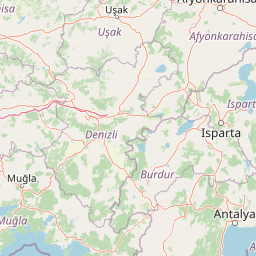
Mount Honaz National Park represents a critical protected area within the geographic tapestry of Turkey. As a designated national park, it offers a unique lens through which to explore regional landscapes, mapped terrain, and the broader context of protected lands in Western Anatolia. This page serves as your atlas-focused entry point to understanding the park's specific boundaries and its place within Turkey's diverse natural geography.
Mount Honaz National Park
National park
Structured park overview, official facts, and landscape profile for Mount Honaz National Park
Geography guide, regional context, and park location map for Mount Honaz National Park
Turkey, officially the Republic of Türkiye, is a transcontinental country located mainly in Anatolia (West Asia) with a smaller portion in East Thrace (Southeast Europe). It borders the Black Sea to the north, several countries to the east and south, and the Aegean Sea and European countries to the west. The country has a population of over 86 million and operates as a secular, Muslim-majority presidential republic with Ankara as capital and Istanbul as its largest city.
Turkey is a transcontinental country with the majority of its territory (about 97%) located in Anatolia (West Asia) and a smaller portion called East Thrace in Southeast Europe. It borders the Black Sea to the north, Georgia, Armenia, Azerbaijan, and Iran to the east, Iraq and Syria to the south, and the Mediterranean Sea to the southwest. To the west, Turkey borders the Aegean Sea, Greece, and Bulgaria. The terrain includes mountains, plateaus, and coastal plains, with the Taurus Mountains running along the southern coast.
Common questions about visiting, size, designation, and location context for Mount Honaz National Park
Deepen your exploration by continuing the structured search for national parks and protected areas worldwide. Utilize the comprehensive filtering capabilities to compare different conservation landscapes and refine your understanding of global park geography. Discover more about the distribution and characteristics of protected natural areas.