
Mori Atlas logo
National parkMurlen National Park

Explore the mapped boundaries and protected landscape of Murlen National Park.

Murlen National Park: A National Park within Champhai's Geographic Landscape

Murlen National Park stands as a significant protected natural area within the Champhai region of India. As a designated National Park, its primary value lies in understanding its geographic context and mapped boundaries. This entry provides essential details for exploring Murlen National Park as a distinct protected landscape, helping to situate it within the broader regional geography and atlas of protected areas for comprehensive discovery.

national parktropical forestbiodiversity hotspotnortheast Indiaold-growth forestendemic species

Murlen National Park

National park

Park overview

Structured park overview, official facts, and landscape profile for Murlen National Park

Murlen National Park park facts, protected area profile, and essential visitor context
Review the core facts for Murlen National Park, including designation, size, terrain, visitor scale, habitats, and operating context in one park-focused overview.

About Murlen National Park

Murlen National Park occupies a significant position in India's protected area network as a Category II IUCN national park in the state of Mizoram. The park's location in the mountainous far east of India, near the international boundary with Myanmar, places it at the crossroads of multiple biogeographic regions. The terrain consists of rolling hills and steep valleys typical of the sub-Himalayan landscape, with the park forming part of a contiguous forested corridor that extends into the Chin Hills of Myanmar. The forest ecosystem is characterized by a complex multilayered structure, with emergent trees, a dense canopy, and a heavily shaded understory that supports specialized shade-tolerant species. The park was officially declared as a national park in 1991 and has since become a focus for conservation efforts in the region, representing one of the last remaining substantial tracts of old-growth forest in northeastern India.

Quick facts and research context for Murlen National Park

Murlen National Park is located in Champhai district, Mizoram, approximately 245 kilometers east of Aizawl, India's capital for this northeastern state. The park was established in 1991 and covers around 200 square kilometers of protected forest land near the Myanmar border. The ecosystem is classified as tropical, semi-evergreen and sub-montane forest, supporting significant biodiversity including approximately 15 mammal species, 150 bird species, and notable plant diversity including two endemic Ceropegia species discovered within the park boundaries. The area is managed with involvement from local conservation workers, with 36 people engaged in protection activities as of 2012.

Park context

Deeper park guide and search-rich context for Murlen National Park

Murlen National Park history, landscape, wildlife, and travel context
Explore Murlen National Park through its history, landscape character, ecosystems, wildlife, conservation priorities, cultural context, and seasonal travel timing in a structured park guide built for atlas discovery and search intent.

Why Murlen National Park stands out

Murlen National Park is best known for its extraordinarily dense tropical forests that create one of the darkest forest understories in the world, with some areas earning the local name of losing area of seven fellow-men or land of no return due to the complete absence of sunlight penetration. The park protects critical habitat in the Indo-Burma biodiversity hotspot and supports significant populations of large mammals including tigers, leopards, and Himalayan black bears, as well as important primate species such as the hoolock gibbon. The botanical diversity is equally remarkable, with the discovery of two endemic Ceropegia species (Ceropegia mizoramensis and Ceropegia murlensis) highlighting the park's scientific significance. The ancient forest, with trees up to 350 years old, represents a rare example of relatively intact montane forest ecosystem in mainland India.

Murlen National Park history and protected-area timeline

Murlen National Park takes its name from Murlen Village, which itself is historically significant as the ancestral home of Saithuama Sailo, the Chief of Hnahlan. The park was formally established in 1991 as a protected national park, designated under Indian law to preserve the exceptional biodiversity and forest resources of this region. The area has been part of the traditional territory of the Mizo people, whose cultural practices and land management shaped the landscape over centuries before formal protection was established. Since its designation, the park has faced challenges from hunting and poaching activities, prompting ongoing enforcement efforts by the state government to protect wildlife populations. Conservation work at the park has involved local communities, with 36 people actively engaged in conservation activities as documented in 2012.

Murlen National Park landscape and geographic character

The landscape of Murlen National Park is dominated by dense tropical and semi-evergreen forests growing in the rolling hills of the Mizoram-Chin hill region. The terrain is characterized by steep-sided valleys and ridges typical of the sub-montane zone, with elevation changes creating diverse microhabitats throughout the protected area. The forest reaches extraordinary density, with the canopy blocking nearly all sunlight from reaching the forest floor in many areas. The age of the forest is remarkable, with individual trees documented at up to 350 years old, representing ancient-growth forest that has never been significantly disturbed by human activity. The park lies in a region of high rainfall, supporting the lush vegetation and maintaining the evergreen character of the forest even during seasonal dry periods.

Murlen National Park ecosystems, habitats, and plant life

The ecological character of Murlen National Park is defined by its tropical, semi-evergreen and sub-montane forest ecosystems that represent a critical component of the Indo-Burma biodiversity hotspot. The forest composition includes a rich mixture of tree species such as Quercus (oak), Schima wallichii, Betula (birch), Michelia champaca, Pinus kesiya, Prunus species, Myrica, and Rhododendron, creating a diverse and layered vegetation structure. The understory includes bamboos such as Chimonobambusa callosa, various cane species, and an exceptional diversity of orchids and lichens. Two endemic plant species, Ceropegia mizoramensis and Ceropegia murlensis, have been discovered in the park, named respectively after the state and the locality. The park also supports approximately 35 species of medicinal plants, adding to its ecological and scientific value.

Murlen National Park wildlife and species highlights

Murlen National Park supports a diverse mammalian fauna that includes significant predator populations such as tigers and leopards, along with large herbivores like sambar deer and barking deer. The park provides crucial habitat for the hoolock gibbon, one of India's lesser-known primate species, as well as other arboreal mammals including the Malayan giant squirrel. The Himalayan black bear and serow represent the park's montane mammal fauna, while smaller mammals include the rhesus macaque. The avian community is equally diverse, with over 150 bird species recorded including Hume's pheasant, kalij pheasant, grey partridge, hill myna, and dark-rumped swift. However, the park has faced challenges from illegal hunting and poaching, prompting continued conservation vigilance.

Murlen National Park conservation status and protection priorities

Murlen National Park represents an important conservation priority within India due to its location in one of the world's most significant biodiversity hotspots. The Indo-Burma region is recognized globally for its species richness and endemism, and protected areas like Murlen serve as critical refuges for many species that face habitat loss throughout their ranges. The park's old-growth forest, with trees up to 350 years old, provides ecosystem services including watershed protection, carbon storage, and habitat for species that cannot survive in disturbed or secondary forest. Conservation challenges include addressing poaching and hunting pressures, with the state government implementing measures to strengthen protection. The involvement of local communities in conservation work demonstrates a collaborative approach to park management.

Murlen National Park cultural meaning and human context

Murlen National Park is situated within the traditional territory of the Mizo people, an indigenous community with deep historical roots in the mountainous landscape of Mizoram. The park takes its name from Murlen Village, which is the birthplace of Saithuama Sailo, the traditional Chief of Hnahlan, connecting the protected area to the cultural heritage of the region. The park exists within what was historically Hnahlan Village area, reflecting the long-standing human presence in this landscape. The Mizo people have historically practiced shifting agriculture and forest-based livelihoods, creating a complex relationship between human communities and the natural environment that predates formal protected area establishment.

Top sights and standout views in Murlen National Park

The park's most distinctive feature is its extraordinarily dense forest environment, where less than one percent of sunlight penetrates the canopy, creating conditions that have earned certain areas the evocative local name of land of no return. Ancient trees reaching 350 years old represent a rare window into pre-industrial forest ecology. The discovery of two endemic Ceropegia species demonstrates the park's botanical significance and the continued potential for new scientific discoveries. The presence of both tiger and leopard indicates a healthy predator-prey ecosystem, while the hoolock gibbon population represents one of India's more elusive primate species. The park's position near the Myanmar border places it at a biogeographic crossroads that contributes to its exceptional species diversity.

Best time to visit Murlen National Park

The park can be visited throughout the year, though the most favorable conditions typically occur during the cooler months from October to March when temperatures are more moderate and rainfall is reduced. The monsoon season from June to September brings heavy precipitation to Mizoram, which can make some trails difficult and reduce visibility for wildlife viewing. The post-monsoon period often features lush, green landscapes as the forest reaches its peak of vegetative growth. Visitors interested in birdwatching may find the dry season months particularly productive as bird activity concentrates around water sources.
Park location guide

Geography guide, regional context, and park location map for Murlen National Park

Murlen National Park park geography, regions, and map view in India
Understand where Murlen National Park sits in India through a broader geographic reading of the surrounding landscape, nearby location context, and its mapped position within the national park landscape.

How Murlen National Park fits into India

India is a South Asian country bordered by the Indian Ocean, Arabian Sea, and Bay of Bengal. It shares land borders with Pakistan, China, Nepal, Bhutan, Bangladesh, and Myanmar. The country has a population of over 1.4 billion people and operates as a federal parliamentary republic with its capital in New Delhi.

Wider geography shaping Murlen National Park in India

India occupies the Indian subcontinent in South Asia, bordered by the Arabian Sea to the southwest, the Bay of Bengal to the southeast, and the Indian Ocean to the south. It shares land borders with Pakistan to the west, China, Nepal, and Bhutan to the north, and Bangladesh and Myanmar to the east. The territory also includes the Andaman and Nicobar Islands in the Indian Ocean.

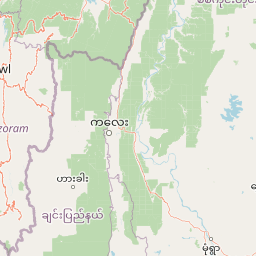
Map view of Murlen National Park

Use this park location map to pinpoint Murlen National Park in India, understand its exact geographic position, and read its mapped placement within the surrounding landscape more clearly.

Pigeon | © OpenStreetMap contributors

Location context for Murlen National Park

ChamphaiMizoram
Park atlas

Trace the mapped geography of protected areas within Mizoram, exploring connected conservation landscapes and regional park context.

Discover Nearby National Parks and Protected Areas Surrounding Murlen National Park
After exploring Murlen National Park, continue your discovery by browsing other protected areas in Mizoram, tracing the regional spread of national parks and wildlife sanctuaries across northeast India. Compare varied forest reserves and mountain ecosystems, understanding the interconnected conservation landscapes that define this part of the Indo-Burma biodiversity hotspot.
National parkIndia

Phawngpui National Park: An Indian National Park's Protected Landscape and Geography

Explore its mapped boundaries and regional natural terrain.

Phawngpui National Park stands as a distinct protected area within India, contributing significantly to the nation's atlas of natural landscapes. Its designation as a national park underscores its importance for understanding regional geography and mapped terrain. This profile focuses on the park's specific protected-area identity and its role in the broader geographic context of India, offering clear insights for landscape and park map discovery.

Area
50 km²
Established
1992
IUCN
II
Visitors
469 annual
National parkManipur

Keibul Lamjao National Park: Mapped Boundaries and Protected Landscape Identity

Explore Manipur's unique national park geography and terrain.

Keibul Lamjao National Park represents a key protected area within the state of Manipur, India, offering critical insights into regional geography and protected landscape dynamics. This national park's unique environmental setting provides an excellent opportunity for structured atlas exploration, allowing users to understand its mapped boundaries and its significance within the subcontinent's network of conservation areas. Discover the specific geographic context and natural terrain that define Keibul Lamjao National Park.

Area
40 km²
Established
1977
IUCN
II
Relief
Lowland
National parkManipur

Shirui National Park: Detailed Protected Landscape and Regional Geography in Manipur

Mapped boundaries and atlas context for this national park.

Shirui National Park serves as a vital protected area within the state of Manipur, offering a unique focal point for geographic exploration. This profile details its identity as a national park, emphasizing its mapped boundaries and landscape context. For users interested in atlas-based discovery and understanding the distribution of protected lands, Shirui National Park provides critical data on regional geography and conservation. Examine its position within India's natural terrain and protected area network.

Area
41.3 km²
Established
1982
IUCN
II
Relief
Mountain
National parkRangamati District

Kaptai National Park: Protected Landscape and Geographic Context in Rangamati District

Explore its mixed evergreen forest and lakeside terrain.

Kaptai National Park is a crucial protected area located in Bangladesh's Rangamati District, renowned for its mixed evergreen forests and unique position adjacent to Kaptai Lake. This detail page provides an atlas-oriented perspective on the park's geographic identity, mapped boundaries, and its role within the diverse Chittagong Hill Tracts region. Understand the terrain, from rolling hills to lakeside environments, and appreciate its conservation significance as a national park.

Area
54.64 km²
Established
1999
IUCN
II
Climate
Subtropical
National parkMoulvibazar District

Lawachara National Park: Protected National Park Landscape in Moulvibazar District

Mapped Terrain and Endangered Primate Habitat Exploration

Delve into the protected landscape of Lawachara National Park, a key national park located in the distinct undulating terrain of Moulvibazar District, Bangladesh. This area is recognized for its ecological significance, particularly as a sanctuary for endangered primates, including the critically important western hoolock gibbon population. Users can explore the park's mapped boundaries, understand its semi-evergreen forest ecosystem, and appreciate its geological features like sandstone hillocks and sandy-bedded streams, making it a valuable point of discovery for regional geography and conservation landscapes.

Area
12.5 km²
Established
1996
IUCN
II
Relief
Upland
National parkSagaing Region

Alaungdaw Kathapa National Park: National Park with Mapped Boundaries in Sagaing Region

Explore its protected landscape and regional geography.

Alaungdaw Kathapa National Park is a protected natural area situated in Myanmar's Sagaing Region. This national park is defined by its specific geographic boundaries and serves as a key component within the regional landscape atlas. Its designation highlights its importance for conservation and offers insights into the natural terrain and protected area distribution, providing a focused entry for geographic study.

Area
1,403 km²
Established
1989
IUCN
II
Relief
Mountain
National parkHabiganj District

Satchari National Park: Mapped Protected Landscape in Habiganj District

Discover regional geography and park boundaries.

Satchari National Park represents a significant protected area within Bangladesh, situated in Habiganj District. This entry focuses on its identity as a national park, detailing its geographic footprint and landscape context. Explore the mapped dimensions of this protected land to better understand its role in the regional atlas and its specific natural terrain.

Area
2.43 km²
Established
2005
IUCN
II
Relief
Highland
National parkChittagong District

Baroiyadhala National Park: A Vital Wildlife Corridor and Protected Forest Landscape in Bangladesh

Discover its terrain, mapped boundaries, and regional significance.

Baroiyadhala National Park, situated in Bangladesh's Chittagong District, stands as a critical national park dedicated to preserving forest ecosystems and functioning as an essential wildlife corridor. The park's undulating terrain and dense vegetation are vital for supporting threatened species and maintaining habitat connectivity. This page offers an atlas-style exploration of Baroiyadhala National Park, detailing its protected area status, geographic context within the Chittagong region, and its significance for conservation in South Asia, providing a rich understanding of its natural landscape.

Area
29.34 km²
Established
2010
IUCN
II
Climate
Tropical

Common questions about visiting, size, designation, and location context for Murlen National Park

Murlen National Park FAQs for park facts, access, geography, and protected area context
Find quick answers about Murlen National Park, including protected-area facts, park geography, trail and visitor context, and how the park fits into its surrounding country and regional landscape.
MoriAtlas Explorer

Continue Your Protected Areas Search Across the Global Atlas

Deepen your exploration by continuing the structured search for national parks and protected areas worldwide. Utilize the comprehensive filtering capabilities to compare different conservation landscapes and refine your understanding of global park geography. Discover more about the distribution and characteristics of protected natural areas.

Global natural geography