Mori Atlas logo
National parkOrlovskoye Polesye National Park

Mapping the ecological junction where broadleaf woodlands meet the vast Russian forest steppe

Orlovskoye Polesye National Park: A Protected Mosaic of Forests and River Valleys in Oryol Oblast

Orlovskoye Polesye National Park occupies a critical ecological crossroads in northwestern Oryol Oblast, spanning a transition zone between northern broadleaf forests and southern forest steppe. This protected territory is defined by a complex drainage network linked to the Vytebet River and the broader Oka basin. Explore the park through its distinct topographic ridges, meandering river valleys, and spring fed streams that sustain a highly diverse range of plant and animal habitats.

mixed forestbroadleaf forestforest-steppe transitionEuropean bisonbison reintroductionriver valley

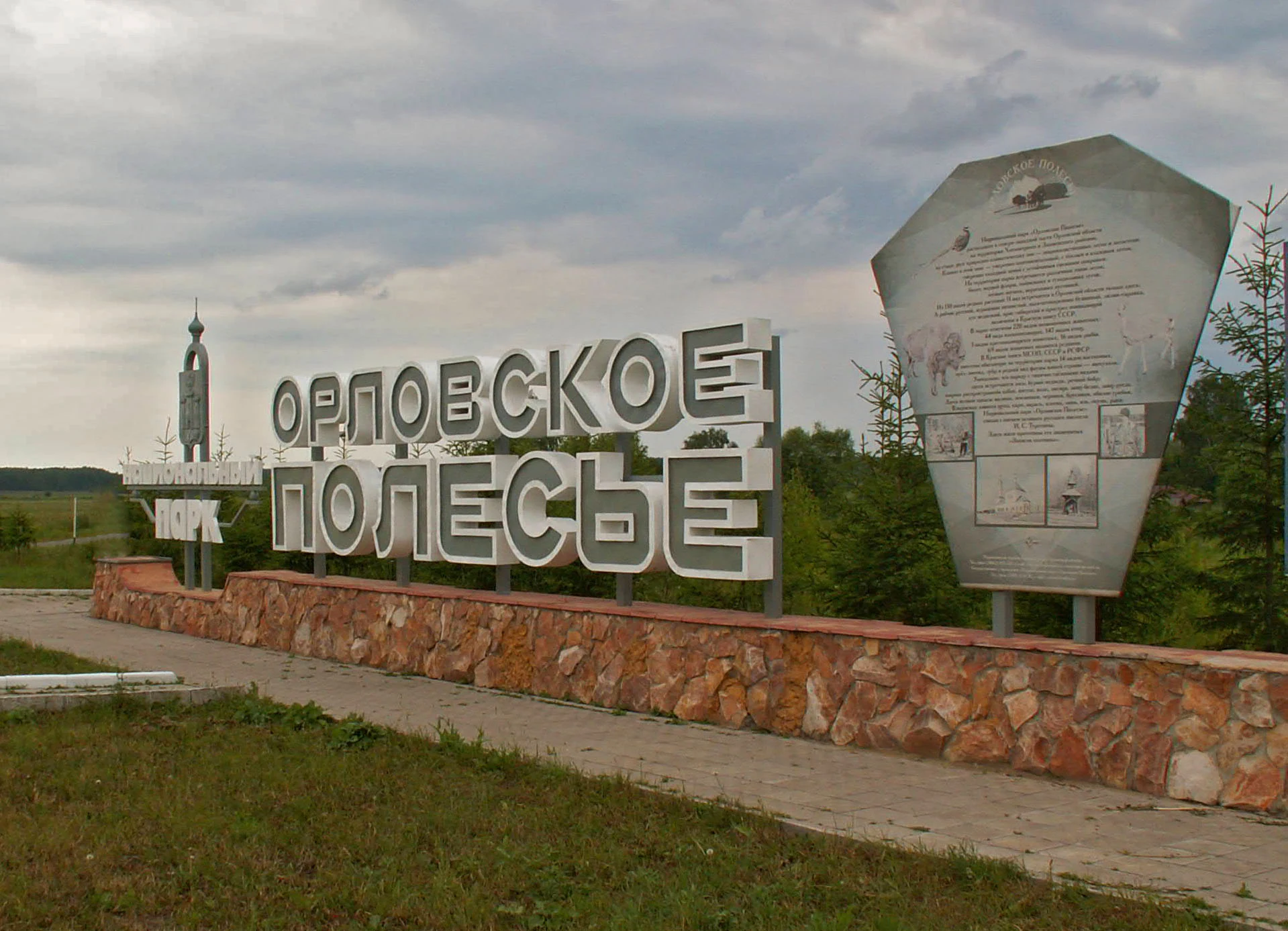
Orlovskoye Polesye National Park

National park

Park overview

Structured park overview, official facts, and landscape profile for Orlovskoye Polesye National Park

Orlovskoye Polesye National Park park facts, protected area profile, and essential visitor context

Review the core facts for Orlovskoye Polesye National Park, including designation, size, terrain, visitor scale, habitats, and operating context in one park-focused overview.

About Orlovskoye Polesye National Park

Orlovskoye Polesye National Park occupies a strategic position in the forested northwest of Oryol Oblast, in the southern part of the historic Oryol-Kaluga Polesye woodland belt. Stretching across portions of the Znamensky and Khotynets districts, the park preserves a substantial tract of mixed forest that has long defined the regional identity of central European Russia. Its 77,745-hectare territory functions as a living transition zone between two major biogeographical regions: broadleaf forest to the north and forest-steppe to the south.

The landscape is shaped by the Vytebet River, whose winding course, along with its tributaries and numerous springs, has cut the terrain into a pattern of valleys, ravines, and gullies typical of the southern Polesye. This dissected topography supports a rich mosaic of habitats, from damp alder groves and riverside meadows to drier oak and pine stands on the higher ground.

What makes Orlovskoye Polesye exceptional in the Russian system of protected areas is its combination of ecological diversity and flagship species. The park supports Russia's largest free-roaming population of the European bison, a globally endangered species reintroduced to the region after extinction in the wild. It is also an important hub for conservation of the Russian desman, a reclusive aquatic mammal endemic to Russia whose numbers have declined sharply elsewhere.

Beyond its natural significance, the park carries strong cultural associations. The surrounding countryside inspired Ivan Turgenev's classic "A Hunter's Notes," and the forested landscape is woven into Russian folklore through the legend of Ilya Muromets and his battle with the bandit Solovey-Razboynik. Ancient hillforts, burial mounds, and historic villages within and around the park give Orlovskoye Polesye a layered human history that complements its natural heritage.

Quick facts and research context for Orlovskoye Polesye National Park

Orlovskoye Polesye National Park was established on 9 January 1994 and covers a large forested area in the Znamensky and Khotynets districts of Oryol Oblast. It sits on a slightly elevated, dissected plain of the southern Oryol-Kaluga Polesye, with terrain shaped by the Vytebet River and its tributaries flowing toward the Oka. The park straddles the broadleaf forest and forest-steppe zones, creating transitional habitats that support both taiga-like and open-country species.

Protection and recognition

Examine documented terrestrial conservation frameworks and official designation records.

Orlovskoye Polesye National Park Protection Status and Conservation Scope

Orlovskoye Polesye National Park maintains a documented terrestrial protection scope within its regional conservation landscape. Official designation records detail the established legal framework and administrative boundaries governing this protected area.

Protection details

Protection scope
Terrestrial
Transboundary protection
No
Park context

Deeper park guide and search-rich context for Orlovskoye Polesye National Park

Orlovskoye Polesye National Park history, landscape, wildlife, and travel context

Explore Orlovskoye Polesye National Park through its history, landscape character, ecosystems, wildlife, conservation priorities, cultural context, and seasonal travel timing in a structured park guide built for atlas discovery and search intent.

Why Orlovskoye Polesye National Park stands out

Orlovskoye Polesye is best known as the home of the largest free-living European bison herd in Russia, with the population reaching 723 animals by 2024; the European bison is listed on the IUCN Red List. The park is also recognized for hosting more than 30 rare and protected plant species found only within its territory, including water caltrop, bear garlic, Siberian iris, and the chess flower. The park's ecological richness is amplified by its location at the junction of broadleaf forest and forest-steppe, a transition that concentrates both woodland and open-ground biodiversity in one area. It also plays a notable role in efforts to restore the Russian desman, an endemic aquatic mammal whose conservation work is centered here.
Orlovskoye Polesye National Park history and protected-area timeline

Orlovskoye Polesye National Park was formally established on 9 January 1994, on the initiative of Yegor Semyonovich Stroyev, who served as governor of Oryol Oblast and later became chairman of the Federation Council. The creation of the park reflected growing recognition of the southern Polesye's ecological importance, particularly its mixed forests and the wildlife they supported at the junction of broadleaf forest and forest-steppe zones.

Since its founding, the park has become a focal point for conservation work involving large mammals. The European bison, which had been exterminated in the wild across its historic range, was reintroduced to the area and has grown into Russia's largest free-roaming herd by 2024. The park has also taken on an active role in restoring populations of the Russian desman, a species endemic to Russia that depends on clean river systems and burrows along forested waterways.

The cultural landscape of the area long predates the park. Medieval settlements, earthworks, and burial mounds dot the territory, and centuries-old churches and villages such as Lgov with its eighteenth-century Trinity Church remain part of the park's heritage. The literary and folk traditions tied to the region, including Turgenev's "A Hunter's Notes" and the legends of Ilya Muromets, continue to shape its identity as a place where natural and cultural history intersect.

Orlovskoye Polesye National Park landscape and geographic character

The park lies on a slightly elevated, hilly plain that forms the southern edge of the Oryol-Kaluga Polesye. The surface is heavily dissected by river valleys, ravines, and gullies, producing a varied topography of forested ridges, slopes, and low-lying stream corridors.

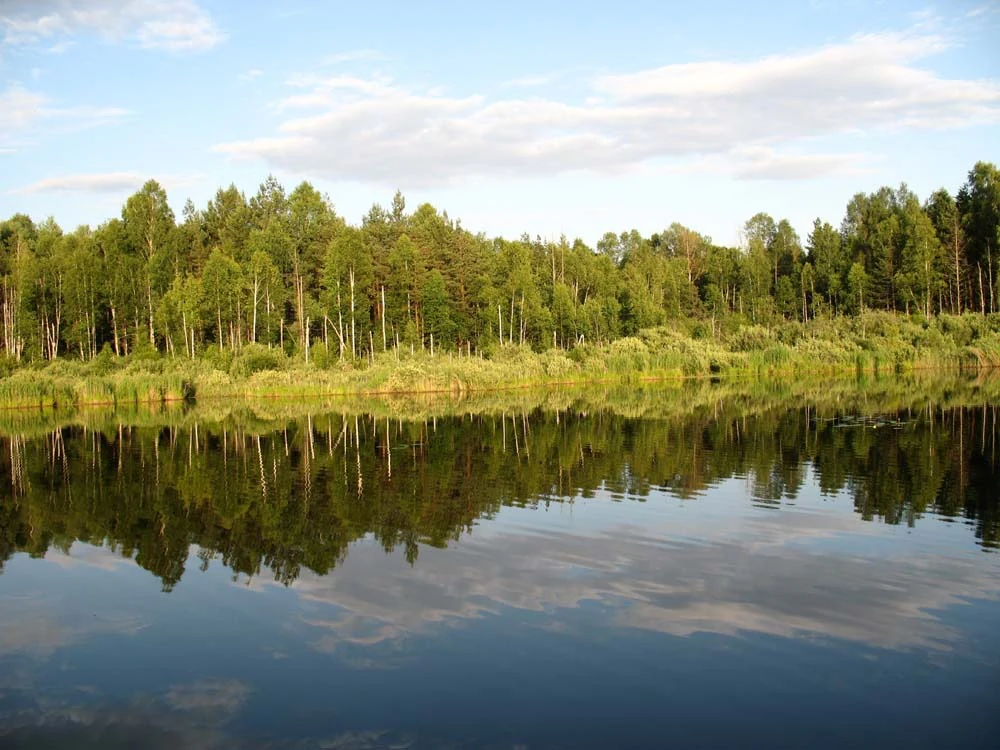
The Vytebet River is the main waterway running through the territory, characterized by an extremely meandering channel. The entire river network belongs to the Oka basin and is fed by numerous springs that emerge within the park, giving rise to small streams and influencing the distribution of wet woodland and meadow habitats. The combination of upland mixed forest, river valleys, and scattered springs creates the varied terrain typical of the southern Polesye woodland belt.
Orlovskoye Polesye National Park ecosystems, habitats, and plant life

Orlovskoye Polesye protects a large and varied mixed forest ecosystem set at the meeting point of broadleaf forest and forest-steppe. This transitional position gives the park unusually high botanical and ecological diversity: its flora includes more than 860 recorded species, of which around 173 are considered rare or endangered, and more than 30 protected plant species occur only within the park's borders.

Dominant tree species include Scots pine, Norway spruce, pedunculate oak, birch, small-leaved lime, aspen, Norway maple, common ash, and alder. This mix supports a layered forest structure ranging from drier pine-dominated stands on sandy soils to moist alder and ash galleries along rivers and springs. Among the park's special botanical features are water caltrop, wild ramps, pasqueflower, Siberian iris, a Jovibarba species, an orchid-like Neottianthe, the chess flower, and the perennial honesty.

The mosaic of forest types, river valleys, and springs produces microhabitats that sustain both resident and migratory wildlife, reinforcing the park's role as a refuge for species at the climatic edge of their ranges.
Orlovskoye Polesye National Park wildlife and species highlights

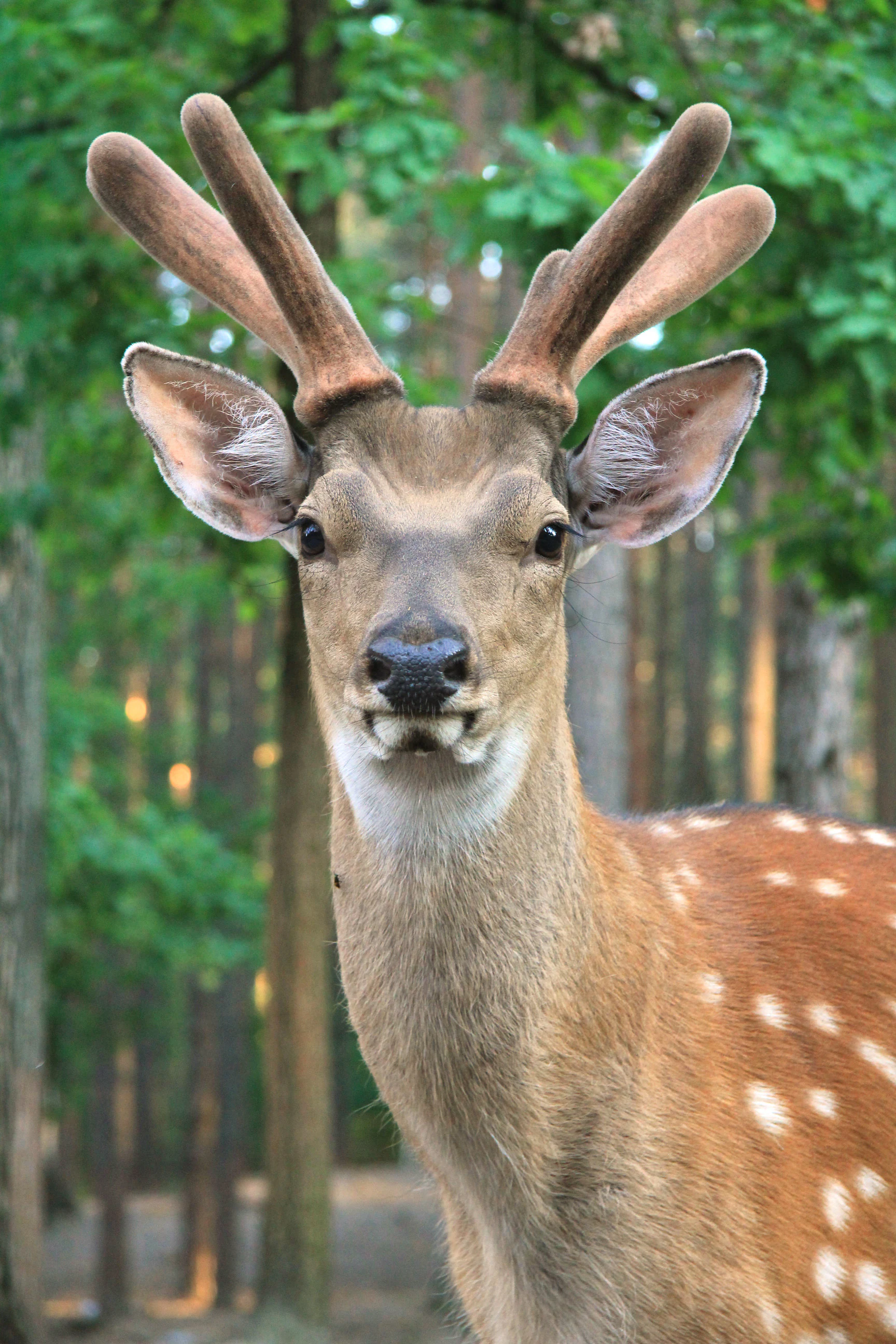
The wildlife of Orlovskoye Polesye is a defining feature of the park. The territory hosts 267 vertebrate species, including 174 bird species, 49 mammal species, 26 fish species, 11 amphibian species, and 7 reptile species. About 87 of these animal species are considered rare.

The park's most celebrated inhabitants are its large mammals. As of 2024, Orlovskoye Polesye supports 723 European bison, forming Russia's largest free-living population of the species and the second largest in the world. The European bison is listed on the IUCN Red List. Other notable mammals include moose, lynx, roe deer, wild boar, Eurasian beaver, otter, European mink, muskrat, red deer, and sika deer.

The park is also a key refuge for the Russian desman, an aquatic mammal endemic to Russia that has suffered severe declines elsewhere; active restoration work is underway here. Birdlife is rich, ranging from woodland grouse species such as capercaillie and hazel grouse to black woodpecker, black stork, grey partridge, quail, steppe polecat, golden eagle, short-toed eagle, lesser spotted eagle, greater spotted eagle, and grey shrike. The presence of steppe-associated species alongside typical forest fauna reflects the park's location at the meeting of two major ecological zones.

Orlovskoye Polesye National Park conservation status and protection priorities

Orlovskoye Polesye stands at the intersection of forest and forest-steppe ecosystems, making its conservation value particularly high: it preserves ecological communities and species transitions that are increasingly rare elsewhere in central European Russia. Its mixed forests, river systems, and spring-fed microhabitats support both woodland and open-country species, including many that have declined outside protected areas.

The park's most prominent conservation role is the recovery of the European bison. After being extirpated from the wild, the species has been reintroduced here and grown into Russia's largest free-living herd, making the park a cornerstone of bison restoration in the country. The park also leads efforts to restore the Russian desman, a reclusive endemic whose dependence on clean, stable river systems makes Orlovskoye Polesye's protected waterways especially important.

By maintaining large, contiguous forest cover and ecologically diverse terrain at the boundary of two biomes, Orlovskoye Polesye contributes to the long-term viability of more than 170 rare plant species and nearly 90 rare animal species, reinforcing its role as a key node in Russia's network of protected natural areas.

Orlovskoye Polesye National Park cultural meaning and human context

The cultural landscape of Orlovskoye Polesye is woven into its forests and villages. The region is closely associated with Ivan Turgenev, whose classic collection "A Hunter's Notes" drew on the people, forests, and rural life of the Oryol countryside. A literary and local-history museum, the Turgenev Polesye Museum, operates in the village of Ilyinskoye and preserves this literary heritage.

The area is also steeped in folk legend. A well-known tradition holds that the bogatyr Ilya Muromets traveled through these lands and fought the bandit Solovey-Razboynik at the village of Devyat Dubov, where church chronicles speak of ancient bogs and a cluster of nine oaks that grew from a single stump and once sheltered the outlaw's band.

Within the park, several historic sites illustrate the long human presence in the region. These include the Radovishche hillfort and burial mounds near the village of Radovishche, the village of Lgov with its eighteenth-century Holy Trinity stone church, and the remains of an eleventh- to twelfth-century hillfort at Khotiml-Kuzmyonkovo, once the largest early-Russian fortress in present-day Oryol Oblast. A holy spring dedicated to the Kazan Mother of God also forms part of the area's living religious heritage.

Top sights and standout views in Orlovskoye Polesye National Park

Orlovskoye Polesye's standout qualities include its position at the junction of broadleaf forest and forest-steppe, its 77,745 hectares of mixed woodland dissected by the Vytebet River, and its exceptional wildlife profile. The park is internationally significant for hosting Russia's largest free-roaming European bison population and for its active restoration work on the endemic Russian desman.

Within its borders, more than 860 plant species, including around 173 rare or endangered taxa, and 267 vertebrate species find refuge. Cultural layers, ranging from Turgenev's literary landscape to medieval hillforts and folk legends of Ilya Muromets, give the park a depth that complements its ecological importance.

Best time to visit Orlovskoye Polesye National Park

The transitional position of Orlovskoye Polesye between forest and forest-steppe means that each season brings a distinct character to the landscape. Spring and early summer are particularly rewarding for seeing wildflowers such as pasqueflower, bear garlic, and Siberian iris, and for observing active birdlife. Late spring through early autumn offers the best conditions for wildlife viewing in general, including bison, deer, and a wide range of forest and steppe-edge bird species.

Winter transforms the park into a quiet, snow-covered forest landscape, when mixed woodlands, frozen streams, and the park's winter feeding sites offer the chance to see large mammals such as bison, moose, and boar against a snowy backdrop. Each season rewards visitors with different aspects of the park's mixed-forest identity.
Monthly climate preview

Long-term representative point measurements tracking monthly temperature and precipitation variation

Orlovskoye Polesye National Park Climate Normals and Annual Weather Rhythm

Representative point records for Orlovskoye Polesye National Park demonstrate measured annual temperature swings from sub-zero winter lows to warm summer maximums alongside varying daily precipitation rates. Examining the full twelve-month profile provides complete long-term climate normals and detailed monthly weather distributions for the protected area.
Annual mean5 °C
-9 °C19 °C
Jan-9°
Feb-8°
Mar-3°
Apr
May13°
Jun17°
Jul19°
Aug18°
Sep12°
Oct
Nov-2°
Dec-7°
Warmest month
July

19.2 °C

Coolest month
January

-9.2 °C

Wettest month
July

2.9 mm/day

Driest month
March

1.4 mm/day

Park location guide

Geography guide, regional context, and park location map for Orlovskoye Polesye National Park

Orlovskoye Polesye National Park park geography, regions, and map view in Russia

Understand where Orlovskoye Polesye National Park sits in Russia through a broader geographic reading of the surrounding landscape, nearby location context, and its mapped position within the national park landscape.

How Orlovskoye Polesye National Park fits into Russia

Russia is a transcontinental nation spanning eleven time zones, bordered by fourteen countries. It is the world's largest country by area, covering 17,098,246 km². Moscow is the capital and largest city, while Saint Petersburg is the second-largest and a major cultural centre.

Wider geography shaping Orlovskoye Polesye National Park in Russia

Russia spans Eastern Europe and North Asia, covering 17,098,246 km². It shares land borders with fourteen countries, more than any other nation, and spans eleven time zones. The landscape includes vast plains, mountain ranges such as the Urals and Caucasus, and extensive coastlines along the Arctic Ocean, Pacific Ocean, Baltic Sea, Black Sea, and Caspian Sea.

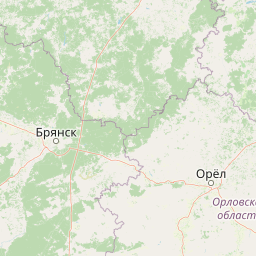
Map view of Orlovskoye Polesye National Park

Use this park location map to pinpoint Orlovskoye Polesye National Park in Russia, understand its exact geographic position, and read its mapped placement within the surrounding landscape more clearly.

Pigeon | © OpenStreetMap contributors

Location context for Orlovskoye Polesye National Park

Oryol Oblast
Park atlas

Compare regional forest reserves, river valleys, and nearby protected natural areas

Explore Parks Near Orlovskoye Polesye National Park and Surrounding Protected Landscapes

Browsing other protected areas near Orlovskoye Polesye National Park reveals connected woodland ecosystems and diverse regional terrain. Extending the search provides valuable geographic context across the broader European Russia conservation belt.
National parkOryol Oblast
Mapped park locations coincide#1 closest

Orlovskoye Polesye National Park: Protected Forest and Wetland Atlas

Geographic overview of the Central Russian Upland sanctuary

Orlovskoye Polesye National Park spans the distinctive terrain of the Central Russian Upland, where forested groves meet expansive wetlands. As a major conservation zone for the European bison, the park showcases a rare forest-marsh ecosystem within Oryol Oblast. Use this geographic record to trace the protected boundaries and understand the regional landscape context of this significant wilderness area.

Area
777.45 km²
Established
1994
IUCN
II
Relief
Lowland
Watercolor painting showing a river flowing through a valley with green fields, scattered trees, and mountain ranges in the background
National parkRussia
About 120 km away#2 closest

Northeast

Ugra National Park: Explore Russia's Protected Landscape and National Park Atlas

Mapped boundaries and regional geographic context.

Ugra National Park represents a crucial protected area within Russia, offering detailed geographic context for atlas-based exploration. This entry details the park's specific identity as a national park, highlighting its mapped boundaries and landscape character. Engage with the structured data to understand Ugra National Park's position within Russia's geography and its significance as a protected natural landscape, facilitating comprehensive map exploration.

Area
986,245 km²
Established
1997
IUCN
II
Relief
Lowland
National parkSumy Oblast
About 178 km away#3 closest

Southwest

Desna, Stara Huta National Nature Park: Key Protected Area and Regional Geographic Context in Ukraine

Explore mapped landscapes of river floodplains and boreal forests.

This page details Desna, Stara Huta National Nature Park, a significant protected area within Ukraine's Sumy Oblast. It showcases a landscape defined by the Desna River floodplain, unique wetlands, and the southernmost extension of the Bryansk Forest. Users can explore its geographic identity, protected status, and its role in the atlas of Eastern European natural regions, focusing on landscape diversity and mapped boundaries.

Area
162 km²
Established
1999
IUCN
II
Relief
Lowland
Watercolor illustration showing a winding river through a grassy field with wildflowers and distant hills under a soft sky
National parkChernihiv Oblast
About 269 km away#4 closest

Southwest

Mezyn National Nature Park: Protected Area with Paleolithic Heritage in Chernihiv Oblast

Explore ancient forests, river wetlands, and prehistoric landscapes.

Mezyn National Nature Park in Chernihiv Oblast, Ukraine, represents a significant protected area where natural landscapes meet profound archaeological discoveries. This national park encompasses diverse terrain, from the expansive Desna River floodplain dotted with oxbow lakes to ancient oak forests and rolling upland areas shaped by glacial activity. It is particularly noted for the Mezyn Paleolithic site, offering insights into Ice Age human life with remarkable artifacts and bone dwellings, making it a unique destination for atlas-driven discovery of protected lands and prehistoric geography.

Area
310 km²
Established
2004
IUCN
II
Relief
Lowland
Watercolor depiction of a river landscape with grassy plains, distant trees, and hills
National parkSumy Oblast
About 312 km away#5 closest

South

Hetman National Nature Park: National Park Geography and Protected Landscape Atlas

Mapped protected area within Sumy Oblast, Ukraine.

Explore Hetman National Nature Park, a designated national park situated in Sumy Oblast, Ukraine. This page offers a detailed look at its geographic setting, mapped boundaries, and role as a protected landscape. Understand its place within the regional geography of northeastern Ukraine and utilize MoriAtlas for structured map-based discovery of this significant natural area.

Area
234 km²
Established
2009
IUCN
II
Relief
Lowland
Watercolor illustration of a winding river, trees, and hills in the background
National parkMoscow Oblast
About 321 km away#6 closest

Northeast

Losiny Ostrov National Park: Mapping the Boundaries of a Unique Urban Wilderness

Protected forest and wetland geography in Moscow Oblast.

Spanning over 116 square kilometers, Losiny Ostrov National Park represents a significant conservation effort as Europe's largest urban national park. Its geography encompasses dense mixed forests, the Upper Yauza Swamps, and a convergence of regional watersheds, providing a rare study of wilderness persistence within a densely populated metropolitan environment.

Area
116 km²
Established
1983
IUCN
II
Relief
Lowland
National parkMoscow
About 321 km away#7 closest

Northeast

Losiny Ostrov National Park: Geography and Protected Landscapes in Moscow, Russia

Mapped forest terrain, wetland systems, and urban conservation zones.

Spanning from the Moscow city fringe into the surrounding landscape, Losiny Ostrov National Park protects a vital mixture of peat bogs, river headwaters, and dense mixed forests. This historic terrain offers a deep look at how large-scale conservation survives within a metropolitan environment, hosting free-roaming moose and diverse mammals while preserving ancient woodland corridors.

Area
128.81 km²
Established
1983
IUCN
II
Relief
Lowland
Watercolor painting of rolling hills, forests, and wildflowers in a landscape
National parkUkraine
About 344 km away#8 closest

Southwest

Ichnia National Nature Park: A Protected Landscape with Geographic Identity in Ukraine

Explore the mapped boundaries and regional natural context of this national park.

Ichnia National Nature Park represents a significant protected landscape within Ukraine, providing users with a focused entry point for geographic discovery. This page details its designation as a national park, highlighting its mapped features and regional setting. It serves as a foundational resource for understanding the park's specific landscape character and its contribution to the broader atlas of Ukraine's protected natural areas, offering detailed geographic context for further exploration.

Area
97 km²
Established
2004
IUCN
II
Relief
Lowland

Common questions about visiting, size, designation, and location context for Orlovskoye Polesye National Park

Orlovskoye Polesye National Park FAQs for park facts, access, geography, and protected area context

Find quick answers about Orlovskoye Polesye National Park, including protected-area facts, park geography, trail and visitor context, and how the park fits into its surrounding country and regional landscape.
MoriAtlas Explorer

Continue Your Protected Areas Search Across the Global Atlas

Deepen your exploration by continuing the structured search for national parks and protected areas worldwide. Utilize the comprehensive filtering capabilities to compare different conservation landscapes and refine your understanding of global park geography. Discover more about the distribution and characteristics of protected natural areas.

Global natural geography