Why Orlovskoye Polesye National Park stands out
Orlovskoye Polesye National Park is best known as one of Russia's premier European bison conservation sites. The park provides protected habitat for European bison, also known as wisent, which represent one of Europe's largest and most symbolically important wild mammals. The species was driven to near extinction in the early twentieth century, and Russia has established several breeding and reintroduction programs to restore populations. Orlovskoye Polesye serves as a key center for these conservation efforts, maintaining herd populations in a semi-natural environment within the Central Russian Upland. The park's combination of Polesye forest ecosystems with its bison conservation program makes it distinctive among Russian protected areas.
Orlovskoye Polesye National Park history and protected-area timeline
Orlovskoye Polesye National Park was established by Decree No. 6 of the Russian Government on January 9, 1994. This establishment came during a period when Russia was developing its modern system of protected areas following the dissolution of the Soviet Union. The creation of the park reflected both conservation priorities, particularly regarding European bison recovery, and the recognition of the Central Russian Upland as a region requiring specific protection. The park was created to serve multiple functions: protecting representative Polesye ecosystems, providing habitat for European bison, and enabling scientific research into forest-wetland dynamics in this part of Russia. The selection of this particular area for protection also acknowledged that Oryol Oblast contained relatively intact examples of the Central Russian landscape that had survived the extensive agricultural conversion that characterized much of the region during the Soviet period.
Orlovskoye Polesye National Park landscape and geographic character
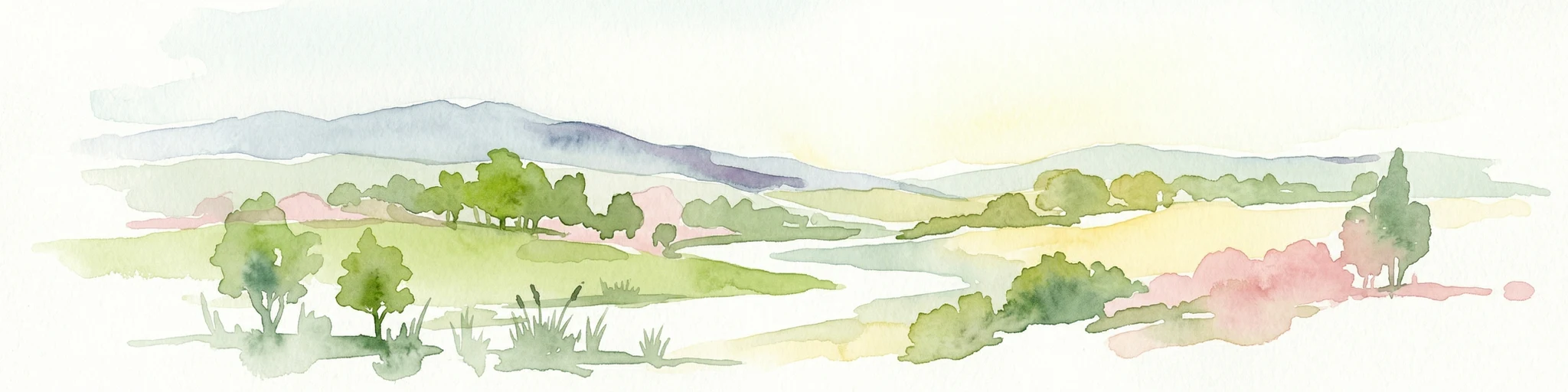
The landscape of Orlovskoye Polesye National Park reflects the characteristic terrain of the Central Russian Upland, a region of subdued topography with gentle elevations and broad valleys. The park encompasses the Polesye ecosystem type, which consists of forested areas interspersed with wetlands, marshes, and waterlogged meadows. The terrain features a mixture of deciduous forest cover, including oak, birch, and aspen groves, alongside coniferous elements where pine and spruce dominate. The park's wetlands include peat bogs, marshes, and small water bodies that collect in depressions between the gentle hills. This combination of forest and wetland creates a landscape of considerable visual and ecological diversity, with tree-lined horizons broken by open marshy clearings and the distinctive texture of peat-forming vegetation.
Orlovskoye Polesye National Park ecosystems, habitats, and plant life
The ecological character of Orlovskoye Polesye National Park is defined by its Polesye forest-wetland ecosystem, a habitat type that is representative of much of central European Russia. The park contains diverse forest communities including mixed deciduous forests, coniferous stands, and transitional woodland types. The wetland components of the park include marshes, peat bogs, and riparian zones along small watercourses that drain through the protected area. These habitats together support a range of plant and animal species adapted to the moist, forested conditions characteristic of the Polesye landscape. The ecological significance of the park lies in its relatively intact state, providing a refuge for species that have been displaced from surrounding agricultural landscapes. The combination of forest cover and wetland habitat creates conditions favorable for species requiring large, interconnected habitats.
Orlovskoye Polesye National Park wildlife and species highlights
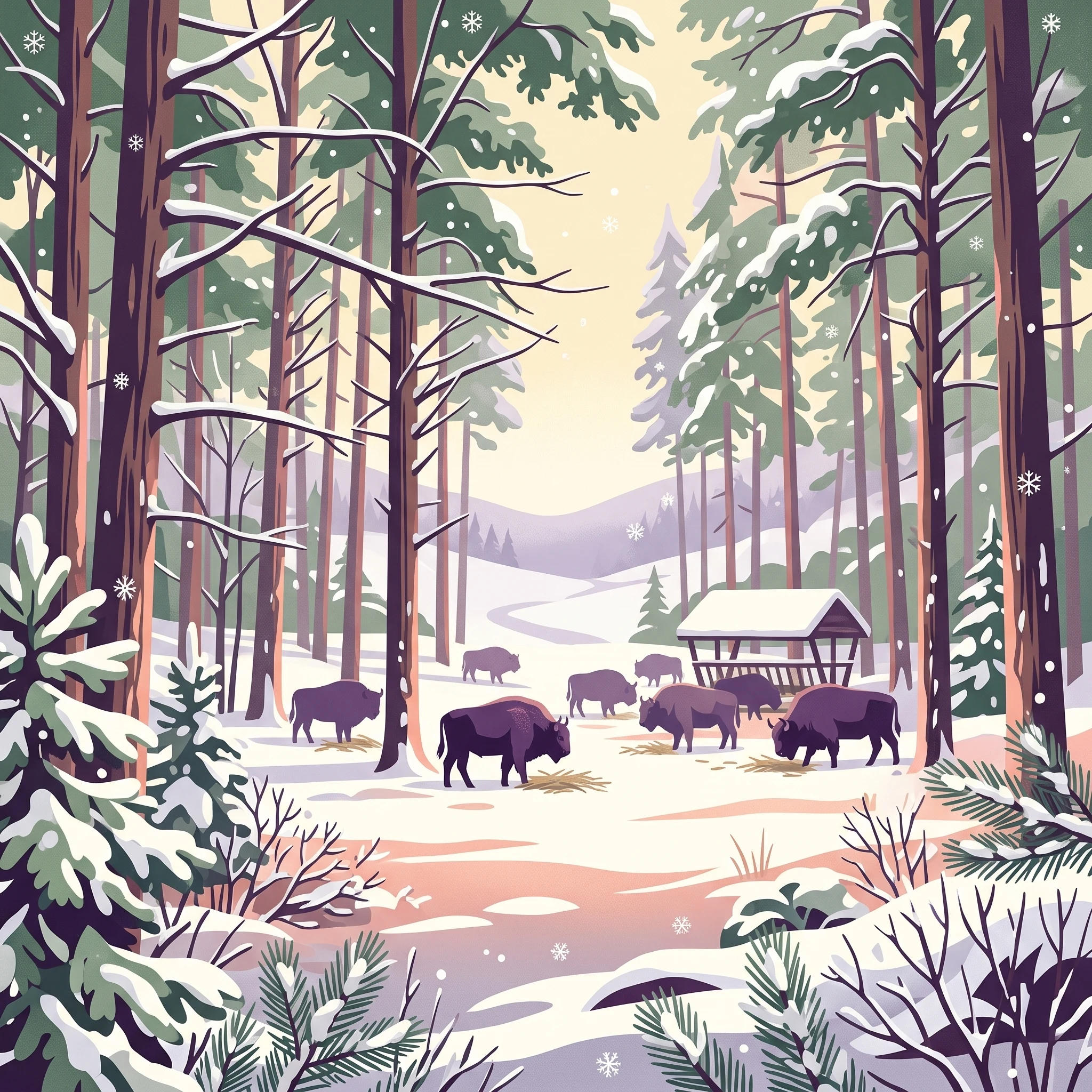
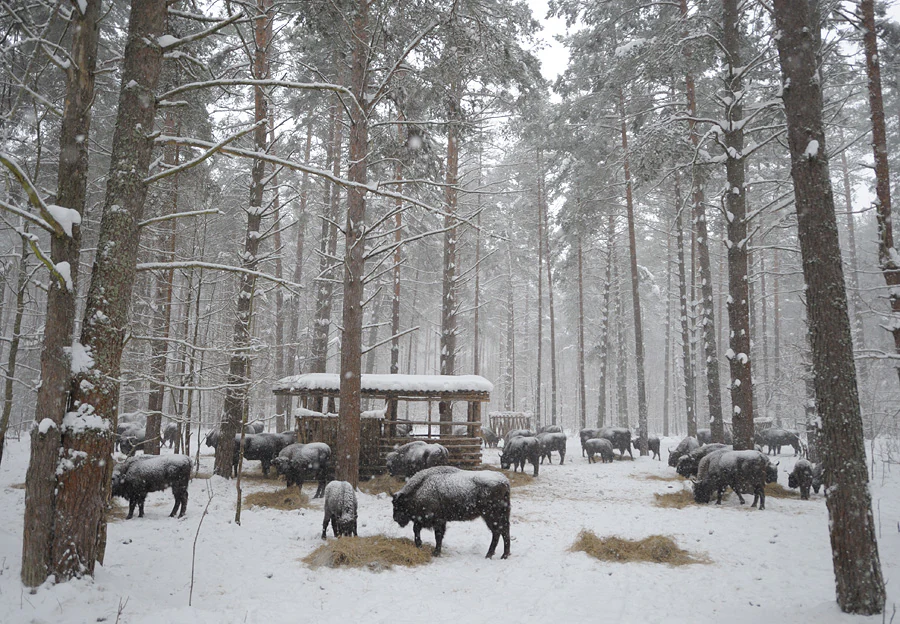
Orlovskoye Polesye National Park is distinguished by its population of European bison, which serve as the flagship species for the protected area. These large herbivores, also known as wisent, represent the largest land mammals in Europe and have been the focus of intensive conservation efforts across the continent. The park provides protected habitat where bison herds can exist in conditions approaching their natural ecological role. Beyond bison, the park's diverse forest and wetland habitats support populations of other notable species including various deer species, small mammals, and bird life associated with forest and wetland environments. The presence of European bison creates opportunities for visitors to observe these impressive animals in a natural setting, particularly during winter when the herds may concentrate in feeding areas.
Orlovskoye Polesye National Park conservation status and protection priorities
Orlovskoye Polesye National Park plays an important role in European bison conservation, contributing to the broader European network of protected areas dedicated to restoring this species. The European bison was hunted to near extinction by the early twentieth century, with the last wild populations disappearing by the 1920s. Subsequent conservation programs have focused on establishing captive breeding populations and reintroducing bison to suitable habitat across Europe. The Russian program, of which Orlovskoye Polesye forms a part, has been particularly significant in maintaining genetic diversity and establishing new populations. The park's conservation value extends beyond bison to include the protection of representative Polesye ecosystems that have become increasingly rare in the Central Russian Upland due to agricultural expansion. The protected area status helps maintain ecological processes and biodiversity in a region where natural habitats have been extensively modified.
Orlovskoye Polesye National Park cultural meaning and human context
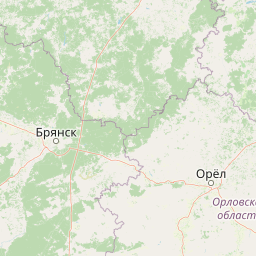
Orlovskoye Polesye National Park is located in Oryol Oblast, a region of central Russia with a rich historical heritage. The park's name reflects the local designation for the Polesye landscape, using the Russian term that has been applied to these forested wetland areas for centuries. The establishment of the protected area represents a relatively recent development in the long history of human presence in this part of Russia, where agriculture and forestry have shaped the landscape for generations. The park lies in an area that has been inhabited and used by local communities, though the core protected zones maintain natural conditions. The European bison conservation program also connects this area to broader European conservation networks and traditions of wildlife protection that have developed across the continent.
Top sights and standout views in Orlovskoye Polesye National Park
The defining highlight of Orlovskoye Polesye National Park is the opportunity to observe European bison in their natural forest environment, particularly during winter when these animals are more readily visible. The park's setting within the Central Russian Upland provides a distinctive landscape of gentle hills, forests, and wetlands that differs from the better-known Russian protected areas in mountainous or Arctic regions. The Polesye ecosystem itself represents a relatively rare habitat type that many visitors and researchers find distinctive. The park serves as an important center for understanding forest-wetland dynamics in central Russia and contributes to the broader European effort to restore viable populations of European bison to the wild.
Best time to visit Orlovskoye Polesye National Park
The park can be visited throughout the year, with each season offering a different experience of the protected area. Winter months often provide the best opportunities to observe European bison, as the animals may be fed and can be more easily spotted in the snow-covered landscape against the bare forest. Spring and summer bring lush vegetation and active wildlife activity, though animals may be more dispersed and difficult to locate. The autumn season offers fall colors and potentially good wildlife viewing as animals prepare for winter. Visitors interested in bison observation should check with park authorities regarding current feeding schedules and viewing opportunities.