Mori Atlas logo
National parkPico de Orizaba National Park

Detailed mapping of protected boundaries and regional natural terrain context.

Pico de Orizaba National Park: Mexico's Protected Landscape and Geographic Atlas Entry

Pico de Orizaba National Park stands as a key protected area within Mexico, offering rich insights for geographic discovery and atlas exploration. This national park entry provides a detailed perspective on its mapped boundaries, regional natural terrain, and its role within Mexico's extensive network of conservation landscapes. Understand the park's specific geographic identity and its mapped context within the broader atlas.

volcanic mountainhigh-altitude protected areastratovolcanoSierra Madre Orientalglaciated peakMexico highest point

Pico de Orizaba National Park

National park

Park overview

Structured park overview, official facts, and landscape profile for Pico de Orizaba National Park

Pico de Orizaba National Park park facts, protected area profile, and essential visitor context
Review the core facts for Pico de Orizaba National Park, including designation, size, terrain, visitor scale, habitats, and operating context in one park-focused overview.

About Pico de Orizaba National Park

Pico de Orizaba National Park protects one of Mexico's most significant mountainous landscapes. The park centers on Citlaltépetl, a massive stratovolcano that dominates the skyline of eastern Mexico. The mountain's symmetrical conical shape and permanent snow cap make it an iconic visual landmark visible from the Gulf of Mexico on clear days. The protected area encompasses the upper reaches of the volcano's slopes, preserving the transition between lower-elevation tropical environments and the harsh alpine zone near the summit.

Quick facts and research context for Pico de Orizaba National Park

The park covers the volcanic massif of Pico de Orizaba, Mexico's tallest mountain. The peak itself is a glaciated stratovolcano that last erupted in the 19th century. The protected area encompasses multiple ecological zones due to its extreme elevation range. The mountain holds cultural significance for indigenous peoples of the region.

Park context

Deeper park guide and search-rich context for Pico de Orizaba National Park

Pico de Orizaba National Park history, landscape, wildlife, and travel context
Explore Pico de Orizaba National Park through its history, landscape character, ecosystems, wildlife, conservation priorities, cultural context, and seasonal travel timing in a structured park guide built for atlas discovery and search intent.

Pico de Orizaba National Park landscape and geographic character

The landscape is dominated by the massive volcanic cone of Pico de Orizaba, which rises abruptly from the surrounding terrain. The mountain features steep-sided slopes that descend into deep barrancas and valleys. Glacial moraines and cirques are present in the upper reaches, evidence of past ice age glaciations. The lower slopes transition from cultivated agricultural land into natural vegetation zones as elevation increases.

Pico de Orizaba National Park ecosystems, habitats, and plant life

The park contains multiple distinct ecological zones due to its extreme elevation range. The lower elevations feature tropical and subtropical forest that transitions to pine-oak woodland at mid-elevations. Higher still, the vegetation gives way to alpine meadows and eventually to bare rock and permanent snow fields near the summit. This vertical stratification supports a remarkable variety of plant communities within a small geographic area.
Park location guide

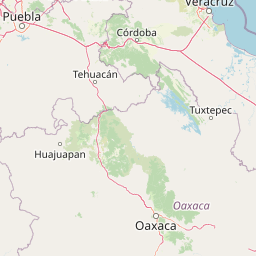
Geography guide, regional context, and park location map for Pico de Orizaba National Park

Pico de Orizaba National Park park geography, regions, and map view in Mexico
Understand where Pico de Orizaba National Park sits in Mexico through a broader geographic reading of the surrounding landscape, nearby location context, and its mapped position within the national park landscape.

How Pico de Orizaba National Park fits into Mexico

Mexico, officially the United Mexican States, is a country in North America spanning the Sierra Madre mountain ranges, coastal plains, and tropical regions. It borders the United States to the north, Guatemala and Belize to the southeast, and has coastlines along the Pacific Ocean, Gulf of Mexico, and Caribbean Sea. With a population exceeding 130 million, Mexico is home to one of the world's most significant concentrations of Indigenous languages alongside Spanish.

Wider geography shaping Pico de Orizaba National Park in Mexico

Mexico occupies a land area of 1,972,550 km2, making it the thirteenth-largest country in the world. The terrain is highly diverse, featuring the Sierra Madre Occidental and Sierra Madre Oriental mountain ranges, the Mexican Plateau, coastal lowlands along the Pacific and Gulf/Caribbean margins, and the Yucatan Peninsula. The country spans multiple climate zones from desert in the north to tropical rainforest in the south.

Common questions about visiting, size, designation, and location context for Pico de Orizaba National Park

Pico de Orizaba National Park FAQs for park facts, access, geography, and protected area context
Find quick answers about Pico de Orizaba National Park, including protected-area facts, park geography, trail and visitor context, and how the park fits into its surrounding country and regional landscape.
MoriAtlas Explorer

Continue Your Protected Areas Search Across the Global Atlas

Deepen your exploration by continuing the structured search for national parks and protected areas worldwide. Utilize the comprehensive filtering capabilities to compare different conservation landscapes and refine your understanding of global park geography. Discover more about the distribution and characteristics of protected natural areas.

Global natural geography