Why La Malinche National Park stands out
La Malinche National Park is best known for its iconic volcanic peak that serves as both a mountaineering training ground and a visually striking landmark of Central Mexico's landscape. The park protects significant conifer forest ecosystems that blanket the volcano's middle elevations, including pine forests, oyamel fir groves, and mixed pine-oak woodland. Its elevation gradient from 2,400 to over 4,400 meters creates distinct ecological zones that support substantial biodiversity, with documented species including over 920 plants and animals, of which 40 are classified as at-risk under Mexican environmental regulations. The mountain holds cultural significance as Matlalcueitl in Nahuatl mythology, and its distinctive shape is said to resemble a woman in traditional lore.
La Malinche National Park history and protected-area timeline
La Malinche National Park was established on October 6, 1938, becoming one of Mexico's pioneering national parks and the 17th park to receive this designation in the country. The creation of the park reflected growing awareness in early 20th-century Mexico of the need to protect outstanding natural landscapes and watersheds. The park's selection was influenced by the mountain's prominent geographic position, its ecological significance as a forested watershed, and its cultural importance to the region. During the subsequent decades, the park received infrastructure improvements including the development of the Centro Vacacional IMSS La Malintzi facility, which provides visitor accommodations and recreational opportunities. The park has faced ongoing conservation challenges related to logging, agriculture, and recreational use, prompting continued management efforts to maintain forest health and biodiversity.
La Malinche National Park landscape and geographic character
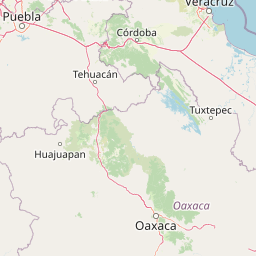
The landscape of La Malinche National Park is dominated by the imposing volcanic cone of La Malinche-Matlalcueitl, a perfectly isolated stratovolcano that rises dramatically from the surrounding Mexican highlands. The mountain reaches 4,462 meters above sea level and features a gently sloping base that becomes steeper and more technical toward the rocky summit. The volcano's upper reaches form a jagged crest with several peaks, and during winter months the highest points become snow-covered. Deep barrancas, or ravines, radiate from the summit down the mountain's flanks, carving through the forested slopes. The volcano's shape is notable for resembling a bent woman when viewed from certain angles, with the distribution of pine forests at the lower elevations appearing like a skirt in traditional descriptions. Several secondary volcanic cones surround the main peak, including Monte Cuatlapanga, El Oclayo, Cerro Xaltonalli, El Filete, and Pico Tlachichihuatzi. The park's terrain ranges from the montane slopes at around 2,400 meters elevation up to the alpine zone near the summit.
La Malinche National Park ecosystems, habitats, and plant life
The ecological diversity of La Malinche National Park reflects its substantial elevation range and position within the Trans-Mexican Volcanic Belt. The park contains multiple distinct vegetation zones that change with altitude, including pine-oak forest at lower elevations, pure pine forest in the mid-montane zone, oyamel fir forest at higher elevations, and alpine grassland at the summit. The pine forests are particularly extensive, with Pinus hartwegii dominating the high-altitude zone between approximately 3,200 and 4,000 meters. The oyamel fir forest, characterized by Abies religiosa, occupies altitudes between 2,800 and 3,200 meters. Below these conifer zones, pine-oak forest contains species including Pinus leiophylla, P. montezumae, P. pseudostrobus, P. patula, and various oak species. The summit areas above 4,000 meters feature grassland vegetation dominated by Calamagrostis and Festuca species adapted to alpine conditions. Juniperus deppeana occupies areas in the middle and lower zones, and induced grasslands have developed in cleared areas.
La Malinche National Park wildlife and species highlights
La Malinche National Park supports a diverse animal community with more than 920 documented species of plants and animals. The mammalian fauna includes more than 27 species, with notable inhabitants including the bobcat or lynx, raccoon, opossum, armadillo, and various rodent species. The park protects important populations of the Mexican gray squirrel and the volcano mouse. Avian diversity is particularly rich, with 77 documented bird species including the rufous hummingbird, the Mexican sheartail, the red warbler, and the Mexican thrush. The park supports significant reptile and amphibian populations, with five amphibian species and eleven reptile species recorded. Among the reptiles are several lizard species and snakes including the three-striped rattlesnake. Many species are endemic to the Trans-Mexican Volcanic Belt, including fifteen species of particular conservation significance. The threatened Montezuma quail, coati, and bobcat are among the species requiring protection within the park.
La Malinche National Park conservation status and protection priorities
La Malinche National Park serves important conservation functions within Central Mexico's protected area network. The park protects critical watershed areas that feed the Atoyac-Zahuapan river system, contributing to water supply for agricultural and human use in the region. The protected area preserves significant examples of Mexican highland forest ecosystems, including old-growth conifer forests that have become increasingly rare in the region. The park's biodiversity is substantial, with over 920 documented species including 40 species that fall within risk categories under Mexico's NOM-059 environmental standard. Sixteen species are endemic to the Trans-Mexican Volcanic Belt, highlighting the park's significance for regional biodiversity conservation. Management challenges include balancing visitor access with resource protection, addressing forest management issues related to historical logging and agricultural expansion, and maintaining ecological connectivity in the highland environment.
La Malinche National Park cultural meaning and human context
La Malinche volcano holds significant cultural importance in Mexican tradition, particularly in Nahuatl-speaking communities of the region. The mountain is known as Matlalcueitl in the Nahuatl language, a name that appears in the park's formal title and connects the natural landscape to indigenous heritage. The mountain's name translates to something like "the one who wears the blue skirt," reflecting traditional interpretations of the mountain's profile and the appearance of its forested slopes. The volcano has historically served as an important landmark for navigation and orientation across the Central Mexican landscape. The park lies in a region with strong indigenous cultural heritage, and the mountain's prominence has made it a symbol of regional identity for communities in both Tlaxcala and Puebla states.
Top sights and standout views in La Malinche National Park
The primary highlight of La Malinche National Park is the opportunity to climb or hike a major volcanic peak in the Trans-Mexican Volcanic Belt, reaching elevations exceeding 4,400 meters within a relatively accessible distance of Mexico City. The park offers one of the most attainable high-altitude experiences in Central Mexico, with a paved road reaching near the summit and the Centro Vacacional providing visitor facilities including cabins and camping. The ecological diversity across the park's substantial elevation range creates varied landscapes from forested slopes to alpine meadows. The mountain's distinctive profile and cultural significance as Matlalcueitl add historical depth to the outdoor experience.
Best time to visit La Malinche National Park
The best time to visit La Malinche National Park depends on visitor priorities, with the dry winter months from November through April offering clearer skies and more stable weather conditions, though nights at higher elevations can be very cold. The summer rainy season from June to September brings warmer temperatures and more vibrant vegetation but also increased cloud cover and afternoon thunderstorms. For mountaineering and summit attempts, the period from November through March typically provides the most favorable conditions, though winter snow may add technical difficulty to the upper reaches. The park can be visited year-round, but weekend crowds are common given its popularity as a near-city destination from Mexico City.