Why Rago National Park stands out
Rago National Park is best known for its transboundary significance as part of a vast Scandinavian protected-area complex spanning the Norway-Sweden border. The park protects a remote, rugged mountain landscape that exemplifies the challenging Arctic-alpine terrain of northern Norway. Its designation as part of one of Europe's largest contiguous protected areas, combined with the Sami heritage reflected in its name meaning difficult and impassable mountain region, gives the park particular significance for conservation and regional identity.
Rago National Park history and protected-area timeline
Rago National Park was formally established on 22 January 1971 as part of Norway's expanding network of protected areas during the mid-twentieth century. The park's creation reflected growing recognition of the need to preserve Norway's remaining wilderness landscapes and unique ecological communities. At the time of establishment, the national park system in Norway was being developed to protect representative examples of the country's diverse landscapes, from coastal areas to mountain regions.The park's designation also acknowledged the significance of the transboundary landscape, and subsequent planning has considered the connected protected areas on the Swedish side. Management of the park falls under the Norwegian Directorate for Nature Management, which oversees conservation implementation and policy for protected areas throughout the country. The establishment of Rago National Park contributed to Norway's commitments to international conservation efforts and helped secure protection for a distinctive mountain ecosystem that might otherwise have faced development pressures.
Rago National Park landscape and geographic character
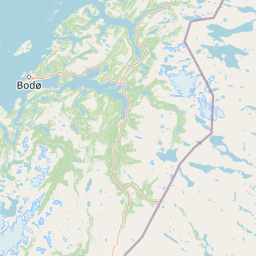
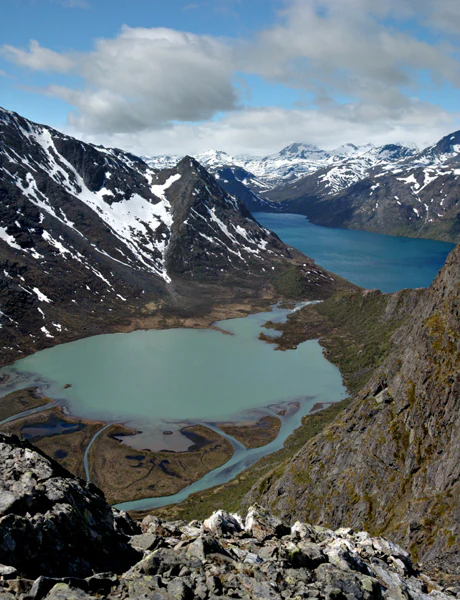
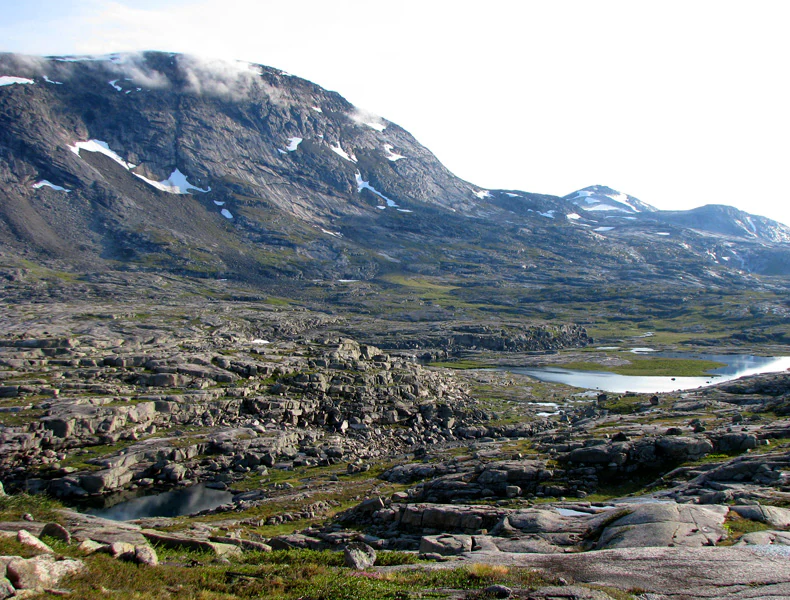
The landscape of Rago National Park is defined by its location in the mountainous interior of Nordland, a region known for its dramatic topography and extensive wilderness. The terrain consists of alpine mountains with steep-sided valleys, exposed ridges, and open plateaus typical of northern Scandinavian mountain terrain. The park's elevation range supports a transition from sub-alpine woodland in the lower valleys to alpine and nival zones on the higher ground.Lake Storskogvatnet and Lake Litlverivatnet are significant freshwater features within the park, their surfaces reflecting the surrounding mountain scenery. The southeastern portion of the park contains several glaciers, remnants of the more extensive glacial coverage that shaped this landscape during the last ice age. These ice masses continue to influence local hydrology and contribute to the character of the park's eastern sector.The overall impression is one of remote, austere beauty where exposed bedrock, thin soils, and harsh climatic conditions combine to create a challenging environment. The landscape lacks the lush vegetation found in more coastal areas of Norway, instead presenting a more sparse and elemental character that emphasizes the sense of wilderness that the park was established to protect.
Rago National Park ecosystems, habitats, and plant life
The natural environment of Rago National Park is characterized by limited species diversity due to the harsh climate, poor soils, and northern latitude. The park's vegetation consists primarily of pine-dominated woodlands in the lower elevations, with more extensive alpine vegetation occurring among the trees and in areas where soil conditions permit. The transition zone between forest and open alpine terrain supports various alpine plant species adapted to the short growing season and cold temperatures.The park does not support the rich biodiversity found in more temperate regions of Norway, but the species present are adapted to survive in these challenging conditions. The sparse woodland and open terrain create a distinctive northern landscape where the effects of climate and soil infertility are clearly visible in the vegetation patterns. This limited productivity is typical of northern mountain environments and reflects the ecological constraints that shape life in these latitudes.
Rago National Park wildlife and species highlights
Wildlife in Rago National Park reflects the northern and alpine character of the landscape. Moose are present in the park and represent one of the larger mammalian species found in this region. Semi-domesticated reindeer also occur within the park boundaries, reflecting the traditional reindeer husbandry practices of Sami communities in northern Scandinavia. The presence of wolverines indicates the park supports predatory species capable of surviving in this harsh environment.Willow grouse and golden eagles are the most frequently observed bird species in the park. The willow grouse is well adapted to the alpine and boreal environments of northern Norway, while the golden eagle occupies the open terrain and preys on the available prey species. The overall wildlife community is not diverse in terms of species numbers, but the species present are characteristic of northern Scandinavian mountain ecosystems and contribute to the park's ecological significance.
Rago National Park conservation status and protection priorities
Rago National Park contributes to conservation of northern Scandinavian mountain ecosystems as part of a transboundary protected-area complex of international significance. The park's connection to Sweden's Padjelanta National Park and the larger network of protected areas creates an ecological corridor that supports wildlife movement and maintains ecological processes across an extensive landscape. This combined protected area of approximately 5,400 square kilometers represents one of the most significant wilderness protection initiatives in Europe.The park protects a representative example of northern Norwegian mountain terrain and the ecological communities that have adapted to these challenging conditions. While biodiversity is limited compared to more temperate regions, the conservation of this landscape preserves important ecological processes and habitat for species adapted to northern conditions. The transboundary protected-area network demonstrates international cooperation in environmental protection and contributes to broader conservation goals for European mountain ecosystems.
Rago National Park cultural meaning and human context
The name Rago National Park derives from the Sami language, specifically the term Rákkok, which means difficult and impassable mountain region. This etymology reflects both the physical challenges of traversing this terrain and the historical presence of Sami communities in this area of northern Norway. The Sami people have traditionally inhabited the northern regions of Norway, Sweden, Finland, and Russia, and their cultural connection to the landscape is reflected in place names throughout the region.The use of a Sami term for the park's name acknowledges the indigenous heritage of the region and the historical relationship between local communities and these mountain lands. While the park's primary purpose is nature conservation, the retention of Sami naming preserves an important cultural dimension of the landscape's identity.
Top sights and standout views in Rago National Park
Rago National Park stands as part of one of Europe's largest transboundary protected-area complexes, spanning the Norway-Sweden border with adjacent Swedish parks to create a vast wilderness corridor of approximately 5,400 square kilometers. The park protects remote mountain terrain with glacial features, alpine lakes, and pine-dominated woodlands in a landscape that embodies the challenging character reflected in its Sami-derived name meaning difficult and impassable mountain region. The park's establishment in 1971 contributed to the preservation of representative northern Scandinavian mountain ecosystems and demonstrates successful international cooperation in conservation across national boundaries.
Best time to visit Rago National Park
The optimal season for visiting Rago National Park aligns with the Norwegian summer months of June through August, when daylight hours are longest and temperatures are most moderate for outdoor exploration. During this period, snow has melted from the lower trails and alpine zones become accessible for hiking. The park's northern latitude means summer days are extended, providing more time for activities. Winter visits are challenging due to harsh conditions, limited daylight, and snow cover that restricts access to most of the park. The shoulder seasons of spring and autumn offer transitional conditions but may present variable weather and reduced services. Visitors should prepare for the northern continental climate regardless of season, with appropriate clothing and awareness that conditions can change rapidly in mountain terrain.