
Why Stora Sjöfallet National Park stands out
Stora Sjöfallet is renowned for its dramatic Arctic mountain landscape centered on the Áhkká massif, often called the "queen of Lapland," which dominates the southern portion of the park with its thirteen peaks and ten glaciers. The park protects a remarkable range of subarctic ecosystems, from old-growth fir forests at lower elevations through mountain birch woodland to bare alpine terrain and boulder fields above the tree line. Its exceptional biodiversity includes nearly half of Sweden's mountain flora species, significant bird populations in the wetland areas, and serves as habitat for threatened species including the lesser white-fronted goose, gyrfalcon, and brown bear. The cultural landscape reflects centuries of Sami reindeer herding, with two active siida communities maintaining traditional practices within the park.
Stora Sjöfallet National Park history and protected-area timeline
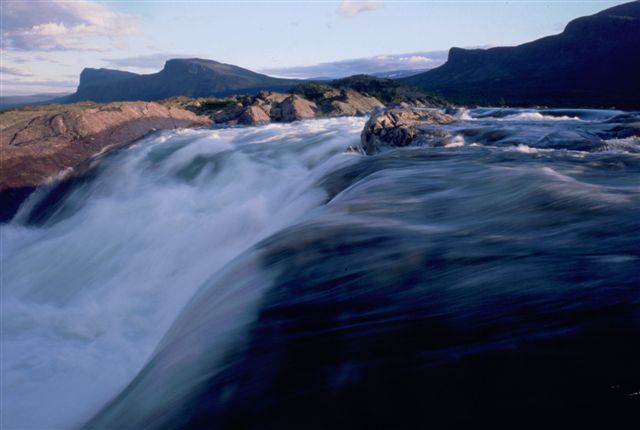
Stora Sjöfallet National Park was established in 1909, making it one of Sweden's original nine national parks and among the first protected areas in Europe. The primary motivation for protection was the spectacular Stuor Muorkkegårttje waterfall on the Lule River, which was then regarded as one of the most powerful and visually impressive cascades in Europe. The park's creation represented a pioneering effort in European conservation, part of Sweden's early 20th-century commitment to preserving its most significant natural landscapes.
However, the protection proved short-lived in practice. Shortly after designation, the Swedish government permitted hydroelectric development of the waterfall, which fundamentally transformed the character of the falls. Today, the once-magnificent cascade flows at significant volume only a few times per year, and the original waterfall area has been excised from the national park boundaries. Additional infrastructure impacts followed, including the construction of the Suorva dam, roads, gravel extraction areas, and power lines. By the 1960s, the park's national park status was actively questioned due to these extensive modifications, and the park's boundaries were already significantly reduced from their original extent beginning in 1919.
The naming of the five waterfall levels reflects the park's deep connections to Lapland's historical development. Each level bears the name of an important figure: SG Hermelin, a key industrial entrepreneur in Norrbotten's history; Lars Levi Laestadius, founder of the Laestadian religious movement; Carl Anton Petterson, who introduced Stora Sjöfallet to the Swedish public; and Henrik Adolf Widmark, a passionate advocate for Lapland's mountains.
Geologically, the mountains date to approximately 400 million years ago when continental collision eliminated the intervening sea and compressed seabed sediments into the mountain range. Evidence of the last ice age remains visible throughout the landscape in the form of terminal moraines and ice-polished rock outcrops.
Stora Sjöfallet National Park landscape and geographic character
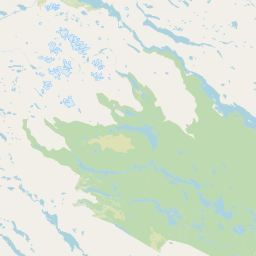
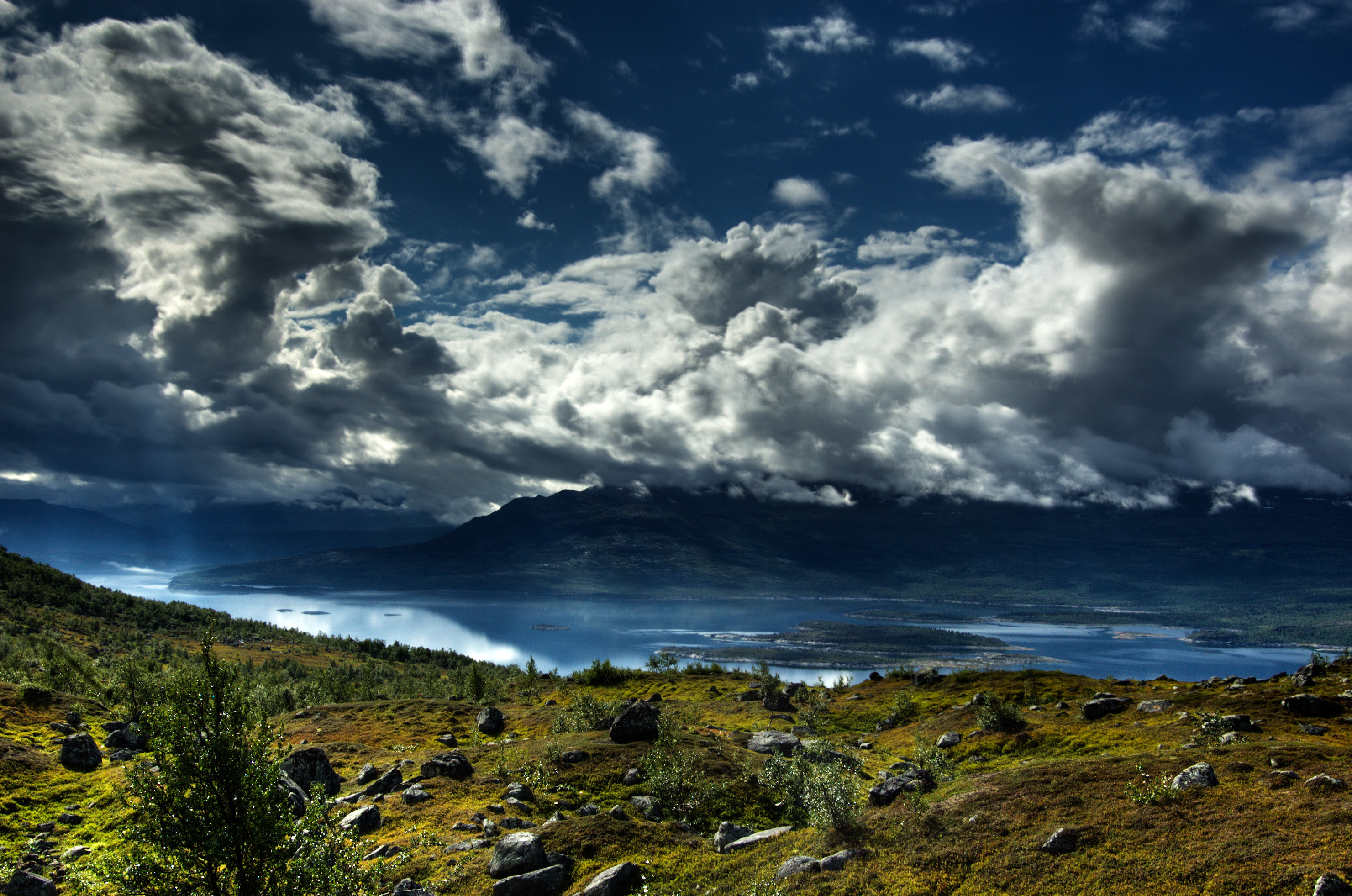
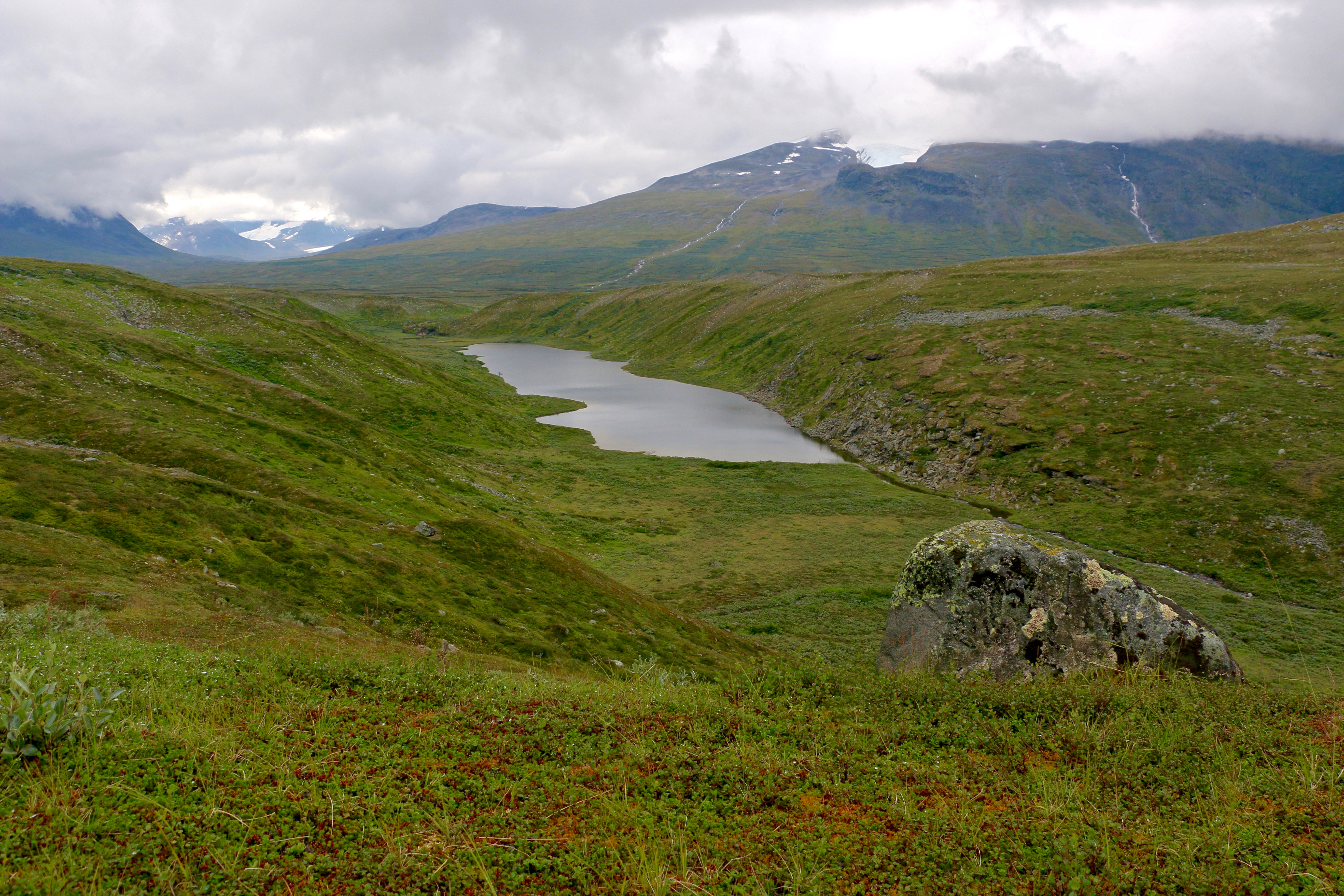
The landscape of Stora Sjöfallet National Park is defined by dramatic mountainous terrain shaped by ancient geological processes and glacial activity. The Áhkká massif dominates the southern portion of the park, rising prominently above the surrounding terrain with its thirteen peaks and ten glaciers. This mountain group, sometimes called the "queen of Lapland," is the park's most striking topographical feature and holds special cultural significance, having inspired Selma Lagerlöf's depictions in "The Wonderful Adventures of Nils."
The park's highest point reaches 2,015 meters above sea level within the Áhkká massif. The mountains exhibit classic alpine character with steep faces, sharp ridges, and glacial cirques. The Teusa-valley in the north represents another distinctive landscape element—a narrow, deep glacial valley cutting through the Kallaktjåkkå mountain range. Below the high peaks, the terrain transitions through distinct vegetation zones. The lower hills in the southern portion support forests of fir trees, while the northern areas feature the long Kallaktjåkkå ridge system.
The Akkajaure reservoir, now an artificial lake created through hydroelectric development, bisects the park and serves as its hydrological centerpiece. The lake's shorelines reflect the environmental changes caused by water regulation. Terminal moraines and polished rock outcrops from the last ice age are visible throughout the park, providing tangible evidence of glacial processes that shaped this landscape. The glaciers within the Áhkká massif are actively retreating due to global warming, losing approximately 10 meters annually—a dynamic process transforming the park's character.
Stora Sjöfallet National Park ecosystems, habitats, and plant life
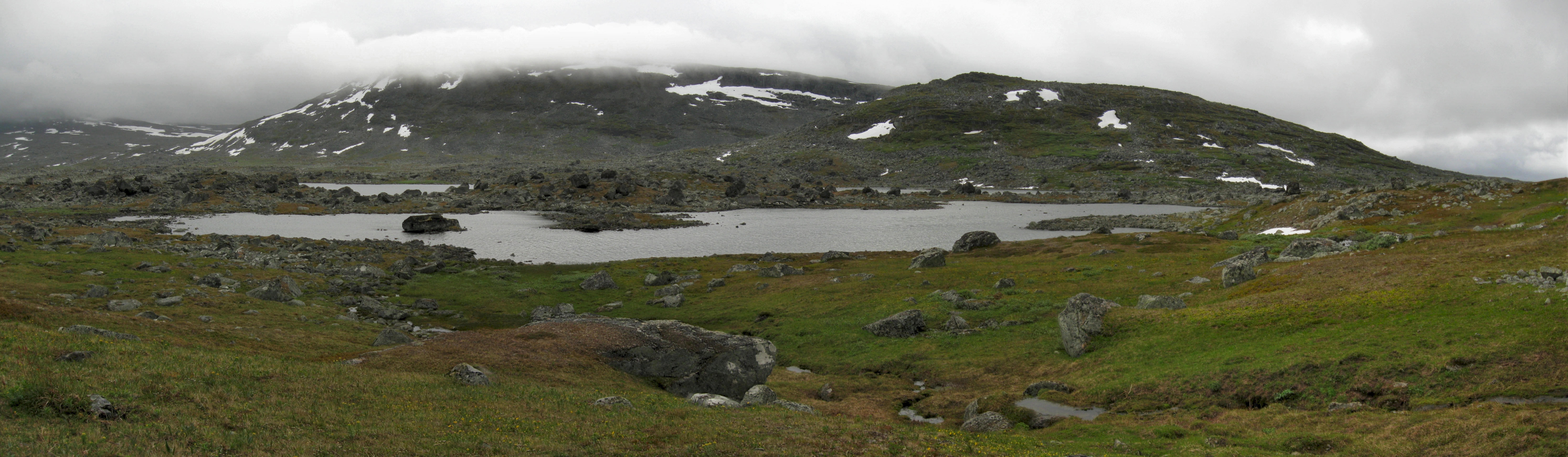
The ecological diversity of Stora Sjöfallet reflects the pronounced elevation gradients and subarctic climate that characterize this northern Swedish landscape. The park's lime-poor bedrock has shaped distinctive vegetation patterns, with extensive areas covered by dwarf birch and crowberry—the dominant plant communities across much of the subarctic. Lichens thrive throughout the park, particularly in alpine and exposed areas, contributing to the characteristic open heathland appearance.
The park's flora includes approximately 400 mountain plant species, with roughly half of these documented within Stora Sjöfallet's boundaries—a remarkable concentration that reflects the site's ecological significance. Species such as Arenaria humifusa demonstrate the park's botanical importance. Cloudberry, known as "the gold of Lapland," fruits abundantly from mid-July through late August, representing a culturally and economically significant wild harvest. The park also features unique geological elements, including "sjöfallskvartsiten" or Sjöfalls sandstone, a distinctive rock formation found only within this protected area.
The elevational range creates pronounced vegetation zonation, from old-growth forest through mountain birch woodland to alpine tundra and bare mountain. This diversity supports varied habitats, with globe-flower and aconitum flourishing in moist hollows at middle elevations, while glacial buttercup, snow bunting, and rock ptarmigan inhabit the highest terrain. The eastern boundary adjoins Sjaunja, Sweden's largest bird reserve, extending the protected habitat network.
Stora Sjöfallet National Park wildlife and species highlights
Stora Sjöfallet supports a diverse community of wildlife adapted to subarctic conditions. Approximately 125 bird species have been documented within the park, including common mountain birds such as European golden plover, meadow pipit, and northern wheatear. Wader species like Eurasian whimbrel breed in the wetlands, while raptors including eagles and rough-legged buzzards hunt across the open terrain. The long-tailed jaeger occupies coastal and wetland areas.
Rare species add special significance to the park's avifauna. With favorable conditions, visitors may observe the lesser white-fronted goose—one of Europe's most threatened goose species—the powerful gyrfalcon, or the elusive great grey owl. Sjaunja bird reserve adjoining the park's eastern boundary provides additional protected habitat for these species.
Mammal populations center on reindeer, the most commonly observed large mammal, with two Sami siida communities—Sörkaitum and Sirka—maintaining traditional reindeer husbandry within the park. Moose browse in the forested areas, while red fox, ermine, and rabbit are widespread. More elusive species present include lynx, wolverine, Arctic fox, and brown bear, reflecting the park's role as a refuge for predators in Sweden's northern wilderness. The large altitudinal range supports this diversity, with different species occupying distinct habitat zones from valley bottoms to alpine peaks.
Stora Sjöfallet National Park conservation status and protection priorities
Stora Sjöfallet National Park holds significant conservation status as part of both the Laponian Area UNESCO World Heritage Site and the European Union's Natura 2000 network. The Laponian Area recognition reflects the outstanding universal value of this landscape, where natural ecosystems and Sami cultural traditions have co-evolved over centuries. This international designation provides additional protection frameworks beyond national park status.
The park protects a remarkable concentration of Sweden's mountain biodiversity, including approximately half of the country's mountain flora species. The variety of habitats—from old-growth forest through mountain birch to alpine tundra—supports populations of threatened species including the lesser white-fronted goose, gyrfalcon, Arctic fox, and brown bear. The adjacent Sjaunja bird reserve extends the protected area network, creating a significant conservation complex.
However, the park's conservation history includes significant challenges. Hydroelectric development fundamentally altered the original waterfall that motivated protection, and the national park boundaries were reduced to accommodate infrastructure. This history has prompted ongoing debates about the park's integrity and the balance between development and preservation. The remaining glaciers, retreating at approximately 10 meters annually due to climate change, represent dynamic conservation challenges as the park's character evolves with warming conditions.
Stora Sjöfallet National Park cultural meaning and human context
Stora Sjöfallet exists within a landscape of deep Sami cultural heritage. The park's Lule Sami name—Stuor Muorkke—means "Great Portage" or, according to the Swedish source, "a land between two lakes," reflecting the traditional use of this terrain by indigenous reindeer herders. Two Sami siida communities, Sörkaitum and Sirka, maintain active reindeer husbandry within the park boundaries, continuing practices that have shaped this landscape for generations.
The naming of the waterfall's five levels after historical figures—SG Hermelin, Lars Levi Laestadius, Düben, Carl Anton Petterson, and Henrik Adolf Widmark—demonstrates how the landscape has been shaped by both indigenous and settler histories. Lars Levi Laestadius was a pivotal figure in Sami religious and cultural history, founder of Laestadianism, while others contributed to the industrial and intellectual development of northern Sweden.
The park's inclusion in the Laponian Area UNESCO World Heritage Site explicitly recognizes the intertwined nature of natural and cultural values in this Arctic landscape. The traditional Sami practice of reindeer husbandry, intimately connected to seasonal movement patterns across this terrain, represents not merely historical artifact but living cultural practice that continues to define the region's identity.
Top sights and standout views in Stora Sjöfallet National Park
Stora Sjöfallet offers exceptional Arctic wilderness experiences centered on the iconic Áhkká massif, whose thirteen peaks and ten glaciers create one of Sweden's most dramatic mountain landscapes. The Kungsleden trail provides accessible wilderness hiking through the northern sections, while the southern areas require more adventurous exploration. The park's ecological significance is extraordinary—protecting approximately half of Sweden's mountain plant species across elevational zones from old-growth forest through alpine tundra. Wildlife viewing opportunities include sightings of reindeer, moose, and potentially brown bear, Arctic fox, or wolverine for patient observers. The cultural dimension adds depth, with active Sami reindeer husbandry continuing traditional practices within the park boundaries, and the Laponian Area designation recognizing this integration of culture and nature.
Best time to visit Stora Sjöfallet National Park
Stora Sjöfallet is most accessible from March through September, when winter conditions ease and the landscape reveals its full character. Summer months (June to August) offer the warmest temperatures, extended daylight hours characteristic of Arctic locations, and the opportunity to observe cloudberry harvesting in mid-to-late summer. The brief growing season brings alpine flora into bloom, creating colorful displays across the tundra. Winter (October to February) transforms the park into a snow-covered wilderness suitable for skiing, snowmobiling, and experiencing the Arctic's stark beauty, though conditions are more challenging and facilities more limited. The shoulder seasons of spring and autumn offer fewer visitors and unique landscape qualities, though access may be more restricted.