Why Rohkunborri National Park stands out
Rohkunborri National Park is best known for its dramatic Sørdalen canyon, which cuts through the landscape as one of the park's most distinctive geological features. The park is recognized for its remarkable ecological diversity, spanning from rich deciduous forests to alpine tundra within a relatively compact area. It is particularly notable for supporting populations of large predators including brown bears, wolverines, and lynx, alongside significant Sami-managed reindeer herds. The presence of species such as snowy owl and gyrfalcon, combined with wetlands and lime-rich bedrock supporting specialized vegetation including Arctic rhododendron, gives the park exceptional conservation value within the Scandinavian mountain region.
Rohkunborri National Park history and protected-area timeline
Rohkunborri National Park was established in 2011 as part of Norway's ongoing effort to expand and strengthen its network of protected areas. The creation of the park reflected both growing scientific understanding of the ecological significance of this border region and broader political commitments to transboundary conservation between Norway and Sweden. The park was designated as an IUCN Category II protected area, recognizing its national park status and the primary goal of preserving natural ecosystems while allowing for limited compatible uses.
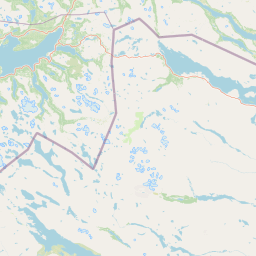
The establishment of Rohkunborri completed a contiguous protected area corridor that connects with existing Norwegian parks to the north and the Swedish Vadvetjåkka National Park to the south. This network approach reflects contemporary conservation thinking about the importance of large, connected habitats for maintaining viable populations of wide-ranging species and preserving ecological processes across broader landscapes. The park's location along an international border also necessitated coordination with Swedish authorities to ensure effective management of the shared ecological region.
Rohkunborri National Park landscape and geographic character
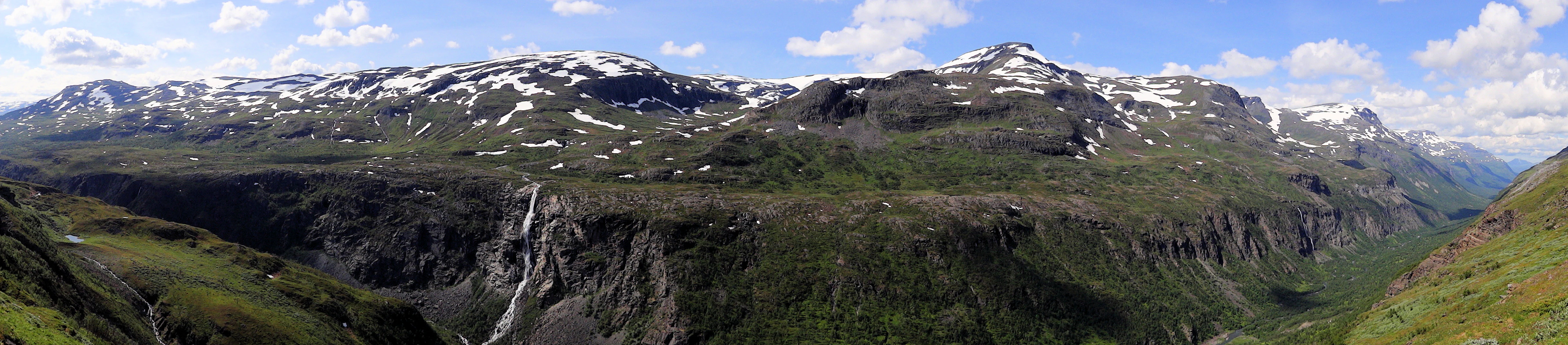
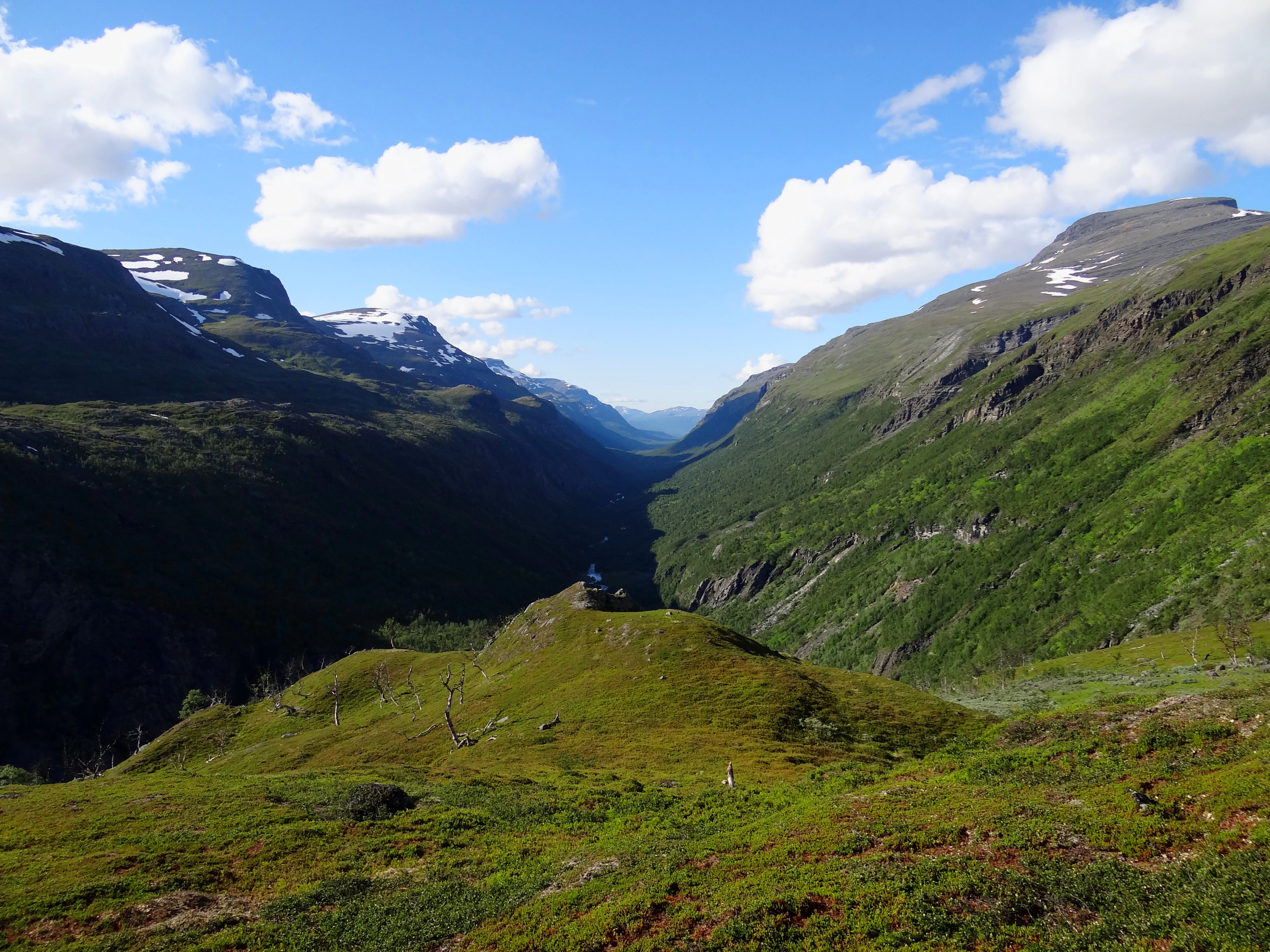
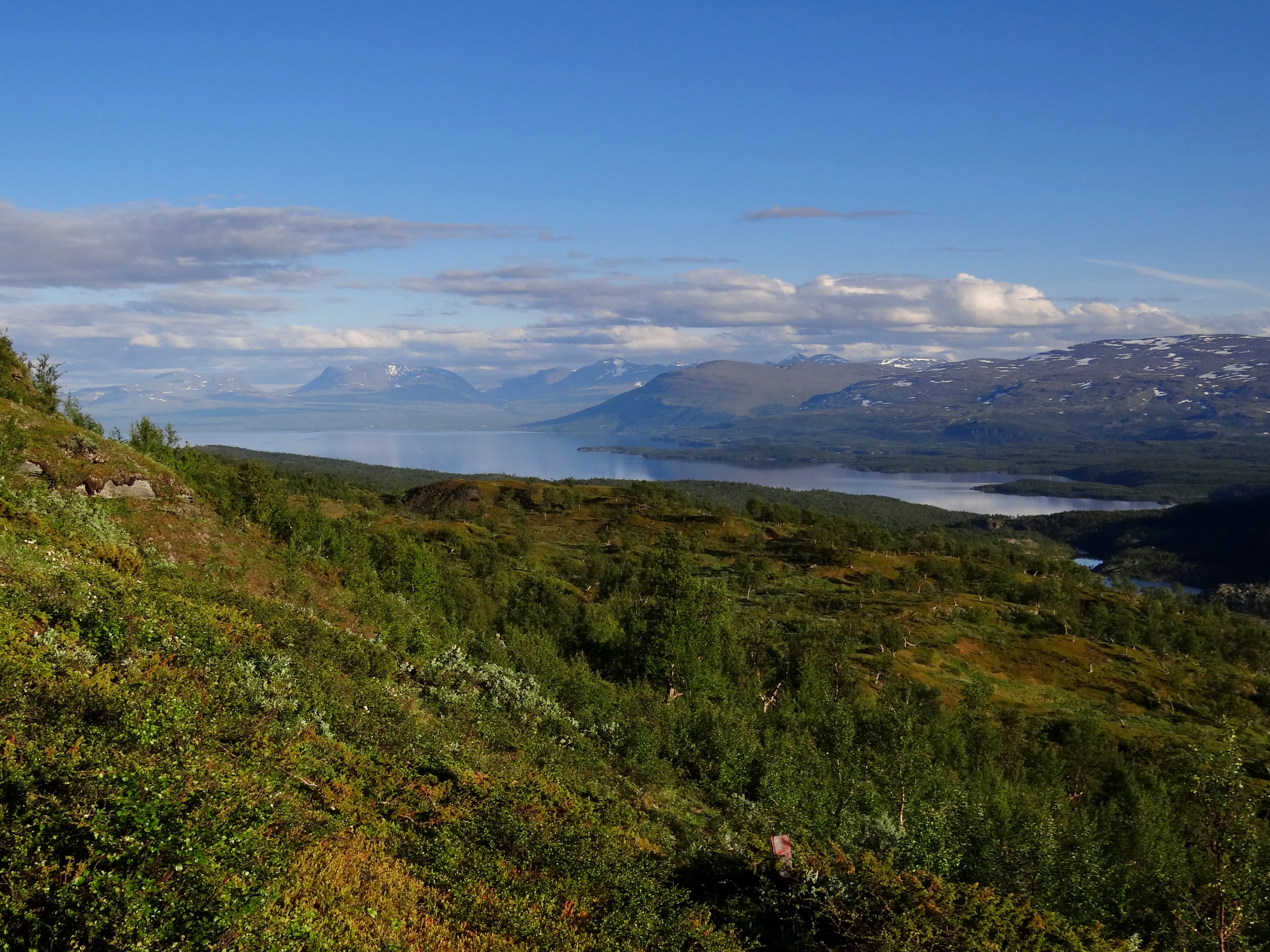
The landscape of Rohkunborri National Park is defined by its dramatic topographic diversity and the dramatic Sørdalen canyon that forms the park's central geographic feature. This deep valley cuts through the protected area, creating a natural corridor that has shaped both ecological patterns and human movement through the region. The surrounding mountain ridges rise to approximately 1,500 meters above sea level, forming a rugged backdrop that transitions from forested slopes to exposed alpine terrain. The park encompasses significant water bodies including the large lake Geavdnjajávri, while Altevatnet and Leinavatnet lie just beyond the northern boundary. The combination of canyon, mountains, lakes, and wetlands creates a landscape of considerable visual and ecological variety within a relatively compact area.
Rohkunborri National Park ecosystems, habitats, and plant life
The nature of Rohkunborri National Park is characterized by a remarkable transition from boreal to Arctic ecosystems that occurs across a relatively short elevational gradient. At lower elevations, the park supports rich boreal deciduous forests that represent the northern limit of more southerly forest types. These forests give way progressively to alpine tundra as elevation increases, with the upper areas supporting only sparse vegetation adapted to harsh conditions, thin soils, and the extreme seasonality of northern latitudes. The park's geology includes areas of lime-rich bedrock, which influences soil chemistry and supports plant communities that differ from the surrounding terrain.
Wetlands and bogs are significant features within the park, adding to habitat diversity and providing important ecological functions. The presence of Arctic rhododendron represents a botanical highlight, with this distinctive species adding to the park's ecological character. The lakes in the eastern portion of the park support Arctic char, a cold-water fish species that is characteristic of subarctic aquatic environments. This combination of terrestrial and aquatic habitats creates an ecological system of considerable complexity and conservation significance.
Rohkunborri National Park wildlife and species highlights
Rohkunborri National Park supports an impressive roster of wildlife, with particular significance attached to its populations of large carnivores. Brown bears, wolverines, and lynx all occur within the park, representing species that require extensive territories and intact habitats to maintain viable populations. The presence of these predators indicates a healthy, functioning ecosystem with sufficient prey base and habitat connectivity. The park also supports significant populations of reindeer, which are owned and managed by Sami herders using traditional practices that have shaped the northern landscape for generations.
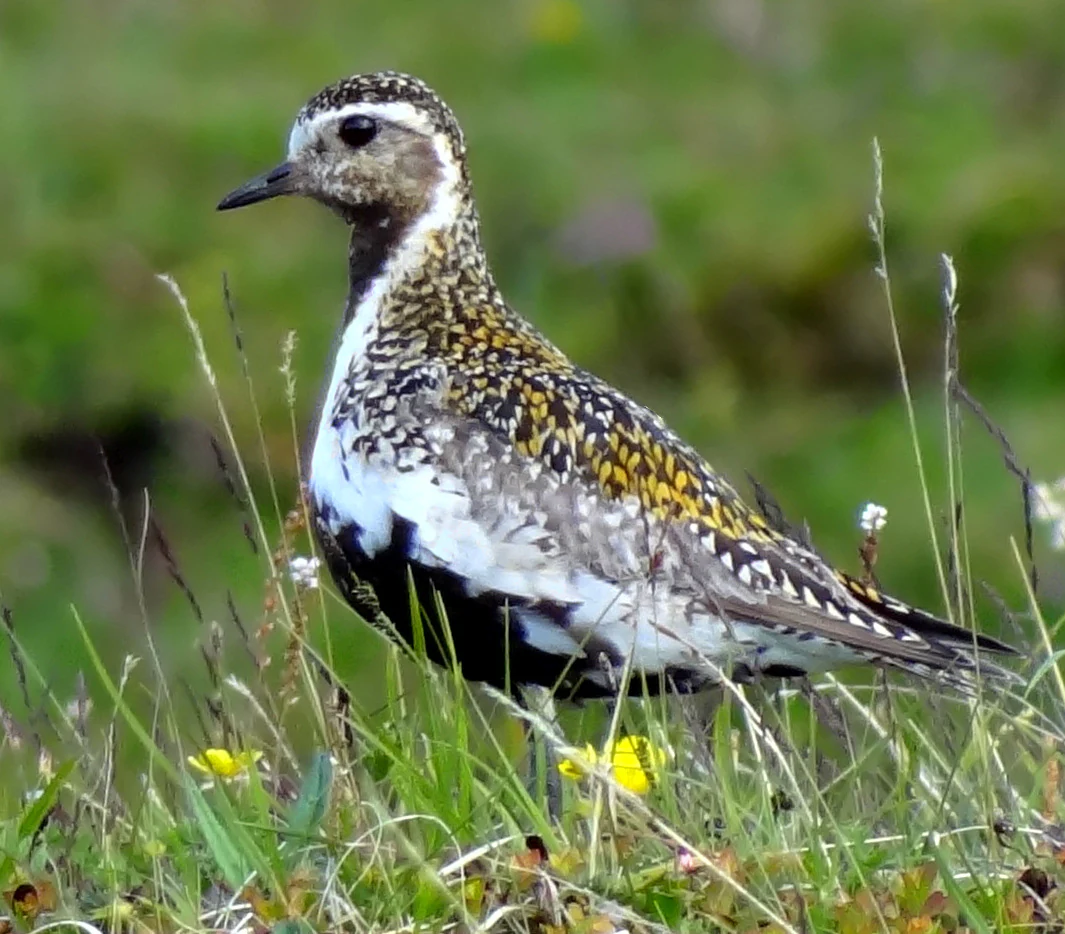
Birdlife in the park includes species that are characteristic of northern and alpine environments. The snowy owl, with its distinctive white plumage, is associated with open tundra and represents one of the more iconic species found in the park. The gyrfalcon, largest of the falcon species, also occurs here, preferring open habitats in northern regions. The golden plover, documented in the park's imagery, represents the broader community of wading birds and ground-nesting species that thrive in the park's alpine and wetland habitats.
Rohkunborri National Park conservation status and protection priorities
Rohkunborri National Park represents an important contribution to Norway's conservation network and to transboundary environmental protection in northern Europe. The park's position along the Norwegian-Swedish border connects it with protected areas on both sides of the frontier, creating a larger conservation landscape that supports ecological processes requiring extensive areas. This network approach is particularly important for wide-ranging species such as brown bears, wolverines, and lynx, which require territories that extend well beyond individual protected areas.
The diversity of habitats within the park, from boreal forest to alpine tundra, adds to its conservation value by preserving ecological gradients that might otherwise be lost to development or land-use changes. The presence of Sami-managed reindeer herds represents a traditional land-use pattern that has shaped the northern landscape over centuries, and the park's management must balance conservation objectives with recognition of these established uses. The protection of wetlands, species-rich bedrock areas, and critical wildlife habitats within the park contributes to broader biodiversity conservation in a region that faces ongoing pressures from climate change and development.
Rohkunborri National Park cultural meaning and human context
Rohkunborri National Park exists within a landscape that has been shaped by human activity, particularly through the traditional practices of the Sami people. Reindeer husbandry has been practiced in this region for centuries, and the park continues to support Sami-owned reindeer herds that represent an important cultural and economic tradition. This historical use of the landscape is reflected in the park's Northern Sami name, Rohkunborri álbmotmeahcci, which translates to indicate the park's established place within the cultural landscape of the region.
The park's location along the Norway-Sweden border also places it within a region of historical significance, where the boundaries between nations have fluctuated over time and where cross-border movement and interaction have shaped local communities. While the protected area itself is focused on preserving natural ecosystems, this cultural context adds depth to understanding the landscape and its significance beyond purely ecological considerations.
Top sights and standout views in Rohkunborri National Park
Rohkunborri National Park offers exceptional wilderness character within northern Norway, combining dramatic canyon landscapes with ecological diversity that spans from boreal forest to alpine tundra. The Sørdalen canyon provides the park's most distinctive visual feature, a dramatic valley that showcases the geological forces that have shaped this border region. Wildlife viewing opportunities for large predators including brown bears, wolverines, and lynx distinguish this park, alongside the chance to observe snowy owls and gyrfalcons in their natural habitat. The transboundary location, connecting with Swedish protected areas, creates a significant conservation corridor that supports ecological processes across an international frontier. The presence of Sami-managed reindeer herds adds cultural dimension to the natural landscape, reflecting the long history of human presence in this northern region.
Best time to visit Rohkunborri National Park
The best time to visit Rohkunborri National Park depends on the experiences sought, with different seasons offering distinct perspectives on this northern wilderness. Summer months bring extended daylight hours, relatively mild conditions for the latitude, and access to higher elevations, making this the most popular season for hiking and wildlife observation. The late summer period often offers particularly good conditions for viewing wildlife as animals become more active in preparation for winter. Winter transforms the park dramatically, with heavy snow cover, limited daylight, and harsh conditions creating a very different experience that appeals to those seeking solitude and winter wilderness. The shoulder seasons of spring and autumn offer transitional experiences, though access and conditions can be variable.