Why Møysalen National Park stands out
Møysalen National Park is especially known for its rare combination of coastal alpine terrain that descends directly to sea level, a distinctive feature among Norwegian protected areas. The dramatic scenery of sharp peaks rising from fjords creates one of the most visually striking coastal mountain landscapes in northern Norway. The park also supports exceptional bird of prey populations, including nesting white-tailed eagles, golden eagles, gyrfalcons, and peregrine falcons, making it a significant raptor conservation area in the region.
Møysalen National Park history and protected-area timeline
Møysalen National Park was established in 2003 as part of Norway's continued expansion of its national park network during the late twentieth and early twenty-first centuries. The creation of the park reflected growing recognition of the ecological and scenic value of Norway's coastal alpine landscapes, particularly those few areas that remained relatively undisturbed by development. The decision to protect this coastal mountain environment came after concerns about the potential impacts of tourism infrastructure, resource extraction, and other developmental pressures on Hinnøya's unique landscape character. The park's designation under the Norwegian Directorate for Nature Management ensured ongoing conservation oversight while allowing for sustainable public access to this Arctic Norwegian wilderness.
Møysalen National Park landscape and geographic character
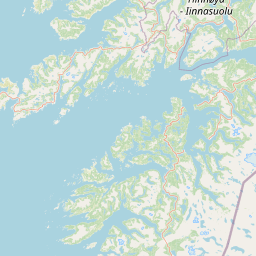
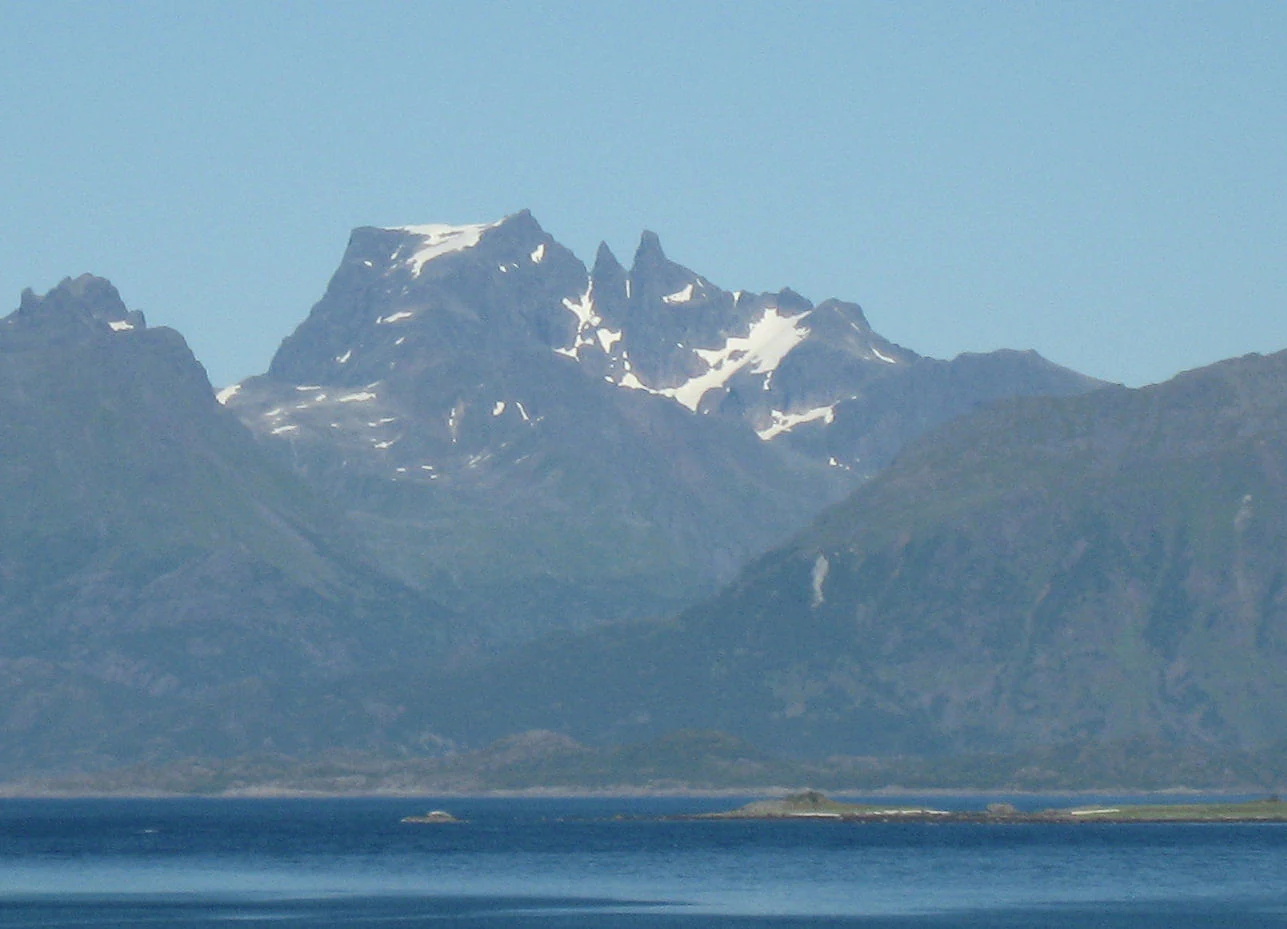
The landscape of Møysalen National Park is defined by its coastal alpine character, where steep mountain peaks rise abruptly from the ocean and deep fjords that indent the island's coastline. The highest point is Møysalen mountain at 1,262 metres, whose jagged silhouette dominates the park's visual identity and provides striking contrast against the surrounding seascape. The terrain descends through alpine zones to reach sea level at theVestpollen fjord branch, creating a near-vertical ecological gradient rarely found in protected areas. Sheltered valleys and lower slopes support birch forest, particularly downy birch, while the terrain is punctuated by numerous fens and bogs that add ecological diversity to the mountain and coastal environments. The combination of exposed peaks, steep cliffs, forested slopes, wetland areas, and protected fjords creates a mosaic of landscapes within the park's relatively compact 51-square-kilometre boundary.
Møysalen National Park ecosystems, habitats, and plant life
The nature of Møysalen National Park encompasses a remarkable diversity of habitats compressed into a coastal mountain setting. The park's altitudinal range from sea level to 1,262 metres supports distinct ecological zones, with alpine communities on exposed heights transitioning through birch woodland to coastal wetland systems at lower elevations. The birch forests represent some of the more intact woodland in this part of Nordland, while the numerous fens and bogs contribute to biodiversity and watershed function. The coastal position exposes the park to maritime influences that shape both vegetation patterns and species distributions, creating a unique blend of inland and coastal ecological characteristics.
Møysalen National Park wildlife and species highlights
Møysalen National Park supports significant populations of birds of prey, with the steep mountain terrain and rich coastal environments providing excellent hunting grounds for several raptor species. White-tailed eagles, golden eagles, gyrfalcons, and peregrine falcons are year-round residents or regular breeders within the park, representing some of Norway's most impressive avian predators. Additional breeding birds of prey include kestrels, merlins, and rough-legged buzzards, creating an especially rich raptor community. The Eurasian otter, classified as vulnerable across Norway, is common within the park's waterways and coastal areas. The Øksfjorden area represents a core habitat for moose on Hinnøya island, supporting a significant population of this large herbivore. Common mammals throughout the park include hares, red foxes, stoats, and American mink, reflecting typical Arctic Norwegian fauna.
Møysalen National Park conservation status and protection priorities
Møysalen National Park was established to preserve an undisturbed coastal alpine landscape that represents a rare ecosystem type within Norway's protected area network. The park's inclusion of sea-level ecosystems, including theVestpollen fjord branch, ensures protection of the complete ecological gradient from mountain to ocean—a feature that distinguishes this park from most other Norwegian national parks, which typically protect higher-elevation terrain. The protection of intact birch forest, wetland systems, and coastal habitats supports biodiversity across multiple ecosystem types. The park's significance for raptor conservation, particularly the presence of multiple breeding pairs of large eagles and falcons, adds important conservation value to Norway's network of protected areas.
Møysalen National Park cultural meaning and human context
Møysalen National Park is situated on Hinnøya, Norway's largest island, which has been inhabited by coastal communities for centuries. The park lies within traditional Sami territory in its broader regional context, though the immediate area around Møysalen reflects Norwegian settlement patterns in the Vesterålen archipelago. Local communities in Lødingen and Sortland municipalities maintain connections to the surrounding landscape, with fishing, small-scale agriculture, and traditional land use having shaped human interaction with this coastal environment over generations. The park's relatively recent establishment in 2003 reflects modern conservation values applied to a landscape that retains strong connections to local cultural identity.
Top sights and standout views in Møysalen National Park
The dramatic coastal alpine scenery of Møysalen, with peaks rising directly from the ocean, represents one of Norway's most visually distinctive protected landscapes. The rare opportunity to walk from alpine terrain down to sea level within a single protected area makes Møysalen unusual among Norwegian national parks. Exceptional bird of prey populations, particularly breeding white-tailed eagles and golden eagles, provide outstanding wildlife observation opportunities for visitors. The protected birch forests and wetland systems add ecological depth to what is already a scenically remarkable Arctic Norwegian landscape.
Best time to visit Møysalen National Park
The optimal time to experience Møysalen National Park runs from late spring through early autumn, when milder temperatures allow access to higher elevations and the extended daylight of Arctic summers provides long hours for exploration. Summer months bring the most accessible trail conditions and the possibility of observing wildlife, particularly birds of prey that are active during the longer days. The winter season transforms the landscape dramatically but brings challenging conditions and limited access, making it suitable only for experienced visitors prepared for Arctic conditions.