Mori Atlas logo
Nature reserveRéserve naturelle régionale de Grande-Synthe

Mapping the mosaic of sandy grasslands, wetlands, and woodland habitats near Dunkirk

Réserve naturelle régionale de Grande-Synthe: A Protected Nature Reserve in Hauts-de-France

The Réserve naturelle régionale de Grande-Synthe spans 174 hectares of restored coastal landscape within the Hauts-de-France region. This protected area features three distinct sectors including the lake-centered Puythouck, the wooded Petit-Prédembourg, and the open fallows of Grand-Prédembourg. By tracing its varied terrain, this atlas entry illustrates how former agricultural land transformed into a vital ecological corridor for migratory birds and amphibians.

regional nature reserveperi-urban nature reservesandy grasslandwetlandswoodland patcheshedgerows

Réserve naturelle régionale de Grande-Synthe

Nature reserve

Park overview

Structured park overview, official facts, and landscape profile for Grande-Synthe Regional Nature Reserve

Grande-Synthe Regional Nature Reserve park facts, protected area profile, and essential visitor context

Review the core facts for Grande-Synthe Regional Nature Reserve, including designation, size, terrain, visitor scale, habitats, and operating context in one park-focused overview.

About Grande-Synthe Regional Nature Reserve

The Grande-Synthe Regional Nature Reserve occupies a transitional zone in the northern French coastal plain, where the expanding urban area of Grande-Synthe meets the industrial complexes around Dunkirk. Despite this heavily modified peri-urban setting, the reserve protects a striking mix of habitat types that have developed from previous rural land use, including former market-gardening plots, hedgerows, fallows, and even lands shaped by mid-20th-century sand quarrying.

The reserve brings together three named sectors, the Grand-Prédembourg, the Petit-Prédembourg, and the Puythouck, each contributing a distinct ecological character. The Puythouck, designed in the 1970s, is built around a 48-hectare landscape dominated by a lake that originated from sand extraction for road construction. Petit-Prédembourg is characterized by woodland patches and traditional hedgerow networks, while the Grand-Prédembourg consists mainly of open agricultural fallows that have gradually reverted to semi-natural vegetation.

At a broader level, the reserve forms part of the trame verte et bleue, the regional green and blue ecological network, connecting with other protected natural areas in Hauts-de-France such as the Réserve naturelle nationale des étangs du Romelaëre and the Réserve naturelle nationale du Platier d'Oye. This functional connectivity gives the site a significance that extends well beyond its own boundaries, supporting wildlife movement and seasonal migration across a heavily industrialized coastal landscape.

The reserve's biodiversity profile is unusually rich for an area of this size in such an urban-industrial setting. Inventories have documented more than 300 vascular plant species, including protected and heritage taxa, and recorded significant populations across fungi, birds, amphibians, and invertebrates. The presence of rare or red-listed species across multiple biological groups underscores the ecological value that has been progressively restored through the reserve's creation and ongoing management.

Quick facts and research context for Grande-Synthe Regional Nature Reserve

The Grande-Synthe Regional Nature Reserve covers approximately 174 hectares in the Nord department of Hauts-de-France, on the outskirts of Dunkirk. It was officially designated on 10 July 2015 by a deliberation of the Regional Council, for an initial renewable period of 50 years. The reserve is the second-largest regional nature reserve in the Hauts-de-France region after the Réserve naturelle régionale du plateau des Landes. It is managed by the Conservatoire d'espaces naturels du Nord et du Pas-de-Calais, falls under IUCN management Category IV, and is registered in the World Database on Protected Areas under the code 555597281.

Protection and recognition

Documented terrestrial protection scope, management records, and official conservation designations

Protection Status and International Recognition for Réserve naturelle régionale de Grande-Synthe

Terrestrial protection status, management scope, and documented designation records for Réserve naturelle régionale de Grande-Synthe appear alongside verified international recognition sources. Structured facts outline the official conservation framework without assuming external management outcomes.

Protection details

Protection scope
Terrestrial
Transboundary protection
No
WDPA ID
555597281
Park context

Deeper park guide and search-rich context for Grande-Synthe Regional Nature Reserve

Grande-Synthe Regional Nature Reserve history, landscape, wildlife, and travel context

Explore Grande-Synthe Regional Nature Reserve through its history, landscape character, ecosystems, wildlife, conservation priorities, cultural context, and seasonal travel timing in a structured park guide built for atlas discovery and search intent.

Why Grande-Synthe Regional Nature Reserve stands out

The Grande-Synthe reserve is best known for the ecological recovery of former coastal farmland into a varied mosaic of sandy grasslands, wetlands, shrubby thickets, and woodlands on the edge of the Dunkirk urban-industrial zone. Its combination of an artificial lake, agricultural fallows, and remnant hedges creates habitat diversity that is rare in such a heavily modified lowland context. The site's integration into the regional ecological corridor and its role for migratory and nesting birds further define its identity.

Grande-Synthe Regional Nature Reserve history and protected-area timeline

The Grande-Synthe Regional Nature Reserve was officially created on 10 July 2015 by deliberation of the Regional Council of Hauts-de-France, with an initial designation period of 50 years that can be renewed. The reserve's origin lies in the slow ecological recovery of peri-urban farmland that had historically been used for market gardening, maraîchage, in the communes of Grande-Synthe and Mardyck on the outskirts of Dunkirk.

The Puythouck sector in particular reflects an earlier industrial-era intervention. During the 1970s, the area was reshaped around a lake created by sand quarrying intended to supply material for local road construction. Over the following decades, this disturbed land gradually acquired ecological complexity and was eventually folded into the broader reserve landscape. The Petit-Prédembourg and Grand-Prédembourg sectors preserve older patterns of small-scale cultivation, hedgerows, and fallow land that had acquired ecological value through abandonment and gradual rewilding.

The reserve has been managed since its creation by the Conservatoire d'espaces naturels du Nord et du Pas-de-Calais, which oversees habitat restoration, species monitoring, public outreach, and visitor reception. Its establishment represents a deliberate effort to formalize the ecological recovery of these land parcels and to anchor them within the regional ecological corridor, alongside the national nature reserves at Romelaëre and Platier d'Oye. The reserve is registered in national and international protected-area databases, including the World Database on Protected Areas and the French Inventaire national du patrimoine naturel.

Grande-Synthe Regional Nature Reserve landscape and geographic character

The Grande-Synthe reserve sits within the low-lying coastal plain of northern France, in flat to gently undulating terrain typical of the former Flemish marshes and reclaimed coastal lands around Dunkirk. The reserve's landscapes are largely a product of past human intervention and subsequent natural recolonization, giving the site a distinctive patchwork character.

The Puythouck sector centers on a 48-hectare area dominated by an artificial lake, the legacy of mid-20th-century sand extraction for road construction. Open water is surrounded by gently sloping sandy banks, colonized over time by grasses, shrubs, and scrub vegetation, creating an atmospheric mix of aquatic edge habitat and dry sandy terrain. The Petit-Prédembourg sector is more enclosed, dominated by small woodland blocks bordered by traditional hedgerows, while the Grand-Prédembourg offers a more open outlook of agricultural fallows transitioning into semi-natural vegetation.

Sandy soils, characteristic of coastal northern France, underpin several of the reserve's most distinctive habitats, notably the pelouses sableuses, or sandy grasslands, that occupy parts of the site. Where water collects in low-lying areas, wetlands and wet meadow communities have developed. The overall scenic effect is of a quiet mosaic landscape of grass, shrub, woodland, and open water, embedded between the dense urbanization of Grande-Synthe and the heavy industry that flanks it to the east.

Grande-Synthe Regional Nature Reserve ecosystems, habitats, and plant life

Ecologically, the Grande-Synthe Regional Nature Reserve functions as a small but unusually diverse refuge within a heavily modified peri-urban coastal region. Its habitats span a continuum from dry sandy grasslands through dense shrubby thickets to mature woodland patches and open wetlands, with the lake at Puythouck introducing a significant aquatic dimension. Habitat diversity is reinforced by the contrast between the long-abandoned farmland of the Grand-Prédembourg and the structurally richer semi-natural vegetation of the Petit-Prédembourg.

Inventories of the site's flora have recorded 306 vascular plant species, of which seven benefit from formal protection status and 37 are considered of heritage interest. The site also harbors 169 recorded fungal species, 13 of which appear on the national red list, with another nine recognized as heritage taxa. These figures indicate a remarkably high biological richness for a relatively compact lowland reserve emerging from a matrix of former market gardens and industrialized surroundings.

A defining function of the reserve is its role as a stepping stone within the regional trame verte et bleue. Alongside the nearby national nature reserves of the étangs du Romelaëre and the Platier d'Oye, it links wetland, dune, and coastal habitats into a continuous ecological network. The reserve's mosaic of habitats makes it valuable for species requiring multiple adjacent conditions, from breeding in dense vegetation to foraging over open water and sandy ground, which is rare in the surrounding Dunkirk coastal plain.

Grande-Synthe Regional Nature Reserve wildlife and species highlights

Wildlife is one of the principal assets of the Grande-Synthe Regional Nature Reserve, especially given its location in a strongly urbanized and industrial environment. The site is recognized for its importance to birds, both as a nesting area and as a stopover during migration. Some 66 bird species are recorded as nesting on the reserve, with nine of these appearing on the regional red list, indicating notable conservation concern.

Characteristic and regularly recorded species include the Little Egret, Common Buzzard, Western Jackdaw, Black-headed Gull, European Herring Gull, Whinchat, Common Kestrel, Sedge Warbler, European Golden Oriole, and Northern Lapwing. The mix of wetland, scrub, and grassland habitats around the lake and the fallows gives these species diverse nesting and feeding opportunities within a small area.

Amphibians include five recorded species, notably the Natterjack Toad, a species of conservation interest associated with sandy lowland environments. Invertebrate diversity is also significant, with 17 dragonfly species, 30 butterfly species, 16 moth species, and 8 orthopteran species documented, suggesting strong habitat quality across both aquatic and terrestrial environments. The Pond Bat, a wetland-associated bat species, also frequents the site, rounding out a fauna that reflects the reserve's ecological connectivity value.

Grande-Synthe Regional Nature Reserve conservation status and protection priorities

From a conservation perspective, the Grande-Synthe Regional Nature Reserve is exceptional as a case of ecological restoration within a heavily urbanized and industrialized coastal setting. Its IUCN management category, Category IV, reflects a focus on active stewardship of habitats and species rather than strict wilderness preservation. The reserve's principal conservation value lies in maintaining and enhancing a habitat mosaic that would otherwise be vulnerable to further urban encroachment or industrial expansion in the peri-urban fringe of Dunkirk.

The reserve plays a critical role in the regional ecological network, the trame verte et bleue, functioning alongside the Romelaëre pond national nature reserve and the Platier d'Oye national nature reserve to maintain ecological connectivity along the northern French coast. This connectivity is essential for migratory species, dispersal of wetland and grassland flora, and the viability of regional populations of threatened taxa. Within its own boundaries, the reserve contributes to the protection of seven legally protected plant species and a significant suite of heritage-status plants, fungi, and birds.

Management of the reserve, undertaken by the Conservatoire d'espaces naturels du Nord et du Pas-de-Calais, combines habitat restoration, ecological monitoring, and public engagement. Public reception facilities have been specifically developed as part of the reserve's mission, illustrating its role not just in biodiversity protection but also in environmental education in a heavily populated region where direct contact with functioning nature is otherwise limited.

Grande-Synthe Regional Nature Reserve cultural meaning and human context

The cultural context of the Grande-Synthe Regional Nature Reserve is rooted in the agricultural and industrial history of the Dunkirk coast. The reserve's older sectors, particularly the Grand-Prédembourg and Petit-Prédembourg, retain the imprint of small-scale market gardening, maraîchage, a traditional activity of the peri-urban fringes surrounding Dunkirk. The persistence of hedgerows and irregular field patterns reflects this rural past, even though active cultivation has largely ceased.

The Puythouck sector, by contrast, carries a more recent industrial cultural legacy. Its central lake originated from sand quarrying for road construction during the 1970s, illustrating how extractive industries in northern France have left lasting but unexpectedly positive ecological traces. The reserve's creation can be read as a regional acknowledgment that these layered land-use histories, both agricultural and industrial, can be reshaped into a shared natural and cultural heritage for a working coastal community.

Top sights and standout views in Grande-Synthe Regional Nature Reserve

The Grande-Synthe Regional Nature Reserve stands out for the way it stitches together three contrasting landscapes, the open fallows of the Grand-Prédembourg, the wooded hedgerow country of the Petit-Prédembourg, and the 48-hectare lake-centered landscape of the Puythouck, into a single coherent protected area on the edge of Dunkirk. Its position between the city and heavy industry gives its biodiversity profile particular interest, demonstrating that rich faunas, including 66 nesting bird species and multiple amphibian species, can coexist with intense human activity nearby. The reserve's role in the regional ecological corridor, its 50-year renewable designation, and the presence of legally protected plant species combine to make it a durable anchor for nature along the heavily modified northern French coast.
Monthly climate preview

Long-term temperature ranges and monthly precipitation averages for Réserve naturelle régionale de Grande-Synthe

Réserve naturelle régionale de Grande-Synthe Climate Normals and Annual Weather Patterns

Representative coordinate records show measured monthly averages ranging from cold winter minimums to warm summer maximums alongside consistent daily precipitation rates throughout the year. Reviewing the complete twelve-month climatology dataset provides deeper insight into long-term meteorological shifts across the protected landscape.
Annual mean11 °C
4 °C18 °C
Jan
Feb
Mar
Apr
May13°
Jun15°
Jul17°
Aug18°
Sep15°
Oct12°
Nov
Dec
Warmest month
August

17.7 °C

Coolest month
January

4.3 °C

Wettest month
November

2.7 mm/day

Driest month
April

1.4 mm/day

Park location guide

Geography guide, regional context, and park location map for Grande-Synthe Regional Nature Reserve

Grande-Synthe Regional Nature Reserve park geography, regions, and map view in France

Understand where Grande-Synthe Regional Nature Reserve sits in France through a broader geographic reading of the surrounding landscape, nearby location context, and its mapped position within the national park landscape.

How Grande-Synthe Regional Nature Reserve fits into France

France is a unitary semi-presidential republic and one of the world's largest economies. It borders Belgium, Luxembourg, Germany, Switzerland, Italy, Monaco, Andorra, and Spain, with a maritime border to the United Kingdom. The country is known for its cultural influence, art, cuisine, and political history spanning centuries.

Wider geography shaping Grande-Synthe Regional Nature Reserve in France

France is located in Western Europe. Metropolitan France extends from the Rhine to the Atlantic Ocean and from the Mediterranean Sea to the English Channel and North Sea. The country borders Belgium, Luxembourg, Germany, Switzerland, Italy, Monaco, Andorra, Spain, and has a maritime border with the United Kingdom.

Map view of Grande-Synthe Regional Nature Reserve

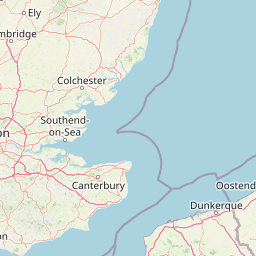
Use this park location map to pinpoint Grande-Synthe Regional Nature Reserve in France, understand its exact geographic position, and read its mapped placement within the surrounding landscape more clearly.

Pigeon | © OpenStreetMap contributors

Location context for Grande-Synthe Regional Nature Reserve

Hauts-de-France
Recorded earthquake history

Review the Earthquake History of Réserve naturelle régionale de Grande-Synthe

Access a detailed collection of recorded seismic activity within the vicinity of the reserve. This MoriAtlas catalogue organizes historical earthquake data by distance to provide clear insight into the regional seismic record and historical ground motion occurrences.

Grande-Synthe Earthquake History

Catalogued events

3 events

Strongest magnitude

Magnitude 3.1

Most recent event

Jul 2, 2001

This history includes earthquakes recorded inside the park or within 50 km of its borders

Park atlas

Compare adjacent wetland reserves and regional nature parks across northern France

Parks Near Réserve naturelle régionale de Grande-Synthe and Surrounding Protected Landscapes

Browse protected areas and ecological corridors connected to the coastal lowland habitats surrounding Réserve naturelle régionale de Grande-Synthe. Comparing nearby reserves reveals how fragmented coastal landscapes support migratory bird networks and regional biodiversity.
A horizontal watercolor painting showing a soft coastal scene with rolling dunes, sparse grasses, and a calm shoreline under a light sky.
Nature reservePas-de-Calais
12 km away#1 closest

West

Réserve naturelle nationale du Platier d'Oye: Protected Coastal Landscape and Wetland Geography

Coastal dunes and migratory bird habitats in Pas-de-Calais

Located along the Opal Coast, the Réserve naturelle nationale du Platier d'Oye represents a complex mosaic of tidal flats, mobile sand dunes, and humid polder meadows. This protected area offers unique insight into the ecological intersection of maritime forces and terrestrial environments, functioning as a primary staging ground for diverse migratory species within the Hauts-de-France coastal region.

Area
3.91 km²
Established
1987
IUCN
IV
Relief
Lowland
Watercolor painting showing layered rolling hills or dunes in shades of green, purple, and pale pink against a white background.
Nature reserveHauts-de-France
About 16 km away#2 closest

Northeast

Réserve naturelle nationale de la dune Marchand: Protected Coastal Dune Landscapes

Coastal Flemish dunes and North Sea protected geography

Located in the Hauts-de-France region, the Réserve naturelle nationale de la dune Marchand is a protected area defined by its rare continuity of dune habitats. From wind-scoured slacks to established grey dunes and wetland pockets, the reserve provides a critical study of coastal topography and endemic species preservation within an active maritime border landscape.

Area
1.13 km²
Established
1974
IUCN
IV
Relief
Lowland
A horizontal watercolor illustration depicting a soft, impressionistic landscape of wetland meadows, grassy patches, and distant trees in pastel shades of green, yellow, and soft purple.
Nature reserveHauts-de-France
About 21 km away#3 closest

Southeast

Réserve naturelle régionale du vallon de la Petite Becque: Protected Area Map and Geography

Flemish Houtland wetland conservation and regional green infrastructure

This protected area in Hauts-de-France functions as a compact, high-value laboratory for habitat restoration within the modernized Flemish countryside. It provides essential sanctuary for relict marsh flora, orchid-rich meadows, and specialized invertebrate communities, effectively acting as an ecological island amidst a vast expanse of intensively cultivated arable farmland.

Area
0.009 km²
Established
2010
IUCN
IV
Relief
Lowland
Nature reserveHauts-de-France
24 km away#4 closest

Southwest

Réserve naturelle régionale de Pont d'Ardres: Mapped Wetland Geography and Protected Lands

A restored industrial landscape in the Hauts-de-France coastal hinterland.

Situated southeast of Calais, this reserve represents a rare success in ecological restoration. The former sugar factory basins now provide vital habitats for shorebirds and nesting species, maintaining an essential wetland presence in an otherwise cultivated landscape of northern France.

Area
0.663 km²
Established
2012
IUCN
IV
Relief
Lowland
A soft watercolor painting of a green meadow, featuring gentle hills in the distance, a small stream flowing through the center, and a few scattered trees, all set against a white background.
Nature reserveHauts-de-France
About 24 km away#5 closest

South

Réserve naturelle régionale des prairies du Schoubrouck: Geography and Protected Area Overview

Wet-meadow habitats and historic watergang networks in northern France.

Located in the Hauts-de-France region, Réserve naturelle régionale des prairies du Schoubrouck provides a focused look at the cultural and ecological heritage of Flemish lowland landscapes. This site preserves an essential mosaic of wet grasslands and traditional drainage systems, serving as a key example of habitat-specific conservation stewardship within the rural fabric of the Nord department.

Area
0.102 km²
Established
2012
IUCN
IV
Nature reserveHauts-de-France
32 km away#6 closest

South

Réserve naturelle régionale du plateau des landes: Regional Nature Reserve Landscape Profile

Protected heathland geography in the Pas-de-Calais corridor.

Understand the ecological structure of the Réserve naturelle régionale du plateau des landes. This protected area features a unique crescent shape and mosaic of heathland sectors spread across several communes, offering a focused study of low-elevation inland conservation management in the heart of northern France.

Area
1.811 km²
Established
2009
IUCN
IV
A soft watercolor painting of a grassy landscape with exposed limestone rock faces and green vegetation.
Nature reserveHauts-de-France
About 39 km away#7 closest

South

Réserve naturelle régionale des anciennes carrières de Cléty: Protected Geological Landscape

Regional nature reserve in the Hauts-de-France, France

A significant geological protected area in the Pas-de-Calais, this reserve features an exposed chalk quarry face that serves as a stratigraphic record for the Cretaceous period. The landscape hosts a rare intersection of geological heritage and diverse ecosystems, including orchids, butterflies, and bat colonies, within a compact footprint.

Area
0.02 km²
Established
2011
IUCN
IV
Nature reserveHauts-de-France
About 39 km away#8 closest

Southwest

Réserve naturelle régionale de la forteresse de Mimoyecques: Regional Nature Reserve Geography

Protected subterranean habitat and wartime heritage in Hauts-de-France.

Located in the rolling lowlands of the Pas-de-Calais, the Réserve naturelle régionale de la forteresse de Mimoyecques is a uniquely managed protected area. Its landscape integrates historical military architecture with modern biodiversity conservation, focusing on the protection of rare underground roosting environments for diverse bat species within the regional Hauts-de-France terrain.

Area
0.016 km²
Established
2012
Relief
Lowland
Climate
Temperate

Common questions about visiting, size, designation, and location context for Grande-Synthe Regional Nature Reserve

Grande-Synthe Regional Nature Reserve FAQs for park facts, access, geography, and protected area context

Find quick answers about Grande-Synthe Regional Nature Reserve, including protected-area facts, park geography, trail and visitor context, and how the park fits into its surrounding country and regional landscape.
MoriAtlas Explorer

Continue Your Protected Areas Search Across the Global Atlas

Deepen your exploration by continuing the structured search for national parks and protected areas worldwide. Utilize the comprehensive filtering capabilities to compare different conservation landscapes and refine your understanding of global park geography. Discover more about the distribution and characteristics of protected natural areas.

Global natural geography