
Why Prairies du Schoubrouck Regional Nature Reserve stands out
The reserve is best known for protecting a small but representative example of the traditional wet-meadow landscapes of French Flanders, along with the historic watergang drainage network that shapes this lowland agricultural environment. Its identity is closely tied to the cultural landscape of the Hauts-de-France region rather than to spectacular scenery or charismatic megafauna. What distinguishes the site is its emphasis on conserving a rural habitat that depends on long-established farming and water management practices. The combination of managed grasslands, shallow drainage ditches, and regional conservation stewardship gives the reserve a focused ecological character centered on meadow biodiversity and cultural landscape preservation.
Prairies du Schoubrouck Regional Nature Reserve history and protected-area timeline
The reserve was formally established on 15 October 2012, following a deliberation that created its protected status under the framework of France's regional nature reserve system. Its creation reflects a regional effort to safeguard the surviving examples of Flemish wet-meadow habitat in the Nord department, an environment shaped by long-standing agricultural traditions and water management practices.
The site has been managed since its designation by the Conservatoire d'espaces naturels du Nord et du Pas-de-Calais, an institution dedicated to preserving natural spaces across the northern French departments. The reserve's relatively recent establishment reflects the broader trend in French regional conservation policy toward protecting small but ecologically meaningful cultural landscapes, rather than focusing exclusively on larger wilderness areas.
Prairies du Schoubrouck Regional Nature Reserve landscape and geographic character
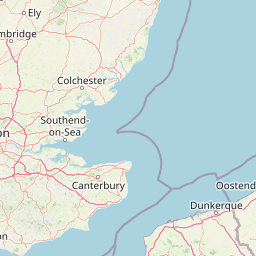
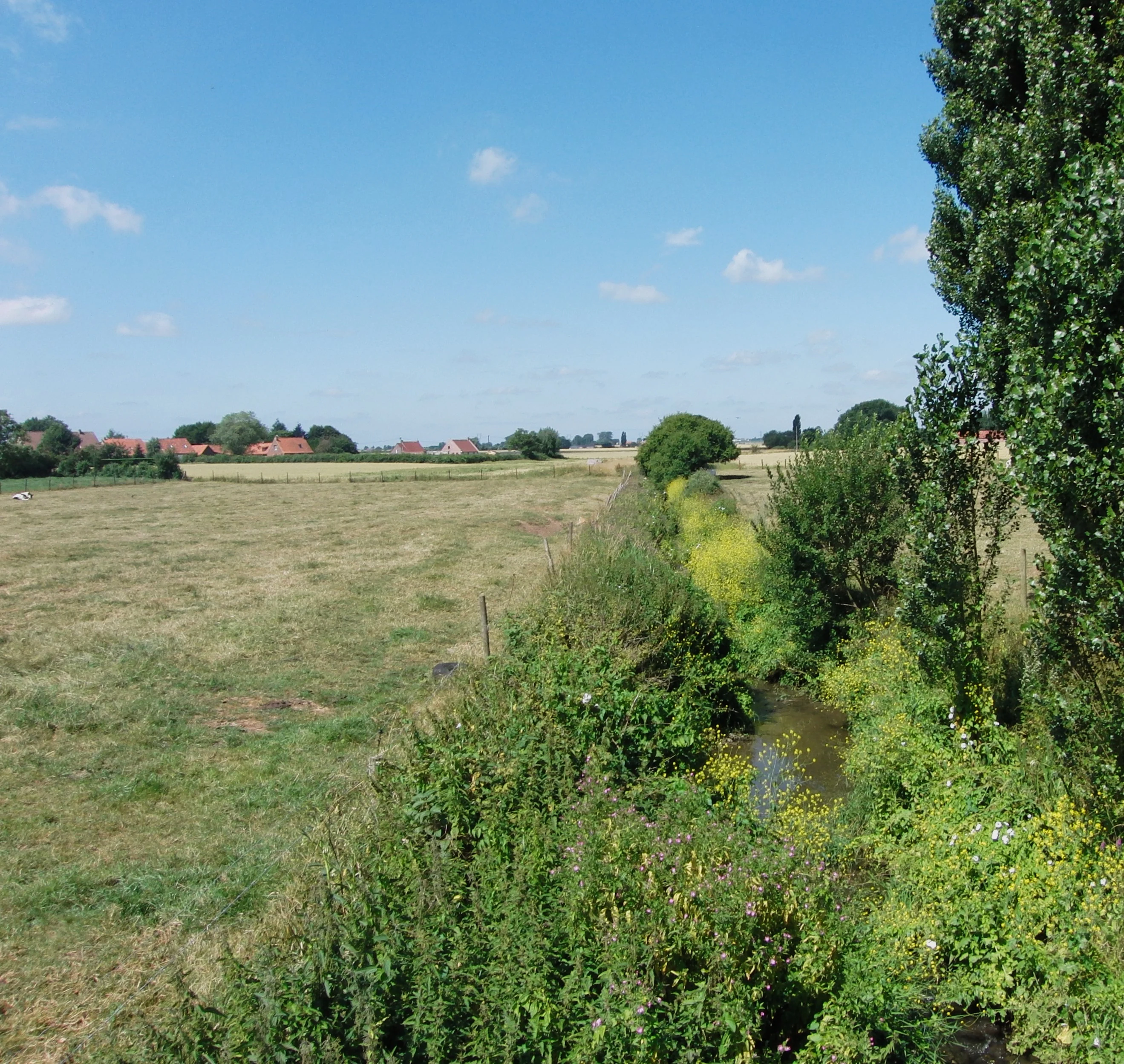
The landscape of the Prairies du Schoubrouck is characterized by the flat, low-lying terrain typical of the Flanders plain in northern France. The reserve sits within a gently graded agricultural environment, where meadows are intersected by a network of shallow drainage channels known locally as watergangs. These watergangs are an essential part of the landscape, defining field boundaries, regulating moisture levels, and supporting the wet-meadow vegetation that defines the reserve.
The visual character of the site is open and pastoral, with few trees and long sightlines across grassy fields. The combination of meadows and small waterways gives the area a distinctive mosaic texture that distinguishes it from more intensively farmed cropland, while still remaining clearly part of the broader Flemish countryside. The overall impression is of a quiet, working rural landscape shaped by centuries of human use.
Prairies du Schoubrouck Regional Nature Reserve ecosystems, habitats, and plant life
The reserve's ecological value lies primarily in its wet meadow habitat and the associated watergang network. These shallow drainage channels maintain the moisture conditions that support meadow vegetation adapted to periodically waterlogged soils, a habitat type that has become increasingly rare in the intensively farmed landscapes of the Hauts-de-France region.
By focusing protection on this combination of open grassland and shallow water features, the reserve contributes to the conservation of habitats that support a range of invertebrates, amphibians, and wetland-adapted plant species. The site's modest size limits its role, but its ecological significance is tied to the quality and continuity of the traditional management practices that maintain the meadow and water system together.
Prairies du Schoubrouck Regional Nature Reserve conservation status and protection priorities
The Prairies du Schoubrouck is classified as a regional nature reserve under IUCN Category IV, indicating that its primary conservation objective is the management of habitats and species rather than the preservation of untouched wilderness. This category reflects a focus on active stewardship of a cultural landscape shaped by long-standing agricultural and water management practices.
The reserve addresses the gradual loss of traditional wet-meadow habitats in the Nord department, where agricultural intensification has reduced the extent of these environments. By maintaining the meadows and their associated watergangs, the reserve helps preserve habitat connectivity, supports meadow-dependent biodiversity, and contributes to the broader regional network of protected sites managed by the Conservatoire d'espaces naturels du Nord et du Pas-de-Calais.
Prairies du Schoubrouck Regional Nature Reserve cultural meaning and human context
The reserve is embedded in the cultural landscape of French Flanders, an area with a long agricultural tradition shaped by Flemish land use practices. The presence of watergangs, the small drainage channels typical of the region, ties the site to centuries of engagement between local communities and the wet, low-lying terrain of the Flanders plain. The protection of the meadows thus carries both ecological and cultural significance, preserving a working rural environment rather than a purely natural one.
Top sights and standout views in Prairies du Schoubrouck Regional Nature Reserve
The reserve's standout features include its protected wet-meadow habitat, its network of traditional Flemish watergangs, and its role as a small but representative example of the rural landscapes of the Hauts-de-France region. Its modest size is offset by a focused conservation mission and a clear connection to regional land-use heritage.
Best time to visit Prairies du Schoubrouck Regional Nature Reserve
The meadows and watergangs of the reserve are most expressive during late spring and early summer, when grassland vegetation is at its peak and the water network is most visible across the landscape. Mild and dry conditions typically offer the most comfortable experience of walking across the flat, open terrain, while autumn and winter tend to emphasize the quiet, waterlogged character of the Flemish plain. As with any wet-meadow reserve, seasonal water levels and meadow growth shape the impression of the site throughout the year.