
Why Riserva Speciale del Sacro Monte di Varallo stands out
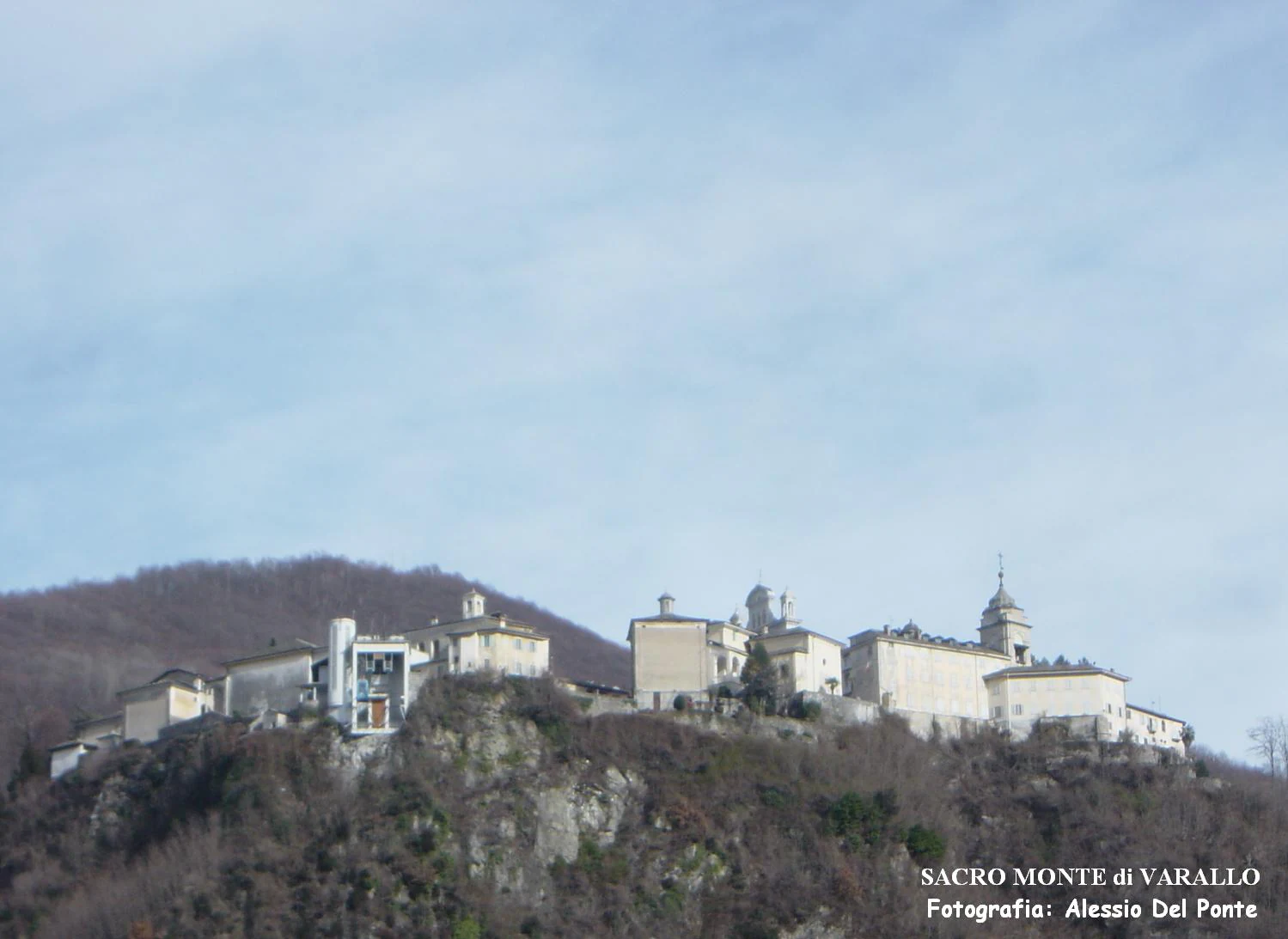
The reserve is best known as the wooded setting of the Sacro Monte di Varallo, the original model for the entire network of Sacri Monti of Piedmont and Lombardy that were later inscribed as a UNESCO World Heritage Site in 2003. Its slope is dotted with chapels containing life-sized terracotta tableaux depicting scenes from the life of Christ, paired with frescoed interiors, and integrated into a deliberately designed forest landscape. Equally distinctive is the reserve's character as a reconstructed Renaissance-style garden landscape. Following a period of partial abandonment, the woodland has been restored with attention to its floral composition, including more than four hundred catalogued plant species. The combination of sacred architecture, woodland management, and Alpine valley views defines much of what makes the reserve recognizable.
Riserva Speciale del Sacro Monte di Varallo history and protected-area timeline
The hill above Varallo was first developed as a site of religious devotion in the late fifteenth century, when the Sacro Monte complex was established under the impulse of the Franciscan friar Bernardino Caimi, who sought to recreate the Holy Places of Jerusalem in an Alpine setting. Over the following centuries, additional chapels, frescoes, and sculptural groups were added, transforming the wooded slope into a major center of Counter-Reformation religious art that inspired the later Sacri Monti of Piedmont and Lombardy.
Formal environmental protection came much later, after the area had experienced periods of partial abandonment. Initial administrative oversight was provided through Piedmontese Regional Law No. 30 of 28 April 1980, which entrusted management to the local civil administration of the Sacro Monte. Responsibility was then reassigned to the Municipality of Varallo under Regional Law No. 18 of 12 September 1985, before the reserve was finally established as a dedicated regional nature reserve under Regional Law No. 12 of 29 March 1990. The site has since been brought under the Ente di Gestione dei Sacri Monti, the public entity responsible for coordinating the Piedmontese Sacri Monti network.
A separate but closely related strand of history concerns religious administration. Under an agreement signed on 10 April 1989 between the Municipality of Varallo and the Diocese of Novara, the pastoral and religious administration of the reserve and the Sacro Monte was assigned to the Oblate Fathers. This arrangement acknowledges the deep entanglement of natural, civic, and ecclesiastical heritage that continues to shape how the reserve is managed today.
Riserva Speciale del Sacro Monte di Varallo landscape and geographic character
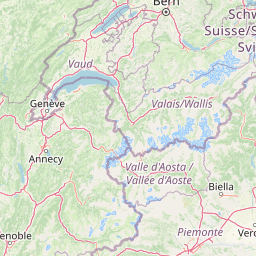
The reserve lies on the slopes of a hill rising above the town of Varallo in the lower Valsesia, on the southern side of the Alpine foothills. From the summit of the hill, broad views open over the valley of the Sesia River and the surrounding mountain ridges of northern Piedmont, giving the wooded reserve a strong sense of elevation relative to the nearby town.
The terrain is dominated by a continuous forest cover shaped to function as a contemplative wooded setting for the chapels, paths, and squares above. The hill is steep enough that the Sacro Monte itself is reached either through a winding approach road or by a funicular that climbs directly from the town. The woodland has been deliberately reconstructed to recall the garden-forest aesthetic of the Renaissance, with managed understory, controlled canopy species, and an emphasis on visual harmony between trees, paths, and built features.
The reserve is small in spatial extent but visually compact, and the sense of enclosure within the forest is one of its most striking physical characteristics. The interplay of rocky outcrops, terraced paths, chapel clearings, and wooded ridges produces a tightly woven landscape in which natural and built elements are difficult to separate visually.
Riserva Speciale del Sacro Monte di Varallo ecosystems, habitats, and plant life
Ecologically, the reserve is defined by a mixed broadleaf forest rooted in the submontane belt of the western Italian Alps. The dominant arboreal species referenced in the management documentation are European beech, along with boxwood, yew, holm oak, and field elm, giving the canopy a distinctly temperate and partially Mediterranean-montane character. The floristic interest is unusually high for such a small area, with more than four hundred plant species treated within the reserve's restoration program.
The woodland has been consciously managed to recover the appearance of a Renaissance garden-forest, in which botanical variety, ornamental effect, and spiritual ambiance are intentionally combined. This has meant that ecological composition is shaped as much by cultural heritage management as by purely natural processes, making the reserve an example of a long-maintained semi-cultural wooded landscape rather than a wild forest.
Despite its modest size and the heavy historic human shaping of the vegetation, the reserve still functions as an island of continuous forest vegetation within an otherwise strongly anthropized Alpine valley landscape, contributing to local ecological continuity and to the preservation of traditional woodland plant assemblages.
Riserva Speciale del Sacro Monte di Varallo wildlife and species highlights
The wildlife profile of the reserve is characterized primarily by typical woodland bird communities of the submontane Alpine zone. Avifauna associated with mature broadleaf forest is present in the area, although the strong anthropization of the site limits the overall significance of its bird populations when measured against more extensive protected areas.
The reserve does not present itself as a site of large mammal conservation; instead, its wildlife interest is concentrated in smaller woodland fauna and in the floristic richness of the understory. The dense forest cover, the managed variety of tree and shrub species, and the surrounding mosaic of fields, settlements, and wooded slopes provide habitat for the usual suite of small woodland birds and forest-edge species typical of the lower Valsesia.
Because the reserve is intensively managed and frequently visited, wildlife observation is generally incidental to cultural visits rather than a primary draw, though the wooded environment contributes meaningfully to maintaining local biodiversity in an otherwise heavily settled valley.
Riserva Speciale del Sacro Monte di Varallo conservation status and protection priorities
The principal conservation value of the reserve lies in the preservation of a small but culturally embedded forest landscape on the edge of the Alpine foothills. By protecting the wooded hill that surrounds the Sacro Monte, the reserve ensures that the natural setting which gave the site its historic meaning is not lost to development, abandonment, or fragmentation.
The reserve holds formal recognition at both national and international levels. Within the Italian system of protected areas it is listed with code EUAP0361, and it is recorded in the World Database on Protected Areas under WDPA ID 15276 with IUCN Category V, recognizing it primarily as a protected landscape. This category is appropriate given that the reserve's significance is rooted as much in the relationship between forest, built heritage, and surrounding valley as in any single biological metric.
Conservation management has historically combined ecological restoration with heritage protection, including the reconstruction of forest cover following periods of partial abandonment and the cataloguing of more than four hundred plant species within the woodland. The reserve is also part of the wider Piedmontese Sacri Monti network managed by the Ente di Gestione dei Sacri Monti, which extends coordinated protection and restoration efforts across multiple sites.
Riserva Speciale del Sacro Monte di Varallo cultural meaning and human context
The reserve sits at the heart of one of the most culturally distinctive religious landscapes in northern Italy. The Sacro Monte of Varallo, which the reserve was created to protect, was the prototype for the entire network of Sacri Monti that later spread across Piedmont and Lombardy and was inscribed as a UNESCO World Heritage Site in 2003. Without the forested setting preserved by the reserve, the chapels, frescoes, and pilgrimage paths would lose a substantial part of their historic character.
Local religious life remains closely tied to the site. Since 1989, the Oblate Fathers have been responsible for the religious administration of the reserve and the Sacro Monte under an agreement between the Municipality of Varallo and the Diocese of Novara. Pilgrimage, devotional practice, and the maintenance of chapel artworks continue alongside the reserve's environmental functions, making the site a contemporary example of a sacred landscape that is also a legally protected natural area.
The reserve also plays a role in regional identity for Valsesia, where the Sacro Monte above Varallo functions as both a religious landmark and a symbol of local heritage. Educational activities organized by the reserve, including ecology lessons, screenings, and school programs, link this layered cultural identity with environmental awareness for residents and visitors alike.
Top sights and standout views in Riserva Speciale del Sacro Monte di Varallo
The reserve's strongest points of distinction include the integration of a Renaissance-inspired wooded landscape with one of the most important devotional complexes in northern Italy, the unusually floristically rich woodland of more than four hundred catalogued species, and the panoramic viewpoint over the Valsesia valley from the summit of the hill.
Equally notable is the practical visitor experience, which combines forest walking with access to chapels, museum spaces, equipped outdoor areas, and educational facilities managed through the Casa d'Adda service center. The presence of a historic funicular linking Piazza Gaudenzio Ferrari in Varallo to the top of the Sacro Monte adds a distinctive cultural and infrastructural highlight uncommon among regional nature reserves.
Finally, the reserve's place within the broader Sacri Monti network, recognized under UNESCO World Heritage, elevates its significance beyond its small physical size. The site demonstrates how ecological protection, religious heritage, and civic identity can be jointly managed within a single protected landscape.
Best time to visit Riserva Speciale del Sacro Monte di Varallo
As an evergreen woodland site with a primarily cultural and contemplative focus, the reserve can be visited meaningfully across much of the year. The surrounding submontane climate of the lower Valsesia valley means that summers are generally mild and suitable for walking through the chapels and forest paths, while spring brings fresh foliage that emphasizes the garden-forest character of the restored woodland.
Autumn is typically the most visually striking season for the landscape itself, when the broadleaf canopy of beech, elm, and related species turns color and the views over the valley are at their clearest. Winters can be quiet and at times snowy on the upper slopes, which can limit easy walking but also give the hilltop chapels a strongly atmospheric quality. Visitors interested in outdoor educational programs and guided activities will generally find spring and early autumn the most comfortable periods for combining forest, view, and chapel visits.