Why Tamá National Natural Park stands out
Tamá National Natural Park is especially known for its extraordinary 820-meter waterfall, one of the highest in the world, which serves as the park's flagship natural landmark. The park is also renowned for its exceptional ecological diversity across four distinct life zones, transitioning from tropical rainforest through progressively higher Andean forest types to reach the unique páramo ecosystem. This altitudinal gradient creates remarkable biodiversity within a relatively compact area. The park protects critical habitat for the endangered northern helmeted curassow and the flame-winged parakeet, both endemic to this region of the Andes. Additionally, Tamá is notable for harboring species endemic specifically to the Páramo de Tamá, including the Tamá harlequin frog and Helena's marsupial frog.
Tamá National Natural Park history and protected-area timeline
Tamá National Natural Park was established on June 6, 1977, as part of Colombia's expanding National System of Protected Areas (SINAP). The park's creation responded to growing awareness of the ecological significance of the Tamá Massif region and the need to conserve its unique Andean ecosystems, particularly the páramo environments that serve critical hydrological functions for surrounding lowland areas. The establishment also reflected growing regional cooperation in environmental protection, as the park was conceived in conjunction with Venezuela's El Tamá National Park to form a coherent transboundary protected area. At the time of establishment, the park was designated for conservation, scientific research, and limited recreational use, reflecting a management philosophy that prioritized ecological preservation while allowing controlled public access. The park's governance falls under Colombia's National System of Protected Areas, with management responsibilities shared between national and regional authorities.
Tamá National Natural Park landscape and geographic character
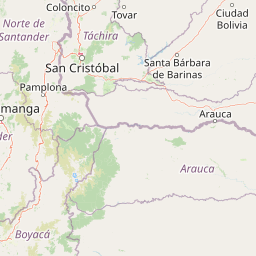
The Tamá National Natural Park encompasses the rugged terrain of the Tamá Massif, a prominent mountain formation in the Colombian Andes. The landscape is characterized by steep slopes, deep valleys, and dramatic elevation changes that create diverse microclimates and habitat conditions across the protected area. The park's terrain ranges from approximately 800 meters elevation in the lower river valleys to 3,800 meters at the highest points, with the majority of the park area positioned above 2,500 meters in the high-Andean zone. The park's most spectacular geological feature is the towering 820-meter waterfall, which drops from a cliff in the mountainous interior, ranking among the world's highest waterfalls and providing a dramatic focal point for the park's landscape. Hydrographic features include numerous rivers and streams that originate in the park's high elevations, including the Táchira River system draining toward Lake Maracaibo and the Oirá River system flowing to the Orinoco. The landscape includes areas of páramo vegetation characterized by cushion plants, grasses, and dwarf shrubs adapted to the cold, windswept conditions above the continuous forest line.
Tamá National Natural Park ecosystems, habitats, and plant life
The ecological diversity of Tamá National Natural Park is remarkable, with four distinct natural environments occurring within its boundaries: tropical rainforest in the lowest elevations, sub-Andean forest, Andean forest, and páramo at the highest levels. This altitudinal sequence represents a complete gradient of Andean ecosystems, each supporting characteristic plant communities adapted to specific elevation, temperature, and moisture conditions. The forests correspond to the Venezuelan Andes montane forests ecoregion, which extends across the border into Venezuela. The páramo ecosystem represents the park's highest and most distinctive ecological zone, characterized by specialized vegetation adapted to harsh conditions including low temperatures, high UV radiation, and seasonal water availability. Notable plant species include Weinmannia pubescens, Wettinia microcarpa, Befaria glauca, Mexican alder (Alnus jorullensis), and the endemic Espeletia uribei. At lower elevations, palm trees thrive in the tropical rainforest zone, while sphagnum moss occupies swampy areas, contributing to the park's wetland character.
Tamá National Natural Park wildlife and species highlights
The wildlife community of Tamá National Natural Park reflects the park's diverse habitats and its position in the northern Andes biodiversity hotspot. Notable mammal species include the spectacled bear, a distinctive Andean species that inhabits the higher forest and páramo zones, as well as opossums, deer, mountain lions, and anteaters. The bird fauna is particularly significant, with several species of conservation importance occurring in the park. The oilbird inhabits cave systems and forest areas, while the endangered northern helmeted curassow represents one of the park's most notable avian species. The flame-winged parakeet, endemic to this region of the Andes, adds to the park's conservation significance. The park also supports important amphibian populations, including the Tamá harlequin frog and Helena's marsupial frog, both species endemic specifically to the Páramo de Tamá. This concentration of endemic species, particularly among amphibians, underscores the park's importance for biodiversity conservation in the northern Andes.
Tamá National Natural Park conservation status and protection priorities
Tamá National Natural Park plays a critical role in conserving the biodiversity and ecosystem services of the northern Colombian Andes. The park's protection of the Tamá Massif region preserves important habitat for species with restricted ranges, including several endemic amphibians that occur nowhere else on Earth. The park's páramo ecosystems are particularly significant, as these high-altitude wetlands perform essential hydrological functions, acting as natural water reservoirs that supply downstream communities in both Colombia and Venezuela. The hydrographic network originating in the park supplies water to more than two million people in the departments of Norte de Santander, Boyacá, and Arauca in Colombia, as well as the Venezuelan states of Táchira and Apure. This water resource function gives the park immense economic and social importance beyond its ecological value. The park's designation as an IUCN Category II protected area reflects its primary objective of preserving natural ecosystems while allowing for limited sustainable use. The transboundary cooperation with Venezuela's El Tamá National Park enhances the conservation effectiveness of the broader landscape.
Tamá National Natural Park cultural meaning and human context
The Tamá National Natural Park occupies territory in the traditional lands of local communities in Norte de Santander department, particularly in the municipalities of Toledo and Herrán. The region's cultural history is linked to agricultural activities that have shaped the landscape surrounding the protected area. Water resources from the park have historically supported agricultural activities and communal water supply systems for local communities. The park's hydrographic resources continue to serve as vital water sources for municipal aqueducts serving communities in both Colombia and Venezuela. The border region has a complex history of interaction between Colombian and Venezuelan communities, and the transboundary protected area complex reflects ongoing regional cooperation in natural resource management.
Top sights and standout views in Tamá National Natural Park
Tamá National Natural Park's 820-meter waterfall stands as one of the world's highest and most impressive natural landmarks, making it the park's signature attraction. The park's complete altitudinal gradient from tropical rainforest to páramo offers visitors the opportunity to experience multiple ecosystems within a single protected area. The presence of endemic amphibian species, particularly the Tamá harlequin frog and Helena's marsupial frog, highlights the park's exceptional conservation significance for biodiversity. The transboundary protected area complex with Venezuela creates one of the largest protected mountain landscapes in the northern Andes. The critical watershed function of the park, supplying water to millions of people in both countries, demonstrates the essential ecosystem services provided by this protected area.
Best time to visit Tamá National Natural Park
The best time to visit Tamá National Natural Park depends on the visitor's interests and priorities. The park can be visited year-round, though conditions vary significantly across its altitudinal range. The páramo and high-Andean zones experience cooler temperatures year-round, while lower elevations maintain warmer conditions. The dry season typically offers more comfortable conditions for hiking and outdoor activities, though the páramo ecosystems display their characteristic beauty year-round. Visitors interested in wildlife viewing may find different species more active during different seasons. Given the park's elevation range and the diversity of environments within its boundaries, layered clothing and preparation for variable conditions are recommended regardless of when visits occur.