Why Warro National Park stands out
Warro National Park is notable for protecting rare dry rainforest communities at elevations reaching 410 metres, a habitat type that is limited in distribution across Queensland. The park also supports significant populations of bird species including the coconut lorikeet, rufous whistler, grey shrikethrush, and noisy friarbird. Additionally, the reserve contains several endangered plant species that are endemic to the area, making it botanically significant within the broader region.
Warro National Park history and protected-area timeline
Warro National Park was established in 2006 as part of Queensland's ongoing efforts to expand the protected area network and preserve regionally significant natural landscapes. The declaration of this national park followed recognition of the area's ecological value, particularly the dry rainforest communities and endangered plant species found within its boundaries. As a relatively recent addition to Queensland's national park system, the park represents contemporary conservation priorities focused on protecting lesser-known but ecologically important habitat types. The establishment also reflects the broader trend of identifying and reserving areas that contain endemic species or specialized ecosystems rather than only focusing on highly visible or famous landscapes.
Warro National Park landscape and geographic character
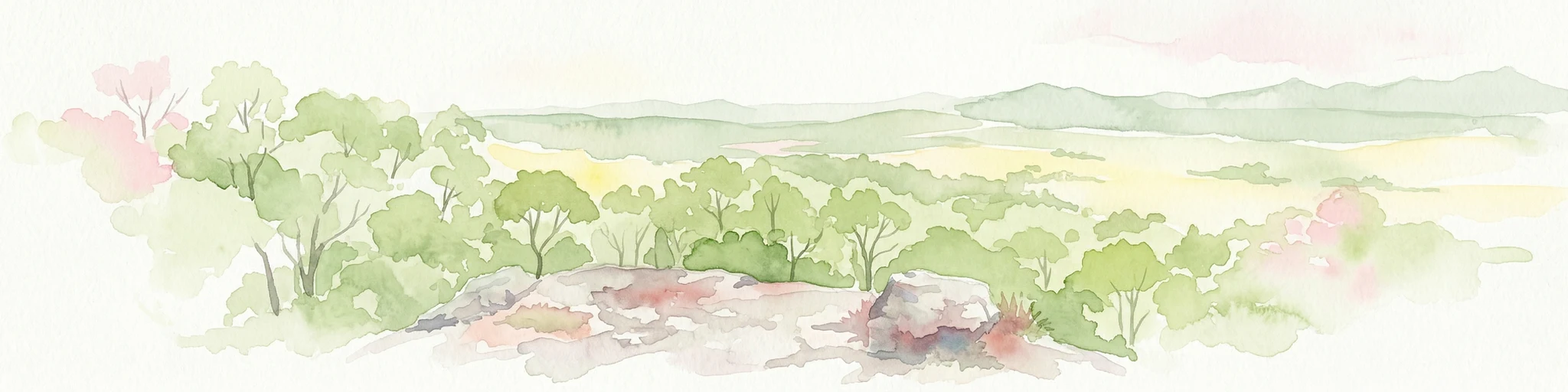
The terrain within Warro National Park is characterized by elevations reaching approximately 410 metres, creating a hilly landscape that supports diverse vegetation communities. The park's elevated positioning is significant as it provides the moisture and microclimate conditions necessary for dry rainforest persistence in what is otherwise a relatively dry region. The landscape features a mix of ridgelines and valleys that create varied exposure and moisture regimes, supporting the coexistence of rainforest and eucalyptus forest communities. While the park does not contain dramatic geological features or dramatic topographical changes, the subtle complexity of the terrain contributes to habitat diversity and ecological richness.
Warro National Park ecosystems, habitats, and plant life
Warro National Park protects significant dry rainforest communities that represent a specialized habitat type within Queensland's ecological landscape. These forests occur at higher elevations within the park and feature species adapted to the somewhat drier conditions that distinguish dry rainforests from their wetter counterparts. The eucalyptus forests that dominate other portions of the park provide a contrasting habitat structure and support different assemblages of plant and animal species. The combination of these two vegetation types within a relatively compact protected area creates ecological diversity that would be difficult to achieve in more uniform landscapes. The presence of several endangered plant species including Argophyllum nullumense, Kunzea flavescens, and Eucalyptus decolor indicates the botanical significance of this area and the importance of its protection.
Warro National Park wildlife and species highlights
The bird communities of Warro National Park are particularly well-documented, with the park supporting populations of several notable species. The coconut lorikeet, rufous whistler, grey shrikethrush, and noisy friarbird are all present within the park boundaries, representing both nectar-feeding and insectivorous bird species. These birds utilize the various habitat layers provided by the rainforest and eucalyptus forests, from the canopy where lorikeets feed on nectar to the mid-story where whistlers and shrikethrushes forage for insects. Amphibian populations are also present, with frog species from the Hylidae family and the Australian common frog group recorded in the park. The Platyplectrum ornatum species specifically inhabits the area, reflecting the moist microhabitats that exist within the forest understory.
Warro National Park conservation status and protection priorities
The conservation significance of Warro National Park stems from its protection of dry rainforest ecosystems that have limited distribution and face ongoing threats from land clearing and fragmentation. The presence of multiple endangered plant species, including Argophyllum nullumense, Kunzea flavescens, and Eucalyptus decolor, elevates the park's importance within Queensland's conservation portfolio. These species are endemic to specific localities and rely on the protected habitat within the park for their continued survival. As an IUCN Category II protected area, the national park designation provides formal recognition of the area's ecological value and establishes a framework for long-term conservation management. The park contributes to regional biodiversity conservation by connecting with other protected areas in the Wide Bay-Burnett region.
Warro National Park cultural meaning and human context
The cultural context of Warro National Park is not extensively documented in the available source material, suggesting that the primary significance of the area is ecological rather than cultural-historical. The park is situated within the traditional lands of the Wide Bay-Burnett region, though specific indigenous connections or heritage values are not detailed in the current information. The landscape surrounding the park includes Lake Monduran to the south, indicating the presence of water bodies that may have historically supported local communities.
Top sights and standout views in Warro National Park
The standout features of Warro National Park include its significant dry rainforest communities at elevations up to 410 metres, its populations of colorful bird species such as the coconut lorikeet, and its protection of rare and endangered plant species endemic to the region. The combination of dry rainforest and eucalyptus forest within a single protected area creates ecological diversity that distinguishes this park from more common protected area types. The park's proximity to Lake Monduran adds landscape context, while its location in the Wide Bay-Burnett region positions it as part of a network of conservation reserves in southeastern Queensland.
Best time to visit Warro National Park
The best time to visit Warro National Park would generally be during the cooler months of autumn and winter in Queensland, from approximately April through September, when temperatures are more moderate and outdoor exploration is comfortable. The dry rainforest and eucalyptus forest environments are accessible year-round given the relatively mild climate of southeastern Queensland, though summer months can bring hot and humid conditions. Visitors should note that the park currently lacks visitor facilities, so preparation for self-sufficient exploration is essential. Wildlife viewing opportunities, particularly for bird species, may be most productive in the early morning hours when birds are most active.