Why Western Area Peninsula National Park stands out
The park is best known for its ancient semi-deciduous forest ecosystem, which represents the westernmost remaining closed-canopy forest in Sierra Leone. It serves as a critical habitat for endangered bird species and three duiker species, earning Important Bird Area status. The Tacugama Chimpanzee Sanctuary within the park provides refuge for orphaned and rehabilitated chimpanzees, offering environmental education to over 2,000 local schoolchildren annually. The park's history as a century-old forest reserve and its recent elevation to national park status in 2012 also contribute to its distinctive profile.
Western Area Peninsula National Park history and protected-area timeline
The Western Area Peninsula National Park traces its protected status to 1916, when the area was first designated as a forest reserve with an initial extent of 17,688 hectares. The demarcation was conducted by Charles Lane Poole, who holds the distinction of being Sierra Leone's first Conservator of Forests and the founder of the Sierra Leonean Forestry Department. For nearly a century, the reserve served as a protected forest area under various management frameworks. In 2012, the Government of Sierra Leone officially proclaimed the area as a national park through Statutory Instrument, formally establishing the Western Area Peninsula National Park with boundaries defined by the WAPFoR Project. The park's application for tentative UNESCO World Heritage status was accepted by UNESCO, linking it with Tiwai Island and Gola Forest National Park as a potential transboundary heritage site. The WAPFoR Project also conducted a detailed deforestation study and subsequent re-demarcation proposal to address conservation challenges.
Western Area Peninsula National Park landscape and geographic character
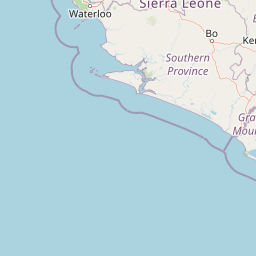
The park encompasses the westernmost extension of semi-deciduous closed canopy forest in Sierra Leone, situated on the Freetown Peninsula. The landscape is characterized by rolling terrain typical of the peninsula's geology, with the forest ecosystem forming a critical green corridor between the capital Freetown and the surrounding rural areas. The forest features a closed canopy structure with semi-deciduous tree species that lose their leaves during the dry season. The park's position on the peninsula provides it with a coastal-influenced climate that supports unique ecological communities. Despite its proximity to the urban center of Freetown, the park maintains significant forest cover that provides watershed protection and ecosystem services to the surrounding region.
Western Area Peninsula National Park ecosystems, habitats, and plant life
The park's semi-deciduous forest ecosystem supports a rich diversity of habitats and ecological communities. As the westernmost remaining closed-canopy forest in Sierra Leone, the area represents a critical refuge for forest-dependent species in West Africa. The forest supports various endangered species, with particular significance for avifauna. BirdLife International has designated the park as an Important Bird Area due to its population of numerous bird species, some of which are considered endangered. The forest also provides habitat for three species of duiker, small antelope species that inhabit the understory and forest edges. The ecosystem faces pressures from deforestation primarily driven by urban expansion from Freetown and agricultural activities, a challenge that was exacerbated during the Sierra Leone civil war. The WAPFoR Project has undertaken detailed studies to understand deforestation patterns and propose conservation interventions.
Western Area Peninsula National Park wildlife and species highlights
The park supports significant wildlife populations, with particular importance for endangered bird species and forest mammals. The Important Bird Area designation reflects the presence of numerous bird species that depend on the forest habitat, including several species of conservation concern. Three species of duiker inhabit the forest, using the dense understory and forest clearings. The Tacugama Chimpanzee Sanctuary, located within the park boundary, provides refuge for orphaned and abandoned common chimpanzees. Founded in 1995, the sanctuary has cared for chimpanzees that were kept as pets or mistreated, offering rehabilitation and permanent care. The sanctuary also conducts educational programs, with more than 2,000 local rural school children visiting annually. While the sanctuary provides ex-situ conservation for chimpanzees, the forest itself supports populations of various other mammals that depend on the intact forest ecosystem.
Western Area Peninsula National Park conservation status and protection priorities
Western Area Peninsula National Park represents a critical conservation priority in Sierra Leone due to its role as the westernmost remaining semi-deciduous forest in the country. The Important Bird Area designation by BirdLife International highlights its international significance for avian biodiversity. The park's inclusion as a tentative UNESCO World Heritage site reflects its outstanding universal value. However, the protected area faces significant conservation challenges, including ongoing deforestation driven primarily by urban encroachment from the expanding capital Freetown and agricultural activities. The Sierra Leone civil war further exacerbated these pressures. The WAPFoR Project has conducted detailed deforestation studies and proposed re-demarcation to strengthen protection. Conservation efforts focus on preserving the forest ecosystem, protecting endangered species populations, and managing the relationship between the park and surrounding communities.
Western Area Peninsula National Park cultural meaning and human context
The park holds cultural significance for local communities on the Freetown Peninsula, particularly through the educational outreach conducted by the Tacugama Chimpanzee Sanctuary. The sanctuary has engaged with over 2,000 local rural school children annually, fostering environmental awareness and promoting chimpanzee conservation. The park's history as a forest reserve since 1916 reflects a long tradition of forest management in Sierra Leone, established during the colonial period under Charles Lane Poole. The surrounding communities have historical connections to the peninsula landscape, with the forest providing ecosystem services including watershed protection and non-timber forest products. The proximity of the park to Freetown creates a unique dynamic where urban populations have access to a significant natural area, presenting both opportunities for environmental education and challenges related to human pressure on the ecosystem.
Top sights and standout views in Western Area Peninsula National Park
The park's defining highlight is its status as Sierra Leone's westernmost remaining semi-deciduous closed canopy forest, a rare ecosystem in West Africa. The Important Bird Area designation underscores exceptional avian diversity. The presence of three duiker species and numerous endangered birds reflects the forest's ecological significance. The Tacugama Chimpanzee Sanctuary provides a tangible conservation success story, having rescued and rehabilitated numerous chimpanzees since 1995. The park's century-long protection history dating to 1916, combined with its 2012 elevation to national park status, demonstrates enduring conservation commitment. The tentative UNESCO World Heritage listing positions the park within a broader framework of Sierra Leone's natural heritage.
Best time to visit Western Area Peninsula National Park
The park can be visited year-round, though the dry season from November to April typically offers more comfortable conditions for forest exploration with reduced rainfall. The wet season from May to October brings heavier rainfall that may limit some activities but supports lush vegetation and excellent birdwatching opportunities. The forest ecosystem maintains its character throughout the year, with the semi-deciduous trees showing seasonal leaf changes. Wildlife viewing may be more productive during the drier months when animals congregate around water sources. Visitors interested in the Tacugama Chimpanzee Sanctuary should check availability in advance, as the sanctuary operates with specific visiting schedules and educational programs.