Why Avon Wilderness Park stands out
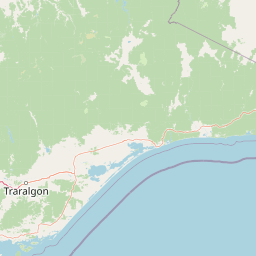
Avon Wilderness Park is best known for its large, roadless block of mountain ash forest, one of the tallest eucalyptus forest types in the world, paired with sub-alpine woodland on the southern fringe of the Victorian Alps. Its strict wilderness status, with no internal tracks or vehicle access, is also a defining feature, preserving the area in a largely unmodified state. The park is also recognised as a key southern component of the Australian Alps, providing habitat continuity with the Alpine National Park to the north and contributing to a much larger interconnected reserve landscape.
Avon Wilderness Park history and protected-area timeline
Avon Wilderness Park was formally declared on 27 November 1987, following a period during which the southern Victorian Alps were increasingly recognised for their ecological and scenic values. The reserve was established to protect a large block of mountain ash forest and sub-alpine woodland that would otherwise have been vulnerable to logging, roading, and other forms of commercial development that had already affected parts of Victoria's high country.
The choice of a wilderness designation, rather than a conventional national park, was deliberate. By prohibiting roads and constructed tracks within its boundaries, the new reserve was intended to maintain the area in as unmodified a condition as possible. Avon became one of only three wilderness parks in Victoria, alongside Big Desert Wilderness Park in the state's northwest and Wabba Wilderness Park in the northeast, reflecting a particular state-level approach to protecting landscapes where minimal intervention was the central goal.
In the years following its declaration, the park was more formally integrated into the broader Australian Alps conservation framework. On 7 November 2008, Avon was added to the Australian National Heritage List as one of eleven areas making up the Australian Alps National Parks and Reserves. This listing recognised the park as part of a nationally significant cross-border system of high-country reserves that spans Victoria, New South Wales, and the Australian Capital Territory.
Avon Wilderness Park landscape and geographic character
The landscape of Avon Wilderness Park is shaped by the southern end of the Victorian Alps, where forested ridges give way, with increasing elevation, to sub-alpine and alpine environments. The terrain is generally steep and dissected, with deeply cut valleys carrying the headwaters of several streams that flow south toward Gippsland. The high country here marks a transition between the denser, wetter forests further west and the drier alpine woodlands further north.
Mountain ash forest dominates much of the park. This forest type, built around towering eucalyptus trees, produces a tall, columnar canopy over relatively open understorey. On the upper edges of the park, at the higher elevations where exposure and cold limit tree height, the vegetation shifts into sub-alpine woodland, with shorter, more wind-formed trees and an open, park-like character. The boundary between these two zones is one of the key landscape transitions visible in the park.
Because the park is roadless and undeveloped, its landscape has not been broken up by clearings, infrastructure, or settlement. Streams run through continuous forest, ridges rise in uninterrupted lines, and the overall impression is of an intact, large-scale mountain forest landscape that has not been fragmented by human construction.
Avon Wilderness Park ecosystems, habitats, and plant life
Ecologically, Avon Wilderness Park belongs to the cool, wet montane and sub-alpine systems of southeastern Australia. The mountain ash forests of the area are globally distinctive: they are among the tallest forests dominated by a single flowering-plant species and are closely tied to fire regimes, rainfall, and fertile valley soils found in this part of the Victorian Alps.
Within the park, the dominant vegetation grades from tall mountain ash forest at lower and mid elevations into sub-alpine woodland higher up. These vegetation types support different suites of associated plants and animals, with the dense, damp mountain ash forests providing habitat for hollow-dependent species and the more open sub-alpine areas supporting cold-adapted flora. The wilderness status of the park allows these ecological processes to occur without the disruption of roading, logging, or intensive recreation infrastructure.
The park's connection to the adjoining Alpine National Park effectively extends the ecological space available to species that move between forest and alpine habitats, including those that respond to seasonal conditions, post-fire regeneration cycles, or large home ranges. This connectivity is one of the core natural values the park protects.
Avon Wilderness Park wildlife and species highlights
The wildlife of Avon Wilderness Park reflects its position in the Victorian Alps, where mountain ash forest and sub-alpine woodland provide habitat for a wide range of forest and high-country species. The tall eucalyptus forests of the area are known for supporting populations of hollow-dependent animals, including various species of parrots and marsupials that rely on old-growth trees for nesting and den sites.
At the higher elevations where the forest gives way to sub-alpine woodland, the fauna shifts toward species adapted to colder, more open conditions. This includes birds, small mammals, and other animals typical of the broader Australian Alps system. Because the park is roadless and undeveloped, wildlife can move through the landscape with relatively little direct human disturbance, which is ecologically significant in a region where much of the surrounding bush has been modified.
The park also serves as part of a wider habitat network for wildlife moving between the Victorian Alps and the forested landscapes to the south, contributing to the overall resilience of high-country fauna in the region.
Avon Wilderness Park conservation status and protection priorities
Conservation is central to the identity of Avon Wilderness Park. The reserve was established specifically to keep a large block of mountain ash forest and sub-alpine woodland in an unmodified state, and its wilderness classification reinforces that goal by excluding roads, constructed tracks, and intensive recreation infrastructure from within its boundaries. Along with Big Desert and Wabba Wilderness Parks, Avon represents Victoria's main application of the strict wilderness model in protected-area management.
Ecologically, the park protects both the tall mountain ash forests and the adjoining sub-alpine vegetation communities, ensuring the transition between these two systems is maintained. Its roadless character preserves natural fire regimes, hydrology, and vegetation dynamics in a context where many similar forests in southeastern Australia have been altered by logging or land clearing. The park therefore functions as a reference area for what intact mountain ash and sub-alpine landscapes look like in the Victorian Alps.
The park's inclusion in the Australian Alps National Parks and Reserves, added to the Australian National Heritage List in 2008, elevated its status from a state-level wilderness to a nationally recognised component of one of Australia's most significant high-country reserve systems. This listing also brought the park into a broader conservation framework that includes the adjoining Alpine National Park and other reserves further north and east.
Avon Wilderness Park cultural meaning and human context
The landscape that Avon Wilderness Park protects carries longstanding cultural significance, both for Indigenous peoples of southeastern Australia and for later pastoral and bushwalking traditions of the Victorian high country. The broader Australian Alps region, of which Avon forms part, has been recognised in heritage listings for combining natural values with a layered human history shaped by Aboriginal land use, seasonal high-country movement, and the more recent pastoral and recreational history of the Australian Alps.
While the park itself is managed as a strict wilderness with no internal infrastructure, the surrounding region is associated with long-standing pastoral activity, particularly in the valleys and lower slopes, and with the broader Australian Alps story of transhumance, high-country huts, and bushwalking culture that developed from the nineteenth and twentieth centuries onward. The park's role in the national heritage listing reflects these intertwined natural and cultural dimensions.
Top sights and standout views in Avon Wilderness Park
The standout quality of Avon Wilderness Park is its scale: nearly forty thousand hectares of continuous, roadless mountain ash and sub-alpine country in the southern Victorian Alps. The park is one of only three wilderness areas in Victoria and stands out for keeping the landscape in a genuinely undeveloped state.
Its connection to the Alpine National Park to the north is another defining feature, allowing wildlife, ecological processes, and vegetation patterns to extend across a much larger combined reserve. Combined with its inclusion in the Australian Alps National Parks and Reserves heritage listing, this gives the park a clear identity as a key southern anchor of Australia's high-country conservation system.
Best time to visit Avon Wilderness Park
The character of Avon Wilderness Park shifts noticeably with the seasons, and the timing of a visit affects both the experience and the conditions encountered on foot. In summer, the mountain ash forests and sub-alpine woodland are generally accessible without snow, days are long, and the high country can be walked, though weather can still be changeable at elevation.
In winter and early spring, the higher elevations of the park can be snow-covered and conditions become considerably more demanding, requiring real cold-weather bushwalking skills and equipment. Many visitors prefer the warmer months for extended traverses of the wilderness, while autumn can offer quieter conditions and cooler walking weather before snow arrives. Because the park is undeveloped and remote, planning around conditions, weather windows, and experience is essential in any season.