Why Basut-Chay State Reserve stands out
Basut-Chay is best known for protecting what is widely considered the world's largest remaining grove of the Oriental plane tree (Platanus orientalis), an ancient floodplain forest species. The trees dominate the landscape to the extent that they form 93.5 percent of the reserve's vegetation, with mature individuals averaging well over 150 years in age and rare veteran specimens reaching extraordinary dimensions. The grove's ecological and cultural significance is heightened by the fact that the Oriental plane was once widespread across Azerbaijan and the broader Caucasus but is now restricted to scattered fragments. By conserving a continuous, undisturbed riverine stand of these trees, including specimens thought to be more than a millennium old, the reserve holds a unique representation of a forest type that has largely disappeared from the region.
Basut-Chay State Reserve history and protected-area timeline
The Oriental plane tree was once widely distributed across the territory of Azerbaijan, including the southeastern parts of the Lesser Caucasus. Over time, this range contracted dramatically, leaving the species confined to scattered remnant patches. By the early twentieth century the Basut-Chay valley still held significant plane forests, but these were being reduced by logging and unregulated use.
The first formal protection step came in February 1961, when the plane groves on Zangilan forestry lands were designated a conservation zone under the Main Department of Forestry of the Council of Ministers. Because this lighter protection regime proved insufficient to safeguard the groves, a stricter dedicated reserve was established on 4 July 1974 by decision of the Azerbaijan SSR Council of Ministers, originally covering 117 hectares. In October 1980 the reserve's area was adjusted slightly downward, to 107 hectares, of which 100 hectares are forested and the remainder consists of rock slides and Basut-Chay floodplain sands.
The reserve's name derives from the Basut-Chay River, itself believed to come from the name of the Beysut, a tribe of Mongol origin associated with the area. Since 1993, the territory has been affected by regional conflict and occupation, a period during which the ancient plane trees have reportedly been compromised by uncontrolled exploitation. The reserve is administered under the oversight of Azerbaijan's Ministry of Ecology and Natural Resources and remains classified as a strict nature reserve.
Basut-Chay State Reserve landscape and geographic character
The reserve occupies an asymmetrical river valley typical of the southeastern Lesser Caucasus. The right side of the Basut-Chay valley rises steeply into mountainous terrain, while the left side is comparatively gentle, set on a hilly plateau at absolute heights of 700 to 1,000 meters. The valley floor itself lies between 600 and 800 meters above sea level and carries a narrow strip of alluvial deposits.
Tributary streams of the Basut-Chay have deeply dissected the surrounding slopes, producing a rugged topography of ravines, terraces, and rocky outcrops. Brown mountain-forest soils dominate the slopes, while alluvial meadow-forest soils cover the river terraces where plane trees thrive. The overall impression is of a small but intensely textured mountain valley, where the steepness of the right bank contrasts with the gentler plateau on the left to create a compact ecological gradient within a very limited area.
Basut-Chay State Reserve ecosystems, habitats, and plant life
Vegetation in the reserve is overwhelmingly shaped by Oriental plane trees, which form both pure stands and mixed groves along the Basut-Chay and its tributary Shikhauzchay. The mixture includes oak, Caucasian hornbeam, juniper, walnut, mulberry, willow, and poplar in the tree layer, with an understory of hawthorn, dog rose, privet-like murdacha, and blackthorn, plus wild fruit-bearing shrubs. Ground layer herbs give the stands their character as a "diverse-herb plane forest" type, the principal forest formation of the reserve.
Despite the continental climate of the region, with hot summers and relatively mild winters, broadleaf cover remains intact thanks to the moderating effect of the river valley. Annual precipitation exceeds 600 millimeters, concentrated in spring and early summer, and the valley supports both productive alluvial soils and stony substrates that still allow the plane trees to grow. The Oriental plane is notably tolerant of poor soils, drought, heat, and frost, and within the reserve it produces its most vigorous growth on deeper, fertile alluvial ground, making the small floodplain disproportionately valuable for the species' regional survival.
Basut-Chay State Reserve cultural meaning and human context
The Basut-Chay valley carries a cultural layer rooted in its name, which is generally traced to the Beysut, a tribe of Mongol origin historically associated with the region. This etymological connection situates the reserve within a broader regional history of Turkic and Mongol-influenced place names across the southern Caucasus. The ancient plane trees themselves have long been part of local life, used for timber and household purposes, a relationship that has at times placed heavy pressure on the grove and contributed to the rationale for strict protection. The area's position in a historically contested borderland has also shaped its modern significance, as the forest is treated by both Azerbaijan and Armenia as a shared natural heritage, mirrored in the Shikahogh Reserve across the border.
Top sights and standout views in Basut-Chay State Reserve
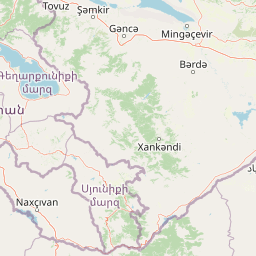
Basut-Chay State Reserve is the smallest state nature reserve in Azerbaijan, yet it concentrates an outsized share of the country's ancient Oriental plane tree forest, with ancient trees estimated to be over a thousand years old. It lies in the southeastern Lesser Caucasus along a 15-kilometer stretch of the Basut-Chay River, forming a continuous forest corridor with the neighboring Shikahogh Reserve in Armenia. The Oriental plane trees, listed in Azerbaijan's Red Data Book, grow on shallow stony soils as well as richer alluvial ground, demonstrating the species' remarkable adaptability. The reserve's Category Ia strict nature reserve status means its primary role is preservation rather than active management, allowing a rare uninterrupted view of a Caucasian floodplain forest that has largely vanished elsewhere.
Best time to visit Basut-Chay State Reserve
The reserve has a moderately warm climate with hot summers and mild winters, and annual precipitation exceeds 600 millimeters, most of which falls in spring and early summer. Spring and early summer are likely to bring the lushest forest conditions, with active vegetation growth and the river valley at its most vibrant, though this is also when precipitation peaks. Autumn offers cooler temperatures and stable weather and would suit visitors seeking to experience the forest in calmer conditions. The region's hot summers and occasional winter frosts and snow cover mean shoulder seasons are generally preferable for comfortable exploration.