
Mori Atlas logo
National parkBatang Ai National Park

Mapping the boundaries and natural terrain of a key national park in Malaysia.

Batang Ai National Park: Protected Landscape and Geographic Context in Sri Aman Division

Batang Ai National Park represents a significant protected area within the Sri Aman Division of Malaysia, offering a distinct focus for geographic discovery. This page provides an atlas-centric view, detailing the park's mapped boundaries and its natural landscape context. Understand its place within the regional geography and explore the foundational elements of this important conservation area through structured data and detailed mapping.

Tropical RainforestOrangutan HabitatCommunity ConservationIban CultureDipterocarp ForestBorneo

Batang Ai National Park

National park

Park overview

Structured park overview, official facts, and landscape profile for Batang Ai National Park

Batang Ai National Park park facts, protected area profile, and essential visitor context
Review the core facts for Batang Ai National Park, including designation, size, terrain, visitor scale, habitats, and operating context in one park-focused overview.

About Batang Ai National Park

Batang Ai National Park represents an important protected area within Sarawak's network of national parks, established in 1991 to preserve a tract of tropical rainforest in the state's central region. The park's defining feature is the artificial lake created by the Batang Ai hydroelectric project, a reservoir spanning approximately 24 square kilometers that now forms the ecological and visual centerpiece of the protected area. The surrounding forest consists primarily of dipterocarp woodland, the dominant tree family of Southeast Asian rainforests, providing critical habitat for numerous species including orangutans, gibbons, and hornbills.

The park's location in the Sri Aman Division places it within a region of significant cultural importance, as the surrounding area is home to Iban communities, the largest Dayak ethnic group in Sarawak. These communities have historically practiced shifting agriculture and lived in longhouses along the rivers that flow through the region. Rather than displacing these communities, the park's management framework has sought to incorporate them as partners in conservation, recognizing that local knowledge and stewardship are essential for effective protection of the forest and its wildlife.

Visitors to Batang Ai National Park experience a landscape where natural forest meets the tranquil waters of the reservoir, with opportunities to observe wildlife in their natural habitat and to engage with local Iban culture. The park has grown in popularity among both domestic Malaysian visitors and international tourists seeking to experience Borneo's rainforests and traditional longhouse communities. While facilities remain limited compared to some other Malaysian parks, the authentic nature of the experience and the park's conservation significance continue to draw visitors interested in both nature and cultural tourism.

Quick facts and research context for Batang Ai National Park

Batang Ai National Park occupies 24 square kilometers in central Sarawak, Malaysian Borneo, established in 1991. The park centers around the Batang Ai hydroelectric reservoir, a 24-square-kilometer artificial lake that defines the landscape. The area features extensive dipterocarp rainforest, home to critically important primate species including orangutans and gibbons, as well as various hornbill species. Access to the park is primarily by longboat, with the journey from the river landing taking approximately 40 minutes to park headquarters. The surrounding region is inhabited by Iban people, traditional Dayak communities whose longhouses dot the riverbanks and who have been incorporated into the park's management structure.

Park context

Deeper park guide and search-rich context for Batang Ai National Park

Batang Ai National Park history, landscape, wildlife, and travel context
Explore Batang Ai National Park through its history, landscape character, ecosystems, wildlife, conservation priorities, cultural context, and seasonal travel timing in a structured park guide built for atlas discovery and search intent.

Why Batang Ai National Park stands out

Batang Ai is best known for its population of orangutans thriving within the tropical rainforest surrounding the hydroelectric reservoir. The park provides crucial habitat for these endangered great apes in a landscape shaped by both natural forest and the man-made lake. The area is also recognized for its community-driven conservation model, where the local Iban population participates directly in protecting and managing the park through the Kooperasi Serbaguna Ulu Batang Ai cooperative. The combination of intact dipterocarp forest, wildlife viewing opportunities, and cultural experiences visiting traditional Iban longhouses makes this park distinctive among Sarawak's protected areas.

Batang Ai National Park history and protected-area timeline

Batang Ai National Park was established in 1991 as part of Sarawak's expanding network of protected areas aimed at preserving the state's tropical forest heritage. The creation of the park coincided with the completion of the Batang Ai hydroelectric dam, which flooded the valley to create the reservoir that now defines the park's landscape. This dam project, while providing hydroelectric power to the region, also created a new ecological environment that became the focus of conservation efforts.

The establishment of the park reflected growing recognition in Malaysia of the need to protect remaining tracts of dipterocarp forest in Sarawak, where logging and agricultural expansion had reduced primary forest cover significantly by the late twentieth century. The park was designated under the management authority of Sarawak Forestry, which oversees the state's protected area network.

A distinctive aspect of Batang Ai's management has been the involvement of local Iban communities in conservation activities. Rather than treating local residents as incompatible with wildlife protection, the park's management worked with communities to establish the Kooperasi Serbaguna Ulu Batang Ai cooperative, which enables local people to participate in park management and benefit from conservation-linked tourism activities. This community-based approach has become a model for integrating indigenous communities into protected area management in Malaysian Borneo.

Batang Ai National Park landscape and geographic character

The landscape of Batang Ai National Park is defined by the intersection of tropical rainforest and the artificial reservoir created by the Batang Ai hydroelectric dam. The park encompasses rolling terrain typical of Sarawak's central highlands, with elevations varying gently across the protected area. The reservoir itself covers approximately 24 square kilometers, its waters reflecting the surrounding forest and creating a distinctive scenery among Borneo protected areas.

The primary forest vegetation consists of dipterocarp trees, the characteristic dominant family of Southeast Asian lowland rainforests. These forests feature emergent trees that tower above the canopy, epiphytes, lianas, and the dense understory typical of tropical rainforest. The forest surrounding the reservoir remains largely intact, providing a continuous habitat corridor for wildlife moving through the area.

Water-based access is the primary means of reaching the park, with visitors traveling by traditional longboats along the reservoir and its tributaries. The lake itself creates a sense of tranquility, with forest meeting the water's edge in many places and providing scenic vistas particularly at the lookout points within the park.

Batang Ai National Park ecosystems, habitats, and plant life

Batang Ai National Park protects a significant area of dipterocarp tropical rainforest within Sarawak's protected area network. The forest ecosystem supports high biodiversity typical of Borneo lowland rainforests, with the park's location providing connectivity for wildlife between the surrounding forested landscapes. The reservoir has created a lacustrine environment that complements the terrestrial forest, influencing the ecology of the surrounding area and providing aquatic habitats.

The dipterocarp forests of the park represent some of the most biodiverse terrestrial ecosystems in the world, home to numerous species of trees, plants, insects, and vertebrates. The forest structure includes distinct layers from the canopy to the forest floor, with each supporting different ecological communities. The preservation of this forest within a protected area framework ensures that these ecological processes continue in a relatively undisturbed setting.

Batang Ai National Park wildlife and species highlights

The wildlife of Batang Ai National Park is distinguished by the presence of orangutans, the endangered great apes that inhabit the rainforest canopy throughout the park. These intelligent primates are a major attraction for visitors and represent a conservation priority, as Bornean orangutan populations have declined significantly due to habitat loss and hunting. The park's forest provides essential habitat for these arboreal apes, allowing them to move through the canopy surrounding the reservoir.

Gibbons, smaller arboreal apes also known as lesser apes, are another notable primate species found in the park's forests. These agile primates are known for their distinctive calls that echo through the forest canopy. Various hornbill species, including the large rhinoceros hornbill, are resident in the area and frequently observed by visitors, their impressive size and distinctive silhouettes making them memorable sighting for visitors exploring the park by boat.

The reservoir itself supports aquatic wildlife including various fish species and water birds, while the forest floor provides habitat for numerous smaller mammals, reptiles, and amphibians that contribute to the park's overall biodiversity.

Batang Ai National Park conservation status and protection priorities

Batang Ai National Park contributes to the conservation of Borneo' tropical forests and their remarkable biodiversity. The park protects a segment of remaining dipterocarp forest in Sarawak, an ecosystem that has been significantly reduced across the island due to logging, plantation development, and agricultural expansion. By establishing this protected area in 1991, the Sarawak government recognized the importance of preserving forest habitat for both wildlife and the ecological services these ecosystems provide.

The park's management approach exemplifies community-based conservation, working with local Iban communities rather than excluding them from the protected area. The Koordinasi Serbaguna Ulu Batang Ai cooperative enables local residents to participate in conservation activities and benefit from tourism, creating incentives for forest protection. This model addresses the reality that effective conservation in populated tropical regions requires engaging with local communities who depend on and interact with the landscape.

The protection of orangutan habitat within the park is particularly significant, as this species is classified as endangered with populations in decline across Borneo. Maintaining connected forest areas like those in Batang Ai is essential for the long-term survival of these apes, providing both habitat and movement corridors between populations.

Batang Ai National Park cultural meaning and human context

The cultural landscape of Batang Ai National Park is defined by the presence of Iban communities, the predominant Dayak ethnic group in Sarawak. The Iban have historically inhabited the river valleys of central Sarawak, establishing longhouse communities that serve as both residential and social centers. These traditional structures, built on stilts along waterways, house extended families and feature prominently in Iban cultural identity.

The park's management has recognized the importance of these communities and incorporated them into conservation planning. Visitors to the park often combine wildlife observation with cultural experiences, traveling to nearby longhouses to learn about traditional Iban life, customs, and crafts. This integration of cultural tourism with nature-based tourism provides economic benefits to local communities while creating meaningful experiences for visitors.

The Iban have a complex relationship with the forest, traditionally practicing shifting agriculture known as hill rice cultivation. This historical use has shaped the landscape surrounding the park, though the protected area itself preserves primary forest that has been less disturbed by human activity. The cooperative management arrangement represents an evolution in how protected areas interact with indigenous communities in Sarawak.

Top sights and standout views in Batang Ai National Park

The primary highlights of Batang Ai National Park include orangutan viewing in the pristine dipterocarp forest surrounding the reservoir, with these endangered great apes often observable moving through the canopy. The boat-based exploration of the reservoir provides a unique perspective on the park, with opportunities to observe wildlife along the forest edge and to appreciate the scenic landscape where forest meets water. The cultural dimension of visiting traditional Iban longhouses offers visitors insight into the living traditions of Sarawak's indigenous communities, with the opportunity to experience hospitality and learn about traditional practices. The park's relatively undeveloped character provides a sense of remoteness and adventure, with access by traditional longboat adding to the immersive nature experience.

Best time to visit Batang Ai National Park

The best time to visit Batang Ai National Park is during the drier months, which in Sarawak typically fall between March and October. During this period, rainfall is reduced and visitors are more likely to experience favorable conditions for wildlife viewing and outdoor activities. The drier season also makes boat travel on the reservoir more comfortable and predictable. However, tropical rain can occur at any time, and the park's rainforest setting means that some rain should be expected year-round. The wetter months from November to February may bring more frequent rainfall and potentially higher water levels in the reservoir, though this period can also offer different ecological experiences and fewer visitors.
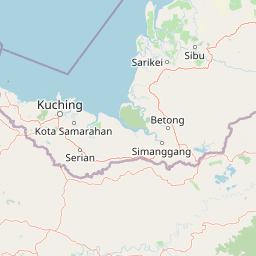

Park location guide

Geography guide, regional context, and park location map for Batang Ai National Park

Batang Ai National Park park geography, regions, and map view in Malaysia
Understand where Batang Ai National Park sits in Malaysia through a broader geographic reading of the surrounding landscape, nearby location context, and its mapped position within the national park landscape.

How Batang Ai National Park fits into Malaysia

Malaysia is a federal constitutional monarchy located in Southeast Asia. The country consists of 13 states and three federal territories, divided by the South China Sea into Peninsular Malaysia on the Indochinese Peninsula and East Malaysia on the island of Borneo. With a population of over 34 million, it achieved independence from Britain in 1957 and became a modern federation in 1963. The country is recognized for its multicultural population, tropical climate, and significant economic role in the region.

Wider geography shaping Batang Ai National Park in Malaysia

Malaysia occupies a strategic position in Southeast Asia, split by the South China Sea into two distinct regions. Peninsular Malaysia lies on the Indochinese Peninsula, sharing a land border with Thailand to the north and maritime borders with Singapore, Vietnam, and Indonesia. East Malaysia occupies the northern portion of Borneo, sharing land borders with Brunei and Indonesia, and maritime borders with the Philippines and Vietnam. The country's terrain includes coastal plains, mountain ranges such as the Titiwangsa in the peninsula, and extensive tropical rainforests.

Map view of Batang Ai National Park

Use this park location map to pinpoint Batang Ai National Park in Malaysia, understand its exact geographic position, and read its mapped placement within the surrounding landscape more clearly.

Pigeon | © OpenStreetMap contributors

Location context for Batang Ai National Park

SarawakSri Aman Division
Park atlas

Compare additional protected landscapes and Borneo's tropical rainforest habitats across the broader Sarawak region.

Discover Other National Parks and Protected Areas Near Batang Ai National Park
After exploring Batang Ai National Park, continue your journey through Sarawak's protected areas to discover nearby national parks and other conservation landscapes across Borneo's diverse ecosystems. Comparing these related sites offers valuable geographic context, revealing patterns in tropical rainforest habitats and community-based conservation efforts throughout the region.
National parkMalaysia

Maludam National Park: Southeast Asian Protected Landscape and National Park Geography

Mapped boundaries and natural terrain in Malaysia.

Maludam National Park offers a focused exploration of protected landscape identity and geographic context within Malaysia. As a designated national park, it serves as a vital component for understanding the distribution of protected areas and their mapped terrain. This detailed entry allows for an appreciation of the park's specific environmental character and its contribution to the broader atlas of natural landscapes in Southeast Asia, facilitating structured discovery for researchers and explorers.

Area
432 km²
Established
2000
IUCN
II
Relief
Lowland
National parkSarawak

Rajang Mangroves National Park: Borneo's Premier Mangrove Protected Landscape

Explore the mapped geography and wetland conservation of this Sarawak national park.

Rajang Mangroves National Park is a significant protected area dedicated to preserving the intricate mangrove swamp ecosystems of Sarawak's Rajang River delta. Encompassing a vast expanse of tidal channels and riverine forests, this national park serves as a critical habitat for unique wildlife and plays a vital role in coastal ecological health. Its landscape is defined by the dynamic interface between riverine and marine environments, offering a prime example of wetland conservation within Borneo's broader natural geography and atlas context.

Area
107 km²
Established
2000
IUCN
II
Relief
Lowland
National parkWest Kalimantan

Betung Kerihun National Park: West Kalimantan's National Park Geography and Mapped Boundaries

Explore protected area landscape context in Indonesia.

Betung Kerihun National Park is a significant protected area within West Kalimantan, Indonesia, identified as a national park. This entry provides detailed atlas-style exploration of its mapped geographic boundaries and landscape context. Understand its place within the regional geography and the broader network of protected lands, offering a foundation for appreciating its natural setting.

Area
8,000 km²
Established
1995
IUCN
II
Relief
Mountain
Watercolor illustration of a coastal landscape with a distinctive rock formation, green vegetation, and calm water under a soft sky with distant mountains
National parkKuching Division

Bako National Park: Sarawak's Oldest National Park and Coastal Protected Landscape

Explore diverse ecosystems and dramatic mapped geology near Kuching Division.

Bako National Park, the oldest national park in Sarawak, Malaysia, offers a profound study in ecological concentration and geological drama. Covering a mere 27 square kilometers on the Muara Tebas peninsula, it encapsulates seven distinct ecosystem types, from coastal heath forest to mangrove areas, supporting significant biodiversity. The park's protected landscape is defined by its stunning sandstone coastline, carved by the sea into cliffs, arches, and seastacks, providing a unique geographic context. This makes Bako an essential destination for understanding Borneo's environmental diversity and the mapped boundaries of its conservation areas.

Area
27.27 km²
Established
1957
IUCN
II
Relief
Mixed relief
National parkSarawak

Santubong National Park: Sarawak's Protected Landscape for Geographic Atlas Exploration

Mapped park boundaries and regional terrain context in Borneo

Delve into Santubong National Park, a significant protected area situated within the diverse geography of Sarawak, Malaysia. This resource provides detailed information on the park's mapped boundaries, allowing for focused exploration of its specific terrain and its role within the regional protected landscape atlas. Understand the geographic identity of Santubong National Park and its contribution to Borneo's conservation mapping.

Area
14.1 km²
Established
2007
IUCN
II
Relief
Mountain
National parkSarawak

Kuching Wetlands National Park: Sarawak's Protected National Park Landscape and Geography

Explore the mapped wetland boundaries and regional context.

Gain a structured understanding of Kuching Wetlands National Park, a key protected area in Sarawak, Malaysia. This detailed entry provides insights into its specific geographic identity, mapped park boundaries, and its significance as a national park within the Borneo region's extensive natural landscapes. Discover the atlas value of this protected wetland environment for comprehensive geographic exploration.

Area
84.95 km²
Established
1992
IUCN
II
Relief
Lowland
National parkSarawak

Kubah National Park: National Park Status and Mapped Landscape in Sarawak

Explore its protected boundaries and geographic context within Borneo.

Kubah National Park is a protected national park located in Sarawak, Malaysia, representing a crucial element of the region's conservation landscape. This detailed entry focuses on its identity as a national park, its specific geographic placement within Sarawak, and its significance for map-based exploration. Users can investigate the mapped boundaries and understand how Kubah National Park fits into the larger atlas of protected areas in East Malaysia, providing a factual foundation for geographic discovery without travel advice.

Area
22.3 km²
Established
1989
IUCN
II
Visitors
45K annual
National parkSarawak

Talang Satang National Park: Protected Landscape and Sarawak Geography

Explore its mapped boundaries and regional context.

Delve into the protected landscape of Talang Satang National Park, a key national park situated in the dynamic geography of Sarawak, Malaysia. This entry provides essential context for understanding its specific protected boundaries and its contribution to the broader regional natural landscape. Discover its atlas-relevant details to enrich your understanding of Borneo's protected areas and their geographic distribution.

Area
194.14 km²
Established
1999
IUCN
II
Relief
Lowland

Common questions about visiting, size, designation, and location context for Batang Ai National Park

Batang Ai National Park FAQs for park facts, access, geography, and protected area context
Find quick answers about Batang Ai National Park, including protected-area facts, park geography, trail and visitor context, and how the park fits into its surrounding country and regional landscape.
MoriAtlas Explorer

Continue Your Protected Areas Search Across the Global Atlas

Deepen your exploration by continuing the structured search for national parks and protected areas worldwide. Utilize the comprehensive filtering capabilities to compare different conservation landscapes and refine your understanding of global park geography. Discover more about the distribution and characteristics of protected natural areas.

Global natural geography