Mori Atlas logo
National parkBenito Juárez National Park

Discover the mapped boundaries and atlas context of this national park in Oaxaca

Benito Juárez National Park: Oaxaca's Protected Landscape and Regional Geography

Benito Juárez National Park stands as a significant protected landscape within the broader geographic tapestry of Oaxaca. This page offers an atlas-driven exploration of its designated boundaries and the regional natural terrain it represents. Understand how this national park fits into the mapped geography of Mexico, providing essential context for protected-area discovery and landscape analysis.

National ParkMountain ForestPine-Oak ForestSierra Madre de OaxacaOaxacaProtected Area

Benito Juárez National Park

National park

Park overview

Structured park overview, official facts, and landscape profile for Benito Juárez National Park

Benito Juárez National Park park facts, protected area profile, and essential visitor context

Review the core facts for Benito Juárez National Park, including designation, size, terrain, visitor scale, habitats, and operating context in one park-focused overview.

About Benito Juárez National Park

Benito Juárez National Park occupies a significant position in Oaxaca's protected area system, preserving a representative sample of the Sierra Madre de Oaxaca's montane ecosystems. The park's terrain is characterized by steep slopes, deep canyons, and the prominent ridgeline of Cerro San Felipe, which rises dramatically from the surrounding valley. This topographic diversity creates a range of microclimates and habitat conditions that support remarkable biological diversity.

The park is administered by Mexico's Secretaría de Medio Ambiente y Recursos Naturales and was created by presidential decree in 1937, making it one of the earliest national parks established in Mexico. Its creation reflected growing recognition of the need to protect montane forests that provided essential ecosystem services, particularly water regulation and supply. The park's boundaries encompass parts of the municipalities of San Felipe Tejalápam and San Andrés Huayapan, areas where local communities have historically maintained close relationships with the forest landscape.

Beyond its ecological value, the park holds cultural significance as a living reminder of Benito Juárez's connection to his Oaxacan homeland. The park's establishment during theCardenas administration represented a broader movement to preserve Mexico's natural heritage and recognize the importance of protected areas for national identity. Today, the park continues to serve multiple functions: biodiversity conservation, watershed protection, and as a natural amenity for the residents of Oaxaca.

Quick facts and research context for Benito Juárez National Park

Benito Juárez National Park is situated in the Valles Centrales region of Oaxaca, Mexico, approximately five kilometers north of the city of Oaxaca. The park covers 2,737 hectares and was established in 1937, making it one of Mexico's older protected areas. Its highest point is Cerro San Felipe at 3,111 meters elevation, part of the Sierra Madre de Oaxaca mountain range. The park spans an elevation gradient from 1,650 to 3,050 meters, supporting multiple vegetation zones including tropical deciduous forest, oak scrub, and pine-oak forest. The Huayapan and San Felipe rivers flow through the area and supply drinking water to Oaxaca City. The park is named after Benito Juárez, a Zapotec Indian born in Oaxaca who served as President of Mexico.

Protection and recognition

Analyzing the historical terrestrial status and global registry data for this park.

Official Protected Area Designation of Benito Juárez National Park

Researchers can verify the national protection status, original 1937 establishment date, and terrestrial scope of Benito Juárez National Park. Accessing verified designation details provides critical context for understanding regional conservation frameworks and official land management history.

Protection details

Protection scope
Terrestrial
Designated year
1937
Transboundary protection
No
Park context

Deeper park guide and search-rich context for Benito Juárez National Park

Benito Juárez National Park history, landscape, wildlife, and travel context

Explore Benito Juárez National Park through its history, landscape character, ecosystems, wildlife, conservation priorities, cultural context, and seasonal travel timing in a structured park guide built for atlas discovery and search intent.

Why Benito Juárez National Park stands out

Benito Juárez National Park is best known for its dramatic mountain scenery centered on Cerro San Felipe, one of the highest peaks in the Oaxaca highlands. The park protects significant pine-oak forest ecosystems that represent an important transitional zone between Mesoamerican tropical and temperate forest biomes. It serves as critical habitat for the dwarf jay, a vulnerable bird species found primarily within this protected area. The park also holds exceptional botanical significance, with numerous orchid species including several endemics, and represents an important watershed providing water resources to the greater Oaxaca metropolitan area.

Benito Juárez National Park history and protected-area timeline

Benito Juárez National Park was established by federal decree on December 30, 1937, during the presidency of General Lázaro Cárdenas del Río. The creation of the park represented an early effort in Mexico's conservation history, predating many of the country's more widely known protected areas. The decision to establish the park was influenced by recognition of the forest's importance for water supply to Oaxaca City and the desire to preserve the scenic mountain landscapes visible from the capital.

The park was named in honor of Benito Juárez (1806-1872), the celebrated Mexican statesman and president who was born in the village of San Pablo Guelatao in the Oaxaca highlands. Of Zapotec indigenous heritage, Juárez rose from humble origins to become one of Mexico's most revered leaders, serving as president during a critical period of national reconstruction following the Reform War. Naming the park after him reinforced the connection between Mexican national identity and the distinctive landscapes of Oaxaca.

Initially established with an area of 3,180 hectares according to the original decree, subsequent boundary adjustments have resulted in the current official area of 2,737 hectares. The park has maintained its national park designation throughout its history, though management challenges including boundary delimitation issues and pressures from surrounding land uses have persisted.

Benito Juárez National Park landscape and geographic character

The landscape of Benito Juárez National Park is dominated by the Sierra Madre de Oaxaca, a mountain range that forms part of the larger Sierra Madre del Sur system extending through southern Mexico. Cerro San Felipe, the park's highest peak at 3,111 meters, rises prominently above the surrounding terrain and forms a visual landmark visible from Oaxaca City. The mountain's steep flanks are dissected by numerous drainages that have carved deep canyons into the underlying rock.

The terrain transitions sharply from the valley floors near Oaxaca City through ascending slopes covered in tropical deciduous forest, ascending into oak-dominated vegetation, and finally reaching the pine-oak forests that crown the higher elevations. The lower reaches of the park feature rugged canyon country where seasonal streams have created narrow valleys and waterfalls. The park's western boundary follows the divide between the Huayapan and San Felipe river watersheds, both of which contribute to Oaxaca City's water supply.

Rock formations throughout the park display the geological character of the Sierra Madre de Oaxaca, with metamorphic and igneous substrates underlying the diverse soils that support the park's vegetation. The highest elevations feature exposed rock outcrops and cliff faces, while the upper forest zones are frequently shrouded in morning mist, particularly during the dry season when cloud banks form against the mountain slopes.

Benito Juárez National Park ecosystems, habitats, and plant life

Benito Juárez National Park encompasses a remarkable range of ecological zones within its relatively compact area, reflecting the steep elevation gradient and complex topography. The lowest elevations feature tropical deciduous forest characterized by trees that lose their leaves during the dry season, adapted to the pronounced seasonal precipitation pattern of the region. As elevation increases, this gives way to oak-dominated scrub and eventually to the pine-oak forests that occupy the cooler upper reaches of the mountain.

The pine-oak forests represent the park's most extensive and ecologically significant vegetation type, composed primarily of Montezuma pine and various oak species. These forests support a dense understory and are characterized by high levels of epiphytic vegetation, including numerous orchid species, bromeliads, mosses, and ferns that carpet the tree branches and forest floor. The ecological transition from tropical to temperate forest types within such a limited area makes the park important for understanding biogeographic patterns in southern Mexico.

The park also includes riparian corridors along the Huayapan and San Felipe rivers, where gallery forests provide habitat for different species assemblages adapted to more humid conditions. These watercourses are essential for maintaining ecological connectivity and provide critical dry-season habitat for wildlife. The park's position in the Sierra Madre de Oaxaca places it within a region recognized for high plant endemism, with several orchid species and other plants known only from this mountain range.

Benito Juárez National Park wildlife and species highlights

The wildlife community of Benito Juárez National Park reflects the park's position at the intersection of tropical and temperate biomes, with species characteristic of both environments present within its boundaries. The park is particularly significant as the primary habitat for the dwarf jay, a small blue jay species considered vulnerable due to its restricted range in highland Oaxaca. This species inhabits the pine-oak forests of the upper elevations and serves as a flagship for the park's conservation importance.

Mammal fauna includes several species typical of Mexican highland forests, though many are elusive and difficult to observe. White-tailed deer and wild boar are present in the park, and coyotes range through the area. Historically, larger predators including pumas and jaguars inhabited the park, though their current presence is uncertain. The common opossum and various squirrel species are more frequently encountered, while porcupines leave evidence of their nocturnal activities through their quills found throughout the area.

Bird diversity is notable, with resident species including the Mexican trogon, various vultures, and the common caracara. The park lies along migratory routes, and winter months bring additional bird species arriving from North America. Reptile diversity includes both harmless snakes and potentially dangerous species such as rattlesnakes and coral snakes. Lizards and amphibians are common in appropriate habitats, while the park's streams support fish, frogs, and crustaceans.

Benito Juárez National Park conservation status and protection priorities

Benito Juárez National Park faces several significant conservation challenges despite its protected status. Boundary delimitation remains incomplete, creating uncertainty about the exact extent of the protected area and complicating enforcement efforts. Livestock encroachment from surrounding ranching areas puts pressure on the park's vegetation, particularly in lower elevation zones where forest has been converted to grassland. Illegal logging represents a persistent threat to the park's timber resources, particularly in the pine-oak forests.

Forest fires occur periodically, often caused by human activity, and can damage large areas of forest. Hunting, both for sport and subsistence, removes wildlife from the ecosystem and particularly affects bird populations. A specific concern involves mistletoe infestations affecting the pine-oak forests, especially in areas adjacent to San Andrés Huayapan, where this parasitic plant is causing deterioration of tree health.

The park's conservation value is enhanced by its role in protecting watersheds that supply Oaxaca City, creating incentives for watershed protection that complement biodiversity conservation objectives. The presence of the vulnerable dwarf jay provides an important focal species for conservation attention, though broader ecosystem protection benefits numerous other species. Addressing the ongoing threats will require continued investment in park management and boundary clarification.

Benito Juárez National Park cultural meaning and human context

Benito Juárez National Park is deeply connected to the cultural identity of Oaxaca, named for Benito Juárez, the Zapotec-born statesman who became a national hero. Juárez was born in San Pablo Guelatao, a small community in the Oaxaca highlands, and his rise from indigenous origins to the presidency of Mexico represents one of the nation's foundational narratives of perseverance and reform. The park preserves mountain landscapes that would have been familiar to Juárez during his early life in the region.

The park encompasses lands that have been inhabited by Mixe and Zapotec communities for centuries, and local communities maintain connections to the area through traditional land uses and resource gathering. The park's water resources have supported human settlement in the Oaxaca Valley for millennia, and the continued importance of the Huayapan and San Felipe rivers for urban water supply maintains this historical relationship between the landscape and regional population.

The park also contains species of cultural significance, including plants used in traditional medicine and cuisine. Species such as dahlia, Mexico's national flower, grow within the park's boundaries, connecting the protected area to broader Mexican cultural symbolism. The combination of natural and cultural values makes the park representative of the interconnected relationship between Oaxacan communities and their mountain environment.

Top sights and standout views in Benito Juárez National Park

Benito Juárez National Park offers visitors access to one of Oaxaca's most scenic mountain environments, with Cerro San Felipe providing dramatic views and challenging trails for hikers. The park's elevation gradient delivers remarkable ecological variety within a compact area, from tropical canyons to cloud forest. Orchid enthusiasts will find exceptional botanical interest, with numerous species including endemics such as Rhynchostele galeottiana. The opportunity to observe the dwarf jay in its primary habitat makes the park a destination for birdwatchers interested in Mexican endemics. The park's proximity to Oaxaca City makes it a convenient escape into mountain nature, while its historical connection to Mexico's beloved president adds cultural depth to the visitor experience.

Best time to visit Benito Juárez National Park

The best time to visit Benito Juárez National Park depends on what visitors hope to experience. The dry season from December through April offers more predictable weather for hiking and outdoor activities, with clear skies and comfortable temperatures in the highlands. This period corresponds with the North American winter bird migration, providing opportunities to observe species not present during the summer months. The landscape may appear less lush during this period, as the tropical deciduous forest at lower elevations loses its leaves.

The wet season from May through November brings regular rainfall that transforms the park's vegetation, with forests becoming lush and waterfalls flowing more dramatically. This period coincides with the warmest months and higher humidity, but also offers the most verdant conditions for botanical observation. Many orchids and other flowering plants bloom during the rainy season, making this an excellent time for plant enthusiasts. Visitors should be aware that afternoon rains are common and trail conditions may be muddy. The transition periods of late spring and early autumn often provide a balance of favorable conditions.
Monthly climate preview

Decadal temperature profiles and monthly precipitation rhythms across the protected highlands

Benito Juárez National Park Average Temperature and Climate Normals

Long term averages at a representative elevation of 1953 meters reveal a distinct shift from drier months early in the year to wetter conditions peaking in September. Examining the complete climate record provides detailed monthly temperature fluctuations and baseline precipitation cycles recorded across several decades.
Annual mean17 °C
14 °C20 °C
Jan14°
Feb16°
Mar18°
Apr20°
May20°
Jun18°
Jul17°
Aug17°
Sep17°
Oct16°
Nov14°
Dec14°
Warmest month
April

19.9 °C

Coolest month
January

13.8 °C

Wettest month
September

6.9 mm/day

Driest month
February

0.3 mm/day

Park location guide

Geography guide, regional context, and park location map for Benito Juárez National Park

Benito Juárez National Park park geography, regions, and map view in Mexico

Understand where Benito Juárez National Park sits in Mexico through a broader geographic reading of the surrounding landscape, nearby location context, and its mapped position within the national park landscape.

How Benito Juárez National Park fits into Mexico

Mexico, officially the United Mexican States, is a country in North America spanning the Sierra Madre mountain ranges, coastal plains, and tropical regions. It borders the United States to the north, Guatemala and Belize to the southeast, and has coastlines along the Pacific Ocean, Gulf of Mexico, and Caribbean Sea. With a population exceeding 130 million, Mexico is home to one of the world's most significant concentrations of Indigenous languages alongside Spanish.

Wider geography shaping Benito Juárez National Park in Mexico

Mexico occupies a land area of 1,972,550 km2, making it the thirteenth-largest country in the world. The terrain is highly diverse, featuring the Sierra Madre Occidental and Sierra Madre Oriental mountain ranges, the Mexican Plateau, coastal lowlands along the Pacific and Gulf/Caribbean margins, and the Yucatan Peninsula. The country spans multiple climate zones from desert in the north to tropical rainforest in the south.

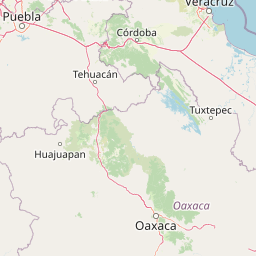
Map view of Benito Juárez National Park

Use this park location map to pinpoint Benito Juárez National Park in Mexico, understand its exact geographic position, and read its mapped placement within the surrounding landscape more clearly.

Pigeon | © OpenStreetMap contributors

Location context for Benito Juárez National Park

Oaxaca
Park atlas

Trace the regional park geography and compare protected mountain landscapes within Oaxaca's Sierra Madre.

Parks Near Benito Juárez National Park: Discover Oaxaca's Surrounding Protected Mountain Landscapes

After exploring Benito Juárez National Park, continue your geographic discovery by browsing other protected areas in the surrounding Oaxaca region of Mexico. Compare diverse mountain forest landscapes, watershed conservation efforts, and unique endemic species habitats to trace the interconnected network of Mexico's natural heritage.
Natural monumentOaxaca
About 39 km away#1 closest

Southeast

Yagul Natural Monument: Geographic Profile and Protected Landscape Context in Oaxaca

Mapped terrain, cultural landscape, and Zapotec valley geography.

Yagul represents a critical intersection of archaeological heritage and semi-arid valley geography. By examining the site's artificial platforms, defensive hilltop positioning, and the surrounding network of rock shelters, one gains insight into the environmental factors that shaped this central hub of the Zapotec world. The protected area provides a defined boundary for investigating how ancient human activity successfully integrated with the complex, drought-prone terrain of the Oaxacan highlands.

Relief
Upland
Climate
Arid
Scope
Terrestrial
Water
Minor water
National parkOaxaca
About 167 km away#2 closest

Southwest

Lagunas de Chacahua National Park: Protected Landscape and Oaxaca Regional Geography

Explore its mapped boundaries and natural terrain.

Lagunas de Chacahua National Park serves as a vital protected landscape within Oaxaca, Mexico. This dedicated entry provides an atlas-focused view of the park's geographic scope, highlighting its mapped boundaries and the surrounding regional terrain. Understand its significance as a protected area and its contribution to the natural landscape of Oaxaca, offering a detailed geographic context for discovery.

Area
132.73 km²
Established
1937
IUCN
II
Access
Moderate access
National parkOaxaca
About 171 km away#3 closest

South

Huatulco National Park: Oaxaca's Key National Park Protected Landscape

Explore its mapped boundaries and regional geography.

Delve into the protected landscape identity of Huatulco National Park, situated within the rich geography of Oaxaca, Mexico. This detail page provides critical atlas-level information, focusing on the park's mapped boundaries and its contribution to the regional conservation landscape. Understand the foundational geographic context that defines this significant national park, essential for any exploration of Mexico's protected areas.

Area
118.9 km²
Established
1998
IUCN
II
Relief
Mixed relief
National parkVeracruz
About 188 km away#4 closest

North

Cañón del Río Blanco National Park: Explore Its Mapped Protected Area and Regional Geography

Discover the geographic context and protected landscape of this national park.

Cañón del Río Blanco National Park offers a distinct protected-area identity within the geography of Veracruz. This canonical page focuses on the park's mapped boundaries and its significance as a national park. Use this resource for structured exploration of its protected landscape and regional setting, enhancing your understanding of Mexican protected areas.

Area
488 km²
Established
1938
IUCN
II
Relief
Mountain
Protected areaVeracruz
About 189 km away#5 closest

Northeast

Alvarado Lagoon System: Mapping the Protected Coastal Wetlands of Veracruz, Mexico

An essential reference for Gulf Coastal Plain wetland geography

The Alvarado Lagoon System acts as a major estuarine node within the southern Gulf Coastal Plain. This protected area connects the Papaloapan River watershed to the Gulf of Mexico through an intricate network of lagoons, mangrove forests, and coastal dunes, providing a vital window into the regional landscape of Veracruz.

Area
2,670.1 km²
Established
2004
Relief
Lowland
Climate
Tropical
National parkMexico
About 214 km away#6 closest

North

Pico de Orizaba National Park: Mexico's Key National Park for Atlas Exploration

Discover mapped boundaries and regional geographic context.

Access detailed atlas information for Pico de Orizaba National Park, a protected natural area in Mexico. This entry focuses on its geographic scope, mapped landscape features, and its significance as a national park within the region. Explore the park's protected boundaries and understand its place in the broader geographical context of Mexico.

IUCN
II
National parkMexico
About 244 km away#7 closest

Northeast

Sistema Arrecifal Veracruzano National Marine Park: Mexico's Coastal National Park

Explore mapped boundaries and regional protected landscape.

Delve into the protected landscape of Sistema Arrecifal Veracruzano National Marine Park, a vital national park situated off the coast of Mexico. This page provides detailed insights into its mapped boundaries and geographic context, crucial for understanding the distribution of protected marine areas within the region. It serves as a gateway to appreciating the park's specific contribution to Mexico's conservation efforts and its place in broader geographic atlases.

IUCN
VI
Scope
Marine
Water
Water-dominated
Protected areaVeracruz
About 249 km away#8 closest

North

Cascada de Texolo Protected Landscape: Geographic Profile and Waterfall Map Context

Veracruz highlands forest and ravine ecosystem.

Cascada de Texolo represents a protected forest and stream corridor in the Veracruz highlands of Mexico. Recognized as a Ramsar wetland, the site features a dramatic waterfall dropping into a dense ravine, surrounded by humid montane forest. This map-focused profile examines the landscape structure, stream networks, and the integration of the gorge into the regional geography of Xico and Xalapa.

Established
2006
Relief
Upland
Access
Access unknown
Scope
Terrestrial

Common questions about visiting, size, designation, and location context for Benito Juárez National Park

Benito Juárez National Park FAQs for park facts, access, geography, and protected area context

Find quick answers about Benito Juárez National Park, including protected-area facts, park geography, trail and visitor context, and how the park fits into its surrounding country and regional landscape.
MoriAtlas Explorer

Continue Your Protected Areas Search Across the Global Atlas

Deepen your exploration by continuing the structured search for national parks and protected areas worldwide. Utilize the comprehensive filtering capabilities to compare different conservation landscapes and refine your understanding of global park geography. Discover more about the distribution and characteristics of protected natural areas.

Global natural geography