Why Bhindawas Wildlife Sanctuary stands out
Bhindawas is best known as a wintering ground for large flocks of migratory waterbirds, including pelicans, flamingos, cranes, and many species of ducks and waders. Its shallow, productive lake and surrounding marshy habitats offer feeding and roosting conditions that draw thousands of birds each season, especially between November and February. The sanctuary's wider significance lies in its role within the Sahibi River corridor, where a sequence of wetlands and restored forests forms a continuous arc of bird habitat between Rajasthan and the Yamuna. This positioning gives Bhindawas particular value as both a stopover and winter destination for species using the Central Asian Flyway.
Bhindawas Wildlife Sanctuary history and protected-area timeline
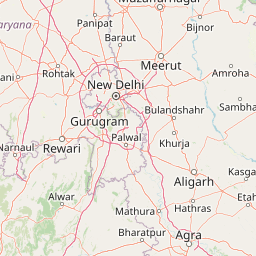
Bhindawas Wildlife Sanctuary was officially notified as a wildlife sanctuary by the Forests Department of the Government of Haryana on 5 July 1985, protecting roughly 412 hectares of wetland and surrounding land in Jhajjar district. The notification placed the site under formal state-level protection and established the Forests Department as the governing authority.
In 2009, the sanctuary was additionally declared a bird sanctuary by the Indian government, underscoring its growing reputation as an important habitat for migratory and resident waterbirds. This designation reflected the increasing visibility of the site among birdwatchers and conservationists, as well as its central place within the Sahibi River ecological corridor.
The site's most significant modern recognition came on 25 May 2021, when it was formally listed as an Indian Ramsar Wetland under Reference number 2459. This international designation confirmed Bhindawas's standing as one of the inland wetlands of India recognized for their ecological, hydrological, and biodiversity values, particularly for waterbird conservation.
Bhindawas Wildlife Sanctuary landscape and geographic character
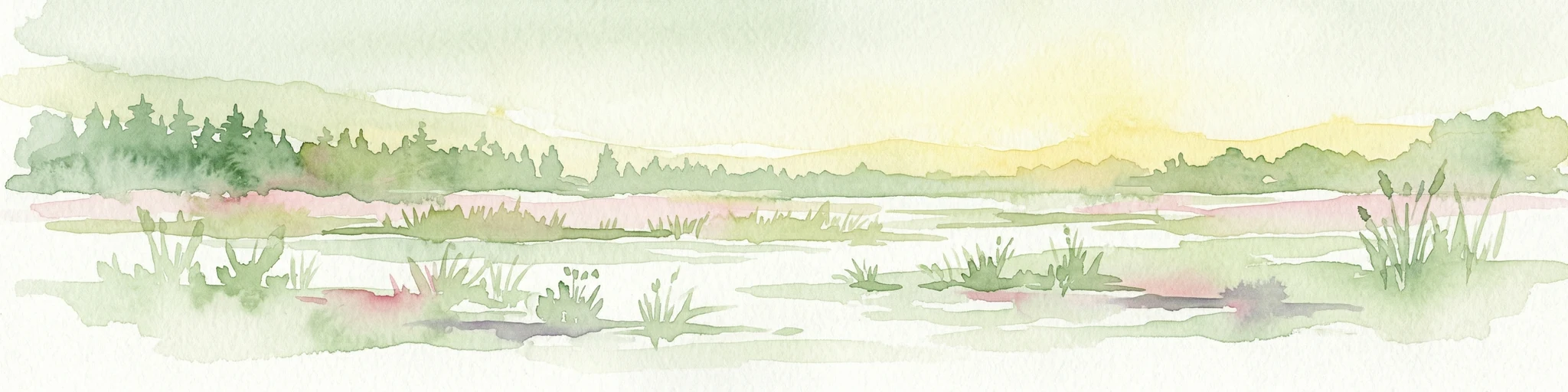
The landscape of Bhindawas Wildlife Sanctuary is shaped by water rather than by dramatic relief. The center of the protected area is a shallow, lake-like expanse whose levels depend on rainfall, canal flow, and seasonal drainage from the surrounding plain. Open water gives way to reed beds, marshy margins, and patches of emergent vegetation, with low scrub and scattered trees along the edges.
The surrounding terrain is typical of the semi-arid Haryana plain, flat to gently undulating, with agricultural land and small villages framing the sanctuary. Villages such as Niwada, Bhindawas, Chandol, Chadhwana, Bilochpura, Reduwas, and Kasni lie adjacent to the protected area, marking the rural context within which the wetland functions.
A particularly distinctive feature of the wider landscape is the engineered hydrological network that feeds the lake, including the JLN Feeder canal and its escape channel. These water inputs, combined with the sanctuary's position along the historic Sahibi River system, create a wetland that persists even when regional rainfall is limited, giving the area an unusual degree of hydrological stability within an otherwise dry landscape.
Bhindawas Wildlife Sanctuary ecosystems, habitats, and plant life
Bhindawas supports a rich wetland ecosystem built around its shallow lake, marshes, reed beds, and fringing vegetation. Aquatic plants, emergent reeds, and seasonal grasses create diverse microhabitats that support invertebrates, fish, amphibians, and the birds that depend on them. The combination of open water and vegetated margins produces the kind of habitat mosaic that waterbirds require for feeding, roosting, and breeding during their stay.
The vegetation around the lake transitions gradually from wetland species in the moist core to drier scrub and trees on the slightly higher ground. This gradient allows different ecological communities to coexist within the sanctuary's relatively compact area, increasing both species richness and habitat resilience.
Hydrologically, the sanctuary is sustained by rainwater, the JLN Feeder canal, and its associated escape channel. This reliable water supply distinguishes Bhindawas from many smaller seasonal wetlands in the region and helps maintain ecological continuity from one season to the next, an important factor for both resident wildlife and long-distance migrants that rely on predictable stopover and wintering sites.
Bhindawas Wildlife Sanctuary wildlife and species highlights
Bhindawas is primarily known for its birdlife, which draws observers and conservation attention from across northern India. The sanctuary's open water and marshes attract impressive numbers of migratory waterbirds in winter, often including pelicans, flamingos, cranes, storks, and a wide variety of ducks, geese, and waders. Such concentrations of waterbirds are not common in this part of Haryana and are central to the sanctuary's conservation significance.
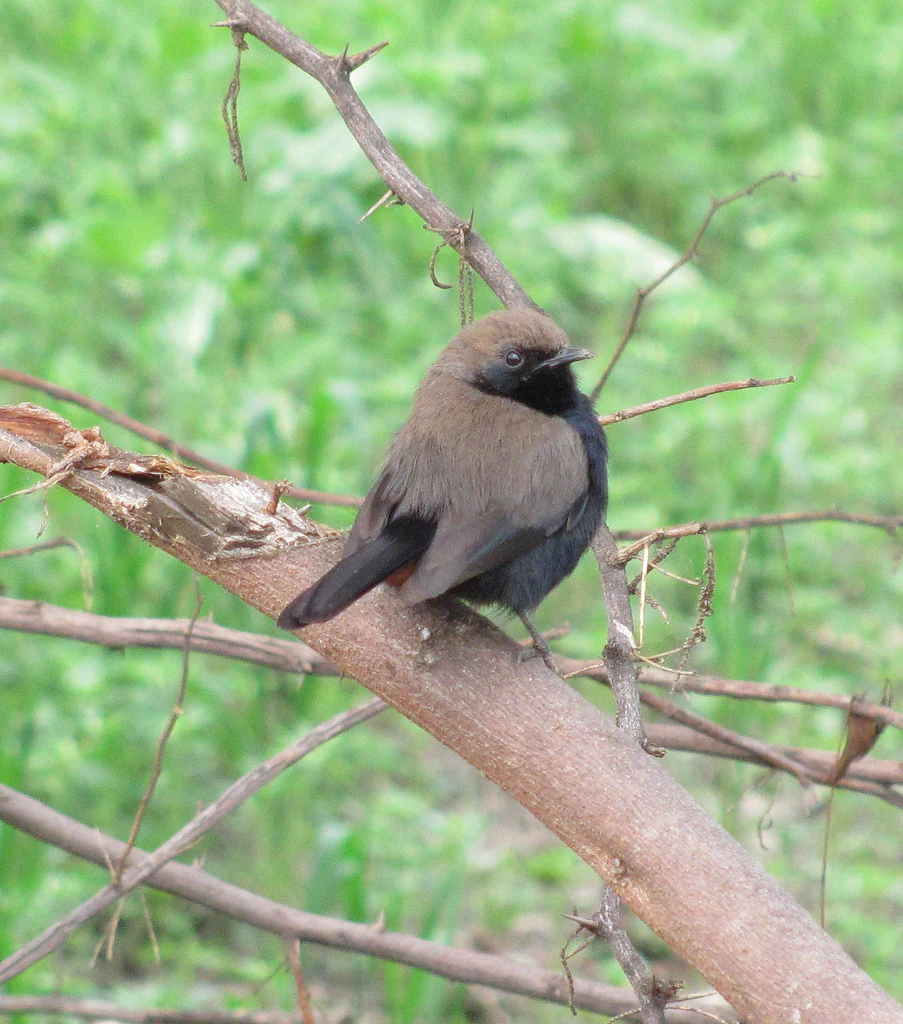
Resident birdlife is also well represented, including familiar Indian species such as the Indian Robin. The mix of open water, reeds, scrub, and dry edges supports a wide range of feeding strategies, from diving and dabbling waterfowl to wading shorebirds, raptors hunting over the marsh, and smaller passerines in the surrounding vegetation.
Beyond birds, the wetland habitat also supports fish, amphibians, reptiles, and invertebrates that sustain the broader food web. Mammals typical of the surrounding semi-arid plain may also pass through or reside near the sanctuary, though the wetland itself is most notable for its avian populations.
Bhindawas Wildlife Sanctuary conservation status and protection priorities
Bhindawas Wildlife Sanctuary's conservation significance rests on its role as one of the larger, more reliable inland wetlands in Haryana and on its place within the Sahibi River ecological corridor. This corridor links forests and wetlands from the Aravalli hills of Rajasthan across Haryana to the Yamuna floodplain, and Bhindawas sits near the middle of that chain, adjacent to the smaller Khaparwas Wildlife Sanctuary and not far from Sultanpur National Park and Basai Wetland.
The sanctuary's formal designations, including wildlife sanctuary status since 1985, bird sanctuary status from 2009, and Ramsar Wetland status since 2021, reflect its layered importance. The Ramsar designation in particular placed it among internationally recognized wetlands, acknowledging its value for migratory waterbirds using the Central Asian Flyway.
Management by the Forests Department of Haryana focuses on maintaining water levels, protecting habitats, and conserving the bird populations that depend on the site. The sanctuary's connectivity with neighbouring protected areas increases its overall conservation value, allowing bird populations and ecological processes to move across a wider landscape rather than being confined to a single protected site.
Bhindawas Wildlife Sanctuary cultural meaning and human context
Bhindawas is closely tied to the rural landscape of Jhajjar district, where agriculture and small villages have long framed the wetland. Adjacent settlements such as Niwada, Bhindawas, Chandol, Chadhwana, Bilochpura, Reduwas, and Kasni reflect the long-standing relationship between local communities and the surrounding land and water.
The sanctuary also sits within a broader regional landscape shaped by historic rivers and engineered water systems, including the Sahibi River corridor and the JLN Feeder canal network. The interplay of older natural drainage patterns and modern canal infrastructure is part of the area's cultural and geographical identity, even though the sanctuary itself is managed primarily for ecological rather than cultural values.
Top sights and standout views in Bhindawas Wildlife Sanctuary
Bhindawas Wildlife Sanctuary stands out for the scale and reliability of its wetland habitat in an otherwise semi-arid region, sustained year-round by rainfall and canal inputs. Its designation as an Indian Ramsar Wetland in 2021 placed it firmly on the international conservation map, particularly for waterbird conservation along the Central Asian Flyway.
The sanctuary's integration into the Sahibi River corridor gives it additional significance, connecting it to a network of forests and wetlands that includes Khaparwas Wildlife Sanctuary, Sultanpur National Park, and Basai Wetland. For visitors and birdwatchers, this means Bhindawas can be experienced as part of a larger chain of bird-rich sites across Haryana and neighbouring states.
Best time to visit Bhindawas Wildlife Sanctuary
Winter is the most rewarding season at Bhindawas Wildlife Sanctuary, when the largest numbers of migratory waterbirds arrive from higher latitudes and colder regions. From roughly November through February, the lake and surrounding marshes host dense concentrations of pelicans, flamingos, cranes, ducks, and waders, making this the prime period for birdwatching.
Cooler temperatures and clearer skies during these months also make the flat terrain more comfortable to explore. Outside of winter, water levels and vegetation change with the seasons, and bird activity is more modest, though resident wildlife and seasonal changes in the wetland can still make off-season visits worthwhile for ecologically minded visitors.