Why Buckaringa Sanctuary stands out
Buckaringa is best known for hosting one of the largest colonies of the yellow-footed rock-wallaby, a threatened macropod whose survival is the sanctuary's central management focus. The reserve's rugged gorges, boulder piles, and rocky cliffs provide exactly the kind of refuge habitat this species depends on, away from the predation pressure found in more open terrain. Equally central to the sanctuary's identity is its role as a working example of private conservation in arid South Australia, with active feral animal control fencing, predator eradication, and vegetation restoration shaping the landscape almost as much as the underlying geology does.
Buckaringa Sanctuary history and protected-area timeline
Buckaringa was first taken up as a pastoral lease in the 1880s, and for more than a century it was used primarily for sheep grazing and cereal cropping. That long agricultural history continued until 1990, when grazing ceased and the property began to transition toward a conservation role.
In the early 1990s the property was acquired by Earth Sanctuaries and operated as a wildlife reserve. In 2002 it was purchased by the Australian Wildlife Conservancy, which remains the owner and manager of the sanctuary today. Since the AWC takeover, management has focused on feral animal control, habitat restoration, and the long-term protection of the yellow-footed rock-wallaby, including a program to map the sanctuary's eight vegetation communities.
Long-term population monitoring of the rock-wallabies at Buckaringa has been ongoing for decades, with surveys from January 1979 to January 1984 estimating between eleven and twenty animals in Middle Gorge alone. Since the 1980s, broader sanctuary-wide estimates for the species have fluctuated widely while persisting at substantial numbers, reflecting both the variable conditions of arid Australia and the impact of sustained conservation work.
Buckaringa Sanctuary landscape and geographic character
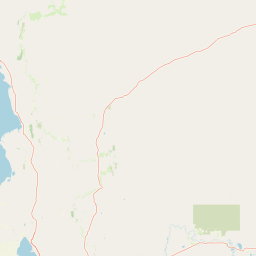
Buckaringa's landscape is defined by the underlying geology of the southern Flinders Ranges. Folded sedimentary sequences of sandstone, siltstones, and shales form the bedrock of the sanctuary, and over geological time, streams cutting through the ridges on the ABC Range at right angles to the strata have carved out the property's most distinctive features: Buckaringa Gorge and Middle Gorge. These steep-sided gorges are filled with crevices, caves, and intricate piles of fallen boulders, creating complex microhabitats in an otherwise open landscape.
Away from the gorges, much of the sanctuary consists of rocky ridges and bedrock plains covered in shallow soils and rock debris. Flatter alluvial zones away from the rock outcrops carry deeper soils, and these zones tend to support denser and more continuous vegetation. The elevation relief within the gorges is dramatic in local terms, with steep cliffs and rocky outcrops rising up to about one hundred metres above the riparian woodlands below.
The whole property lies within an arid climatic zone, with cool winters and hot summers and a low average annual rainfall of around 329 millimetres. Together, the folded sedimentary geology, the deeply incised gorges, and the arid setting give Buckaringa its distinctive mix of rugged refuge terrain and open stony country.
Buckaringa Sanctuary ecosystems, habitats, and plant life
Buckaringa supports a mosaic of arid and semi-arid habitats shaped by both geology and a long history of grazing and cultivation. The vegetation has been substantially altered by more than a hundred years of agricultural use, yet enough remains to give the sanctuary a varied ecological character.
The dominant habitats include hummock grassland, Acacia shrubland, and low woodland dominated by northern cypress pine. Patches of relatively intact mallee scrub occur across parts of the property, particularly where vegetation communities dominated by Eucalyptus porosa and Eucalyptus viridis survive from earlier conditions. The hill slopes carry Callitris glaucophylla and Casuarina pauper woodlands, while the riparian zones along the gorges support tall Eucalyptus camaldulensis (river red gum) woodland beneath the cliffs.
According to the Australian Wildlife Conservancy, the sanctuary contains eight formally recognised vegetation communities. Active management includes ongoing ecological surveys and a dedicated vegetation mapping program, both of which are intended to clarify how the habitats have been altered and how they can best be restored. The combination of intact gorge woodlands, mallee remnants, and recovering ground cover vegetation makes the property ecologically distinctive within the Flinders Lofty Block.
Buckaringa Sanctuary wildlife and species highlights
Although the full biodiversity of Buckaringa is still being documented, the sanctuary is recognised as an important refuge for arid-zone fauna, with sixty bird species and four mammal species recorded to date. The most ecologically significant resident is the yellow-footed rock-wallaby, for which Buckaringa holds one of the largest known colonies in Australia and whose protection is the sanctuary's primary management objective.
Birdlife at Buckaringa includes wedge-tailed eagles, emus, sulphur-crested cockatoos, peregrine falcons, sacred kingfishers, and blue-winged parrots, along with other arid-country species typical of the Flinders Ranges. The blue-winged parrot is listed as vulnerable in South Australia, while the peregrine falcon is listed as rare, giving Buckaringa an important role in maintaining populations of threatened bird species as well as mammals.
The sanctuary's four known mammal species are the western grey kangaroo, the red kangaroo, the euro, and the yellow-footed rock-wallaby. The rock-wallabies are particularly associated with the rocky gorges and boulder piles of the property, which offer the kind of refuge habitat that reduces predation risk. Population estimates for the species across the sanctuary have ranged from roughly three hundred to sixteen hundred animals since the 1980s, indicating a persistent but fluctuating population that continues to depend on the rugged terrain and active predator control for its survival.
Buckaringa Sanctuary conservation status and protection priorities
Buckaringa Sanctuary is owned and managed by the Australian Wildlife Conservancy, a private conservation organisation that purchased the property in 2002. The sanctuary's central conservation goal is the protection of the yellow-footed rock-wallaby, a species listed as vulnerable under Australia's Environment Protection and Biodiversity Conservation Act 1999, as vulnerable in South Australia under the National Parks and Wildlife Act 1972, and as near threatened globally on the IUCN Red List.
Conservation management at Buckaringa is built around a comprehensive feral animal control program. Since 2002, AWC staff have eradicated thousands of foxes, rabbits, and feral goats, and have modified a twenty-three-kilometre goat-resistant fence along the sanctuary boundary to support these efforts. The removal of introduced herbivores such as goats and rabbits is intended to reduce direct competition with rock-wallabies for food, while predator control targets foxes and feral cats, both of which are major threats to small mammals and ground-nesting birds.
Beyond animal control, conservation work at Buckaringa includes erosion management, restoration of natural water flows along the creeks, and revegetation of native plant communities. Surveys and vegetation mapping underpin these efforts, helping managers track changes in habitat condition over time. The sanctuary is widely cited as a strong example of active, science-based management of a private conservation property in arid South Australia.
Top sights and standout views in Buckaringa Sanctuary
Buckaringa Sanctuary combines deeply incised sandstone gorges, cypress pine and mallee woodlands, and arid rocky plains in a compact private reserve at the edge of the Flinders Ranges. The sanctuary's most distinctive feature is its role as one of the largest known strongholds of the yellow-footed rock-wallaby, an outcome directly linked to decades of feral animal control and habitat restoration.
Equally notable are the reserves themselves: thousands of feral herbivores removed, a twenty-three-kilometre predator-resistant fence, and ongoing work to restore natural creek flows and native vegetation. The result is a reserve where the conservation program is as visible a feature of the landscape as the gorges themselves, and where eighty-eight recorded species so far continue to grow as surveys progress.
Best time to visit Buckaringa Sanctuary
Buckaringa lies in an arid region with cool winters and hot summers and low annual rainfall. Cooler months tend to be more comfortable for outdoor activity and offer a chance to see the landscape at its most vegetated following winter rains, while summer conditions are typically harsh, with high temperatures and limited surface water.
Wildlife viewing opportunities exist year-round but are best planned around cooler weather, when both animals and observers are more active during the day. Because Buckaringa is a working conservation property rather than a publicly oriented tourist destination, any visit will depend on arrangements made through the Australian Wildlife Conservancy rather than on seasonal tourism infrastructure.