Why Chiquibul National Park stands out
Chiquibul National Park is best known for its extraordinary biodiversity and its role as a protected corridor surrounding the Caracol archaeological reserve, one of the ancient Maya civilization's major urban centers. The park harbors Belize's largest breeding population of scarlet macaws, and supports significant populations of jaguars, Baird's tapirs, and other keystone species of the Central American tropical forest. The park also contains the Chiquibul Cave System, the most extensive underground cave network in the Western Hemisphere, with massive chambers and passageways carved through limestone strata. The combination of archaeological significance, ecological intactness, and geological wonder makes Chiquibul one of Belize's most distinctive protected areas.
Chiquibul National Park history and protected-area timeline
Chiquibul National Park emerged from a prolonged conservation evolution that began in the mid-twentieth century. The area was first protected as Chiquibul Forest Reserve in 1956, reflecting early recognition of the forest's value. However, active logging concessions continued within the reserve for decades. Conservation advocates lobbied throughout the 1980s for stronger protection, arguing that the pristine portions of the reserve warranted national park status. In 1991, approximately three-quarters of the forest reserve that lacked active logging was redesignated as a national park under Belize's National Parks System Act. The park's borders were finalized in 1995, at which time the Caracol archaeological site became fully surrounded by the protected area. This transition from extractive use to strict conservation represents a broader pattern in Belize's environmental policy.
Chiquibul National Park landscape and geographic character
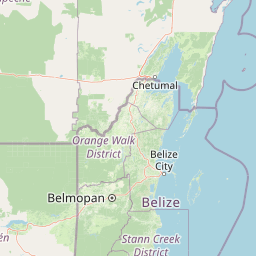
The physical landscape of Chiquibul National Park is defined by its position in the Maya Mountains, Belize's highest and most rugged terrain. The park includes the southern portions of the Vaca Plateau and the eastern slopes rising toward Doyle's Delight, the nation's highest summit at 1,167 meters above sea level. The underlying geology consists of extensive limestone formations that have produced Belize's most significant karst topography, with sinkholes, caves, and underground river systems carved over millennia. The Chiquibul Cave System represents a remarkable underground labyrinth extending across the boundary between Belize and Guatemala, with the Chiquibul River flowing above ground before disappearing into the cave network and resurfacing in Guatemalan territory. This cave system contains the largest known underground passages and chambers in the Western Hemisphere.
Chiquibul National Park ecosystems, habitats, and plant life
The ecological character of Chiquibul is defined by extensive tracts of lowland and premontane tropical forest that have persisted largely undisturbed since the decline of the Maya civilization. The forest canopy remains largely unbroken, supporting complex ecological relationships that have evolved over centuries. The park protects one of Central America's largest contiguous areas of tropical forest, creating a critical corridor for wildlife movement between Guatemala and Belize. The limestone karst environment adds further ecological complexity, with cave systems supporting specialized adapted species and the hydrological connections between surface and underground environments influencing broader ecosystem function. The Missouri Botanical Garden has documented remarkable plant diversity here, including species previously unknown to Central America.
Chiquibul National Park wildlife and species highlights
Chiquibul National Park supports exceptional wildlife diversity, with the park serving as a stronghold for many species that have been reduced or eliminated from other parts of their range. The park contains Belize's largest breeding population of scarlet macaws, whose brilliant plumage and loud calls are among the most iconic sights in the forest. Large mammals are well represented, with populations of jaguars, jaguarundis, ocelots, margays, and Baird's tapirs moving through the forest understory. The arboreal fauna includes Yucatan spider monkeys and kinkajous, while the avifauna features keel-billed motmots and king vultures. The ocellated turkey, a species endemic to the region, is also present. Notably, ongoing biological surveys continue to discover previously unknown insect and crustacean species, indicating that the full extent of the park's biodiversity has not yet been documented.
Chiquibul National Park conservation status and protection priorities
Chiquibul National Park represents a critical conservation priority for Belize and Central America as a whole. The park protects the largest remaining tract of contiguous forest in Belize and serves as a vital corridor connecting ecosystems across the Guatemala-Belize border. The largely unbroken forest cover provides habitat for species requiring large territories and intact ecological processes. The park's designation as an IUCN Category II protected area reflects its significance for both biodiversity conservation and natural landscape preservation. However, the park faces ongoing challenges including pressures from logging operations that continue in adjacent areas, archaeological tourism at Caracol, and the broader regional context of Central American deforestation. The protection of this vast area is essential for maintaining Belize's environmental identity and ecological integrity.
Chiquibul National Park cultural meaning and human context
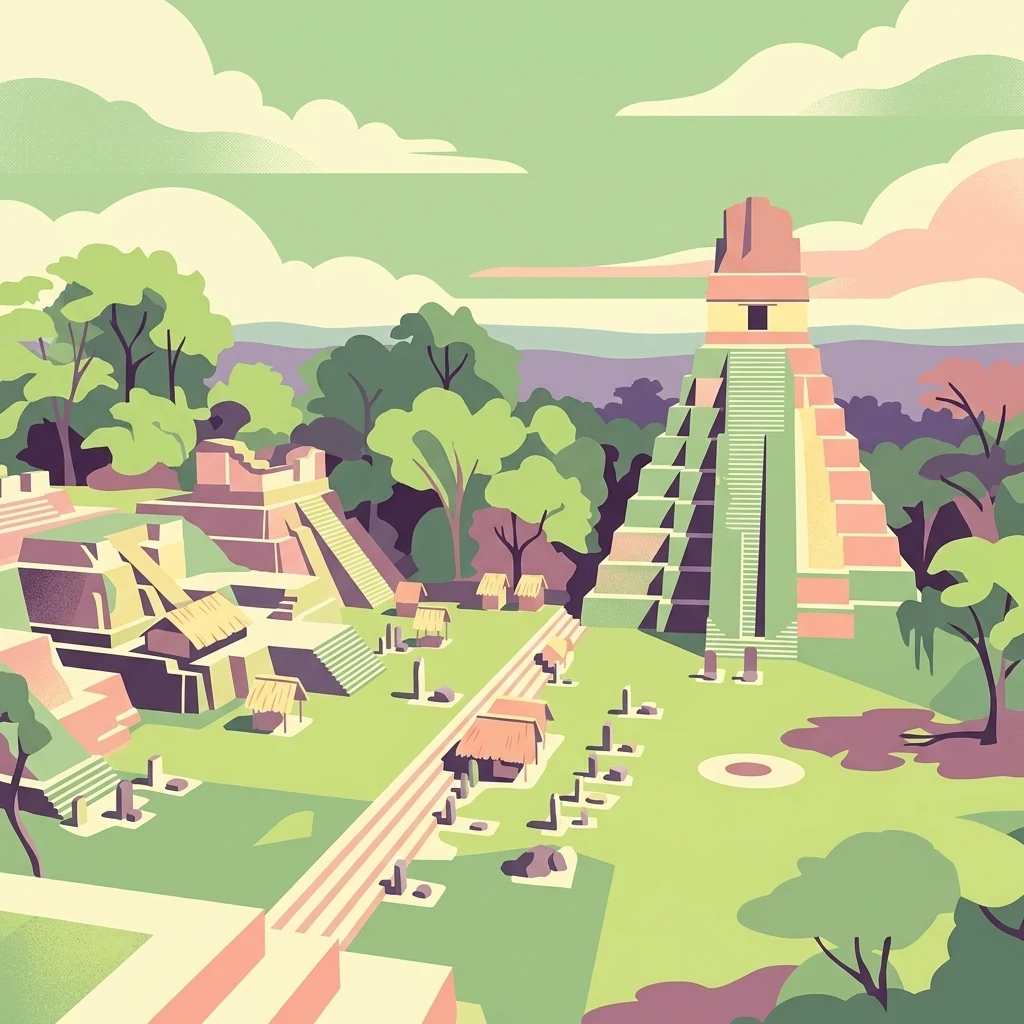
Chiquibul National Park encompasses the ancient Mayan city of Caracol, which represents one of the most important archaeological sites in Belize and was once one of the largest cities in the Classic Maya world. While Caracol itself is managed as a separate archaeological reserve and is not included within the national park's official area calculation, the park's boundaries completely surround this ancient urban center. This integration of natural and cultural protection creates a unique management context where the preservation of the forest helps protect the archaeological landscape from erosion and unauthorized access. The broader park area contains evidence of continuous Maya presence spanning millennia, with the forest itself shaped by centuries of traditional land use and eventual abandonment that paradoxically allowed ecological recovery.
Top sights and standout views in Chiquibul National Park
Chiquibul National Park offers remarkable experiences centered on its combination of ecological and archaeological significance. Visitors can explore the boundaries of the Caracol archaeological zone, one of the Maya civilization's great cities, while surrounded by forest that has recovered since the Classic period. The park provides habitat for Central America's highest concentration of scarlet macaws, whose spectacular breeding displays are a major draw for wildlife enthusiasts. The Chiquibul Cave System represents a geological wonder of hemispheric significance, with passages and chambers of extraordinary scale. The presence of Belize's highest mountain, Doyle's Delight, adds topographic interest, while the karst landscape creates a distinctive visual character unlike the coastal and lowland environments more commonly associated with Belize.
Best time to visit Chiquibul National Park
The optimal time to visit Chiquibul National Park corresponds to the dry season from December through April, when rainfall is minimal and trail conditions are most favorable for exploration. This period coincides with the peak breeding season for scarlet macaws, offering the best opportunities for observing these spectacular birds. The dry months also provide optimal conditions for cave exploration within the Chiquibul Cave System. However, the wet season from May through November transforms the landscape, with green forest, flowing waterfalls, and increased wildlife activity, though some trails may become difficult to navigate. The park's remote location and limited infrastructure mean that visits require careful planning and typically involve arrangements through authorized tour operators.