
Mori Atlas logo
National parkChristmas Island National Park

Understand the mapped boundaries and regional context of this significant Australian national park.

Christmas Island National Park: An Atlas of Protected Landscape Geography in Australia

Christmas Island National Park represents a distinct protected natural area within the geographic scope of Australia. This page serves as an entry point for exploring its specific mapped boundaries and the unique landscape context it provides. Delve into the regional geography to understand how this national park fits into the broader atlas of protected lands, offering a focused view of its identity as a significant conservation landscape.

Australian territory parkIndian Ocean islandsEndemic species sanctuaryRainforest protected areaRed crab migration siteSeabird breeding habitat

Christmas Island National Park

National park

Park overview

Structured park overview, official facts, and landscape profile for Christmas Island National Park

Christmas Island National Park park facts, protected area profile, and essential visitor context

Review the core facts for Christmas Island National Park, including designation, size, terrain, visitor scale, habitats, and operating context in one park-focused overview.

About Christmas Island National Park

Christmas Island National Park represents one of the most ecologically significant protected areas in the Indo-Pacific region. The park encompasses most of Christmas Island, an isolated landmass that rises dramatically from the deep ocean floor as an ancient volcanic seamount topped with uplifted limestone formations. The landscape features steep sea cliffs reaching heights of 60 meters, terraced step-like formations, and an extensive cave system carved into the limestone bedrock. The park protects the island's dense rainforest, which dominates the interior and supports an extraordinary concentration of endemic species. The marine environment surrounding the island also falls within park boundaries, extending to the low-water mark and protecting coastal ecosystems including rock platforms and tidal pools. The park's two Ramsar-listed wetlands, The Dales and Hosnies Spring, provide critical freshwater habitat and are among the island's most botanically diverse areas. The combination of terrestrial and marine protection makes Christmas Island National Park a comprehensive conservation unit for an island ecosystem that has evolved in almost complete isolation.

Quick facts and research context for Christmas Island National Park

Christmas Island National Park occupies most of Christmas Island, an Australian territory in the eastern Indian Ocean. The park was established in 1980 under the National Parks and Wildlife Conservation Act 1975, initially protecting the southwest corner before expanding to encompass the majority of the island's rainforest. The park boundary extends 50 meters beyond the low water line, with approximately 46 of the island's 73 kilometers of shoreline falling within park boundaries. Two Ramsar wetland sites, The Dales and Hosnies Spring, are contained within the park. The park is managed by the Director of National Parks with a staff of 17 operating from an office in Drumsite.

Protection and recognition

Documenting the formal environmental management scope and international boundary status within global databases

Protection Status and Conservation Designations of Christmas Island National Park

National park datasets provide verified insight into the registered protection levels and mixed management categories applied to Christmas Island National Park. Regional researchers can analyze official data records covering transboundary agreements, designation histories, and international registry listings.

Protection details

Protection scope
Mixed
Transboundary protection
No
Park context

Deeper park guide and search-rich context for Christmas Island National Park

Christmas Island National Park history, landscape, wildlife, and travel context

Explore Christmas Island National Park through its history, landscape character, ecosystems, wildlife, conservation priorities, cultural context, and seasonal travel timing in a structured park guide built for atlas discovery and search intent.

Why Christmas Island National Park stands out

Christmas Island National Park is best known for two extraordinary natural phenomena. The first is the spectacular annual migration of the Christmas Island red crab, during which approximately 100 million bright red crabs traverse the island's terrain to reach the sea for spawning, creating one of the most visible animal migrations on Earth. The second is the park's exceptional significance as the sole nesting habitat for both the endangered Abbott's booby and the critically endangered Christmas Island frigatebird. These seabirds, found nowhere else in the world, depend entirely on the island's forest ecosystem for breeding, making the park irreplaceable for their survival.

Christmas Island National Park history and protected-area timeline

The establishment of Christmas Island National Park emerged from growing environmental concerns in the early 1970s regarding the impacts of phosphate mining on the island's unique flora and fauna. A particular catalyst was the precarious situation of Abbott's booby, which appeared to be heading toward extinction due to habitat loss and disturbance. In 1974, a governmental committee was convened to examine the environmental impact of mining and other commercial activities, recommending that portions of the island be set aside for conservation. These recommendations led to a series of protective measures culminating in the formal establishment of Christmas Island National Park on 21 February 1980 under the National Parks and Wildlife Conservation Act 1975. The park initially covered only the southwest corner of the island but was subsequently expanded in 1986 and 1989 to include the majority of the island's rainforest. Today the park encompasses approximately 85 square kilometers, representing about 63 percent of Christmas Island's land area.

Christmas Island National Park landscape and geographic character

Christmas Island presents a dramatic landscape defined by its geological origins as an uplifted limestone cap over ancient volcanic andesite bedrock. The island rises from an underwater mountain positioned roughly 500 kilometers southwest of Indonesia, and its isolation by the abyssal zone has been fundamental to the evolution of its unique biota. The coastline features approximately 46 kilometers within the park boundary, characterized by steep sea cliffs reaching up to 60 meters in height and forming a series of stepped terraces. Rock platforms along the shoreline collect wave splashes to create tidal rock pools, providing unique intertidal habitats. The interior of the island supports dense rainforest growing on generally poor soils, punctuated by dramatic limestone pinnacles. The limestone bedrock has been fractured by geological processes to create an extensive cave system, with both water-filled and dry caves providing additional habitat diversity. Two Ramsar-listed wetlands, The Dales and Hosnies Spring, represent rare freshwater areas on an otherwise arid island, with Hosnies Spring notably featuring a stand of mangrove species growing approximately 50 meters above sea level.

Christmas Island National Park ecosystems, habitats, and plant life

The ecological character of Christmas Island National Park is defined by extreme geographical isolation and the evolutionary consequences of millions of years of separation from continental landmasses. The park's dominant vegetation is tropical rainforest, home to approximately 200 species of native flowering plants. This forest ecosystem supports an extraordinarily high level of endemism, with many species found nowhere else on Earth. The marine environment surrounding the island also exhibits high biodiversity and endemism, a consequence of the island's position as an isolated seamount in the deep ocean. The park contains two Ramsar Convention wetlands, The Dales and Hosnies Spring, which provide critical habitat for various species and represent important hydrological features on an island with limited freshwater resources. The combination of terrestrial rainforest, coastal ecosystems, and marine environments creates a comprehensive protected area that preserves an entire island biota.

Christmas Island National Park wildlife and species highlights

Christmas Island National Park supports an extraordinary concentration of wildlife, with many species existing nowhere else on Earth. The most famous inhabitant is the Christmas Island red crab, whose annual breeding migration involves approximately 100 million individuals moving from the forest to the sea to spawn, creating one of the most dramatic wildlife spectacles observable from the air. The island also supports the world's largest population of coconut crabs, the world's largest land invertebrate, with estimated numbers reaching one million individuals. The park provides critical nesting habitat for Abbott's booby, the only place where this endangered seabird breeds, and the Christmas Island frigatebird, classified as critically endangered. The reptile fauna includes six native species, five of which are endemic, including the giant gecko, Christmas Island gecko, forest skink, blue-tailed skink, and Christmas Island blind snake. Bird diversity includes over 100 species, with ten being endemic to the island. Mammals include the critically endangered Christmas Island shrew, the endangered Christmas Island pipistrelle, and the Christmas Island flying fox. However, these native species face severe threats from invasive species, particularly the yellow crazy ant, which has been responsible for killing up to 30 million red crabs and threatening bird populations.

Christmas Island National Park conservation status and protection priorities

Christmas Island National Park holds exceptional conservation significance due to its extraordinary level of endemism and the presence of globally threatened species. The park represents the sole breeding location for both Abbott's booby and the Christmas Island frigatebird, making its protection absolutely critical for the survival of these species. All endemic bird species have been classified as critically endangered, reflecting the severe threats facing the island's unique fauna. The park's management prioritizes control of the invasive yellow crazy ant, which represents the most significant threat to native wildlife through direct predation and population disruption. The ant, accidentally introduced between 1915 and 1934, forms supercolonies without competition from native ant species and has devastated red crab populations. Conservation efforts also address introduced predators including black rats, house mice, feral cats, and dogs that predate on native wildlife. The inclusion of two Ramsar wetland sites demonstrates international recognition of the park's conservation value, while the park's marine boundaries protect coastal and near-shore ecosystems integral to the island's overall ecological integrity.

Christmas Island National Park cultural meaning and human context

Christmas Island's human history is distinct from its natural significance. The island was uninhabited when first discovered by European explorers in the 17th century, though it had been known to Arab traders in earlier centuries. The island became a British colony in 1888 and was subsequently administered by various colonial and federal authorities before becoming an Australian external territory. Phosphate mining dominated the island's economy from the late 19th century onward and was the driver of the environmental concerns that eventually led to the park's establishment. The current population consists primarily of Chinese and Malay communities, with the settlement of Flying Fish Cove serving as the administrative center. The park management operates from Drumsite, a small settlement on the northern side of the island.

Top sights and standout views in Christmas Island National Park

Christmas Island National Park offers extraordinary natural experiences centered on unique endemic species found nowhere else on Earth. The annual red crab migration represents one of the most spectacular wildlife phenomena, with millions of bright red crabs moving in synchronized mass movement across the island. The park provides critical protection for the only nesting grounds of Abbott's booby and Christmas Island frigatebird, two of the world's most threatened seabirds. The coconut crab population is the largest on the planet, offering opportunities to observe the world's largest land invertebrate in its natural habitat. The island's limestone landscape features dramatic sea cliffs, extensive cave systems, and tidal rock pools. Two Ramsar wetlands provide botanical diversity and freshwater habitat. The combination of terrestrial and marine protection creates a comprehensive conservation area representing one of Earth's most isolated and evolutionarily significant island ecosystems.

Best time to visit Christmas Island National Park

Christmas Island National Park can be visited year-round, though certain seasons offer particular advantages. The wet season typically runs from December to April, bringing higher humidity and more frequent rainfall but also greenest forest conditions. The dry season from May to November offers lower humidity and more comfortable temperatures for walking in the park. The famous red crab migration generally occurs following the onset of the wet season, typically between October and December, with the most intense activity often around the November full moon. This timing provides the best opportunity to witness the spectacular crab movement. Birdwatching opportunities exist throughout the year, though seabird breeding cycles influence observable behavior. The park's relatively small size and the fact that most of the island falls within protected boundaries mean that exploration can be spread across multiple visits. Regardless of season, visitors should be aware that Christmas Island is remote and access requires flights from mainland Australia or Indonesia.
Monthly climate preview

Analyzing long-term temperature patterns and monthly precipitation cycles on Australia's isolated Indian Ocean territory.

Christmas Island National Park Average Temperature and Weather by Month Climatology

Long-term meteorological data at a representative lowland coordinate reveal a warm maritime cycle where average monthly temperatures remain stable between twenty-five and twenty-eight degrees Celsius. Accessing the complete monthly profile provides an in-depth breakdown of the wet and dry cycles, showing how daily rainfall averages shift across the year.
Annual mean27 °C
26 °C28 °C
Jan28°
Feb28°
Mar28°
Apr28°
May28°
Jun27°
Jul26°
Aug26°
Sep26°
Oct26°
Nov27°
Dec27°
Warmest month
April

28.1 °C

Coolest month
September

25.7 °C

Wettest month
February

6.2 mm/day

Driest month
September

0.6 mm/day

Park location guide

Geography guide, regional context, and park location map for Christmas Island National Park

Christmas Island National Park park geography, regions, and map view in Australia

Understand where Christmas Island National Park sits in Australia through a broader geographic reading of the surrounding landscape, nearby location context, and its mapped position within the national park landscape.

How Christmas Island National Park fits into Australia

Australia is a constitutional monarchy and federal parliamentary democracy comprising six states and ten territories. With a population of nearly 28 million, it is one of the world's most urbanised countries, with most people concentrated on the eastern seaboard. The country has a high Human Development Index and is known for its cultural diversity, ancient Aboriginal heritage, and unique wildlife.

Wider geography shaping Christmas Island National Park in Australia

Australia occupies the entire Australian continent, the island of Tasmania, and numerous smaller islands. It is the world's flattest and driest inhabited continent, featuring vast deserts in the interior (the Outback), tropical rainforests along the eastern coast, and a coastline bordering the Indian and Pacific Oceans.

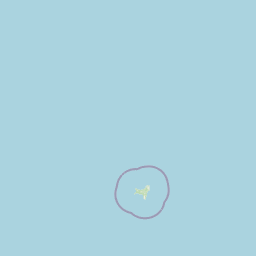
Map view of Christmas Island National Park

Use this park location map to pinpoint Christmas Island National Park in Australia, understand its exact geographic position, and read its mapped placement within the surrounding landscape more clearly.

Pigeon | © OpenStreetMap contributors

Location context for Christmas Island National Park

Christmas Island
Natural feature types

Explore the Natural Features of Christmas Island National Park

Navigate the diverse physical landscape of Christmas Island National Park by viewing our comprehensive index of named natural features. MoriAtlas provides a clear geographic record of the wetlands, caves, and coastal formations that define this unique ecosystem.
Recorded earthquake history

Review the Recorded Seismic History of Christmas Island National Park

Explore a structured collection of historical earthquake records associated with the geography of Christmas Island National Park. MoriAtlas provides this catalogue to assist with your investigation of regional seismic history, presenting event dates, magnitudes, and epicentre data in an accessible, browseable format.

Christmas Island National Park Earthquake History

Catalogued events

3 events

Strongest magnitude

Magnitude 5.4

Most recent event

Jan 22, 2011

This history includes earthquakes recorded inside the park or within 50 km of its borders

Park atlas

Trace the regional context of protected landscapes and island geography, comparing areas in the Indian Ocean near Christmas Island National Park.

Explore Other Protected Areas and National Parks Near Christmas Island National Park

Continue your exploration from Christmas Island National Park by browsing other protected areas and national parks in its broad regional vicinity. This geographic view helps users compare distinct island ecosystems and diverse conservation landscapes, tracing interconnected protected zones across the Indian Ocean.
National parkBanten
391 km away#1 closest

North

Ujung Kulon National Park: Atlas of Java's Last Lowland Rainforest and Protected Landscapes

Explore the unique geography and critical conservation importance of this vital protected area.

Ujung Kulon National Park, located in Banten, Indonesia, is a crucial protected landscape recognized for its ecological significance. This national park represents the last substantial area of lowland rainforest remaining on Java, making it an indispensable sanctuary. It is globally recognized as the primary and final refuge for the Javan rhinoceros, a critically endangered species. The park's geography encompasses the Ujung Kulon peninsula and mountain ranges, alongside vital marine environments, contributing to its status as a UNESCO World Heritage Site and a cornerstone of regional conservation efforts.

Area
497.59 km²
Established
1992
IUCN
II
Visitors
12K annual
National parkIndonesia
About 409 km away#2 closest

North

Gunung Halimun National Park: Mapped Protected Landscape within Indonesia's Geography

Explore the park's national park designation and regional terrain.

Gunung Halimun National Park stands as a key protected national park in Indonesia, offering a deep dive into its specific geographic identity and landscape context. Through this detail page, users can explore the mapped boundaries, understand its place within the regional geography of Indonesia, and gain insight into its protected area status. This content focuses on the atlas exploration value of Gunung Halimun National Park, detailing its terrain and conservation landscape.

National parkIndonesia
About 426 km away#3 closest

North

Gunung Gede Pangrango National Park: Indonesia's National Park with Distinct Protected Geography

Explore mapped boundaries and natural landscape context.

Gunung Gede Pangrango National Park represents a key protected area within Indonesia's diverse geography. This national park provides a focal point for understanding mapped boundaries and the specific natural landscape character it preserves. Its designation as a national park highlights its importance for regional protected land discovery and the detailed study of Indonesia's archipelagic features.

Area
242.71 km²
Established
1980
Relief
Mountain
Climate
Tropical
National parkIndonesia
About 490 km away#4 closest

Northeast

Mount Ciremai National Park: A Protected Landscape Within Indonesia's Geography

Explore mapped boundaries and regional park context.

This national park in Indonesia provides a unique opportunity to study protected landscape geography. Access detailed information on Mount Ciremai National Park's mapped boundaries and its regional context, contributing to a richer understanding of Indonesia's diverse natural terrain and protected areas. It serves as a crucial point for atlas-based geographic discovery within the archipelago.

Area
155 km²
Established
2004
Visitors
15.1K annual
Relief
Mountain
National parkSumatra
507 km away#5 closest

North

Bukit Barisan Selatan National Park: Sumatra's Critical Tropical Rainforest Corridor

Explore mapped boundaries and regional geography within this protected area.

Bukit Barisan Selatan National Park is a substantial national park located in Sumatra, Indonesia, designated as a protected landscape along the southern Bukit Barisan mountain range. Spanning a considerable area, it functions as a crucial corridor of tropical rainforest, playing a pivotal role in conservation efforts and the preservation of Sumatra's unique geographic identity. This page serves as a dedicated entry point for understanding the park's protected area status and its mapped presence within the broader regional geography of Indonesia.

Area
3,568 km²
Established
1982
IUCN
II
Relief
Mountain
Watercolor illustration of islands with trees and a sunset over the water
National parkIndonesia
About 530 km away#6 closest

North

Kepulauan Seribu National Park: Mapped Marine Protected Landscape in Indonesia

Explore the coral reefs and island geography of this unique national park.

Kepulauan Seribu National Park is a significant marine protected area located in Indonesia's Java Sea. This archipelago comprises numerous islands and extensive coral reef systems, serving as a crucial habitat for diverse marine life, including endangered sea turtles. The park's geography is characterized by low-lying coral islands and underwater reef platforms, offering unique opportunities for understanding marine conservation efforts and island ecosystems within the broader Indonesian context. Its protected status underscores its importance for both ecological preservation and geographic study.

Area
1,074.89 km²
Established
1982
IUCN
II
Visitors
777K annual
National parkLampung
571 km away#7 closest

North

Way Kambas National Park: Mapped Lowland Rainforest and Wetland Ecosystems

Explore the geography and protected landscape of this Indonesian national park.

Way Kambas National Park in Lampung, Indonesia, is a significant protected area characterized by its extensive lowland rainforest and varied wetland habitats. The park's landscape features swamp forests, coastal fringes, and river systems, creating a unique ecological mosaic. It serves as a critical sanctuary for endangered species, offering a vital context for understanding Sumatra's remaining natural landscapes. Explore the mapped boundaries and geographic identity of this important conservation area.

Area
1,300 km²
Established
1989
IUCN
II
Visitors
2.6K annual
National parkIndonesia
About 611 km away#8 closest

Northeast

Gunung Merapi National Park: Indonesia's Protected National Park Landscape and Geography

Explore mapped boundaries and regional natural terrain within Indonesia.

Gunung Merapi National Park stands as a distinct protected area within the Indonesian atlas, offering insights into its specific landscape and geographic identity. This page provides a focused entry point for understanding the park's designation as a national park, detailing its mapped environmental features and regional context. Discover the characteristics that define Gunung Merapi National Park as a key component of Indonesia's protected lands, facilitating a structured approach to geographic exploration.

Area
64.1 km²
Established
2004
Relief
Mountain
Climate
Tropical

Common questions about visiting, size, designation, and location context for Christmas Island National Park

Christmas Island National Park FAQs for park facts, access, geography, and protected area context

Find quick answers about Christmas Island National Park, including protected-area facts, park geography, trail and visitor context, and how the park fits into its surrounding country and regional landscape.
MoriAtlas Explorer

Continue Your Protected Areas Search Across the Global Atlas

Deepen your exploration by continuing the structured search for national parks and protected areas worldwide. Utilize the comprehensive filtering capabilities to compare different conservation landscapes and refine your understanding of global park geography. Discover more about the distribution and characteristics of protected natural areas.

Global natural geography