Why Dorset Heaths stands out
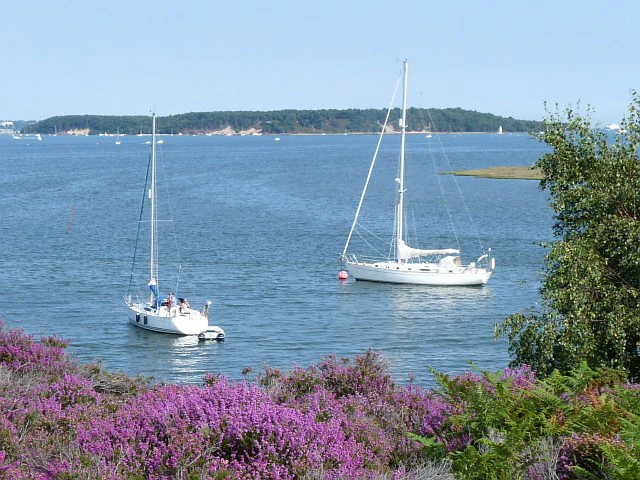
The Dorset Heaths are best known as one of the most important concentrations of lowland heathland remaining in lowland Britain. The defining character of the region is the open mosaic of dry heath, valley mire, gorse-clad slopes, pine and birch woodland, and conifer plantations that stretch across the Poole Basin. This heathland mosaic is closely tied to the area's underlying geology, occupying the Tertiary Beds that contrast so strongly with the surrounding chalk. The result is a sweeping landscape of heather, scattered trees, farmland, scrub, and open river valleys, framed by the sheltered waters of Poole Harbour and broken by distinctive landmarks such as the dunes of Studland and Brownsea Island. The Dorset Heaths are also notable for the unusually dense concentration of overlapping conservation designations protecting their heathland, wetland, and coastal habitats.
Dorset Heaths history and protected-area timeline
The Dorset Heaths as a recognized natural region are a relatively modern construct, formalized through the Natural England system of National Character Areas. Their identification as National Character Area 135 reflects a long-standing recognition that the heathlands of the Poole Basin form one of the most important surviving lowland heath landscapes in lowland Britain.
The international profile of the area was significantly raised in 1998, when the Dorset Heathlands were designated under the Ramsar Convention, drawing attention to the wetland values of the region on a global stage. Over the following years, a series of overlapping national and European designations were applied to different components of the heathland mosaic, including Special Protection Areas, Special Areas of Conservation, and National Nature Reserves. These successive layers of protection reflect the gradual recognition of the ecological importance of an area that had previously been shaped by centuries of common-land grazing, forestry, and low-intensity agriculture.
Dorset Heaths landscape and geographic character
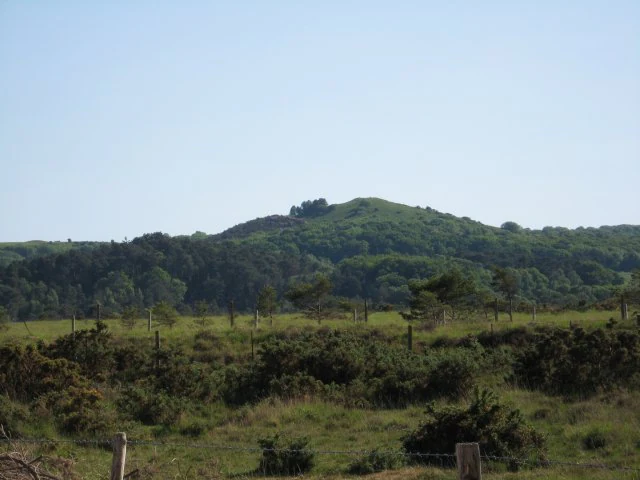
The landscape of the Dorset Heaths is dominated by gently undulating lowland, where open expanses of heath, scattered pines, and gorse alternate with blocks of conifers, broadleaved woodland, scrub, and farmland. The sandy, acidic soils derived from the Tertiary Beds produce a soft, rolling terrain that sits in clear contrast to the brighter, smoother chalk landscapes that border much of the region. Creech Barrow Hill rises to 193 metres at the highest point, but the average elevation across the area is only around 32 metres, giving the region a generally low and open character.
The river system plays a defining role in shaping the heathland scenery. The valleys of the Frome, Stour, Moors, Piddle, Sherford, Allen, Corfe, and Dorset Avon cut flat-bottomed channels through the heath, opening out into floodplain pastures that interrupt the surrounding dry heath. These river corridors often shelter wet heath and valley mire, adding ecological and visual complexity to the landscape. Along the coast, the scenery changes character to include sandy shores, dunes such as those at Studland, the sheltered waters of Poole Harbour, and the wooded shoreline around Brownsea Island.
At the margins of the region, the heathland gives way to a perimeter of low, rolling hills that signal the transition into the chalk downland of Dorset and the surrounding counties. Within the basin itself, stands of conifer plantation act as locally dominant landmarks, while patches of broadleaved woodland, scrub, and rough farmland break up the otherwise open view across the heath.
Dorset Heaths ecosystems, habitats, and plant life
The ecological character of the Dorset Heaths is defined by the intimate mixture of dry and wet lowland heath that covers much of the Poole Basin. The acidic, nutrient-poor soils derived from the Tertiary geology support classic heathland vegetation, dominated by heather, gorse, and scattered pines, with birch and other broadleaves adding variety in places. Where the terrain dips toward river courses, the heath becomes wetter, giving rise to mires and wet heath communities that are among the most threatened habitat types in lowland Britain.
Beyond the heath itself, the region supports a rich mosaic of supporting habitats. Conifer plantations intersperse with patches of broadleaved woodland and scrub, while open farmland, valley pastures, and floodplain meadows add further variety. Along the coast, the ecology shifts to include sand dunes, shingle, saltmarsh, and the sheltered estuarine habitats of Poole Harbour, which is internationally recognized for its bird populations.
The combination of dry heath, wet heath, mire, woodland, farmland, dunes, and estuarine environments gives the Dorset Heaths an unusually concentrated ecological identity for a lowland area. This mosaic is one of the main reasons the region has accumulated so many overlapping conservation designations over time.
Dorset Heaths wildlife and species highlights
The Dorset Heaths are particularly significant for the birdlife associated with lowland heath and the adjacent wetlands. The heathland and Poole Harbour together support internationally important numbers of birds, reflected in the region's Ramsar designation and its multiple Special Protection Areas. Species typical of lowland heath, such as those associated with dry and wet heath mosaites, benefit from the open, undisturbed character of large parts of the area.
The river valleys and wet heath components of the region extend the wildlife value beyond classic dry heath species, supporting birds and other fauna tied to mire, floodplain, and damp woodland habitats. Along the coast and within Poole Harbour, the wetlands and reedbed environments add a further faunal dimension, with the harbour widely recognized as one of the most important estuarine habitats in southern England for migratory and wintering birds.
Dorset Heaths conservation status and protection priorities
The Dorset Heaths are among the most heavily protected lowland landscapes in the United Kingdom, with a dense layering of international, European, and national conservation designations. The region as a whole is internationally recognized through the Dorset Heathlands Ramsar site, designated on 1 October 1998, which highlights the area's wetland significance on a global level.
European-level protections reinforce this status. Special Protection Areas cover the Dorset Heathlands, Poole Harbour, and the Avon valley, safeguarding important bird populations. Complementing these are multiple Special Areas of Conservation, including the Dorset Heaths SAC, the Dorset Heaths (Purbeck and Wareham) and Studland Dunes SAC, the Isle of Portland to Studland Cliffs SAC, and the River Avon SAC. Together, these sites protect the dry and wet heathland, dune, cliff, and freshwater habitats that make up much of the region's ecological value.
At the national level, National Nature Reserves add a further layer of protection. Studland and Godlingston Heath, Holt Heath, Hartland Moor, Stoborough Heath, Holton Heath, Morden Bog, and Arne Reedbeds together anchor the conservation framework within the wider heathland mosaic. The cumulative effect is a region where large areas of lowland heath, wetland, and coastal habitat are protected under multiple overlapping designations, reflecting recognition of the Dorset Heaths as a key stronghold for some of the most threatened lowland habitats in Britain.
Dorset Heaths cultural meaning and human context
The cultural context of the Dorset Heaths is shaped by centuries of low-intensity land use on the sandy soils of the Poole Basin. Heathland of this kind has traditionally supported common grazing, seasonal agriculture, forestry, and game management, practices that have helped to maintain the open character of the modern landscape. Rural settlements such as Wareham, Wimborne Minster, and Fordingbridge grew up as service centres within this heathland environment, and their relationship with the surrounding heath continues to define the regional identity.
The proximity of large towns such as Poole, Bournemouth, and Christchurch adds a modern cultural layer, in which the heathlands function both as a working landscape and as a recreational and ecological resource close to major centres of population. This blend of long-standing rural character and contemporary urban pressure gives the Dorset Heaths a distinctive place within the wider cultural geography of southern England.
Top sights and standout views in Dorset Heaths
The Dorset Heaths stand out for the exceptional density of overlapping nature conservation designations protecting their heathlands, wetlands, and coastal habitats. Few lowland regions in the United Kingdom combine so many different layers of international, European, and national protection within a single natural area.
The heathland mosaic itself, with its heather, gorse, scattered pines, conifer blocks, woodland, and open farmland, gives the region a distinctive visual and ecological identity that contrasts strongly with the chalk landscapes of surrounding Dorset. The integration of this mosaic with major river valleys, the dunes of Studland, and the sheltered waters of Poole Harbour adds further depth. The result is a region of lowland England whose ecological significance, landscape character, and position along the South East Dorset coast combine to make it one of the standout protected natural areas of southern England.
Best time to visit Dorset Heaths
Although specific seasonal opening arrangements vary across the many individual sites within the Dorset Heaths, the region's heathland character gives it a strong seasonal rhythm. Late summer and early autumn are traditionally the most atmospheric times on the heaths, when heather and gorse come into bloom and the open landscape takes on rich purple and gold tones. Spring and early summer can be rewarding for woodland and valley mire habitats, while winter brings flocks of birds to Poole Harbour and the surrounding wetlands.
Milder months generally offer easier walking conditions across the open heath, while the exposed nature of much of the terrain means that very wet or windy weather can affect access to particular sites. Visitors interested in birdlife often find that the cooler months coincide with the most concentrated wildfowl and wader activity around the harbour, while heathland flowers and insects are at their most visible in warmer weather.