Why East Carpathian Biosphere Reserve stands out
The East Carpathian Biosphere Reserve is most recognized for its pioneering role as the world's first three-country UNESCO biosphere reserve, bringing together the protected landscapes of the eastern Carpathians into a single shared conservation framework. It is notable for the unbroken continuity of Carpathian beech forests and other primeval forest remnants that stretch across national borders. The reserve is also distinguished by the inclusion of large tracts of the Bieszczady mountains, a region widely valued in central Europe for its wilderness character, sweeping polonyna meadow landscapes, and high biodiversity. Its recognition through the European Diploma of Protected Areas further highlights its importance among Europe's premier transboundary conservation landscapes.
East Carpathian Biosphere Reserve history and protected-area timeline
The East Carpathian Biosphere Reserve was established in 1992 under the UNESCO Man and the Biosphere programme, becoming the first biosphere reserve anywhere in the world to span three countries. Its founding brought together the protected areas of the Bieszczady region in Poland with the Protected Landscape Area of Eastern Carpathians in Slovakia, creating an early example of transboundary conservation cooperation in central and eastern Europe.
In 1997, the Slovak component was reorganized, with the original Protected Landscape Area being succeeded by Poloniny National Park and its surrounding buffer zone. The following year, Ukrainian parks were formally incorporated into the reserve, completing its three-country composition and aligning it more closely with the UNESCO biosphere reserve model of core, buffer, and transition zones.
A substantial recognition of the reserve's importance came in 1998, when the Council of Europe awarded the European Diploma of Protected Areas to both Bieszczady National Park in Poland and Poloniny National Park in Slovakia, highlighting the international value of the landscapes and ecosystems protected within the reserve.
East Carpathian Biosphere Reserve landscape and geographic character
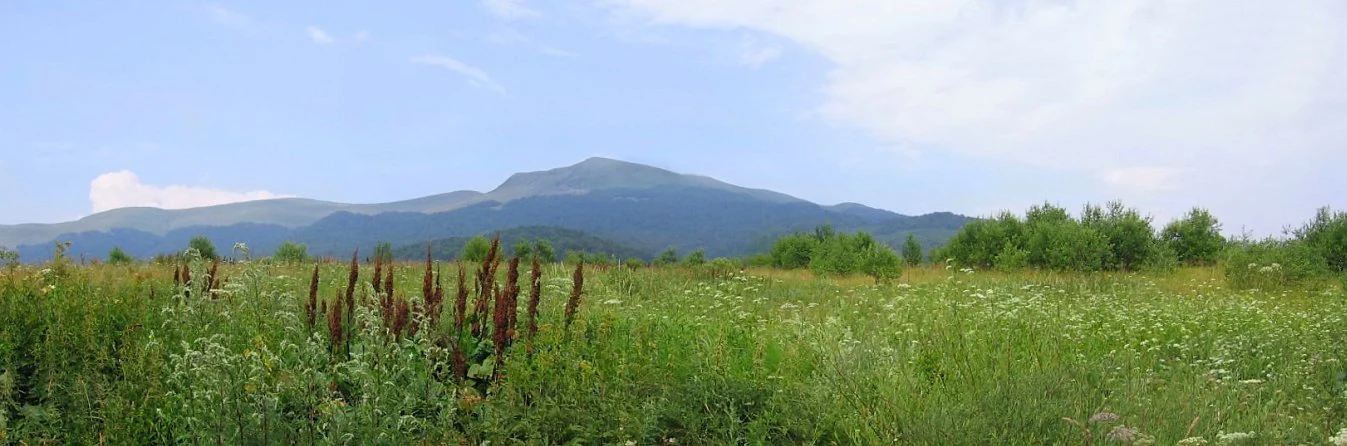
The landscape of the East Carpathian Biosphere Reserve is defined by the Bieszczady section of the eastern Carpathians, a mountain chain characterized by long, parallel ridges separated by deeply cut river valleys. Slopes are typically cloaked in beech and mixed Carpathian forest, while higher elevations open into sweeping mountain meadows known as polonyny, which give the region much of its distinctive visual character.
Within the reserve, the most prominent summits include Tarnica, the highest peak of the Polish Bieszczady, and other ridgelines that mark the watershed between the San and other Carpathian river systems. The terrain transitions from forested foothills through subalpine grasslands to the rounded summits of the main range, producing a layered landscape where the structure of the mountains is clearly visible.
River valleys carved by the San, Solinka, and other tributaries shape much of the reserve's lower elevations. These valleys create long corridors of varied forest and meadow habitats and play a defining role in the overall character of the landscape, supporting both ecological connectivity and the scenic transitions that distinguish this part of the Carpathians.
East Carpathian Biosphere Reserve ecosystems, habitats, and plant life
The East Carpathian Biosphere Reserve protects one of the most extensive and ecologically continuous forest complexes in the eastern Carpathians. Its habitats range from lowland and foothill forests along the river valleys to montane beech forests, mixed spruce forests, and subalpine vegetation on the higher ridges. The combination of these habitats under a unified conservation framework makes the reserve an important stronghold for the natural woodland heritage of central Europe.
A signature feature of the reserve is the presence of large tracts of Carpathian beech forest, including stands of old-growth and semi-natural forest that have survived in relatively intact condition due to low historical population density and limited industrial exploitation of these mountains. The polonyna meadows above the treeline add a secondary but ecologically essential habitat layer, supporting both specialized meadow flora and the birdlife, insects, and small mammals associated with open montane environments.
The reserve's value lies not only in the variety of habitats it encompasses but also in the connectivity it maintains across the Polish, Slovak, and Ukrainian Carpathians. By linking protected areas across national borders, the reserve allows ecological processes and species movements to function at a regional scale, reinforcing the resilience of the broader Carpathian forest landscape.
East Carpathian Biosphere Reserve wildlife and species highlights
The forests and meadows of the East Carpathian Biosphere Reserve support a rich and characteristic Carpathian fauna. Large carnivores, including brown bears, wolves, and lynx, are present in the broader Carpathian landscape that the reserve helps to protect, and the relatively undisturbed forest tracts are considered important for their continued viability in this part of Europe.
The reserve is also notable for its populations of large ungulates, especially red deer, which thrive in the mosaic of forest and meadow habitats typical of the Bieszczady. Rarer or more localized species, such as the European bison reintroduced in parts of the Polish Bieszczady, further underscore the ecological importance of the region as a refuge for species once lost from much of central Europe.
Birdlife is similarly rich. The polonyna meadows and forest edges host a variety of mountain and forest bird species, including raptors and ground-nesting meadow specialists. The reserve's transboundary character strengthens these wildlife values by maintaining continuous habitat across political boundaries, supporting the long-term conservation of species that depend on extensive, low-disturbance landscapes.
East Carpathian Biosphere Reserve conservation status and protection priorities
As a UNESCO biosphere reserve, the East Carpathian Biosphere Reserve represents one of the most internationally significant conservation designations in the eastern Carpathians. Its creation in 1992 marked the first time three countries jointly formed a biosphere reserve, demonstrating how cross-border cooperation can protect ecological values that no single nation could conserve on its own.
The reserve uses the UNESCO three-zone model, combining strict core protection in the national parks with buffer functions in adjoining landscape parks and transition zones that permit sustainable human activity. This structure allows the gradual integration of conservation with land use, while maintaining the integrity of the most sensitive habitats and landscapes.
The awarding of the European Diploma of Protected Areas by the Council of Europe to both the Polish Bieszczady National Park and the Slovak Poloniny National Park in 1998 highlighted the reserve's importance at the European level. The diploma recognizes not just the natural qualities of these parks but also the effectiveness of their management, reinforcing the reserve's status as a benchmark for transboundary conservation in European mountain regions.
East Carpathian Biosphere Reserve cultural meaning and human context
The Bieszczady region, around which the East Carpathian Biosphere Reserve is built, has a layered cultural and historical character shaped by its position at the meeting point of Polish, Slovak, Ukrainian, and historically also other communities. Border shifts, population displacement after the Second World War, and the gradual depopulation of highland villages have left the landscape relatively open and sparsely inhabited, an important factor in the preservation of its wild character.
Traditional highland culture in the Bieszczady, including dispersed settlement, pastoral land use, and the maintenance of polonyna meadows through seasonal grazing, continues to influence both the appearance and the ecology of the landscape. The presence of Boyko, Lemko, and other regional communities, alongside the area's reputation for solitude and memory of former villages, contributes to the strong sense of place that frames the reserve's natural values.
Top sights and standout views in East Carpathian Biosphere Reserve
The defining strength of the East Carpathian Biosphere Reserve lies in its transboundary integration of high-value Carpathian forest landscapes into a single coordinated conservation system. By uniting the Polish Bieszczady, the Slovak Poloniny, and the Ukrainian Uzh area, the reserve preserves a continuous block of eastern Carpathian nature that would otherwise be fragmented by national borders.
Its international recognition through UNESCO and the European Diploma of Protected Areas, combined with its pioneering three-country structure, makes it a flagship case of European cooperative conservation. The reserve's extensive beech forests, polonyna meadows, and recovering populations of large mammals collectively mark it out as one of the most significant mountain protected area complexes in central Europe.
Best time to visit East Carpathian Biosphere Reserve
The eastern Carpathians within the East Carpathian Biosphere Reserve experience distinct seasonal changes that strongly shape the experience of the landscape. Late spring and early summer bring fresh green foliage, flowering mountain meadows, and active birdlife in the polonyny, making this period particularly rewarding for nature observation.
Autumn is traditionally associated with clear, expansive views, colorful forest displays, and a quieter atmosphere, while winter covers the higher ridges in snow and emphasizes the wild, remote character of the area. Each season highlights a different aspect of the reserve: spring and summer for biodiversity and meadow landscapes, autumn for scenery and tranquility, and winter for the stark mountain silhouette that defines the Bieszczady skyline.