
Mori Atlas logo
Nature reserveHeidesee

A glacial-formed sanctuary preserving rare bog forest and heath ecosystems in Munsterland

Heidesee Nature Reserve and Protected Heathland Landscapes in North Rhine-Westphalia Germany

(Naturschutzgebiet Heidesee)

Heidesee functions as a critical nature reserve southeast of Coesfeld, representing a distinctive slice of the sandy Munsterland landscape. The protected area features a mosaic of acidic heath ponds and bog forests that serve as an essential breeding site for endangered moor frogs. Through mapped boundaries and environmental data, this site illustrates the ecological significance of the Coesfelder Heide and its long-standing habitat management strategies.

nature reserveheathlandbog forestmoor frogheath pondNorth Rhine-Westphalia
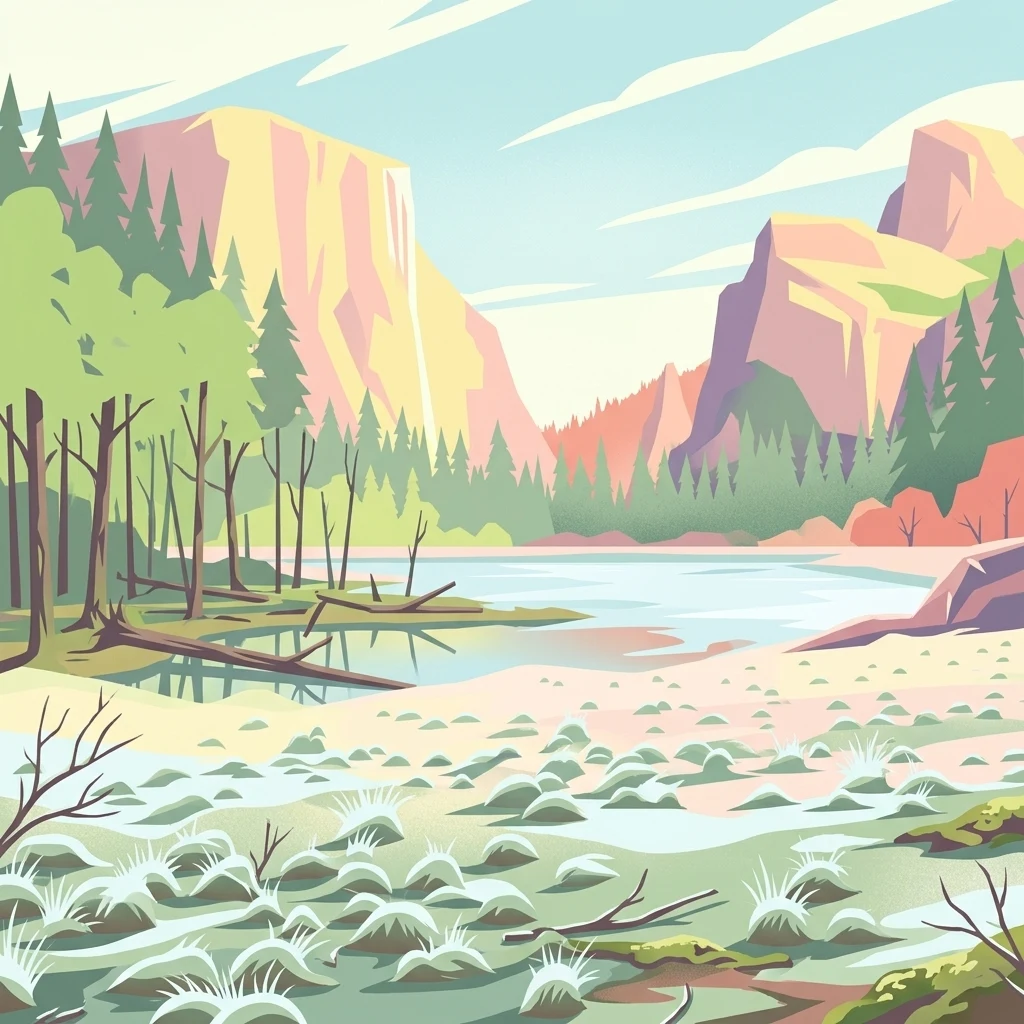
A graphic illustration showing a lake surrounded by forest, grassy wetlands, and mountains under a light sky.

Heidesee

Nature reserve

Park overview

Structured park overview, official facts, and landscape profile for Heidesee (Coesfeld)

Heidesee (Coesfeld) park facts, protected area profile, and essential visitor context

Review the core facts for Heidesee (Coesfeld), including designation, size, terrain, visitor scale, habitats, and operating context in one park-focused overview.

About Heidesee (Coesfeld)

Located in the western Munsterland region of North Rhine-Westphalia, the Heidesee nature reserve is a compact protected site that captures a representative slice of the sand and heathland landscape that once covered much of northern Germany's lowlands. Although the reserve is small, the combination of habitats it preserves is unusually rich for the region.

The central feature is the shallow heath pond of the same name, a small body of water that sits in a sandy depression within the broader Coesfelder Heide woodland. According to geological interpretation, the depression itself may be a wind-eroded sand feature dating back to the last ice age. Around the pond, the landscape transitions through a fringe of bog forest into open heath vegetation, with wet bog communities lining the water's edge.

The reserve is administered as an IUCN Category IV habitat and species management area, with protection that goes beyond ordinary landscape preservation. Its focus is on keeping the heath habitats open by maintaining traditional grazing with Heidschnucken, the hardy grey heath sheep characteristic of northern Germany. While the protected area is fenced to allow wildlife recovery and to keep disturbance low, an interpretive trail loops around the perimeter so visitors can experience the landscape without entering sensitive zones. Together, these features make the Heidesee an unusually complete, if compact, example of a managed heath and bog ecosystem in the western Munsterland.

Quick facts and research context for Heidesee (Coesfeld)

Heidesee is a small nature reserve located southeast of Coesfeld in the Munsterland region of North Rhine-Westphalia, Germany. The reserve covers 5.2 hectares of sandy heathland and bog forest centered on a shallow heath pond of glacial origin, sitting at about 75 meters elevation in a wind-scoured sand depression.

Designated in 1985 under the Coesfelder Heide/Flamschen landscape plan, it is managed today by the Kreis Coesfeld district authority and is recorded internationally as an IUCN Category IV habitat and species management area under WDPA identifier 163591. The site is officially catalogued in the North Rhine-Westphalian nature reserve register as COE-012.

The reserve's defining ecological value rests on its unusually complete mosaic of dry heath, bog forest, and open acidic water. Within a few hectares it supports a regionally notable population of the endangered moor frog, alongside typical heath, bog, and bog-forest plant assemblies. The protected core is fenced to limit disturbance, while a perimeter walking trail allows the landscape to be observed from outside.

Protection and recognition

Examine the verified conservation records and international registry data for Heidesee.

Heidesee Protection Status And Official Protected Area Documentation

Conservation researchers can review documented protection status and official database records associated with Heidesee. Structured registry entries provide reliable insight into international recognition parameters and administrative frameworks.

Protection details

WDPA ID
163591
Park context

Deeper park guide and search-rich context for Heidesee (Coesfeld)

Heidesee (Coesfeld) history, landscape, wildlife, and travel context

Explore Heidesee (Coesfeld) through its history, landscape character, ecosystems, wildlife, conservation priorities, cultural context, and seasonal travel timing in a structured park guide built for atlas discovery and search intent.

Why Heidesee (Coesfeld) stands out

Heidesee is most renowned for providing one of the region's most important breeding sites for the moor frog, a species that has become increasingly rare in Germany. The acidic, nutrient-poor heath pond offers exactly the conditions this amphibian needs to complete its metamorphosis, with surrounding bog vegetation providing stable humid microclimates. The reserve is also known for its compact but unusually complete mosaic of heath, bog forest, and open water habitats. Within a few hectares, visitors find bell heather and common heather communities, sphagnum moss cushions, cottongrass, small cranberry patches, and the carnivorous round-leaved sundew along the pond's edge. This density of distinct habitat types in such a small space is part of what makes Heidesee a meaningful conservation site and a recognizable reference point within the broader Coesfelder Heide.
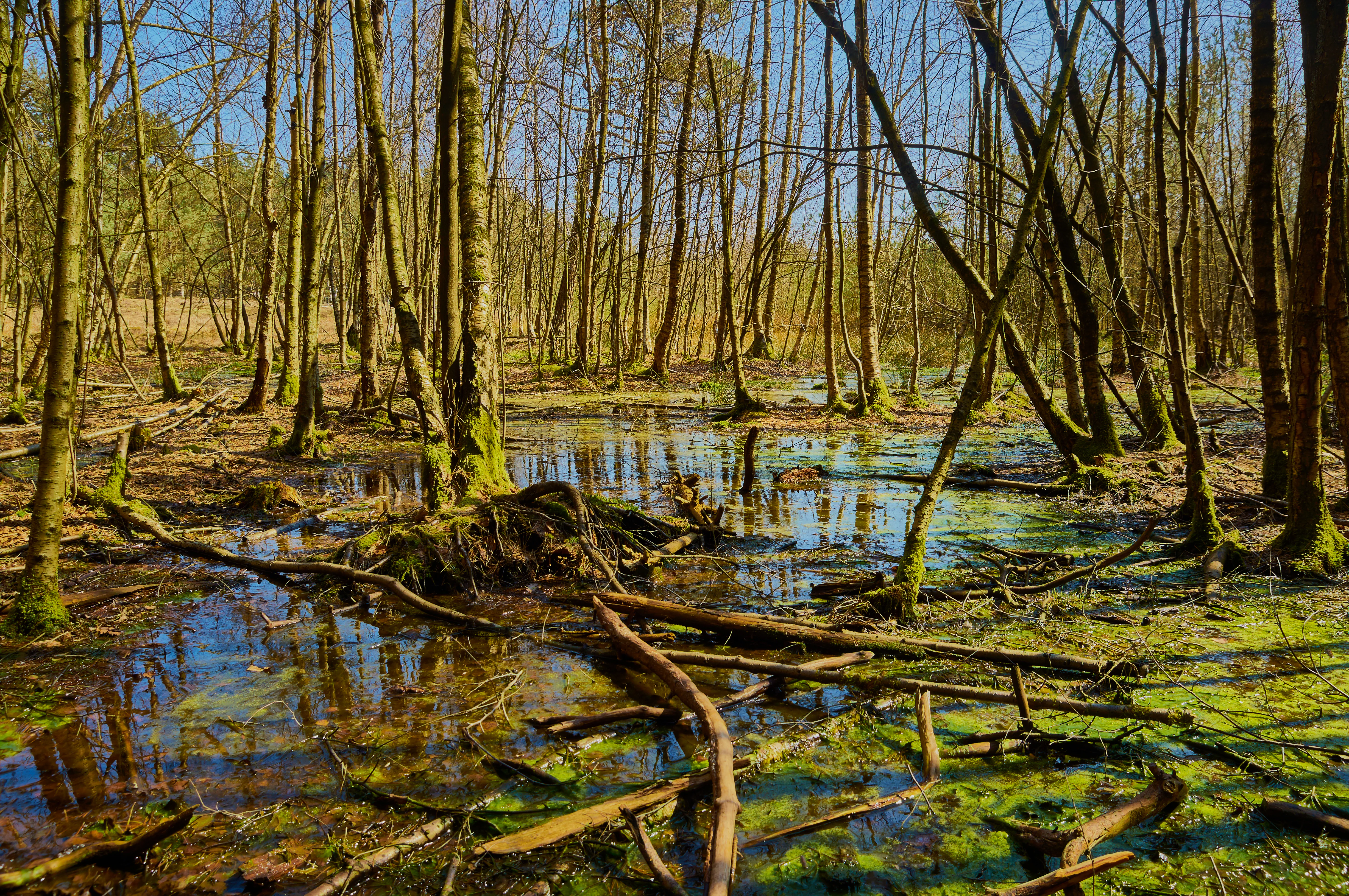
A swampy woodland scene with a shallow pond reflecting trees; mossy tree roots and fallen branches are visible in the foreground with a dense stand of slender trees in the background.
A shallow pond within the bog woodland of Heidesee Nature Reserve.

Heidesee (Coesfeld) history and protected-area timeline

The Coesfelder Heide has been shaped by centuries of human use as well as by natural glacial processes. From the late nineteenth century onward, large parts of the original open heath landscape began to scrub over and convert to woodland as traditional grazing practices declined. By the late twentieth century, only small fragments of the historic open heath character remained across the wider region, and these fragments became increasingly important for biodiversity conservation.

Recognizing the ecological value of those remaining fragments, the Kreis Coesfeld district authority included the Heidesee in the Coesfelder Heide/Flamschen landscape plan, which was finalized in 1985. The same year, the site was formally designated as a Naturschutzgebiet, or nature reserve, under North Rhine-Westphalian conservation law. The reserve was assigned the official code COE-012 in the state register and was later recorded in the international World Database on Protected Areas under WDPA identifier 163591.

Since designation, the reserve has been managed primarily to retain its open heath and bog habitat character. Traditional grazing with Heidschnucken was reintroduced as a management tool, and infrastructure such as the perimeter trail and the information panel at the main entrance was installed to support public understanding while keeping disturbance to wildlife low. The reserve's IUCN Category IV status reflects an ongoing, active conservation approach rather than passive preservation, and continues to shape how the site is treated today.

Heidesee (Coesfeld) landscape and geographic character

The Heidesee reserve sits within the Coesfelder Heide, a sandy woodland area that extends from the residential settlement of Goxel in the northeast, across the rounded hilltops of the Monenberg and Hünsberg, toward the Heubach lowlands near the district boundary between Coesfeld and Borken. This wider setting is gently undulating rather than dramatic, with glacial sand deposits forming the substrate for every habitat within the reserve and its surroundings.

The central landform is the basin holding the shallow heath pond. The origins of this depression are tied to post-glacial processes, with prevailing winds believed to have scoured out an overlying sand cover and left the small wet hollow that now holds water year-round. The pond's water is acidic and nutrient-poor, mirroring the surrounding sand and bog environment and limiting colonization by more competitive plant species.

Surrounding the basin, the landscape opens into heath vegetation on sandy, acidic soils. Natural succession toward scrub and woodland is held back by the grazing of Heidschnucken. Small juniper bushes stand scattered across the heath, individually protected against browsing during their early years with timber guards. Bog forest occupies transitional wetter areas immediately around the pond, contrasting sharply with the open heath and the reflective surface of the water.
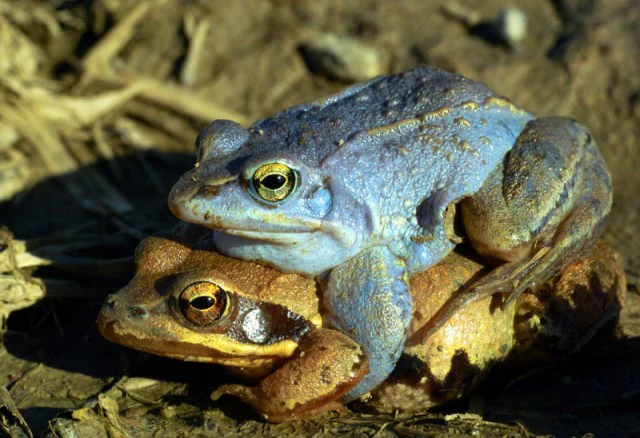
A blue male moor frog mating with a brownish female frog on dry, textured ground.
A pair of moor frogs, showing the distinct blue breeding coloration of the male.

Heidesee (Coesfeld) ecosystems, habitats, and plant life

The reserve's ecological character is shaped by its sandy, acidic substrate and its wet central hollow. This small-scale combination produces what ecologists describe as a heath and bog mosaic, with distinct plant communities that depend on low nutrient levels and unusually stable hydrology.

On the dry sandy fringes, typical heath vegetation dominates, including bell heather, common heather, and patches of sand nutrient-poor grassland. Early hair-grass tolerates these conditions well, forming small tussocks across the exposed sand and adding fine texture to the open heath. Scattered common juniper bushes, individually protected against browsing in their early stages, add structural variety and visual interest to the otherwise low heath vegetation.

At the wet edges of the pond, bog plant communities have established themselves in a narrow but ecologically significant zone. Cottongrass, sphagnum moss, small cranberry, and the carnivorous round-leaved sundew all occur here, occupying permanently waterlogged ground where acidity and low nutrients keep the habitat distinct from the surrounding heath. Bog forest occupies the transition fully, with moisture-tolerant trees and a shaded understory that contrasts sharply with both the open heath and the reflective pond surface.

Heidesee (Coesfeld) wildlife and species highlights

The Heidesee is perhaps most celebrated for its role as a breeding site for the moor frog, an amphibian that has become rare across much of its former German range. The pond's acidic water, absence of fish, and surrounding wet vegetation together provide ideal spawning and larval habitat, and the reserve supports what is locally regarded as a significant moor frog population. This amphibian focus is explicit enough that the source material flags it as a defining special feature of the protected area.

Bird and mammal life is not the primary focus of the site, but invertebrates are strongly represented. A wide range of insect species occurs in and around the reserve, notably grasshoppers in the dry heath, dragonflies patrolling over the pond, and solitary bees nesting in the open sand. The dragonfly community includes the white-faced darter, a species more typical of acidic bog pools, which is recorded with some frequency around the Heidesee.

Predatory invertebrates such as antlions are present as well, with larvae constructing their characteristic conical pits in the dry sand to trap smaller insects. Reptiles such as the forest lizard are scattered across the drier heath sections, while tiger beetles patrol open sand surfaces, completing a fauna shaped strongly by the dry, acidic character of the substrate. Together, these groups illustrate how the reserve's ecological identity moves well beyond its most famous inhabitant.

Heidesee (Coesfeld) conservation status and protection priorities

Designated in 1985 as part of the Coesfelder Heide/Flamschen landscape plan, the Heidesee nature reserve emerged at a moment when conservation practitioners across northern Germany were working to retain fragments of threatened heath and bog habitat. By the late twentieth century, large areas of what had once been open heath had been lost to forest succession and agricultural intensification, and isolated sites like the Heidesee became disproportionately important for biodiversity conservation in the Munsterland.

The reserve is classified at the international level as an IUCN Category IV habitat and species management area, a designation that emphasizes active intervention. Rather than being left entirely to natural processes, the site requires ongoing management, including controlled grazing by Heidschnucken, scrub control to keep heath vegetation open, and careful hydrological containment to preserve the acidic conditions on which bog and pond species depend.

Protection is also enforced through access restrictions. The reserve is fenced, and visitors are asked not to enter the protected zones directly, which reduces trampling damage and limits disturbance to sensitive species such as the moor frog during its breeding period. The circular trail around the perimeter, supported by an information panel at the main Coesfeld-side entrance, allows the conservation message to be communicated without compromising the site's ecological value. The site's registration in the World Database on Protected Areas reflects its significance in national and international conservation frameworks.

Heidesee (Coesfeld) cultural meaning and human context

Heidesee sits within a broader cultural landscape in which open heath and grazing with hardy sheep breeds have shaped rural identity for generations. The tradition of using Heidschnucken to maintain sandy heathland extends back centuries across northern Germany, and remains visible today in the small flocks that keep the vegetation around the Heidesee open and that reinforce the visual character of the surrounding Coesfelder Heide.

Locally, the broader Coesfelder Heide serves as a recreational corridor and is used extensively by walkers, joggers, and mountain bikers. Although the Heidesee protected site itself is fenced, the surrounding sandy woodland forms part of how residents and visitors experience the region's countryside, and connects the small reserve to a wider cultural pattern of low-intensity land use on glacial sand soils. The presence of interpretive infrastructure, such as the information panel at the main entrance, also reflects an effort to communicate that heritage to the public without compromising the protected habitats.

Top sights and standout views in Heidesee (Coesfeld)

A small but unusually complete heath, bog forest, and pond ecosystem arranged within roughly five hectares southeast of Coesfeld. The reserve is best known as an important breeding site for the endangered moor frog, supported by the acidic pond and the surrounding wet bog vegetation.

The site preserves a representative slice of the sandy Coesfelder Heide landscape, with bell heather, common heather, sphagnum moss, cottongrass, small cranberry, and the carnivorous round-leaved sundew in close proximity. Although the protected core is fenced to limit disturbance, an approximately one-kilometer walking trail around the perimeter makes the site accessible without compromising sensitive habitats, and an information panel at the main Coesfeld-side entrance explains the reserve's ecological and cultural significance.

Best time to visit Heidesee (Coesfeld)

The reserve can be experienced at any time of year, but its visual and ecological character shifts noticeably with the seasons. Late spring and early summer bring the heath into bloom, with bell heather and common heather providing color across the open sandy areas, and warmer days drawing dragonflies over the pond surface. Early spring is also the most biologically noteworthy period for visitors interested in amphibians, when moor frogs congregate at the pond to spawn and can briefly appear in large numbers.

Autumn brings crisper light and quieter conditions across the larger Coesfelder Heide, making it a peaceful time for the perimeter walk and for observing the reserve from a distance. Winter visits can offer wider views over the open heath with reduced foliage cover, though paths may be wetter and the typical profusion of insect activity is largely absent. Open access to the perimeter trail and the surrounding woodland is generally unhindered throughout the year, so timing depends mainly on what visitors want to see.
Monthly climate preview

Long term temperature and precipitation averages for Heidesee by month

Heidesee Climate Normals and Measured Monthly Temperature Patterns

Representative coordinate records show average monthly temperatures ranging from sub-zero winter minimums to warm summer maximums alongside steady daily precipitation. Detailed twelve-month climate normals provide complete statistical context for long-term meteorological research across Heidesee.
Annual mean10 °C
2 °C18 °C
Jan
Feb
Mar
Apr
May13°
Jun16°
Jul18°
Aug18°
Sep15°
Oct10°
Nov
Dec
Warmest month
July

18.4 °C

Coolest month
January

1.6 °C

Wettest month
December

2.5 mm/day

Driest month
April

1.5 mm/day

Park location guide

Geography guide, regional context, and park location map for Heidesee (Coesfeld)

Heidesee (Coesfeld) park geography, regions, and map view in Germany

Understand where Heidesee (Coesfeld) sits in Germany through a broader geographic reading of the surrounding landscape, nearby location context, and its mapped position within the national park landscape.

How Heidesee (Coesfeld) fits into Germany

Germany is a federal republic in Western and Central Europe with a population of over 83 million across sixteen constituent states. It is Europe's largest economy by nominal GDP and a major global exporter and importer. The capital is Berlin, and the country borders Denmark, Poland, Czech Republic, Austria, Switzerland, France, Luxembourg, Belgium, and the Netherlands.

Wider geography shaping Heidesee (Coesfeld) in Germany

Germany is located in Western and Central Europe, spanning 357,022 km². It borders Denmark to the north, Poland and the Czech Republic to the east, Austria and Switzerland to the south, and France, Luxembourg, Belgium, and the Netherlands to the west. The country has coastlines on the Baltic Sea and North Sea to the north, with the Alps located in the southern region.

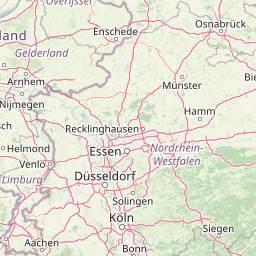
Map view of Heidesee (Coesfeld)

Use this park location map to pinpoint Heidesee (Coesfeld) in Germany, understand its exact geographic position, and read its mapped placement within the surrounding landscape more clearly.

Pigeon | © OpenStreetMap contributors

Location context for Heidesee (Coesfeld)

North Rhine-Westphalia

Explore detailed imagery of the shallow heath pond, bog forest, and sandy terrain within the Coesfelder Heide.

Heidesee Photos and Landscapes: Visualizing the Protected Heath and Bog Habitats

Visual documentation captures the rare mosaic of open heath vegetation, sphagnum moss cushions, and wetland habitats surrounding the central pond. Examining these protected environments provides a clearer understanding of the ecological character defining the reserve.

A swampy woodland scene with a shallow pond reflecting trees; mossy tree roots and fallen branches are visible in the foreground with a dense stand of slender trees in the background.

A wide, eye level shot of the Heidesee nature reserve in winter, featuring a frozen moor pond in the middle distance, surrounded by dormant heathland vegetation in the foreground and a line of bare trees in the background.

A blue male moor frog mating with a brownish female frog on dry, textured ground.

Park atlas

Compare regional wetland reserves and sandy heathland landscapes across the district

Explore Parks Near Heidesee And Related Protected Areas In Munsterland

Continue browsing other protected areas near Heidesee to examine similar wetland habitats and sandy heath ecosystems throughout the surrounding region. Comparing adjacent nature reserves provides deeper geographic context into regional conservation efforts and post glacial landforms.
A watercolor painting showing a soft, pastoral landscape with green rolling hills, distant pinkish-hued mountains, and small clusters of trees.
Nature reserveNordrhein-Westfalen
About 2.2 km away#1 closest

West

Kuhlenvenn Nature Reserve: Geographic Insights and Wetland Protection in Germany

A vital bird refuge within the Münsterland landscape

Kuhlenvenn is a 67 hectare nature reserve situated in the western Münsterland. Originally formed through industrial sand extraction, this area now features a rich habitat mosaic of meadows, wet grasslands, and shallow pools. It serves as a key regional center for migratory and breeding bird species, demonstrating how restored landscapes provide essential refuge in the broader North Rhine-Westphalia geography.

Area
0.67 km²
Established
1988
IUCN
IV
Relief
Lowland
Watercolor painting of a green wetland area with a stream, soft hills in the background, and sparse trees.
Nature reserveNordrhein-Westfalen
About 9.3 km away#2 closest

South

Heubachwiesen (BOR) Nature Reserve: Exploring the Heubach Stream Floodplain Geography

Wetland ecosystems and protected lowland terrain in western Münsterland.

This nature reserve in Nordrhein-Westfalen consists of four separate parcels characterized by flat wet meadows and shallow water features. As a protected area integrated into the EU Birds Directive, Heubachwiesen (BOR) serves as a vital refuge for threatened bird species and rare plant communities within the open, low-lying landscape of the Heubach floodplain.

Area
4.66 km²
Established
1982
IUCN
IV
Nature reserveNordrhein-Westfalen
About 9.8 km away#3 closest

South

Wildpferdebahn Nature Reserve: Geography and Protected Habitat of the Merfelder Bruch

Explore the historic horse range in Nordrhein-Westfalen

Located in the Merfelder Bruch, the Wildpferdebahn protects 500 hectares of diverse terrain ranging from dry grasslands to damp alder woodlands. This nature reserve supports a self-sustaining herd of semi-feral horses, maintaining a landscape character that has persisted for generations. Learn about the reserve's role in conserving Westphalian wilderness traditions alongside sensitive moor and heath habitats.

Area
3.6 km²
Established
1847
Relief
Lowland
Access
Easy access
Watercolor painting of a tranquil pond at Kranenmeer, showing reflective water, distant tree lines, and foreground foliage hanging from the upper right corner.
Nature reserveNordrhein-Westfalen
About 18 km away#4 closest

Southwest

Kranenmeer Nature Reserve: Mapped Geography and Protected Wetland Boundaries

A preserved moorland enclave in the Westmünsterland region.

Kranenmeer preserves a fragile mosaic of open water, bog vegetation, and alder carr woodland in a compact site within Nordrhein-Westfalen. Study the mapped protected boundaries and subtle terrain transitions of this significant nature reserve that serves as a vital habitat for rare amphibians and specialized wetland species in the lowland northwest of Germany.

Area
1.4 km²
Established
1950
Relief
Lowland
Climate
Temperate
A pale, soft watercolor illustration showing rolling hills, sparse trees, and gentle inland dune slopes under a light sky.
Protected landscapeBerlin
About 19 km away#5 closest

East

Baumberge Protected Landscape: Mapping Berlin's Glacial Sand Dunes and Rare Grassland Habitats

A vital protected ecosystem within the Tegeler Forst region

The Baumberge stand as one of the last remaining open inland dune sites in Berlin, encompassing a fragile 47 hectare mosaic of sand heath and dry grassland. These parabolic dunes provide a critical refuge for warmth-loving invertebrate species and rare flora, anchored by glacial sand deposits dating back to the last ice age. The area offers a significant window into the historical landscape evolution of the northern Berlin glacial valley.

Area
0.47 km²
Relief
Lowland
Climate
Temperate
Access
Easy access
Nature reserveNetherlands
About 24 km away#6 closest

West

Wooldse Veen Nature Reserve: Mapped Geography and Protected Bog Landscapes in the Netherlands

A transboundary peatland system in Gelderland.

Wooldse Veen preserves a rare fragment of raised bog and peatland habitat in the Dutch-German borderlands. The reserve features restored bog pools, historic smugglers paths, and a mosaic of heathland and birch woodland that reflects the regional geography of the Winterswijk National Landscape.

Area
1.5 km²
Established
1949
Relief
Lowland
Climate
Temperate
A watercolor painting showing a soft green rolling landscape, a winding stream in the foreground, and distant hills under a white background.
Protected landscapeGermany
About 26 km away#7 closest

Southwest

Naturpark Hohe Mark: Protected Landscape and Regional Geography Overview

Mapped terrain in North Rhine-Westphalia, Germany.

Gain insight into the complex topography of Naturpark Hohe Mark, an expansive protected area characterized by its transition from sandy upland forests to wetland-rich river valleys. This detailed overview covers the essential landscape features, regional boundaries, and ecological diversity that distinguish the park as a key geographical entity in Germany.

Area
1,978 km²
Established
1963
Relief
Mixed relief
Climate
Temperate
Watercolor painting of a low-lying, marshy landscape with soft green meadows and sparse vegetation against a white background.
Nature reserveNorth Rhine-Westphalia
About 28 km away#8 closest

Northwest

Lüntener Fischteiche Nature Reserve: Geography and Protected Area Landscape Map

A preserved mosaic of Münsterland heath and bog ecosystems

Lüntener Fischteiche is a specialized nature reserve in North Rhine-Westphalia, documented here for its distinct heath-pond character and ecological significance within the German-Dutch borderland. The site preserves remnants of bog and heath vegetation embedded within a pine forest matrix, serving as an important hub for regional waterbird populations and transboundary habitat connectivity.

Area
1.011 km²
Established
1959
IUCN
IV

Common questions about visiting, size, designation, and location context for Heidesee (Coesfeld)

Heidesee (Coesfeld) FAQs for park facts, access, geography, and protected area context

Find quick answers about Heidesee (Coesfeld), including protected-area facts, park geography, trail and visitor context, and how the park fits into its surrounding country and regional landscape.
MoriAtlas Explorer

Continue Your Protected Areas Search Across the Global Atlas

Deepen your exploration by continuing the structured search for national parks and protected areas worldwide. Utilize the comprehensive filtering capabilities to compare different conservation landscapes and refine your understanding of global park geography. Discover more about the distribution and characteristics of protected natural areas.

Global natural geography