Mori Atlas logo
National parkKrkonoše National Park

Discover mapped glacial terrain and unique ecosystems in the Czech Republic's highest mountains.

Krkonoše National Park: Central Europe's Alpine Protected Landscape Atlas

(Krkonošský národní park)

Krkonoše National Park represents a significant protected landscape within the Liberec Region of the Czech Republic, renowned as the nation's oldest national park and home to its highest peak. This page serves as an entry point for exploring the park's unique glacial geography, its dramatic alpine terrain, and the mapped boundaries that define this critical conservation area. Users can delve into the park's geological heritage, understand its place in Central European geography, and discover the rich biodiversity shaped by its ice-age past.

Alpine EnvironmentMountain National ParkGlacial LandscapeTransboundary Protected AreaUNESCO Biosphere ReserveEndemic Species
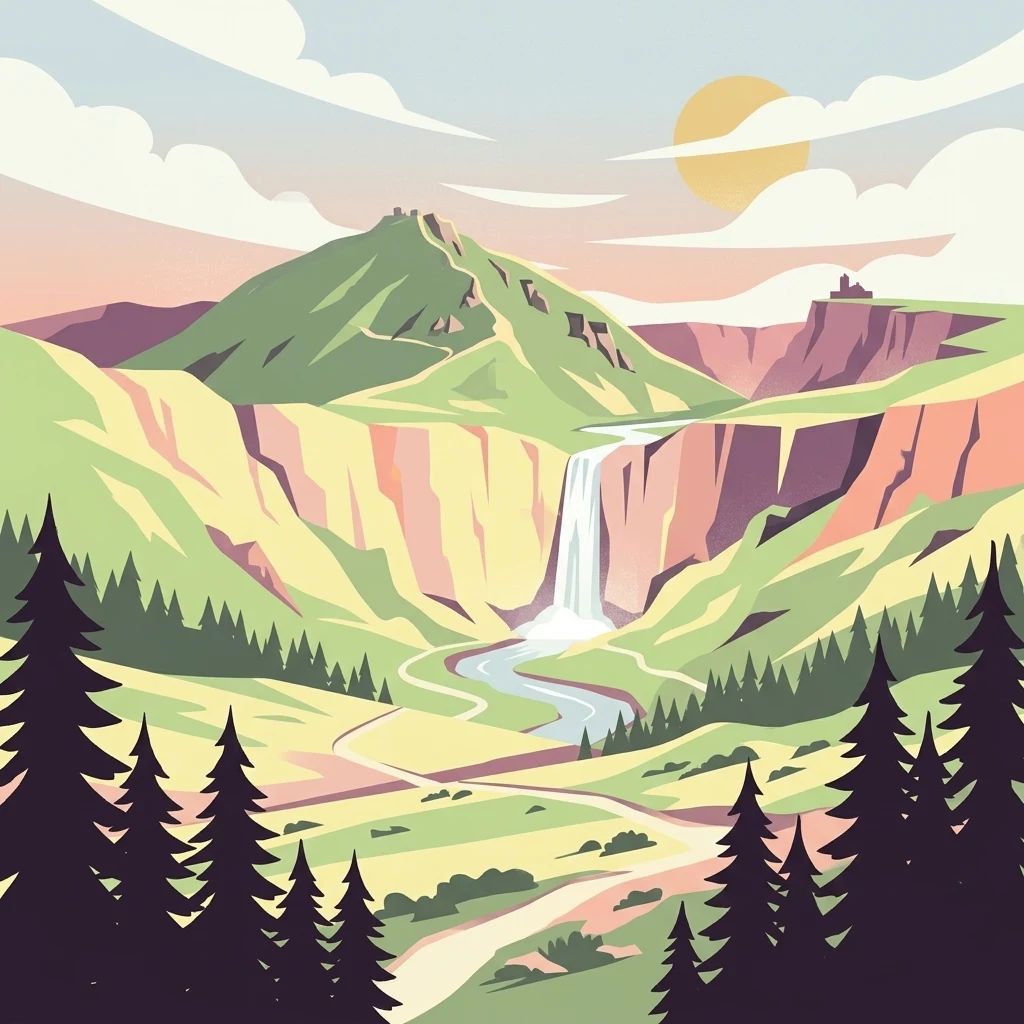
Illustration of a mountain landscape with waterfall, river, forests, and mountains under a sunlit sky

Krkonoše National Park

National park

Park overview

Structured park overview, official facts, and landscape profile for Krkonoše National Park

Krkonoše National Park park facts, protected area profile, and essential visitor context

Review the core facts for Krkonoše National Park, including designation, size, terrain, visitor scale, habitats, and operating context in one park-focused overview.

About Krkonoše National Park

Krkonoše National Park occupies the central and highest portions of the Giant Mountains, the most significant mountain range in the Czech Republic and part of the larger Sudetes mountain system. The park's elevation ranges from 413 meters to 1,603 meters at Sněžka, the country's highest peak. The landscape tells a compelling geological story, with the Krkonoše-Jizera crystalline complex dominating the bedrock and the granitoid pluton forming the main ridge. Evidence of Pleistocene glaciation is everywhere—cirques scoured into the granite, glacial valleys carved by ice, and the blockfield stone seas that blanket higher summits. The eastern section around Albeřice reveals karst phenomena, adding geological complexity to the protected area.

The ecological significance of Krkonoše extends far beyond its physical geography. The mountain range acts as a biogeographical island where species survived the last glaciation and now persist in a warming world. This has produced a remarkable concentration of glacial relicts, species that once dominated vast expanses of tundra but now survive only in these high-altitude refugia. The Czech side of the mountains forms part of a transboundary conservation unit with Poland, and together these protected areas were recognized as a UNESCO Biosphere Reserve in 1992, acknowledging their international significance for conservation and sustainable development.

Quick facts and research context for Krkonoše National Park

Krkonoše National Park occupies the Czech Republic's highest mountain range, covering 363.52 km² across the Liberec and Hradec Králové regions. The park was established on 17 May 1963 and serves as the country's oldest national park. Its highest point, Sněžka, reaches 1,603 meters above sea level, making it the tallest mountain in the Czech Republic. The park shares its northern border with Poland's Karkonosze National Park, forming a transboundary protected area. A protective zone surrounding the core park covers an additional 186.18 km². The park administration is based in the town of Vrchlabí.

Protection and recognition

Mapping terrestrial protection limits, transboundary coordinates, and international designations.

Krkonoše National Park Protection Status and Protected Area Designations

Users can trace the documented protection status of Krkonoše National Park, which encompasses a terrestrial zone integrated under the European Natura 2000 network. Analyzing official UNESCO Biosphere Reserve and transboundary designations offers essential context for mapping the mountain borders across continental databases.

International recognition

Protection details

Protection scope
Terrestrial
Designated year
1992
Transboundary protection
Yes
Core area
79.19 km²
Buffer area
186.18 km²
Park context

Deeper park guide and search-rich context for Krkonoše National Park

Krkonoše National Park history, landscape, wildlife, and travel context

Explore Krkonoše National Park through its history, landscape character, ecosystems, wildlife, conservation priorities, cultural context, and seasonal travel timing in a structured park guide built for atlas discovery and search intent.

Why Krkonoše National Park stands out

Krkonoše National Park is renowned for its exceptional alpine ecosystems and the presence of glacial relict species found nowhere else in the Czech Republic. The mountain meadows and peat bogs of the subalpine zone support unique plant communities including the snow saxifrage, cloudberry, and the endemic Giant Mountain lousewort. The park's dramatic glacial landscape features the distinctive cirques and rock formations often called the 'Krkonoše botanical gardens' at higher elevations. The area serves as the source of the Elbe River, one of Central Europe's major waterways, and contains significant Ramsar-listed wetland areas.
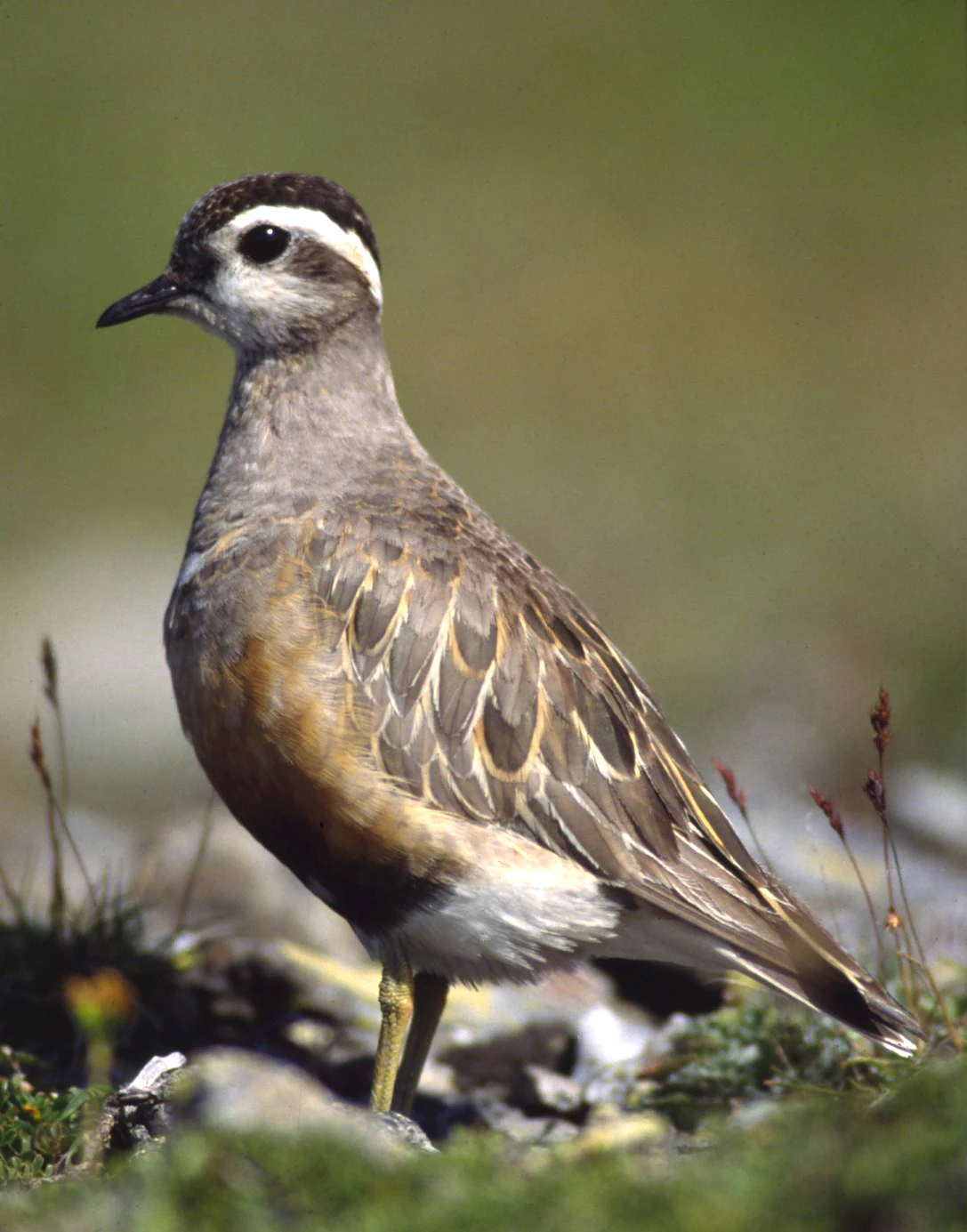
A small bird with brown and white plumage, black beak, and distinctive white and black markings on its head, standing on rocky ground with sparse green vegetation
Male Northern Lapwing standing on rocky terrain with sparse vegetation

Krkonoše National Park history and protected-area timeline

Nature conservation in the Giant Mountains began in 1952 when several key areas were declared state nature reserves, including Kotelní jámy, Pančavská louka, and Labský důl. These early protected sites were supervised by conservationists from Hradec Králové, among whom Zdeněk Pilous, Jindřich Ambrož, and Josef Šourek became prominent figures in the movement to protect the mountains' unique nature. These pioneering conservationists faced significant challenges, including intense pressure from tourism and economic exploitation of the landscape.

Krkonoše National Park was officially proclaimed on 17 May 1963 through Government Decree No. 41/1963, becoming the Czech Republic's first national park. This came four years after the establishment of the adjacent Karkonosze National Park in Poland (1959). In 1986, the park was expanded to include a protective zone. The park's statutory mission was refined in Government Decree No. 165/1991, emphasizing the preservation and improvement of the natural environment, protection of wild animals and plants, landscape conservation, and sustainable tourism. The legal framework was most recently updated with Act No. 123/2017. In 1992, the Czech and Polish national parks were jointly designated as a UNESCO Biosphere Reserve, and both are now certified transboundary parks under the EUROPARC Federation program.

Krkonoše National Park landscape and geographic character

The Krkonoše landscape presents a dramatic alpine environment shaped by millions of years of geological processes and the powerful hand of glacial ice. The main ridge runs from Mrtvý vrch in the west to the western foothills of Sněžka in the east, composed primarily of granitoid rocks of the Krkonoše-Jizera pluton. Contact zones feature gray schists and phyllites, while the eastern region is characterized by gneisses and the western portion by phyllites of the Ponikel group.

Glacial processes have left an indelible mark on the terrain. Cirques—steep, bowl-shaped depressions carved by glacial ice—dot the upper elevations, their rocky walls and intervening ridges creating the distinctive skyline that defines the Giant Mountains. Glacial valleys radiate outward from the highest peaks, while moraines mark the former extent of ice sheets. At the highest elevations, blockfields (stone seas) of angular boulders represent the frozen ground that persisted long after the glaciers retreated.

The terrain descends through well-defined vegetation zones from the forested lower slopes through the subalpine heathlands to the bare rock and alpine meadows of the summit zone. The park contains several notable waterfalls including Pančava, Elbe, and Mumlava, while the Obří důl valley and the ancient Dvorský les forest represent additional landscape highlights.
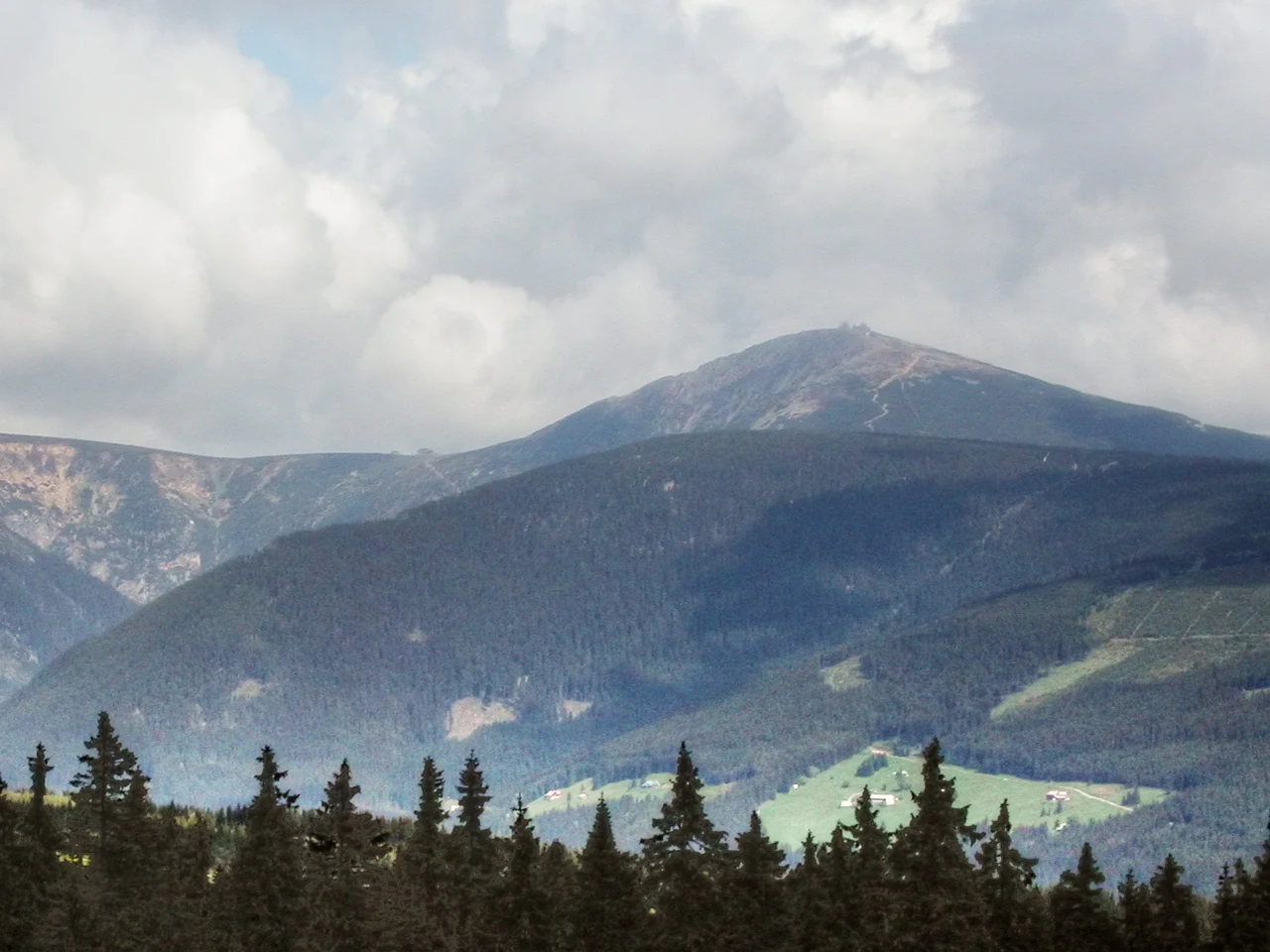
Mountain range with Sněžka peak under cloudy sky, forested slopes, and pine trees in foreground
View of Sněžka mountain from Černá hora in Krkonoše National Park

Krkonoše National Park ecosystems, habitats, and plant life

The ecological character of Krkonoše National Park is defined by its remarkable altitudinal zonation and the survival of species from the glacial period. The vegetation progresses through distinct stages as elevation increases: the submontane zone (400-800m) originally featured deciduous and mixed forests of beech, sycamore, rowan, and grey alder, though much has been replaced by spruce monocultures; the montane zone (800-1200m) is dominated by spruce forests; the subalpine zone (1200-1450m) contains the most valuable habitats including immortelle meadows, northern peat bogs, and low-growing heathlands; and the alpine zone (1450-1603m) hosts the richest plant diversity on steep rocky slopes and in glacial cirques.

The park supports approximately 1,200 species of vascular plants and about 300 vertebrate species, with many more spore plants including mosses, ferns, and lichens. Several species are endemic to these mountains, persisting nowhere else on Earth. The high-altitude flora includes numerous glacial relicts—plants that survived the ice ages in these mountain refugia and now represent fragments of the former tundra that covered much of Central Europe.
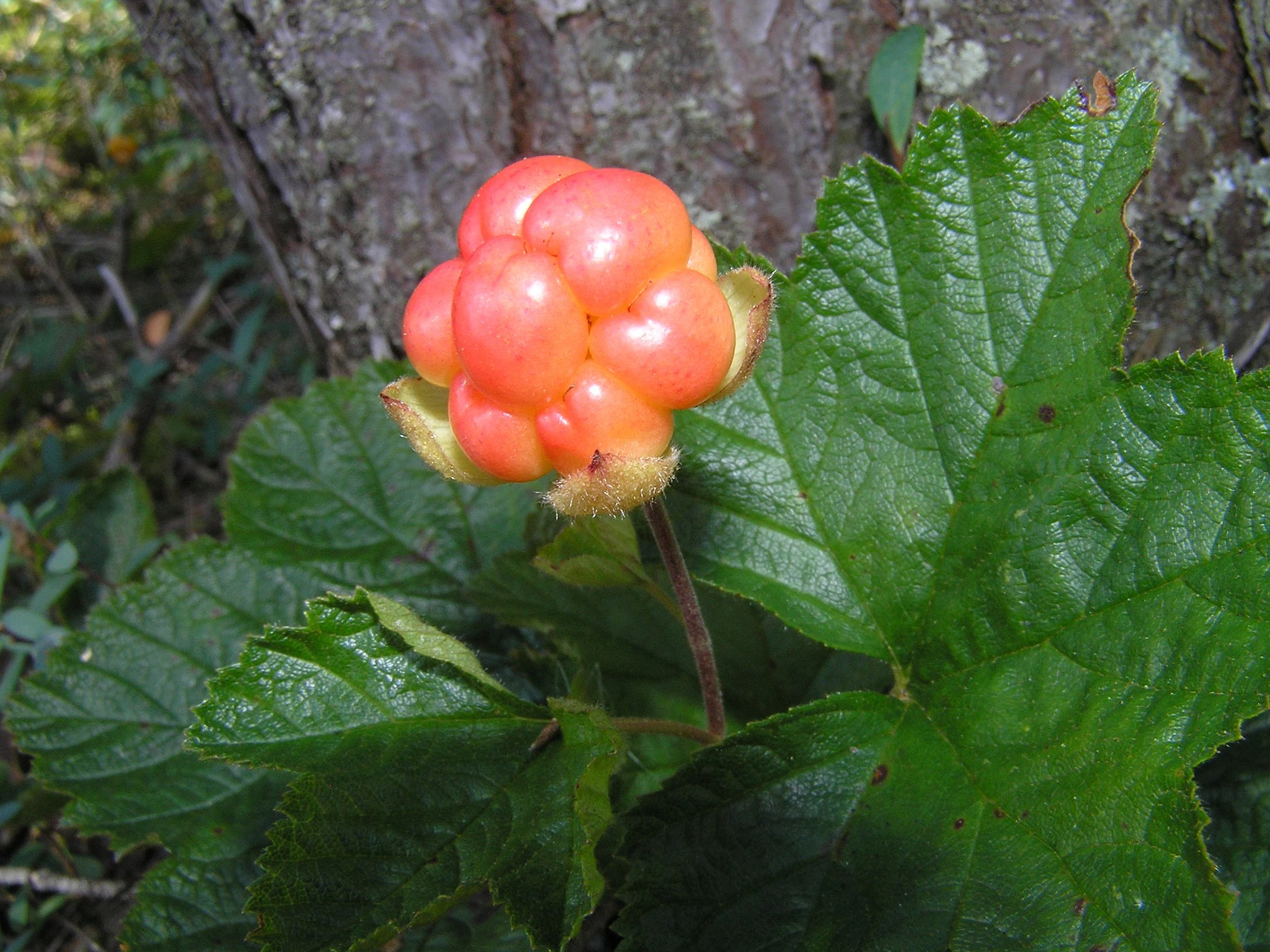
A close-up of a cloudberry plant with bright orange-red berries and large green leaves against a forest background
Cloudberry (Rubus chamaemorus) in Krkonoše National Park

Krkonoše National Park wildlife and species highlights

The fauna of Krkonoše reflects the diverse plant communities and the mountain's position as a biogeographical crossroads between Central European and Alpine species. At lower elevations, Euro-Siberian fauna dominates, while mountain species become increasingly prevalent at higher altitudes. Several invertebrate species are considered glacial relicts, including the ninespine stickleback, northern plait beetle, mountain mayfly, and specific ground beetles and dragonflies.

Notable bird species include the ring ouzel, a high-altitude thrush, the bluethroat associated with tundra-like habitats, the Eurasian dotterel nesting in alpine meadows, and the dipper adapted to fast-flowing mountain streams. The region hosts endemic species found nowhere else: the Krkonoše mayfly (Rhithrogena corcontica), a Sudeten variant of the yellow-banded carpet moth, and the Krkonoše spindle snail. These endemics underscore the evolutionary significance of this mountain range as a biodiversity refuge.
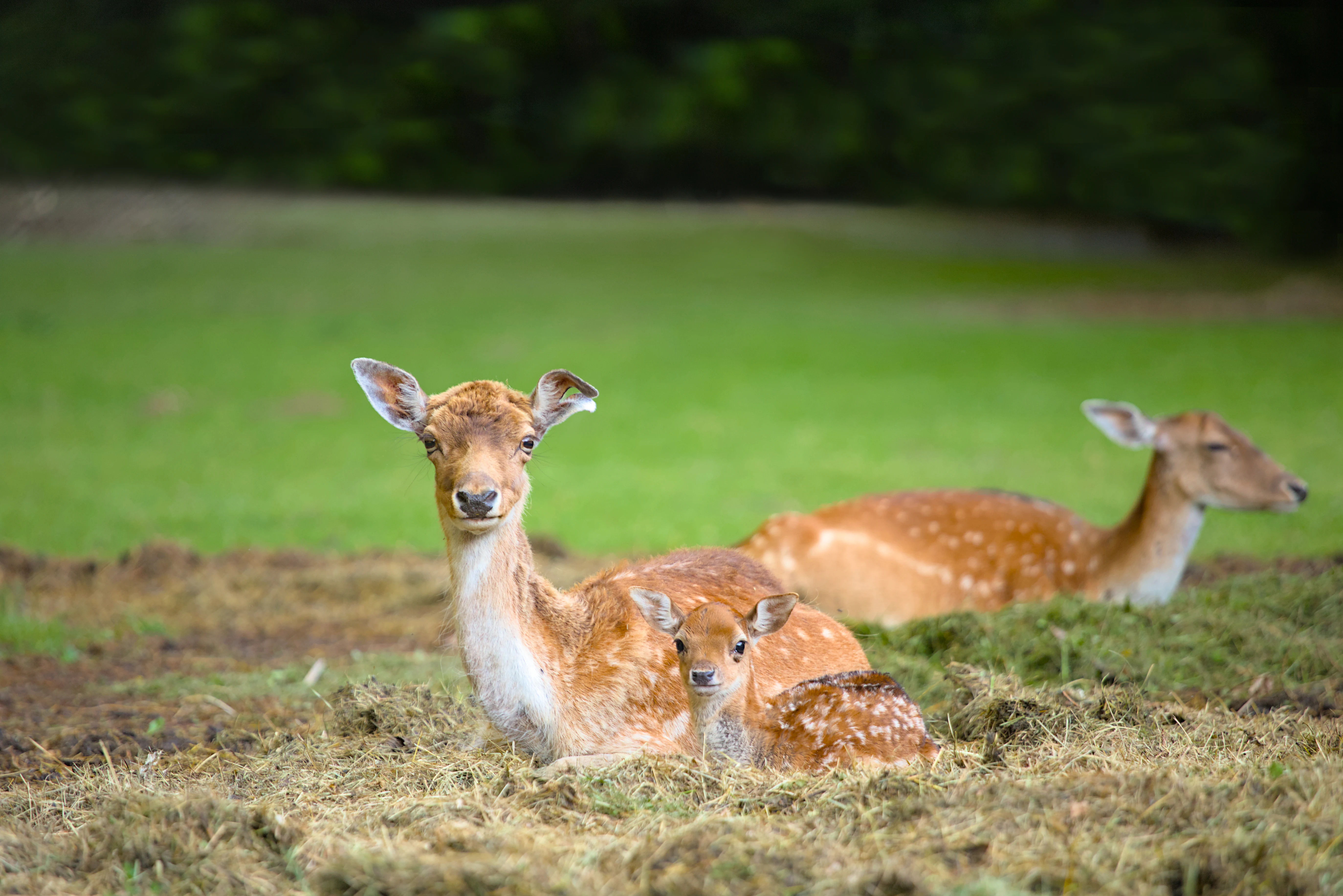
A fallow deer doe and fawn lying on grass with green field in background
Fallow deer doe and fawn resting on grass in Krkonoše National Park

Krkonoše National Park conservation status and protection priorities

Krkonoše National Park holds significant conservation importance at multiple levels. The park's peat bogs have been designated as wetlands of international importance under the Ramsar Convention, acknowledging their global significance for biodiversity and water regulation. In 1992, the Czech and Polish protected areas were jointly inscribed into the UNESCO network of Biosphere Reserves, creating the Krkonoše/Karkonosze Transboundary Biosphere Reserve.

The park's IUCN classification as Category V (Protected Landscape) reflects its particular management context—a landscape shaped by centuries of human use that cannot meet the strict wilderness criteria of Category II national parks. Nevertheless, the park implements a zonation system with four care zones (natural, close to nature, concentrated nature care, and cultural landscape) covering different proportions of the territory. "Quiet areas" now regulate visitor movement across 22.2% of the park, restricting access to marked paths in sensitive zones. A 2025 restoration project aims to recover the European silver fir population, which has declined to less than 0.5% of forest composition from a historical level of approximately 15%.

Krkonoše National Park cultural meaning and human context

The Giant Mountains have been inhabited and used by humans for centuries, with traditional mountain settlements and pastoral practices shaping the cultural landscape. The border position of the range has influenced regional identity, and the mountains hold significance in Czech cultural heritage as the setting for folk traditions and regional identity. The management of the park recognizes a cultural landscape zone that acknowledges the historical human presence in these mountains, including traditional land uses that created and maintained the open meadow habitats that now harbor rare species.
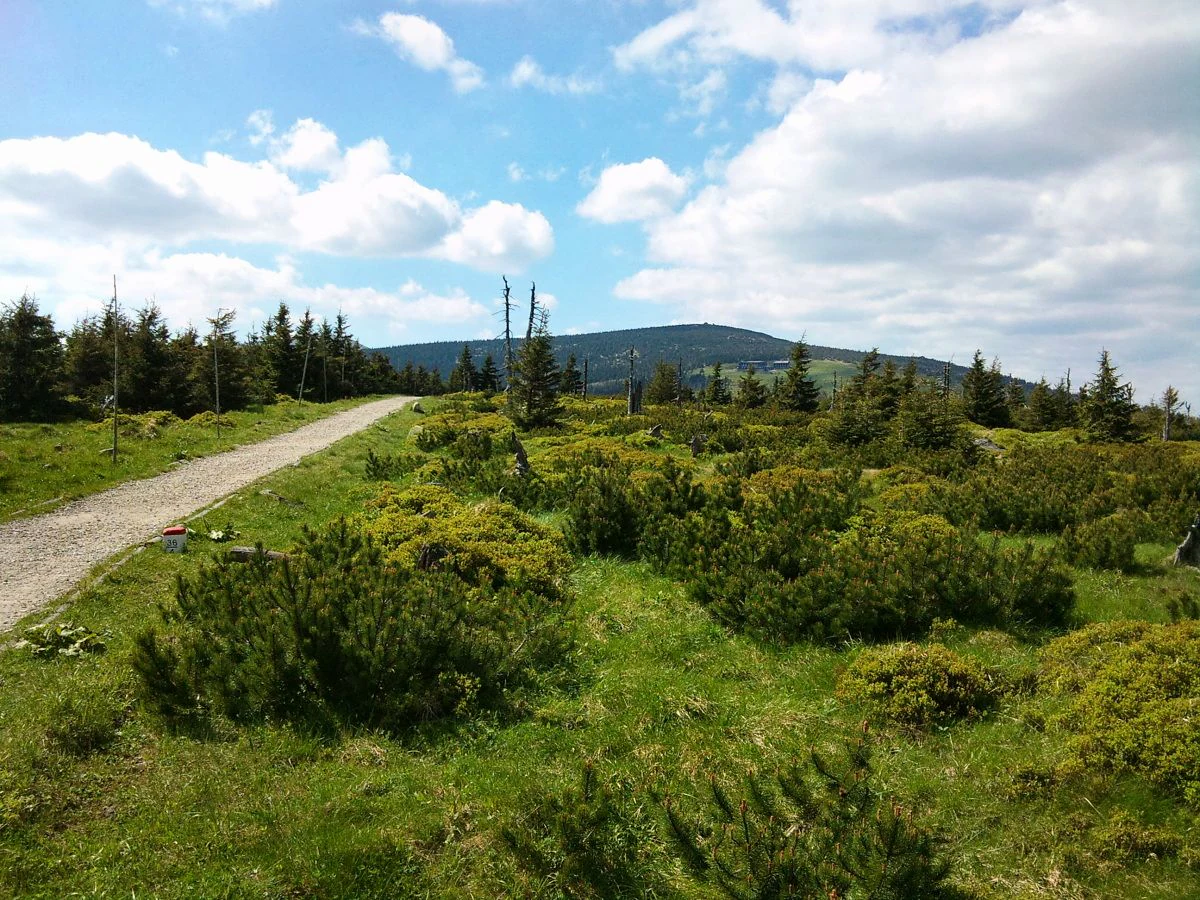
Gravel path through grassy terrain with scattered shrubs and trees, distant mountains under blue sky with white clouds.
Gravel path through grassy terrain with scattered shrubs and trees leading toward distant mountains under a partly cloudy sky.

Top sights and standout views in Krkonoše National Park

Krkonoše National Park protects the Czech Republic's highest and most ecologically significant mountain landscape. The park preserves exceptional glacial landforms including cirques, moraines, and blockfields, alongside endemic species and glacial relicts that survived the ice ages in these high-altitude refugia. The transboundary cooperation with Poland's Karkonosze National Park creates one of Central Europe's largest protected mountain ecosystems. Peat bogs of international importance, the source waters of the Elbe River, and the dramatic alpine environment make this park a cornerstone of Czech nature conservation.
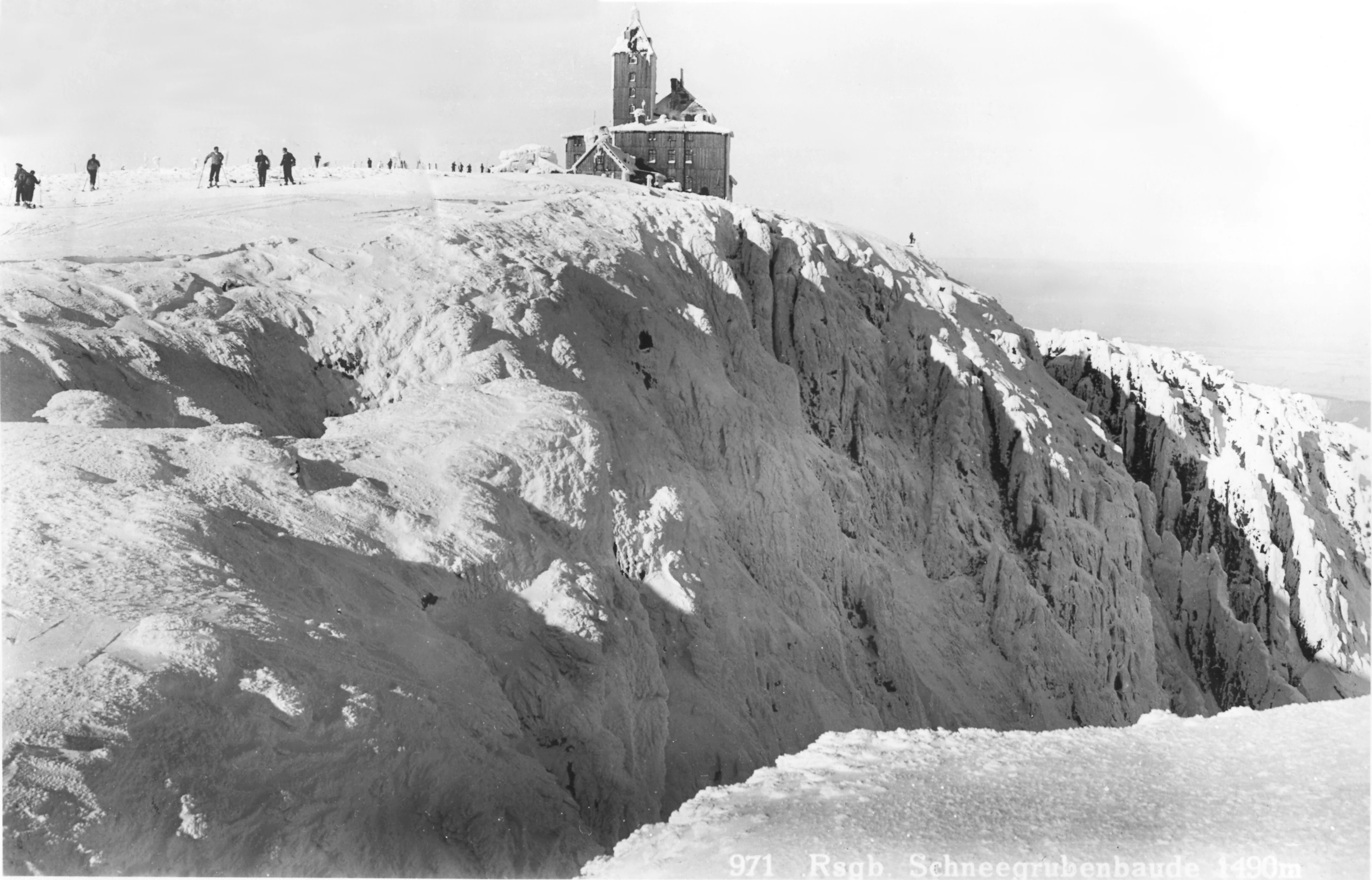
Black-and-white photograph of a snow-covered mountain cliff with a small building on the ridge, several people walking along the crest, and a steep drop into a valley below.
Sniezne Kotly in Krkonoše National Park, showing a snow-covered mountain cliff with a small structure on the ridge and people walking along the crest.

Best time to visit Krkonoše National Park

The Krkonoše mountains experience distinct seasons that dramatically shape the visitor experience. Summer months offer the most accessible conditions for hiking through the various vegetation zones, with July and August providing the warmest temperatures at lower elevations. Winter transforms the landscape into a major skiing destination, though the alpine zone experiences extreme conditions with snow cover persisting for up to 180 days on the highest peaks. Spring and autumn bring fewer crowds and the opportunity to experience the changing moods of the mountains, though weather can be highly variable. Temperature inversions during winter and autumn can produce extended periods of fog and trapped cold air in the valleys while summits remain clear.
Monthly climate preview

Year-round temperature and precipitation trends measured at Liberec Region coordinates

Long-Term Average Climate and Weather by Month in Krkonoše National Park

Based on historical data at 456 meters, Krkonoše National Park experiences mean temperatures from -3.72 degrees Celsius in January up to 18.07 degrees Celsius in July. Reviewing the complete month by month climate normals offers a deeper look at seasonal temperature spreads and precipitation patterns across the protected terrain.
Annual mean7 °C
-4 °C18 °C
Jan-4°
Feb-2°
Mar
Apr
May12°
Jun16°
Jul18°
Aug18°
Sep13°
Oct
Nov
Dec-2°
Warmest month
July

18.1 °C

Coolest month
January

-3.7 °C

Wettest month
July

3.1 mm/day

Driest month
April

1.4 mm/day

Park location guide

Geography guide, regional context, and park location map for Krkonoše National Park

Krkonoše National Park park geography, regions, and map view in Czechia

Understand where Krkonoše National Park sits in Czechia through a broader geographic reading of the surrounding landscape, nearby location context, and its mapped position within the national park landscape.

How Krkonoše National Park fits into Czechia

Czech Republic is a landlocked Central European country with a population of approximately 10.9 million people. The nation was established as an independent state on January 1, 1993, following the dissolution of Czechoslovakia. Its capital and largest city is Prague, with other major urban centers including Brno, Ostrava, Plzeň, and Liberec.

Wider geography shaping Krkonoše National Park in Czechia

The Czech Republic is a landlocked country in Central Europe. It is bordered by Germany to the west, Austria to the south, Poland to the northeast, and Slovakia to the southeast. The landscape is predominantly hilly, with the territory covering 78,871 square kilometers.

Map view of Krkonoše National Park

Use this park location map to pinpoint Krkonoše National Park in Czechia, understand its exact geographic position, and read its mapped placement within the surrounding landscape more clearly.

Pigeon | © OpenStreetMap contributors

Location context for Krkonoše National Park

Hradec Králové RegionLiberec Region
Natural feature types

Explore the Full Collection of Krkonoše National Park Natural Features

Examine the diverse array of named geographic landmarks, alpine formations, and hydrological sites that define the Krkonoše National Park area. This MoriAtlas collection connects the specific natural character of the Giant Mountains to broader regional geography and landscape preservation efforts.
Recorded earthquake history

Review the Historical Earthquake Catalogue for Krkonoše National Park

Explore the collection of recorded seismic events associated with the landscape of Krkonoše National Park. MoriAtlas provides this structured catalogue to assist in reviewing the historical seismic data and epicentral proximity for the Giant Mountains region.

Krkonoše National Park Earthquake History

Catalogued events

242 events

Strongest magnitude

Magnitude 4.9

Most recent event

Oct 25, 2005

This history includes earthquakes recorded inside the park or within 50 km of its borders

Visual Atlas of Krkonoše: Discover the Glacial Terrain, High-Altitude Ecosystems, and Distinctive Protected-Area Views

Krkonoše National Park Photos: Explore Alpine Landscapes, Glacial Scenery, and Mountain Habitats

Browse an immersive gallery of Krkonoše National Park photos to understand its unique glacial landforms, diverse mountain scenery, and critical alpine environments. These images provide essential visual context for tracing the park's dramatic terrain, observing its distinct habitats, and comprehending its protected natural character as part of Central Europe's highest range.

A small bird with brown and white plumage, black beak, and distinctive white and black markings on its head, standing on rocky ground with sparse green vegetation

Purple bell-shaped flowers with green leaves growing among tall grasses

Mountain range with Sněžka peak under cloudy sky, forested slopes, and pine trees in foreground

A close-up of a cloudberry plant with bright orange-red berries and large green leaves against a forest background

A fallow deer doe and fawn lying on grass with green field in background

Close-up of White Butterbur plant with white star-shaped flowers and green stem in forest setting

Gravel path through grassy terrain with scattered shrubs and trees, distant mountains under blue sky with white clouds.

Black-and-white photograph of a snow-covered mountain cliff with a small building on the ridge, several people walking along the crest, and a steep drop into a valley below.

Ferns and a stone path in a forested area

Park atlas

Compare protected landscapes and mapped geography in the surrounding Giant Mountains region.

Explore Other National Parks and Protected Areas Near Krkonoše National Park

Continue discovering national parks and significant protected areas adjacent to Krkonoše National Park, tracing their mapped geography and shared alpine characteristics. This detailed comparison view helps users trace the regional spread of conservation landscapes and highlights similar mountain environments for deeper exploration beyond the Czech Republic.
A minimalist watercolor illustration depicting rolling, layered mountain ridges in soft shades of green, yellow, and light pink against a white background.
National parkDolnośląskie Voivodeship
Park boundaries overlap#1 closest

Northwest

Karkonoski Park Narodowy: Mapping Protected Granite Peaks and Glacial Terrain in Poland

High-mountain landscapes in the Dolnośląskie Voivodeship

Trace the diverse geography of Karkonoski Park Narodowy, where granite blockfields and glacial cirques define the high-altitude terrain. This protected area represents one of Central Europe's most significant upland ecosystems, showcasing a vertical transition from dense forest to alpine tundra.

Area
59.51 km²
Established
1959
Visitors
2M annual
Relief
Mountain
Watercolor illustration of a mountain range with green hills, pink and yellow sky, and sparse vegetation
National parkPoland
Park boundaries overlap#2 closest

Northwest

Karkonosze National Park: A Premier National Park in Poland's Giant Mountains

Discover alpine terrain and unique glacial landscapes.

Karkonosze National Park is a significant protected area in Poland, renowned for its dramatic alpine topography carved by ancient glaciers. As the highest range in the Polish Sudetes, it features striking U-shaped valleys, U-shaped glacial cirques, and diverse subalpine to alpine ecosystems. This national park provides a rich context for understanding Central European mountain geography and exploring its mapped protected boundaries.

IUCN
II
Relief
Mountain
Scope
Terrestrial
A soft watercolor painting of gentle rolling green hills and meadows with patches of trees, set against a background of distant mountains.
Natural monumentKrálovéhradecký kraj
Mapped location lies within the park boundary#3 closest

Southeast

Sklenářovické údolí Natural Monument: Geography, Terrain, and Protected Land Features

Meadow-rich valley ecosystems in the Krkonoše foothills

Sklenářovické údolí stands as a significant protected natural monument in the Královéhradecký kraj region. Its geography consists of a deeply carved stream valley that shelters an unusually high concentration of rare orchid species and sensitive wetland habitats. The area provides a clear look at historical land-use restoration, where meadow and forest boundaries are maintained to protect diverse raptor nesting grounds and fragile montane flora within the broader Czech landscape network.

Area
1.806 km²
Established
2009
IUCN
III
Relief
Mountain
Natural monumentKrálovéhradecký kraj
About 0.7 km away#4 closest

Southwest

Vejsplachy Natural Monument: Protected Floodplain Forest and Wetland Geography in Czech Republic

Ecological mosaic and regional floodplain habitat in Královéhradecký kraj

Vejsplachy serves as a significant natural monument, preserving a rare convergence of ash and alder floodplain forest, wet thistle meadows, and aquatic reedbeds. Located on the edge of the town of Vrchlabí, this 3.34 hectare protected area offers a deep look into the geomorphology of the Královéhradecký kraj foothills and the delicate balance of surviving wetland habitats in a changing landscape.

Area
0.033 km²
Established
2020
IUCN
IV
Relief
Upland
A horizontal watercolor illustration showing rolling green hills, a small pond, and trees under a soft, light sky.
Protected landscapeTrutnov District
About 1.4 km away#5 closest

South

Přírodní park Hrádeček: Protected Landscape Geography and Mapped Regional Terrain

A forested hill-country protected area in Trutnov District

Přírodní park Hrádeček is a regional protected landscape characterized by a compact cluster of forested summits and traditional Bohemian countryside. Located in the Trutnov District, this area features a distinctive bowl-shaped topography anchored by the ruins of Břecštejn castle, offering a clear example of protected hill-forest and rural mosaic environments within the eastern Giant Mountains foothills.

Established
2000
Relief
Upland
Climate
Temperate
Access
Easy access
Watercolor painting of a mountain range with spruce forest in the foreground on a white background.
Nature reserveLiberec Region
About 9.6 km away#6 closest

West

Prales Jizera Nature Reserve: Protected Mountain Geography and Summit Landscapes

Highland spruce forests and granite outcrops in the Liberec Region

Investigate the summit geomorphology of Prales Jizera, a vital protected area encompassing rare climax spruce forest and granite blockfields. This record provides detailed geographic context on the reserve's unique soil, hydrological watershed position, and its role as a landmark conservation site in the Jizera Mountains.

Area
0.936 km²
Established
1960
IUCN
IV
Relief
Mountain
A soft watercolor painting of rolling hills, grassy meadows, and coniferous trees set against a pale background.
Natural monumentCzechia
About 11 km away#7 closest

West

Na kneipě Natural Monument: Geography and Protected Mire Landscape in the Jizera Mountains

A rare summit peat bog and granite mountain plateau in Czechia.

Na kneipě serves as a preserved natural monument in the Czech Jizera Mountains, characterized by its rare summit mire and dense mountain pine coverage. Situated on a modest granite plateau, the area functions as a key hydrological hub that sustains surrounding upland habitats. This site provides essential context for understanding the high-elevation mire ecosystems and protected terrain found across northern Bohemia.

Established
1965
Relief
Mountain
Water
Minor water
Natural monumentLiberecký kraj
About 12 km away#8 closest

West

Vlčí louka Natural Monument: Protected Bog Landscape in the Liberecký kraj Region

High-elevation peatland and mountain habitat geography

Vlčí louka serves as a prime example of a high-altitude raised bog located along the Smědavská hora ridge. This protected area supports a diverse suite of peatland plants and serves as a vital refuge for mountain birds. By studying its unique terrain, mapped boundaries, and position within the Jizera Mountains, users gain a deeper understanding of this specialized, elevated ecosystem in the Czech Republic.

Area
0.08 km²
Established
1965
IUCN
IV
Relief
Highland

Common questions about visiting, size, designation, and location context for Krkonoše National Park

Krkonoše National Park FAQs for park facts, access, geography, and protected area context

Find quick answers about Krkonoše National Park, including protected-area facts, park geography, trail and visitor context, and how the park fits into its surrounding country and regional landscape.
MoriAtlas Explorer

Continue Your Protected Areas Search Across the Global Atlas

Deepen your exploration by continuing the structured search for national parks and protected areas worldwide. Utilize the comprehensive filtering capabilities to compare different conservation landscapes and refine your understanding of global park geography. Discover more about the distribution and characteristics of protected natural areas.

Global natural geography