Why Las Ochoża Nature Reserve stands out
Las Ochoża Nature Reserve is best known for its unusually intact mosaic of wet lowland forest types in eastern Poland. Ash-alder riparian stands and currant alder swamps dominate its lower, wetter zones, while small raised patches of oak-hornbeam forest (grąd) create an ecological mosaic typical of historic floodplain woodlands. The reserve is also notable for embedding an early medieval hillfort on a roughly 0.7-hectare forested island surrounded by marshland, one of the most distinctive archaeological features within a Polish nature reserve. Its position inside the Natura 2000 bird protection area Uroczysko Mosty-Zahajki adds strong ornithological significance to the site's profile.
Las Ochoża Nature Reserve history and protected-area timeline
The reserve's modern history is recent and intentionally connected to Polish forest policy. It was established by order of the Regional Director of Environmental Protection in Lublin on 4 December 2024 and formally came into being on 19 December 2024 through publication in the official journal of Lubelskie Voivodeship. Its creation was part of the broader program celebrating one hundred years of Poland's State Forests, under which a hundred new reserves were designated across the country.
The reserve is named for Marek Keller, an ornithologist active in the Lubelskie region who died in 2012. Keller contributed, along with other specialists, to the scientific documentation that justified the area's protection, including its importance for birdlife associated with the surrounding Natura 2000 network.
In archaeological terms, however, the landscape itself is far older in significance. Archaeological surveys during 2024 and 2025 confirmed that the central forested island contains the remains of an early medieval hillfort dated to between the tenth and thirteenth centuries. Some researchers have suggested it may have served as a border watchpoint along the medieval frontier with the Grand Duchy of Lithuania. A total of 244 artifacts, mostly everyday objects and tools, were recovered during the investigations. During the Second World War, the site's remote terrain also reportedly provided shelter for Jewish people seeking refuge from persecution.
Las Ochoża Nature Reserve landscape and geographic character
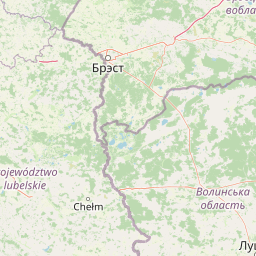
The landscape of Las Ochoża Nature Reserve is defined by the gentle, low-relief character of eastern Poland's Polesia fringe, with wetland forest patterns shaped by small-scale elevation differences rather than dramatic topography. The reserve sits in the Zaklęsłość Sosnowicka mesoregion, a basin-like area known for its complex mosaic of forests, peatlands, and marshy depressions.
The full reserve area is forested, encircled by the broader Sobiborskie Forest complex. Within the protected boundary, slightly elevated sections form small wooded islands standing above otherwise saturated ground. The central feature of the landscape is an oval island of about 0.7 hectares, ringed by hard-to-access wetlands and bogs that effectively isolate it from the surrounding forest.
The eastern edge of the reserve follows a small watercourse that feeds into the river Hanka, reinforcing the hydrological character of the site. This network of streams, mires, and seasonally flooded depressions explains both the dominance of alder swamps and the reserve's recognized role in water storage and flood moderation.
Las Ochoża Nature Reserve ecosystems, habitats, and plant life
The ecological identity of Las Ochoża Nature Reserve is shaped by the wet, low-energy conditions typical of eastern Polesia. The reserve's protection goal is explicitly framed as preserving forest communities of alder swamps (olsy) and oak-hornbeam forests (grądy), reflecting the presence of two structurally distinct forest types within a small, contiguous area.
In the wetter zones, ash-alder riparian forests and currant alder swamps dominate, with alder (Alnus glutinosa) as the most ecologically important species. These communities are biologically productive, maintain high humidity, and support rich invertebrate and birdlife. Slightly drier, higher ground forms small islands of oak-hornbeam woodland, a habitat type that has become increasingly rare across heavily modified Polish lowlands.
In addition to its forest vegetation, the reserve has been highlighted for the presence of rare and threatened plant species within its mosaic. The surrounding wetlands, mires, and seasonally flooded areas contribute substantially to the reserve's broader biodiversity value and connect it functionally to surrounding protected landscapes.
Las Ochoża Nature Reserve wildlife and species highlights
Although the reserve itself was only formally established in late 2024, its wildlife significance is well established through its placement in the Natura 2000 network. The entire area of Las Ochoża lies within the Special Protection Area known as Uroczysko Mosty-Zahajki (PLB060014), designated specifically for the conservation of wild birds.
The combination of mature alder forests, marshy understory, and open wetland edges provides attractive habitat structure for woodland and marsh birds, including species that depend on extensive lowland forest complexes. The reserve's name and its dedication to the ornithologist Marek Keller reflect the site's recognized importance for birdlife study and protection.
The mosaic of wet forests, riparian vegetation, and adjacent open water and bog systems also supports a broader community of forest fauna typical of eastern Polish lowlands, although the current public documentation focuses more on habitat integrity and the Natura 2000 bird designation than on detailed species inventories.
Las Ochoża Nature Reserve conservation status and protection priorities
Las Ochoża Nature Reserve was created primarily to secure a representative example of two interrelated forest communities: alder swamps and oak-hornbeam forests. It is officially classified as a phytocenotic reserve of the forest-community subtype, emphasizing vegetation preservation as its central legal objective.
A second conservation priority highlighted in the reserve's defining documents is hydrological function. The reserve is expected to play a meaningful role in water storage, helping to buffer the climate-related extremes that increasingly affect the lowlands of eastern Poland. This combination of biodiversity and hydrological function aligns it with broader climate-adaptation thinking in Polish forest policy.
Its full inclusion within the Natura 2000 Special Protection Area Uroczysko Mosty-Zahajki adds a transnational layer of conservation status, binding the reserve to the European Union Birds Directive framework. As of December 2024 the reserve did not yet have an approved formal protection plan or set of conservation tasks, indicating it is in an early stage of structured management development.
Las Ochoża Nature Reserve cultural meaning and human context
The cultural context of Las Ochoża Nature Reserve is unusually rich for a small forest area. The reserve's central island contains the remains of an early medieval hillfort, dated by archaeological work between the tenth and thirteenth centuries. Researchers have proposed that the site may have functioned as a border watchpoint along the medieval frontier separating Polish territories from the Grand Duchy of Lithuania.
Excavations carried out in 2024 and 2025 uncovered 244 artifacts concentrated on the island's surface and subsurface layers, including everyday objects and tools associated with a small fortified settlement. This combination of fortification archaeology and wetland landscape is rare in the Polish lowlands and adds a distinct historical dimension to the site.
The site also carries more recent historical memory. During the Second World War, the area's difficult-to-access marshland reportedly provided refuge for Jewish people fleeing persecution, making the landscape an unintended shelter during one of the most tragic periods of the twentieth century. The naming of the reserve after the ornithologist Marek Keller further embeds the area within a living tradition of regional natural-history study.
Top sights and standout views in Las Ochoża Nature Reserve
Las Ochoża Nature Reserve stands out for the unusually tight integration of ecological, hydrological, and archaeological values within a compact 193-hectare area. The combination of well-developed alder swamps and oak-hornbeam forest islands, embedded inside a transboundary Natura 2000 bird protection area, gives it both national and European conservation relevance.
Equally distinctive is the central forested island bearing a medieval hillfort, an unusual pairing of protected natural forest with a documented early Slavic stronghold. The reserve's recent creation under the State Forests centenary initiative, and its memorial naming after ornithologist Marek Keller, also mark it as part of a deliberate wave of new Polish forest reserves combining science, memory, and long-term habitat protection.
Best time to visit Las Ochoża Nature Reserve
Reserved visitation aside, the most rewarding periods to experience this part of lowland eastern Poland are typically late spring and early summer, when alder forests are fully leafed, marshland vegetation is most visible, and woodland bird activity peaks. These seasons also offer the mildest walking conditions in wetland forest terrain.
Autumn can also be attractive for visitors interested in the broader forest landscape, when mixed deciduous canopy and changing colors highlight the transition between oak-hornbeam patches and surrounding alder wetlands. Winter visits, while possible in some surrounding forest areas, are generally less suited to appreciating the reserve's wetland and ecological features, which are best understood when water levels, vegetation structure, and forest understory are clearly visible.