Why Lofotodden National Park stands out
Lofotodden is best known for its spectacular alpine scenery where dramatic mountain peaks rise directly from the North Atlantic coast, creating one of Norway's most recognizable and photographed landscapes. The Lofotenveggen, a nearly continuous wall of mountains stretching 160 kilometers along the archipelago's western edge, reaches its most dramatic expression within this park. The combination of sharp granite and volcanic peaks, including the prominent Hermannsdalstinden, with coastal features like Bunesstrand sandy beach and the sheltered waters of Ågvatnet lake, creates an exceptional mountain-and-sea environment. The park also protects significant seabird nesting colonies and rare coastal dune systems that are unusual this far north.
Lofotodden National Park history and protected-area timeline
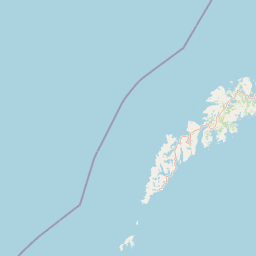
Lofotodden National Park was formally established on June 22, 2018, making it one of Norway's newer national parks. The park was officially opened by Climate and Environment Minister Ola Elvestuen on June 9, 2019. The creation of the park fulfilled long-standing conservation goals to protect the natural, cultural, and historical values of the Lofotenveggen landscape. The park's name derives from the traditional regional name for this distinctive area at the southern end of the Lofoten mountain range. While the protected area itself has been kept largely free from major development, the adjacent Stokkvika valley was excluded from the park boundaries due to its historical human occupation, with documented residency dating to 1634 and later use as a military facility during World War II and into the 1960s.
Lofotodden National Park landscape and geographic character
The landscape of Lofotodden National Park is dominated by the imposing Lofotenveggen mountain wall, a nearly continuous ridge of rugged peaks that forms the backbone of the Lofoten archipelago's western coast. The park protects the southern approximately 160-kilometer segment of this mountain range, where peaks rise dramatically from sea level to elevations between 500 and 1,029 meters. The highest peak within the park is Hermannsdalstinden, which at 1,029 meters above sea level is the highest point on Moskenesøya island and among the most prominent mountains in northern Norway. The terrain is composed of ancient volcanic rocks and granite that have been shaped by glacial processes, creating the characteristic sharp ridges, steep cliffs, and jagged summits that define the Lofoten silhouette. Between the mountain peaks, the terrain includes coastal bogs, rubble forest areas, and sand dunes that meet the North Atlantic at the park's western edge. The park encompasses several bays and inlets including portions of the coastal waters, as well as smaller islands and islets at the southwestern tip where the Lofotodden Nature Reserve provides additional protection.
Lofotodden National Park ecosystems, habitats, and plant life
The ecological character of Lofotodden National Park reflects the unique convergence of Arctic alpine and North Atlantic coastal environments. The park protects a remarkable diversity of habitat types within a relatively limited area, including rubble forests, coastal bogs, cliffed coastlines, and sand dune systems that are unusual in this northern latitude. The coastal areas and offshore islands support significant seabird populations, with the Lofotodden Nature Reserve at the southwestern tip serving as particularly important nesting grounds. The park's vegetation includes northern birch woodland in sheltered valleys and more open heath communities on exposed slopes. The combination of relatively low human impact and the variety of microhabitats created by the mountain-coastal interface has allowed for the persistence of specialized plant and fungal species adapted to these harsh but ecologically diverse conditions.
Lofotodden National Park wildlife and species highlights
Lofotodden National Park supports several species of conservation significance, particularly among seabirds that nest on the coastal cliffs and islands. The protected area provides habitat for black guillemot and European shag, both species of concern in the broader Nordic region. Various gull species also utilize the coastal islands and cliff habitats for nesting. The diverse habitats within the park support a range of terrestrial wildlife typical of northern Norwegian mountain and coastal environments, though the primary conservation significance lies in the seabird colonies and the species that depend on the coastal-marine interface. The park's position along the eastern Atlantic flyway also makes it significant for migratory bird populations that pass through the Lofoten archipelago seasonally.
Lofotodden National Park conservation status and protection priorities
Lofotodden National Park was created specifically to preserve the outstanding natural, cultural, and historical values of a landscape that has remained relatively unaffected by human development. The protection encompasses the entire mountain-coastal ecosystem, from the alpine peaks through the coastal zones to the surrounding marine areas. The park preserves not only the dramatic scenery that defines the Lofoten archipelago but also the ecological processes that sustain its biodiversity, including the seabird colonies at the Lofotodden Nature Reserve and the unusual coastal dune and bog habitats. The designation recognizes that this landscape represents one of northern Europe's most significant mountain-coastal protected areas, where natural dynamics continue largely unimpeded across a spectrum of Arctic and boreal habitats.
Lofotodden National Park cultural meaning and human context
The landscape of Lofotodden has been part of the human history of the Lofoten archipelago for centuries, though the park area itself has remained relatively sparsely populated due to its rugged terrain. The adjacent Stokkvika valley, excluded from the park boundaries, contains evidence of continuous habitation dating to at least 1634, illustrating the long history of human presence in even the most challenging terrain of this region. The traditional name Lofotodden reflects the historical regional identity of this distinctive landscape at the southern end of the Lofoten mountains. During World War II and the post-war period, certain areas surrounding the park were used for military purposes, but the core mountain and coastal areas preserved their wilderness character and were ultimately protected through national park designation.
Top sights and standout views in Lofotodden National Park
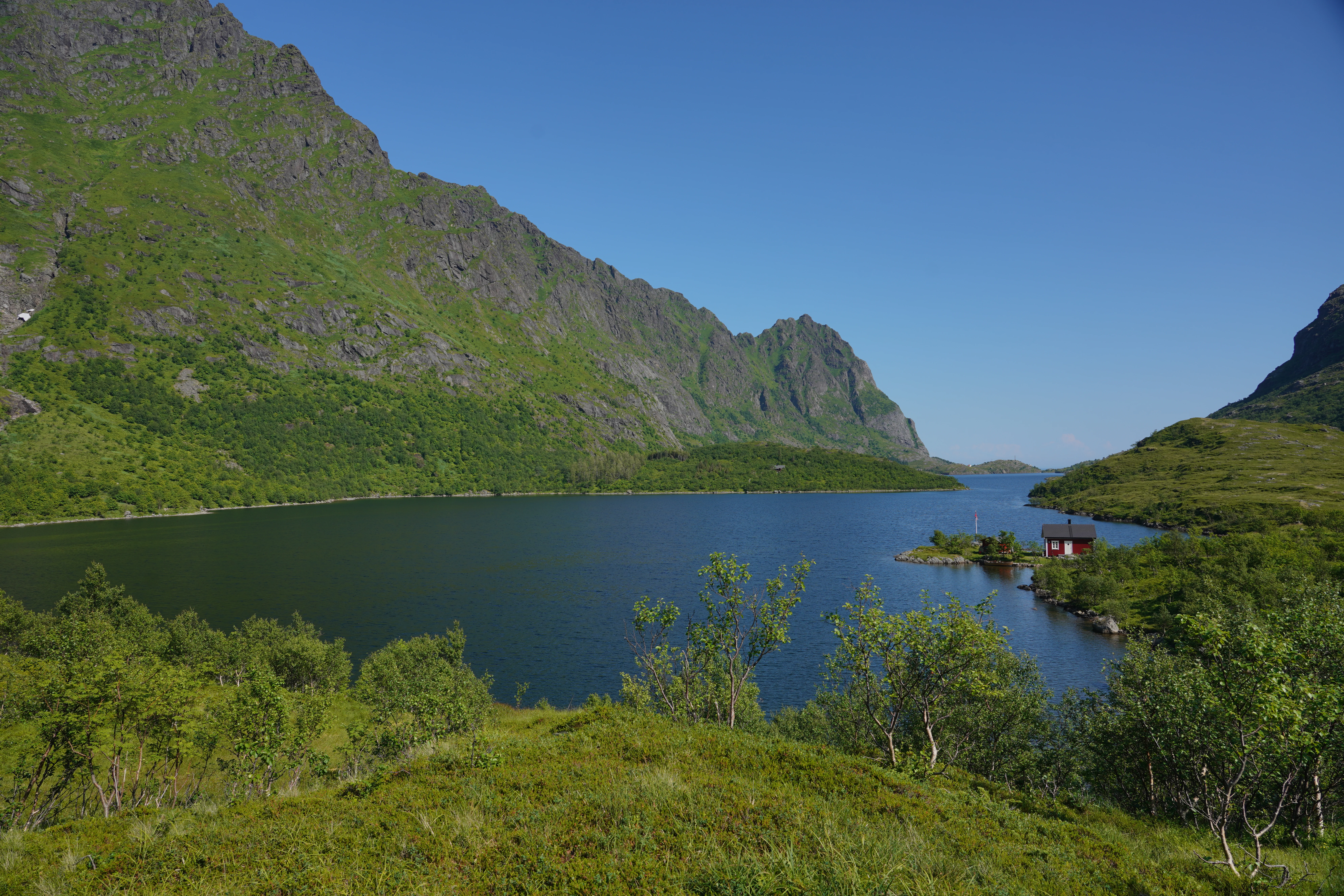
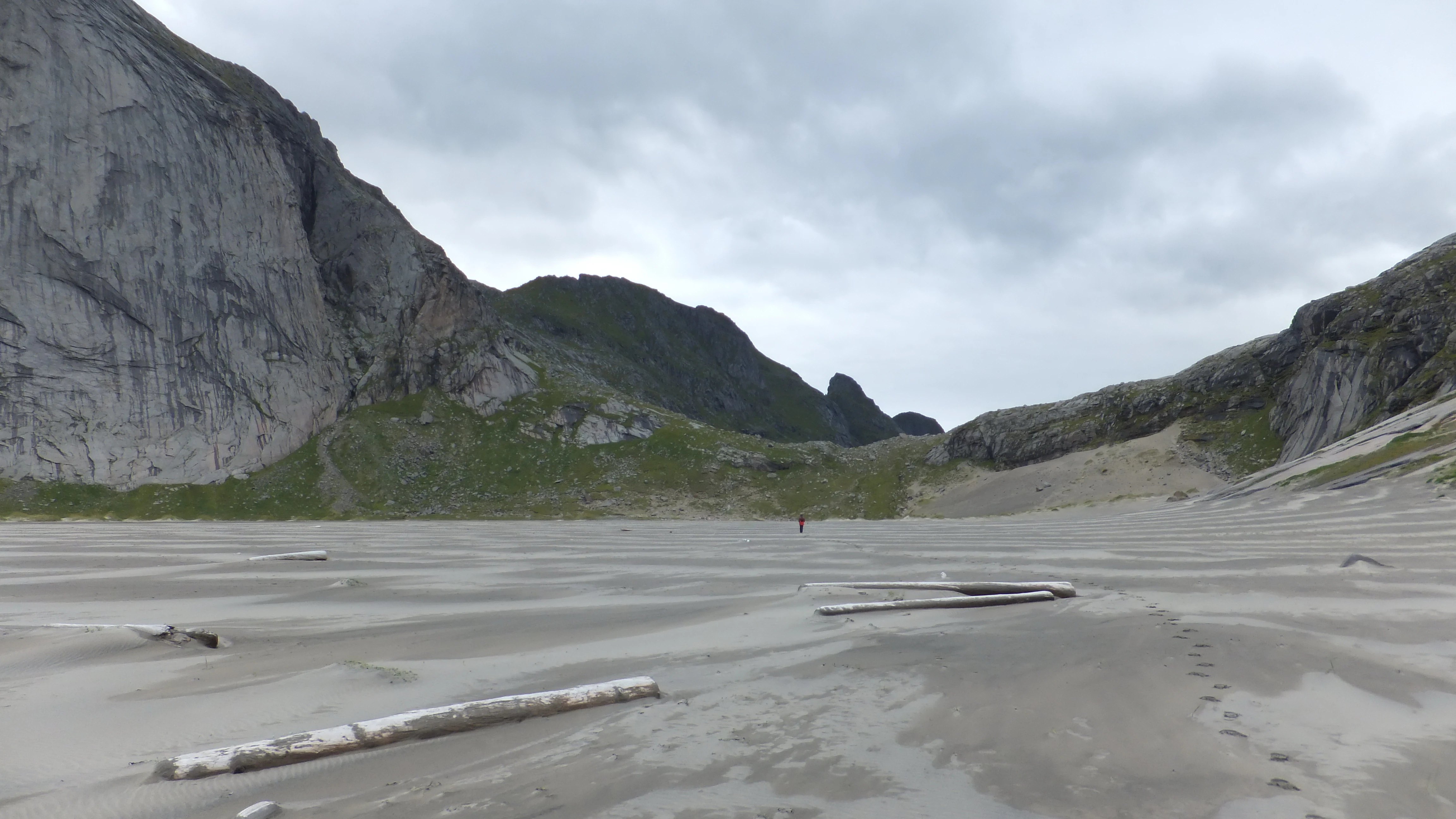
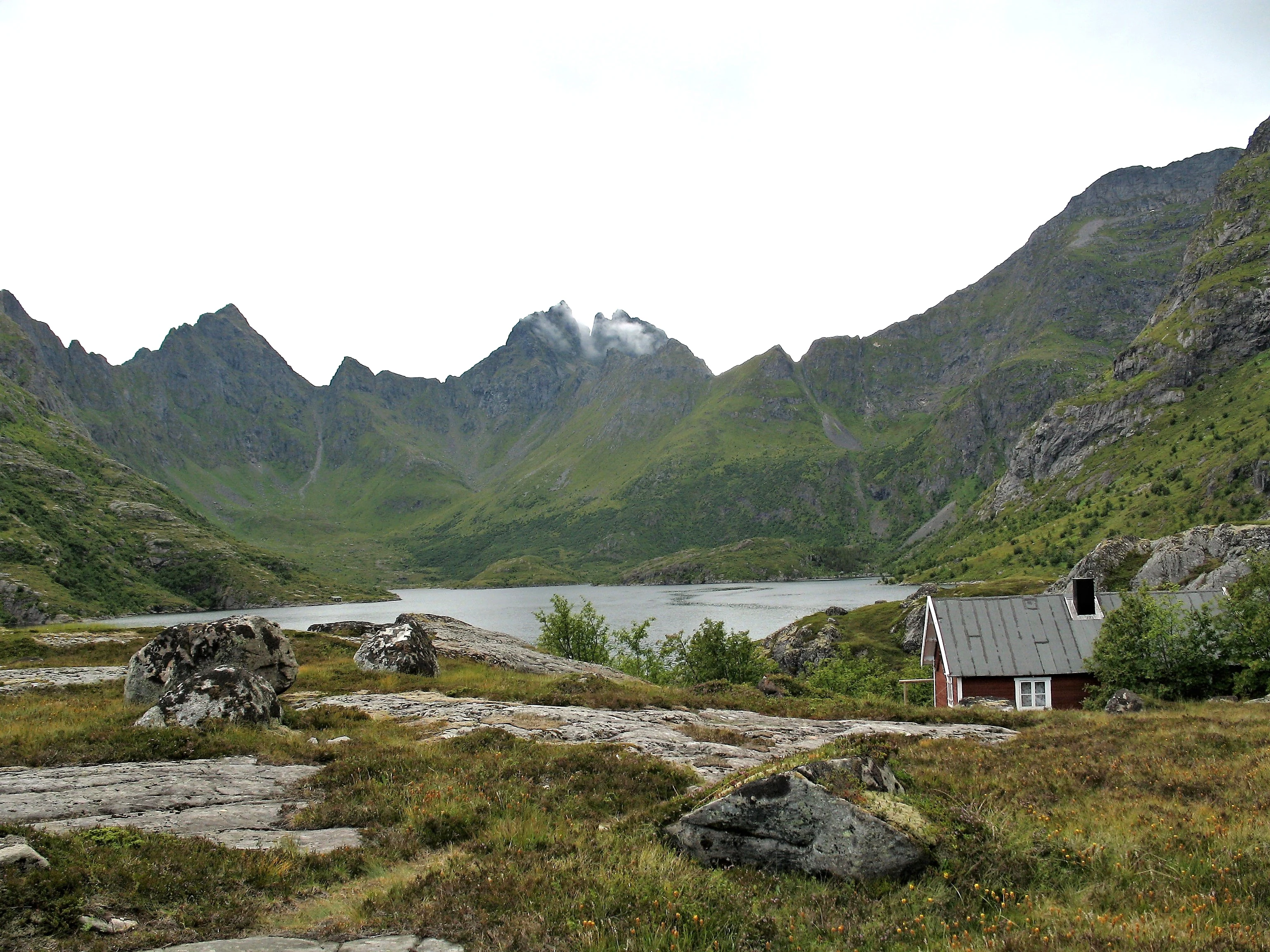
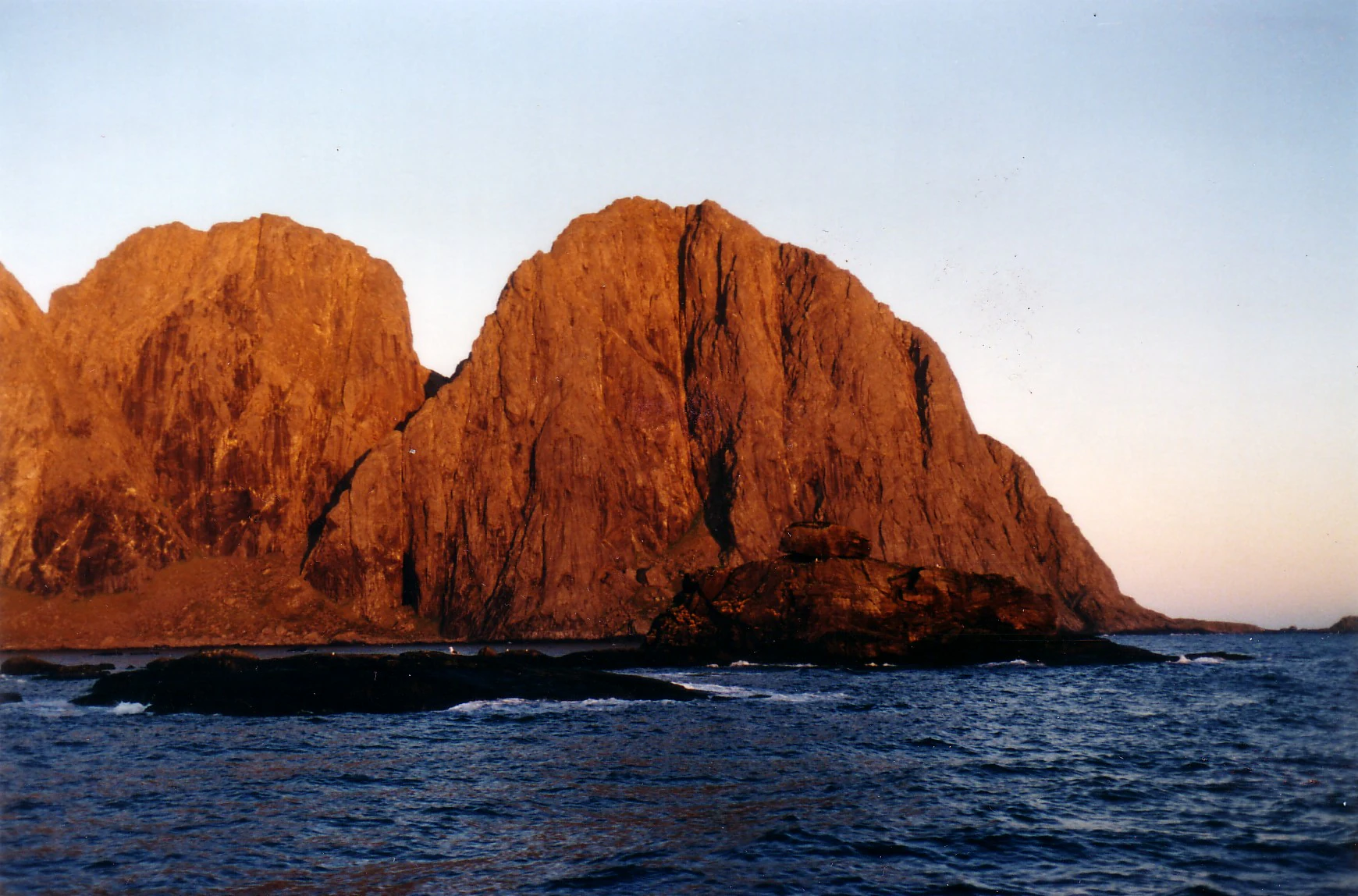
Lofotodden National Park offers exceptional mountain scenery where the dramatic Lofotenveggen rises directly from the North Atlantic, with peaks like Hermannsdalstinden providing iconic Arctic alpine silhouettes. The park protects unusual coastal features including the sandy Bunesstrand beach on the western coast and the tranquil Lake Ågvatnet nestled beneath towering peaks. The Lofotodden Nature Reserve at the southwestern tip safeguards important seabird nesting colonies on islands like Sørholmen. Hiking trails cross the mountain range, including routes from Vinstad to Bunesstrand and from the village of Å along Lake Ågvatnet to the western coast, offering access to one of Norway's most spectacular protected mountain landscapes.
Best time to visit Lofotodden National Park
The summer months of June through August offer the most accessible conditions for exploring Lofotodden National Park, with relatively mild temperatures, long daylight hours, and snow-free mountain trails. The midnight sun period around the summer solstice provides exceptional lighting for photography and extended hiking opportunities. Autumn (September through October) brings the first snow to higher elevations and creates dramatic light conditions as the landscape transitions toward winter. Winter conditions are severe, with snow cover on the mountains and limited access, though the stark alpine scenery under winter conditions offers a different but equally compelling experience for those prepared for Arctic conditions. The shoulder seasons of late spring and early autumn typically offer fewer visitors while still providing reasonable access to the park's main attractions.