
Why Lomsdal, Visten National Park stands out
Lomsdal, Visten is best known for its dramatic fjord and mountain landscape with exceptional geological diversity. The karstic terrain featuring caves, subterranean rivers, natural arches, and weathered rock formations represents a standout characteristic uncommon in Norwegian protected areas. The park's combination of steep-sided fjords, deciduous woodlands in the valley floors, coniferous forests on slopes, and alpine terrain above the tree line creates a vertically layered landscape that exemplifies the ecological diversity of northern Norway's mountain regions. The presence of ancient cultural heritage sites spanning thousands of years adds historical depth to the natural landscape.
Lomsdal, Visten National Park history and protected-area timeline
The Lomsdal–Visten area contains evidence of human activity spanning from the Mesolithic period, approximately 8,000 to 9,000 years ago, through to the present day. Archaeological findings indicate continuous human presence throughout prehistoric and historic periods. The park area was traditionally associated with Sámi culture, with traces of both historic hunting and gathering practices and the later development of semi-domesticated reindeer husbandry visible throughout the landscape. Following the population losses of the Black Death in the 14th century, ethnic Norwegian settlers expanded into the Sámi areas from the 1500s through the 1800s, re-clearing abandoned farmland along the fjords and major valleys and extending their use of the land into mountain areas. The cultural landscape that resulted from this prolonged period of settlement—including farmsteads, outlying grazing areas, and transportation routes—remains visible within the park today. The Second World War also left marks on the area, and an annual memorial march travels from inner Visten to Eiterådalen to commemorate wartime events in the region.
Lomsdal, Visten National Park landscape and geographic character
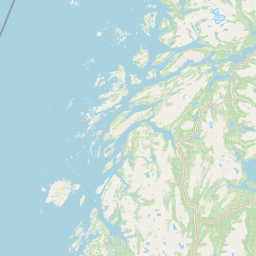
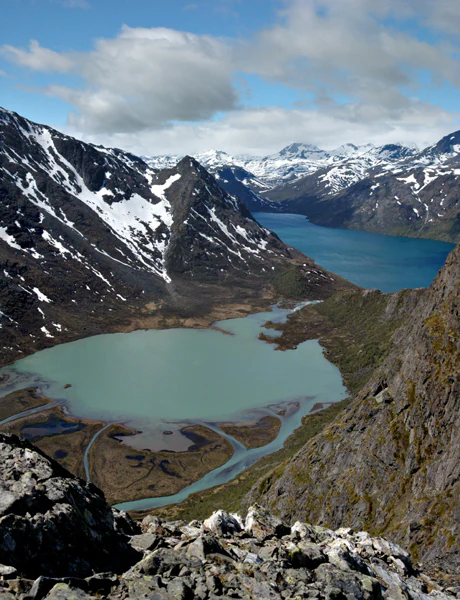
The landscape of Lomsdal–Visten National Park presents an exceptional diversity of terrain within a relatively compact protected area. The park encompasses steep-sided fjords that penetrate far inland from the coast, with deciduous woodlands lining the valley floors where conditions permit. The slopes support coniferous forests, primarily consisting of spruce and pine, which give way to mountain birch and alpine vegetation at higher elevations. The park's mountainous terrain rises to true alpine peaks, with bare rock and seasonal snow cover characterizing the highest zones. Rivers traverse the landscape in multiple directions, carving valleys and creating the water features that contribute to the park's character. The geological diversity ranks among the park's most distinctive qualities, with the karstic system representing a particularly unusual element in the Norwegian context. Caves, subterranean rivers, natural arches, and distinctive weathering patterns create a landscape of scientific interest beyond its scenic value.
Lomsdal, Visten National Park ecosystems, habitats, and plant life
The ecological character of Lomsdal–Visten reflects the transitional nature of its location within northern Norway's biogeographic zone. The park encompasses multiple habitat types arranged in response to elevation, slope orientation, and proximity to water. The valley floors and lower slopes support productive deciduous and mixed forests, while coniferous woodlands dominate the mid-elevation zones. Above the tree line, alpine vegetation prevails with species adapted to the harsh conditions of mountain environments. The river systems that traverse the park provide aquatic habitats and movement corridors for wildlife, while the karstic geology influences groundwater patterns and creates unique microhabitats. The diversity of habitats within the park boundary supports a range of species adapted to Norway's northern environments, though the specific biodiversity patterns reflect the relatively continental climate of inland Nordland.
Lomsdal, Visten National Park wildlife and species highlights
The wildlife of Lomsdal–Visten National Park reflects the park's position within the boreal and alpine zones of northern Norway. The forested areas support populations of moose, roe deer, and smaller mammals adapted to woodland environments. Bird species associated with boreal forest habitats are present throughout the park, while the alpine zones provide breeding grounds for species adapted to open mountain terrain. The rivers and waterways support fish populations and provide feeding areas for birds associated with aquatic environments. The exact species composition reflects the park's location at the transition between coastal and continental climate influences, with some species reaching the limits of their ranges in this part of Norway. The relatively recent establishment of the park means that systematic wildlife surveys continue to build understanding of the area's ecological communities.
Lomsdal, Visten National Park conservation status and protection priorities
Lomsdal–Visten National Park was established in 2009 to protect a landscape of exceptional geological diversity and ecological significance in northern Norway. The karstic terrain, with its caves, subterranean rivers, and unique weathering formations, represented a primary motivation for protection, as such features are uncommon in Norwegian protected areas and face vulnerability to disturbance. The protection designation also preserves the cultural landscape that reflects centuries of human interaction with the terrain, including both historic Sámi land use and later Norwegian settlement patterns. The park forms part of Norway's conservation framework under IUCN Category II, reflecting its designation as a national park with the primary purpose of protecting ecological processes and natural features while allowing for compatible human uses such as berry and mushroom gathering.
Lomsdal, Visten National Park cultural meaning and human context
The cultural landscape of Lomsdal–Visten reflects the long and complex history of human settlement in northern Norway. The park area preserves evidence of the region's prehistoric period through Mesolithic archaeological finds that document human presence extending back thousands of years. The Sámi people maintained traditional connections to the landscape, first as hunters and gatherers and later developing reindeer husbandry practices that shaped both the land and the cultural identity of the region. Following the demographic disruptions of the Black Death, ethnic Norwegian settlers expanded into areas previously associated with Sámi use, establishing farms along the fjords and valleys and gradually extending their presence into higher elevations. This layered history of cultural interaction remains visible in the landscape through historic farm sites, transportation routes, and ongoing land use patterns. The park also contains evidence of more recent history, including features associated with the Second World War that remain significant in local commemorative traditions.
Top sights and standout views in Lomsdal, Visten National Park
The karstic landscape of Lomsdal–Visten stands as the park's most distinctive geological feature, with caves, subterranean rivers, natural arches, and weathering formations that are uncommon in Norwegian protected areas. The dramatic fjord and mountain scenery provides representative examples of Nordland's characteristic landscape, with steep-sided fjords rising to alpine peaks within a relatively compact area. The cultural heritage spanning from Mesolithic times through modern reindeer husbandry and wartime history adds historical dimension to the natural landscape. The diversity of ecosystems, from valley deciduous woodlands through coniferous forest to alpine zones, exemplifies the ecological complexity of Norway's mountain environments.
Best time to visit Lomsdal, Visten National Park
The optimal season for visiting Lomsdal–Visten National Park aligns with the brief but productive Norwegian summer months, when daylight hours are long and the mountain terrain is accessible. Summer conditions allow visitors to experience the full range of elevations within the park, from the fjord valleys to alpine areas. The landscape displays its characteristic diversity most fully during the growing season, when vegetation is active and wildlife is more observable. Autumn offers another productive period, particularly for visitors interested in berry and mushroom gathering, which is permitted within the park. Winter conditions in this northern location are severe, with limited daylight and extensive snow cover restricting access to much of the park area. Spring arrives late compared to lower latitudes and brings the gradual transition from winter dormancy to the brief summer growing period.