Mori Atlas logo
Wildlife reserveMajete Wildlife Reserve

Explore the riparian savanna and woodland terrain of this landmark restoration project

Majete Wildlife Reserve: Mapping the Protected Landscapes and Geography of Southern Malawi

Majete Wildlife Reserve occupies a critical position in the lower Shire River valley of southwestern Malawi. This protected area showcases a diverse landscape of savanna, riparian forest, and miombo woodland that supports a rebounding Big Five population. By examining its mapped boundaries and topographic features, users can understand the ecological recovery and community-linked conservation model that defines this significant southern African reserve.

Big Five safariwildlife restorationsavannawoodlandriparian forestShire River valley

Majete Wildlife Reserve

Wildlife reserve

Park overview

Structured park overview, official facts, and landscape profile for Majete Wildlife Reserve

Majete Wildlife Reserve park facts, protected area profile, and essential visitor context

Review the core facts for Majete Wildlife Reserve, including designation, size, terrain, visitor scale, habitats, and operating context in one park-focused overview.

About Majete Wildlife Reserve

Majete Wildlife Reserve occupies a substantial tract of the lower Shire River valley in southwestern Malawi, where the Shire flows toward the Kapachira Falls not far from Blantyre. The protected area combines open savanna, mixed woodland, and stretches of riparian forest along the river and its tributaries, producing a habitat mosaic that supports an unusually broad range of large mammals, birds, and reptiles for a reserve of its size.

The reserve's modern identity is inseparable from its restoration story. Designated as a nature reserve in 1955, Majete was progressively stripped of its wildlife through the 1970s and 1980s as charcoal burning, logging, and organized poaching hollowed out animal populations. By the early 2000s, the reserve had lost its last elephants in the early 1990s, its rhinos had been wiped out decades earlier, and large predators were locally absent. The reserve was effectively a protected landscape in administrative form but not in ecological reality.

The transformation of Majete began in 2003, when African Parks entered into a 25-year public-private partnership with the Malawi Department of National Parks and Wildlife. Over the following decade, a perimeter fence was completed around the reserve, a 24-hour ranger patrol system was established, hundreds of kilometers of internal roads were constructed, and core facilities including visitor and education centers, a campsite, and the Thawale lodge were developed. Animal reintroductions began in earnest, with black rhinos returning in 2003, elephants relocated from Liwonde National Park and Mangochi Forest Reserve from 2006 onward, lions translocated from South Africa in 2012, giraffes reintroduced from 2018, and cheetahs and African wild dogs returned in subsequent restocking efforts. By 2013, more than 2,000 animals had been reintroduced, funded at a cost of roughly US$3 million.

Today, Majete functions as both a working safari destination and a conservation anchor in Malawi's southern protected-area network. Visitor numbers grew from almost none in the early 2000s to several thousand per year by the mid-2010s, supporting a riverside luxury lodge, Mkulumadzi, and a community benefit program that channels tourism revenue into local development initiatives. The reserve's heritage center, displaying confiscated snares and muzzleloaders, anchors the experience in the history of what was lost and what has been rebuilt, making Majete as much a story of recovery as a traditional African game reserve.

Quick facts and research context for Majete Wildlife Reserve

Majete Wildlife Reserve is a roughly 700 square kilometer protected area in the lower Shire River valley of southwestern Malawi. It sits near Blantyre, Malawi's second largest city, and lies close to the Kapachira Falls on the Shire River.

Established as a nature reserve in 1955, Majete lost most of its large mammal populations to poaching and habitat pressure by the 1990s. Under a 25-year partnership with African Parks from 2003 onward, the reserve was fenced, patrolled, restocked with more than 2,000 animals, and became Malawi's first Big Five game reserve after lions were reintroduced in 2012.

Protection and recognition

Review documented terrestrial protection scope and official international recognition records.

Majete Wildlife Reserve Protection Status and Designated Conservation Context

Majete Wildlife Reserve maintains a defined terrestrial protection scope within the global conservation network. Official records organize designated area boundaries, management parameters, and international recognition sources for structured geographical analysis.

Protection details

Protection scope
Terrestrial
Transboundary protection
No
Park context

Deeper park guide and search-rich context for Majete Wildlife Reserve

Majete Wildlife Reserve history, landscape, wildlife, and travel context

Explore Majete Wildlife Reserve through its history, landscape character, ecosystems, wildlife, conservation priorities, cultural context, and seasonal travel timing in a structured park guide built for atlas discovery and search intent.

Why Majete Wildlife Reserve stands out

Majete is best known for being Malawi's first Big Five reserve, a status reached through one of southern Africa's most ambitious wildlife restoration projects. The reserve reintroduced lions, elephants, black rhinos, and cheetahs into habitat that had lost most of its large mammals, rebuilding a functioning savanna ecosystem from near-empty former hunting ground. It is also notable as a flagship African Parks partnership site, where long-term management has linked species reintroduction, ranger-based protection, and community development in the Shire River valley. The reserve today stands as a model of how depleted African wildlife areas can be brought back to ecological and economic viability.
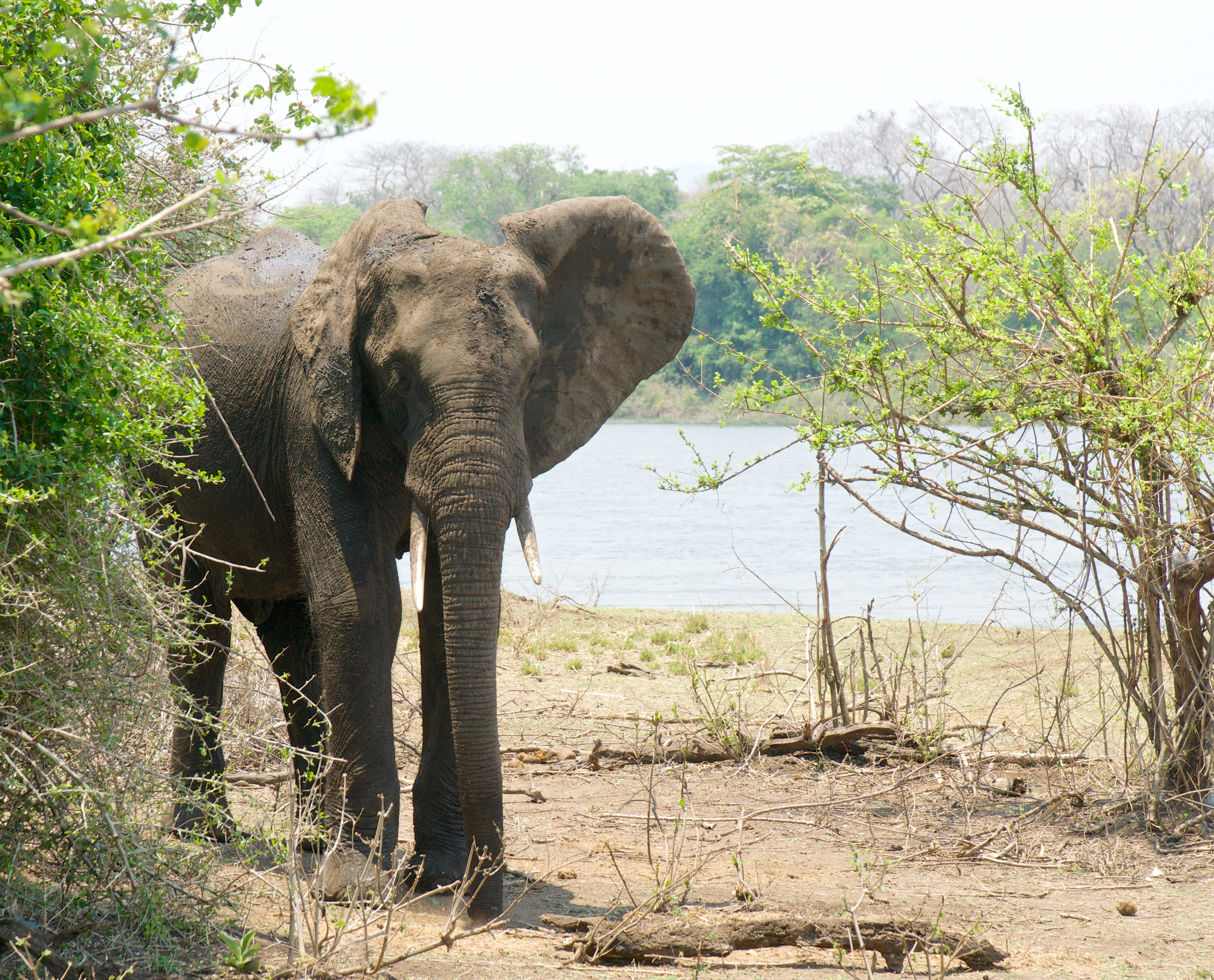
A single African elephant standing on dry ground between trees with a river visible in the background.
An African elephant stands near the riverbank in Majete Wildlife Reserve.

Majete Wildlife Reserve history and protected-area timeline

Majete has been formally recognized as a protected area since 1955, when it was gazetted as a nature reserve in the lower Shire River valley. For much of its early existence, however, the reserve's ecological value eroded under sustained pressure. Charcoal burning, commercial logging, and poaching intensified during the late 1970s and 1980s, eventually eliminating populations of rhinoceros and driving the last elephants out of the reserve by the early 1990s. By 2002, observers described Majete as a wildlife sanctuary in name only, with little large mammal life remaining beyond antelope.

The reserve's modern chapter began in March 2003, when African Parks signed a 25-year public-private management partnership with the Malawi Department of National Parks and Wildlife. Under this arrangement, the reserve's perimeter fence was completed by 2013, enclosing a roughly 142 kilometer boundary that enabled effective anti-poaching patrols. Ranger numbers grew from around 12 to approximately 140 full-time employees, internal road infrastructure expanded by some 300 kilometers, and visitor facilities including the Thawale lodge, an education and visitor center, and a community-operated campsite were added.

Animal reintroductions defined the next phase of Majete's history. Black rhinos were returned to the reserve in 2003, the first elephants were relocated from Liwonde National Park and Mangochi Forest Reserve to a fenced sanctuary within Majete, and further elephant translocations followed in 2008 and 2009. In 2012, two male and two female lions were brought in from South Africa, securing Majete's place as Malawi's first self-described Big Five game reserve. Subsequent reintroductions expanded the reserve's predator and grazer profile: additional lions in 2018, giraffes from 2018 onward, cheetahs in 2019, and African wild dogs in 2020. Between 2016 and 2017, African Parks also moved several hundred elephants out of Majete and Liwonde to help rebuild Nkhotakota Wildlife Reserve, illustrating the reserve's role as a source population within Malawi's national conservation strategy.

Majete Wildlife Reserve landscape and geographic character

Majete sits within the lower Shire River valley in southwestern Malawi, a landscape shaped by the Shire River as it descends toward the Kapachira Falls. The reserve's terrain combines open stretches of savanna with interspersed woodland and bands of denser riparian vegetation along river courses, producing a mosaic of habitats rather than a single uniform ecosystem.

The vegetation reflects this mosaic character. Acacia, Brachystegia, and Sterculia trees define much of the woody cover, while tall grasses dominate more open areas. The riparian forests along the Shire and its tributaries add a distinct, riverine component to the landscape, supporting both aquatic wildlife and tree species that thrive in moister conditions on the valley floor.

Topographically, Majete lies in a transition zone between the broader Shire Highlands and the river valley below, giving the reserve a varied relief that influences drainage, grass growth, and animal movement. The Kapachira Falls nearby anchor the regional hydrology and contribute to the riparian wealth of the reserve. Inside the park, a fenced core sanctuary of roughly 78 square kilometers is reserved for safari use, while the wider reserve offers additional habitat for wildlife ranging across the full protected area.

Majete Wildlife Reserve ecosystems, habitats, and plant life

Majete's ecological identity rests on the interplay between dry savanna, mixed miombo-like woodland, and Shire River riparian forest. This combination supports a wide spectrum of ecological niches within a relatively compact protected area, from open grasslands favored by grazing antelope to denser woody cover preferred by browsers and predators. The presence of sizable riparian corridors also makes the reserve ecologically richer than purely dry-land reserves of similar size.

Seasonal variation in rainfall and river flow shapes much of the reserve's ecological rhythm, with the Shire valley ecosystem responding to wet and dry cycles that affect grass cover, water availability, and animal distribution. Tall grass areas are particularly important for species such as buffalo, while the woodland and riparian forest provide shade, cover, and browse during hotter parts of the year.

Restoration efforts have re-established ecological processes that had been broken for decades. The return of large herbivores and predators has begun to reshape grazing pressure, predator-prey dynamics, and the broader food web, while ongoing anti-poaching and ranger presence have stabilized the conditions under which these processes can operate. In this sense, Majete functions less as a static sanctuary and more as a recovering, functioning ecosystem.

Majete Wildlife Reserve wildlife and species highlights

Majete Wildlife Reserve is distinguished by the recovery of its large mammal fauna. By 2022, the reserve was home to more than 12,000 animals, including all of Africa's Big Five: African elephant, lion, African leopard, African buffalo, and rhinoceros. Elephants, once eliminated from the reserve, now number in the hundreds following translocations from Liwonde and other protected areas. The reserve's lion population, founded by reintroduced individuals from South Africa in 2012, had grown to roughly 52 by 2022.

Other mammals in Majete include a full suite of savanna ungulates: common eland, nyala, sable antelope, impala, waterbuck, reedbuck, duiker, and zebra. Hippopotamus and crocodile are present in the Shire River and associated waterways, while monkeys and warthog occupy the woodland and savanna mosaic. Giraffes, returned to the reserve from 2018 onward, and cheetahs and African wild dogs reintroduced later in the 2010s and early 2020s, add further breadth to the reserve's mammal community.

Birdlife is also a notable feature. Recorded species include the African finfoot, Böhm's bee-eater, Egyptian goose, and racket-tailed roller, as well as additional waterfowl and other birds within Anseriformes. Reptiles include crocodiles and tortoises, and arachnid records include the golden silk orb-weaver. While Majete is primarily marketed around its large mammals and Big Five status, its bird and reptile diversity contributes meaningfully to the ecological richness visitors encounter.

Majete Wildlife Reserve conservation status and protection priorities

Majete Wildlife Reserve is one of the most prominent modern examples of reserve restoration through long-term public-private management. The combination of perimeter fencing, ranger-based law enforcement, infrastructure rebuild, and active animal reintroductions has transformed a reserve that had been ecologically gutted by poaching into a functioning Big Five sanctuary within roughly a decade.

The African Parks partnership with the Malawi Department of National Parks and Wildlife, signed in 2003, has been the institutional engine of this transformation. By 2013, fence completion, 24-hour patrols, and ranger expansion had effectively closed the era of large-scale poaching-related losses, and as of 2022 no elephants or rhinos had been poached inside the reserve since these interventions took hold. The reserve's role within Malawi's broader protected-area strategy is also important: Majete has served as a source population for elephants and other species restocked into Nkhotakota Wildlife Reserve, illustrating its place as a node in a national conservation network rather than an isolated protected area.

Equally significant is the conservation-linked community development model around the reserve. Revenue from tourism and lodge operations has funded malaria prevention, beekeeping projects, scholarships, and other local initiatives, aligning reserve protection with the welfare of surrounding communities. The reserve's heritage center, displaying confiscated snares and muzzleloaders, also serves a conservation messaging function, putting the poaching history and recovery narrative at the heart of the visitor experience.

Majete Wildlife Reserve cultural meaning and human context

Majete's cultural context is shaped by its role in the rural landscape of the lower Shire River valley and its relationship with communities living in and around the reserve. The area has a history of human use tied to charcoal production, subsistence hunting, and small-scale agriculture, much of which contributed to the wildlife collapse of the late twentieth century. Contemporary reserve management has explicitly engaged this context, framing the reserve's recovery as inseparable from local livelihoods and community participation.

A heritage center at the reserve's entrance highlights this relationship by displaying confiscated trapping devices and poachers' muzzleloaders, offering visitors a grounded view of the human pressures that once emptied the reserve. Local communities also participate directly in reserve operations through the community-run campsite, employment in lodge and ranger services, and benefit-sharing from tourism revenue. Funded initiatives have included a malaria research and prevention center, beekeeping projects, and student scholarships, embedding the reserve in a wider pattern of community-linked conservation in southern Africa.

Top sights and standout views in Majete Wildlife Reserve

Majete's defining strengths are its recovery story and the ecological density of the lower Shire River valley. The reserve combines Big Five game viewing with miombo-style woodland, savanna, and Shire River riparian habitats in a single protected area, offering a compact but diverse safari experience within easy reach of Blantyre. The Mkulumadzi lodge on the Shire River, an active reintroductions program, and a heritage center focused on the reserve's poaching history give visitors multiple entry points to Majete's identity.

Equally distinctive is the reserve's function as a source population for wildlife translocations elsewhere in Malawi, especially the elephants relocated to Nkhotakota Wildlife Reserve. Together with its community-linked funding model and ranger-led protection record since 2003, Majete stands out as both a successful restoration project and an ongoing contributor to Malawi's national park network.

Best time to visit Majete Wildlife Reserve

Majete's dry season typically offers the most favorable conditions for game viewing, with shorter grass, more concentrated water sources, and easier access along the reserve's internal road network. During these months, animals tend to gather near the Shire River and remaining waterholes, increasing the predictability of sightings and making predator and large-mammal viewing more rewarding.

In the wet season, denser grass and more dispersed water sources can make wildlife harder to locate, although the landscape becomes lusher and bird activity increases. Visitors interested in birding, lush scenery, and quieter conditions may find this period attractive, while those focused on classic Big Five game viewing are generally best served by the dry months when access and visibility are at their best.

Monthly climate preview

Long-term representative averages for annual temperature and monthly precipitation rhythm

Majete Wildlife Reserve Climate Normals and Monthly Temperature Patterns

Representative coordinates record measured monthly averages spanning temperatures from 19.28 °C to 28.16 °C alongside varying daily precipitation rates. Examining the full twelve-month profile provides deeper context on long-term climatic variations across the reserve.
Annual mean24 °C
19 °C28 °C
Jan25°
Feb24°
Mar24°
Apr23°
May21°
Jun20°
Jul19°
Aug22°
Sep25°
Oct28°
Nov28°
Dec26°
Warmest month
November

28.2 °C

Coolest month
July

19.3 °C

Wettest month
January

9.5 mm/day

Driest month
August

0.3 mm/day

Park location guide

Geography guide, regional context, and park location map for Majete Wildlife Reserve

Majete Wildlife Reserve park geography, regions, and map view in Malawi

Understand where Majete Wildlife Reserve sits in Malawi through a broader geographic reading of the surrounding landscape, nearby location context, and its mapped position within the national park landscape.

How Majete Wildlife Reserve fits into Malawi

Malawi is a landlocked country in Southeastern Africa. Formerly known as Nyasaland under British colonial rule, it gained independence in 1964 and became a multi-party democracy in 1994. The country is known for Lake Malawi, which comprises about one-fifth of its territory, and is governed as a unitary presidential republic with Lilongwe as its capital.

Wider geography shaping Majete Wildlife Reserve in Malawi

Malawi is located in Southeastern Africa within the Great Rift Valley. It is bordered by Zambia to the west, Tanzania to the north and northeast, and Mozambique to the east, south, and southwest. The country features highlands and plateaus in the northern and central areas, with the Great Rift Valley system running through the territory.

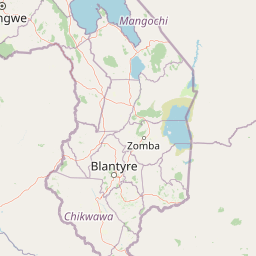
Map view of Majete Wildlife Reserve

Use this park location map to pinpoint Majete Wildlife Reserve in Malawi, understand its exact geographic position, and read its mapped placement within the surrounding landscape more clearly.

Pigeon | © OpenStreetMap contributors

Explore protected area views, savanna terrain, and riverine habitats across the reserve.

Majete Wildlife Reserve Photos and Scenery: Visualizing the Shire River Valley Landscape

Visual records document the diverse terrain, acacia woodlands, and riparian habitats that characterize the protected landscape. Examining these photographs helps observers understand the environmental restoration and ecological structure of the sanctuary.

A single African elephant standing on dry ground between trees with a river visible in the background.

Park atlas

Compare regional savanna reserves, riparian woodlands, and connected conservation landscapes.

Other Parks Like Majete Wildlife Reserve and Protected Areas in the Surrounding Region

Browse national parks and protected areas near Majete Wildlife Reserve to expand regional ecological comparison. Evaluating adjacent wildlife reserves clarifies broader conservation patterns across the surrounding river valley and woodland terrain.
National parkMalawi
About 32 km away#1 closest

South

Lengwe National Park: Malawi's Protected Landscape Atlas and Geographic Context

Mapped natural terrain and protected area boundaries in Malawi.

Lengwe National Park offers a focused look into Malawi's protected natural areas. As a designated national park, its geographic significance is highlighted through mapped boundaries and an understanding of the surrounding regional terrain. This entry provides essential context for exploring its identity as a protected landscape within southeastern Africa, contributing to a broader atlas of conservation areas.

Area
887 km²
Established
1970
IUCN
II
Climate
Tropical
Nature reserveChiradzulu District
About 55 km away#2 closest

Northeast

Chiradzulu Mountain Forest Reserve: Geography and Protected Area Profile

A rugged mountain landmark in the Shire Highlands of southern Malawi

Located in the heart of Chiradzulu District, this nature reserve protects a prominent mountain massif known for its unique silhouette and ecological importance. The site provides a vital reference point for understanding the mountainous terrain, regional reforestation progress, and the broader natural landscapes of the Shire Highlands.

Area
7.74 km²
Established
1924
Relief
Mountain
Scope
Terrestrial
Wildlife reserveNsanje District
About 81 km away#3 closest

South

Mwabvi Wildlife Reserve: Mapping the Protected Landscapes of the Nsanje District

Geography, woodland terrain, and regional biodiversity.

Located in the southernmost Nsanje District of Malawi, Mwabvi Wildlife Reserve encompasses a unique convergence of dry Brachystegia woodland, sandstone hills, and open savanna grasslands. This protected area offers a deep look into the varied topographies of the Lower Shire region, providing a comprehensive understanding of the reserve's historic ecological importance and its current role in regional conservation.

Area
135 km²
Established
1953
IUCN
IV
Relief
Upland
Digital illustration of a large mountain range with jagged peaks, rolling green foothills, a central valley, and a stylized sun in a soft pastel sky.
Nature reserveMalawi
About 87 km away#4 closest

East

Mulanje Mountain Forest Reserve: Protected Afromontane Landscapes in Southern Malawi

Geographic overview of the Mulanje Massif and its high-elevation plateau

This nature reserve covers an isolated mountain block in Malawi, rising sharply to 3,002 meters at Sapitwa Peak. The landscape features rugged granite cliffs, deeply carved valleys, and extensive Afromontane forests that provide sanctuary for numerous endemic species. Use this atlas resource to understand the massif's vertical relief, plateau characteristics, and its central role in the regional geography of southeastern Africa.

Area
563.17 km²
Established
1927
Relief
Mountain
Climate
Tropical
Nature reserveMalawi
About 93 km away#5 closest

Northeast

Zomba Plateau Nature Reserve: Geographic Overview and Mapped Mountain Terrain

Protected montane landscapes in southern Malawi

Zomba Plateau stands as a significant granitic intrusion within the Shire Highlands, featuring high-altitude terrain and diverse forested patches. This record provides essential geographic context on its geological structure, forest reserves, and surrounding vistas across the southern Malawi landscape.

Area
130 km²
Established
1913
Relief
Mountain
Climate
Tropical
A watercolor painting showing a wide, panoramic view of a lake shore with marshy green grasses in the foreground and soft purple hills in the background.
Protected areaZomba District
About 125 km away#6 closest

Northeast

Lake Chilwa Protected Area: Geography, Map, and Seasonal Wetland Landscape Analysis

Understanding the endorheic basin and floodplain dynamics in Malawi.

Lake Chilwa stands as a significant protected area and Ramsar wetland in Zomba District. This detail covers its unique closed-basin geography, the influence of seasonal rainfall on surface extent, and the distinct characteristics of its shallow open water and flooded grasslands. Explore the intersection of river inflows and basin drainage that defines this critical ecosystem.

Established
1996
Relief
Lowland
Scope
Terrestrial
Water
Water-dominated
National parkSouthern Region
About 140 km away#7 closest

Northeast

Liwonde National Park: National Park in Malawi's Southern Region

Mapped Protected Area Boundaries and Geographic Context

Liwonde National Park is a designated national park situated in Malawi's Southern Region. This entry provides detailed geographic information, focusing on the park's mapped boundaries and its role within the broader atlas of protected landscapes. Explore the unique regional geography and conservation context that defines this protected area.

Area
548 km²
Established
1973
Relief
Upland
Climate
Tropical
National parkMalawi
About 194 km away#8 closest

North

Lake Malawi National Park: UNESCO Protected Landscape and Endemic Fish Habitat

Discover mapped terrain, island geography, and evolutionary wonders.

Lake Malawi National Park offers unparalleled insight into freshwater biodiversity and landscape dynamics within Malawi's Great Rift Valley. As a UNESCO World Heritage Site, it is celebrated for its spectacular evolutionary radiation of cichlid fish, a phenomenon studied globally. The park's protected territory includes the mountainous Nankumbu Peninsula and thirteen islands, providing a rich context for understanding the interplay between aquatic ecosystems, terrestrial terrain, and unique island geography.

Area
94 km²
Established
1980
IUCN
II
Relief
Mountain

Common questions about visiting, size, designation, and location context for Majete Wildlife Reserve

Majete Wildlife Reserve FAQs for park facts, access, geography, and protected area context

Find quick answers about Majete Wildlife Reserve, including protected-area facts, park geography, trail and visitor context, and how the park fits into its surrounding country and regional landscape.
MoriAtlas Explorer

Continue Your Protected Areas Search Across the Global Atlas

Deepen your exploration by continuing the structured search for national parks and protected areas worldwide. Utilize the comprehensive filtering capabilities to compare different conservation landscapes and refine your understanding of global park geography. Discover more about the distribution and characteristics of protected natural areas.

Global natural geography