Mori Atlas logo
Nature reserveRezerwat przyrody Małoziemce

Mapping protected forest and wetland habitats within the transboundary Polesie Zachodnie region

Rezerwat przyrody Małoziemce: A Dedicated Nature Reserve and Wetland Landscape in Lubelskie Voivodeship

Rezerwat przyrody Małoziemce functions as an essential nature reserve focused on protecting grey heron breeding colonies within the flat, post-glacial terrain of eastern Poland. Situated inside the Sobiborski Landscape Park, this protected area anchors a mosaic of peat bogs, meadows, and forest stands characteristic of the Łęczna-Włodawa Lake District. Its geographic significance extends through its role in the transboundary Polesie Zachodnie Biosphere Reserve, linking local wetland conservation to wider international efforts across the border landscape.

faunal reservebird sanctuarygrey heron colonywetland birdsforest reserveLake District landscape

Rezerwat przyrody Małoziemce

Nature reserve

Park overview

Structured park overview, official facts, and landscape profile for Małoziemce Nature Reserve

Małoziemce Nature Reserve park facts, protected area profile, and essential visitor context

Review the core facts for Małoziemce Nature Reserve, including designation, size, terrain, visitor scale, habitats, and operating context in one park-focused overview.

About Małoziemce Nature Reserve

Małoziemce Nature Reserve occupies a modest footprint in the eastern reaches of the Lubelskie Voivodeship, in the Włodawa County area near the border with Ukraine. The reserve lies within the Łęczna-Włodawa Lake District, a lowland region characterized by post-glacial lakes, peatlands, and extensive forest cover. Together with the surrounding Sobiborski Landscape Park, it belongs to a wider network of protected sites that preserve the natural character of the western Polesie region.

The reserve is classified as a faunal reserve, meaning its protective framework is focused specifically on animal life rather than on broader geological or botanical features. This designation reflects the central role that the site plays in safeguarding a nesting colony of the grey heron, a waterbird species closely associated with wetland habitats. The reserve's protected zone is intended to ensure that breeding pairs and their nesting sites remain undisturbed within a forest setting that otherwise forms part of a larger managed landscape.

Because the reserve sits inside the Sobiborski Landscape Park, its conservation role extends beyond the reserve itself. The surrounding landscape park provides additional layers of protection for the forests, lakes, and wetland systems that surround the heron colony. At a broader scale, Małoziemce is recognized internationally through its inclusion in the Transboundary Biosphere Reserve 'Polesie Zachodnie', which links protected areas across the Polish-Ukrainian border and highlights the global significance of the region's wetland and forest ecosystems.

Quick facts and research context for Małoziemce Nature Reserve

Małoziemce Nature Reserve is a faunal-type nature reserve in eastern Poland, located in Gmina Wola Uhruska, Włodawa County, Lubelskie Voivodeship. It was created in 1988 by order of the Minister of Environmental Protection and Natural Resources. Its protected area covers roughly 38 hectares, and its primary conservation purpose is to safeguard nesting sites of the grey heron and other bird species. The reserve lies within the Sobiborski Landscape Park and is part of the Transboundary Biosphere Reserve 'Polesie Zachodnie'.

Protection and recognition

Documented terrestrial protection scope and international recognition records

Rezerwat przyrody Małoziemce Protection Status and Designation Data

Rezerwat przyrody Małoziemce maintains a documented terrestrial protection scope without imported international recognition sources. Structured designation records outline the regulatory framework and management context for the protected area.

Protection details

Protection scope
Terrestrial
Transboundary protection
No
Park context

Deeper park guide and search-rich context for Małoziemce Nature Reserve

Małoziemce Nature Reserve history, landscape, wildlife, and travel context

Explore Małoziemce Nature Reserve through its history, landscape character, ecosystems, wildlife, conservation priorities, cultural context, and seasonal travel timing in a structured park guide built for atlas discovery and search intent.

Why Małoziemce Nature Reserve stands out

Małoziemce is best known as a dedicated bird protection reserve, established in 1988 to preserve a breeding colony of the grey heron and associated bird species. Its identity is closely tied to its location within the Sobiborski Landscape Park and the larger transboundary Polesie Zachodnie Biosphere Reserve, both of which reinforce its role in protecting wetland-associated birdlife in the Łęczna-Włodawa Lake District.
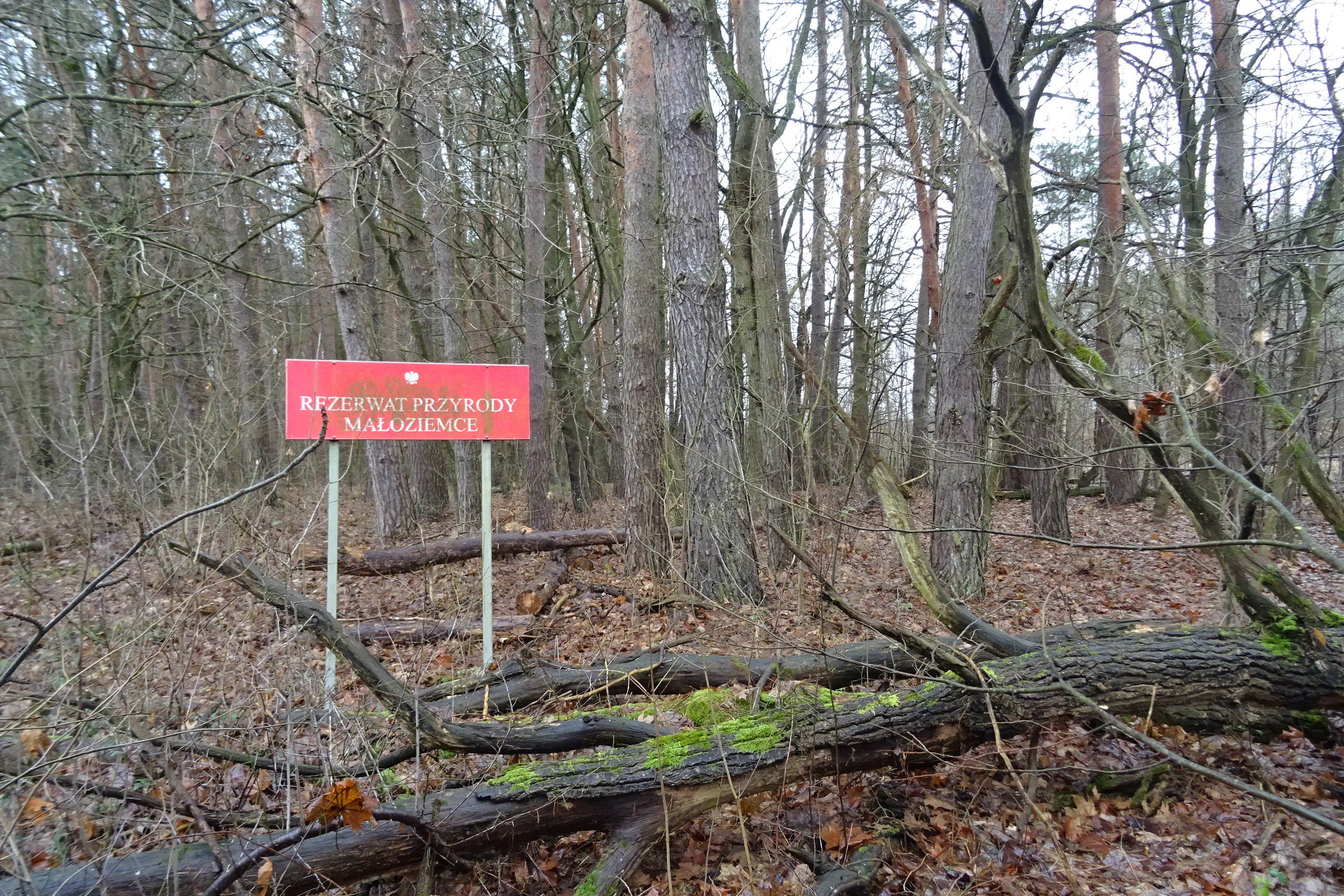
A red, rectangular nature reserve sign with white Polish text mounted on two posts in a wooded area with many fallen logs on the forest floor.
A red information sign marking the entrance to Rezerwat przyrody Małoziemce.

Małoziemce Nature Reserve history and protected-area timeline

Małoziemce Nature Reserve was formally established in 1988 through an order of the Minister of Environmental Protection and Natural Resources, published in Monitor Polski No. 32, item 293. The legal act recognized the site as a faunal nature reserve with the explicit purpose of preserving nesting sites of the grey heron and other bird species.

Its establishment coincided with a broader wave of formal nature protection initiatives in Poland during the late 1980s, when small, biologically focused reserves were created across many regions to safeguard specific wildlife habitats. The reserve's location within the Sobiborski Landscape Park, a larger protected landscape unit, helped integrate its faunal protection goals with the wider landscape-scale conservation framework already in place around the Łęczna-Włodawa Lake District.

In subsequent years, the reserve gained additional international recognition through its inclusion in the Transboundary Biosphere Reserve 'Polesie Zachodnie', extending its conservation context across the border and placing it within a broader European network of protected wetland and forest sites.

Małoziemce Nature Reserve landscape and geographic character

The reserve sits within the Łęczna-Włodawa Lake District, a lowland post-glacial region marked by a mosaic of lakes, peat bogs, meadows, and forests. The terrain is largely flat, shaped by past glacial activity that left behind the characteristic lake basins and wetland complexes of western Polesie.

Around the reserve, the landscape of the Sobiborski Landscape Park frames the protected site with broader stretches of forest, scattered open water, and marshy lowlands typical of the border region with Ukraine. This setting provides the woodland and wetland conditions needed by colonial nesting waterbirds such as the grey heron.

Although the reserve itself is small in area, it is embedded within a wider landscape where lakes, bogs, and forest stands alternate across the plain, offering a continuous ecological backdrop for the bird species it was created to protect.

Małoziemce Nature Reserve ecosystems, habitats, and plant life

Małoziemce is classified as a faunal reserve, which means its formal protective framework targets animal populations and their habitats rather than geological formations or plant communities. The reserve's ecological value lies primarily in its forested setting, which supports a breeding colony of the grey heron and other bird species.

The broader ecological context is shaped by the Łęczna-Włodawa Lake District, where lakes, peatlands, and woodlands form interconnected habitat networks. Forests around the reserve supply nesting trees for herons and other woodland bird species, while nearby wetlands and open waters in the Sobiborski Landscape Park support feeding and migration-related activity for a wider bird community.

Through its inclusion in the Transboundary Biosphere Reserve 'Polesie Zachodnie', the site's ecological importance is recognized at a regional and international scale, particularly for the conservation of wetland-associated birdlife in the western Polesie region.

Małoziemce Nature Reserve wildlife and species highlights

The reserve's wildlife profile is centered on its role as a breeding site for the grey heron, a colonial nesting waterbird that depends on quiet, wooded wetland edges for its rookeries. Protection of these nesting places is the formal purpose for which the reserve was created.

Beyond the grey heron, the reserve's forested and wetland-adjacent setting supports other bird species associated with the lakes, peatlands, and forests of the Łęczna-Włodawa Lake District. The surrounding Sobiborski Landscape Park extends the available habitat for waterbirds, woodland species, and species that move between nesting, feeding, and migration sites across the broader Polesie region.

Inclusion in the Transboundary Biosphere Reserve 'Polesie Zachodnie' further emphasizes the wildlife significance of the area, placing it within a protected ecological corridor that links Polish and Ukrainian habitats.

Małoziemce Nature Reserve conservation status and protection priorities

Małoziemce's conservation importance is anchored in its formal designation as a faunal nature reserve, a category of Polish protected area that focuses legal protection on animal habitats. By targeting the nesting sites of the grey heron, the reserve safeguards a specific and vulnerable breeding resource within the Łęczna-Włodawa Lake District.

The reserve is nested within the Sobiborski Landscape Park, a broader protected landscape that reinforces conservation of the surrounding forests, lakes, and wetlands. This layered protection helps ensure that habitats adjacent to the colony remain in a condition suitable for breeding, feeding, and seasonal movement of birds.

At a larger scale, Małoziemce lies within the Transboundary Biosphere Reserve 'Polesie Zachodnie', which recognizes the international conservation value of the wetland and forest ecosystems crossing the Polish-Ukrainian border. This biosphere designation frames the small reserve as part of a much wider strategy for protecting the ecological integrity of the western Polesie region.

Top sights and standout views in Małoziemce Nature Reserve

Małoziemce Nature Reserve is a small but ecologically focused protected area in eastern Poland, created specifically to protect a grey heron breeding colony within the Łęczna-Włodawa Lake District. Its position inside the Sobiborski Landscape Park places it within a wider network of protected forests, lakes, and wetlands near the Ukrainian border.

The reserve adds international dimension to its local conservation role through inclusion in the Transboundary Biosphere Reserve 'Polesie Zachodnie', connecting it to broader European efforts to preserve wetland-associated birdlife and forest habitats across borders.

Monthly climate preview

Long-term representative measurements of temperature progression and monthly precipitation

Rezerwat przyrody Małoziemce Climate Normals and Annual Weather Rhythm

Rezerwat przyrody Małoziemce exhibits a measured annual temperature span ranging from sub-zero winter lows to warm summer maximums alongside steady monthly precipitation rates. Detailed multi-year climatology records provide comprehensive monthly averages for analyzing long-term environmental patterns across the protected terrain.
Annual mean8 °C
-4 °C21 °C
Jan-4°
Feb-3°
Mar
Apr
May14°
Jun18°
Jul21°
Aug20°
Sep14°
Oct
Nov
Dec-3°
Warmest month
July

20.6 °C

Coolest month
January

-4.5 °C

Wettest month
July

2.6 mm/day

Driest month
January

1.2 mm/day

Park location guide

Geography guide, regional context, and park location map for Małoziemce Nature Reserve

Małoziemce Nature Reserve park geography, regions, and map view in Poland

Understand where Małoziemce Nature Reserve sits in Poland through a broader geographic reading of the surrounding landscape, nearby location context, and its mapped position within the national park landscape.

How Małoziemce Nature Reserve fits into Poland

Poland, officially the Republic of Poland, is a Central European country spanning from the Baltic Sea in the north to the Carpathian Mountains in the south. It borders Germany, Czech Republic, Slovakia, Ukraine, Belarus, Lithuania, and Kaliningrad Oblast. The country has a temperate climate, diverse landscapes, and is known for its rich history, cultural heritage, and strong economic position within the EU.

Wider geography shaping Małoziemce Nature Reserve in Poland

Poland occupies 312,696 km2 in Central Europe, extending from the Baltic Sea coast in the north to the Sudetes and Carpathian Mountains in the south. It borders Germany to the west, Czech Republic and Slovakia to the south, Ukraine and Belarus to the east, and Lithuania and Kaliningrad Oblast to the northeast. The landscape includes lowland plains, uplands, and mountain ranges.

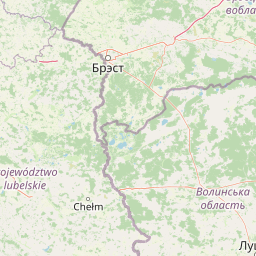
Map view of Małoziemce Nature Reserve

Use this park location map to pinpoint Małoziemce Nature Reserve in Poland, understand its exact geographic position, and read its mapped placement within the surrounding landscape more clearly.

Pigeon | © OpenStreetMap contributors

Location context for Małoziemce Nature Reserve

Lubelskie Voivodeship

Visual reference of wetland habitats, nesting colonies, and post glacial lowland terrain

Rezerwat przyrody Małoziemce Photos, Landscape Scenery, and Protected Area Views

Visual records capture the distinctive wetland habitats, post glacial lake basins, and forested lowlands defining Rezerwat przyrody Małoziemce. Photographic documentation reveals the environmental character of the protected bird sanctuary and its surrounding regional landscape.

A red, rectangular nature reserve sign with white Polish text mounted on two posts in a wooded area with many fallen logs on the forest floor.

Park atlas

Compare adjacent wetland reserves and regional landscapes in eastern Poland

Explore Parks Near Rezerwat przyrody Małoziemce and Surrounding Protected Areas

Visitors exploring Rezerwat przyrody Małoziemce can browse nearby protected areas, wetland reserves, and forest landscapes across eastern Poland. Comparing adjacent conservation zones reveals regional ecological connections, wetland habitats, and post-glacial lake terrain.
Protected areaLublin Voivodeship
About 0.7 km away#1 closest

Southeast

Poleska Dolina Bugu Protected Landscape: Mapped Atlas and Geographic Overview

Key Natura 2000 river valley site in Lublin Voivodeship

Poleska Dolina Bugu is a regionally vital protected area comprising six connected enclaves along the Bug River. The site features a mosaic of oxbow lakes, alkaline fens, molinia meadows, and riparian woodlands that define the lowland geography of eastern Poland. Access structured data on this Habitats Directive site to understand its surface composition, floodplain connectivity, and specialized conservation habitats.

Area
81.732 km²
Relief
Lowland
Scope
Terrestrial
Water
Major water bodies
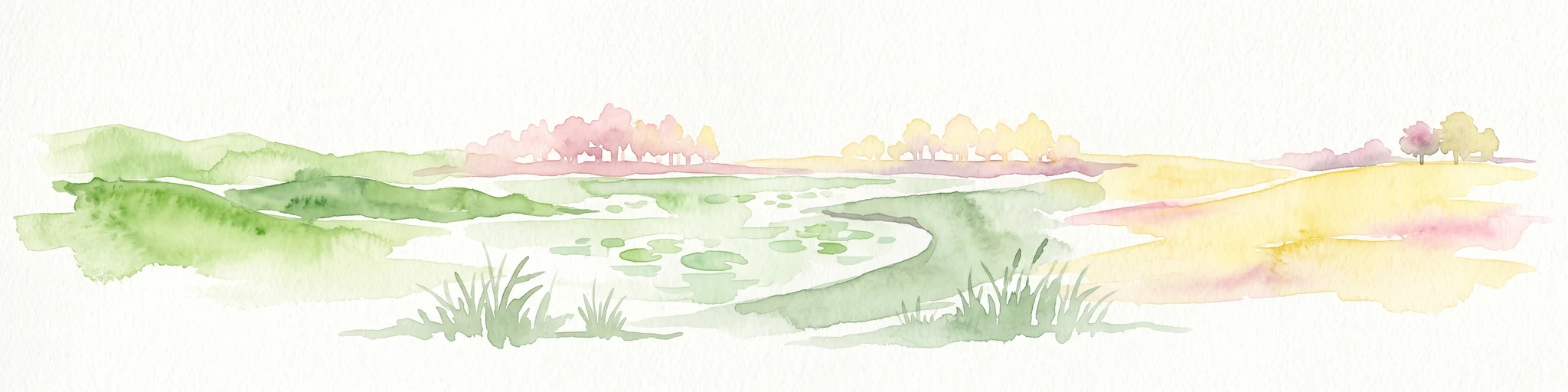
A horizontal watercolor illustration depicting a calm lake with marshy shores, reeds, and distant low hills.
Nature reserveWojewództwo lubelskie
About 14 km away#2 closest

North

Rezerwat przyrody Jezioro Orchowe: Protected Area and Wetland Geography Map

Wetland ecosystems and peatland terrain in Województwo lubelskie.

The Rezerwat przyrody Jezioro Orchowe nature reserve protects a distinct dystrophic lake and surrounding mire complex in eastern Poland. This site offers deep insight into the transition between aquatic, peatland, and forested habitats within a glacial depression of the Bug river valley. Its documented plant communities represent a key reference for understanding the ecological structure of the wider Polesie lowland region.

Area
0.582 km²
Established
1996
Relief
Lowland
Climate
Temperate
Nature reservePoland
About 15 km away#3 closest

Southwest

Rezerwat przyrody Bachus: Protected Nature Reserve and Forest Atlas in Eastern Poland

Mapping sessile oak woodlands and protected landscape boundaries

Rezerwat przyrody Bachus is a notable nature reserve in Poland, recognized for its role in preserving sessile oak within the broader Chełmski Landscape Park. This atlas entry provides geographic context on the reserve, detailing its position within the lowland terrain of the Lubelskie region and its importance as an edge-of-range forest sanctuary.

Area
0.826 km²
Established
1958
Relief
Lowland
Climate
Temperate
A watercolor painting showing a panoramic view of a marshy landscape with green grasses, light-colored water, and distant trees on a white background.
National parkLublin Voivodeship
About 18 km away#4 closest

West

Poleski Park Narodowy: Protected Wetlands and Glacial Geography in Lublin Voivodeship

Exploration of peatlands, kettle lakes, and boreal-style marshes

Poleski Park Narodowy encompasses a diverse mosaic of fens, transitional bogs, and dense marsh forests within the Lublin Voivodeship. This protected area serves as a primary reference for understanding the glacial-relict biodiversity and flat, water-defined terrain characteristic of the historic Polesie region in eastern Poland.

Area
97.6 km²
Established
1990
Visitors
41K annual
Relief
Lowland
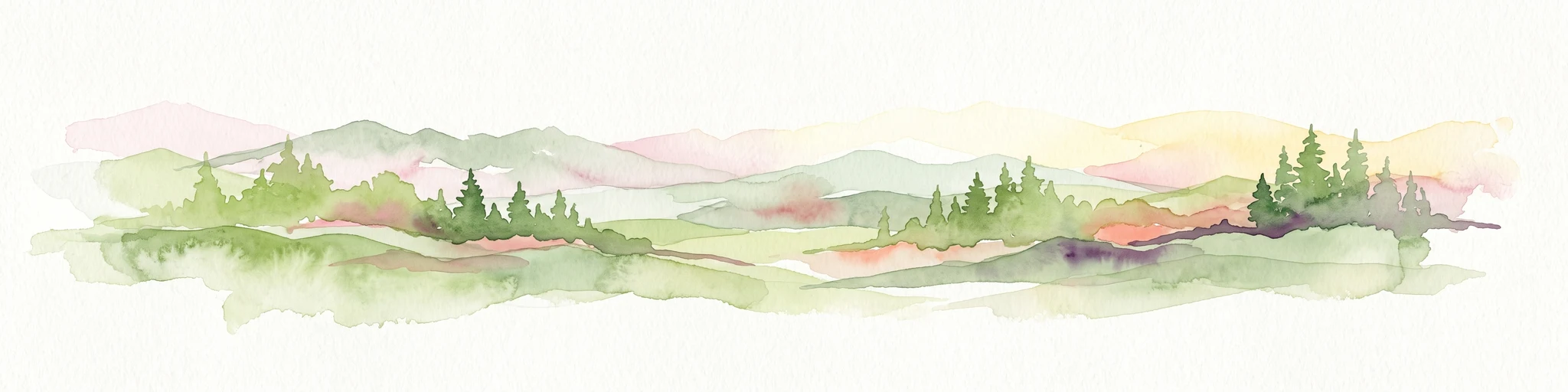
A watercolor illustration showing a soft, stylized landscape of rolling green hills, distant mountains, and coniferous trees against a white background.
Protected landscapeLublin Voivodeship
About 19 km away#5 closest

South

Chełmski Park Krajobrazowy: A Detailed Atlas of the Protected Landscape in Lublin Voivodeship

Exploring the calcareous peatlands and diverse wetland topography

Located in eastern Poland, Chełmski Park Krajobrazowy is a protected landscape shaped by unique geological features and rich botanical habitats. This overview explores the park's transition from upland hills to lowland depressions, its internal nature reserves, and its function as a critical biodiversity center within the Lublin Voivodeship landscape.

Area
164.57 km²
Established
1983
Relief
Upland
Climate
Temperate
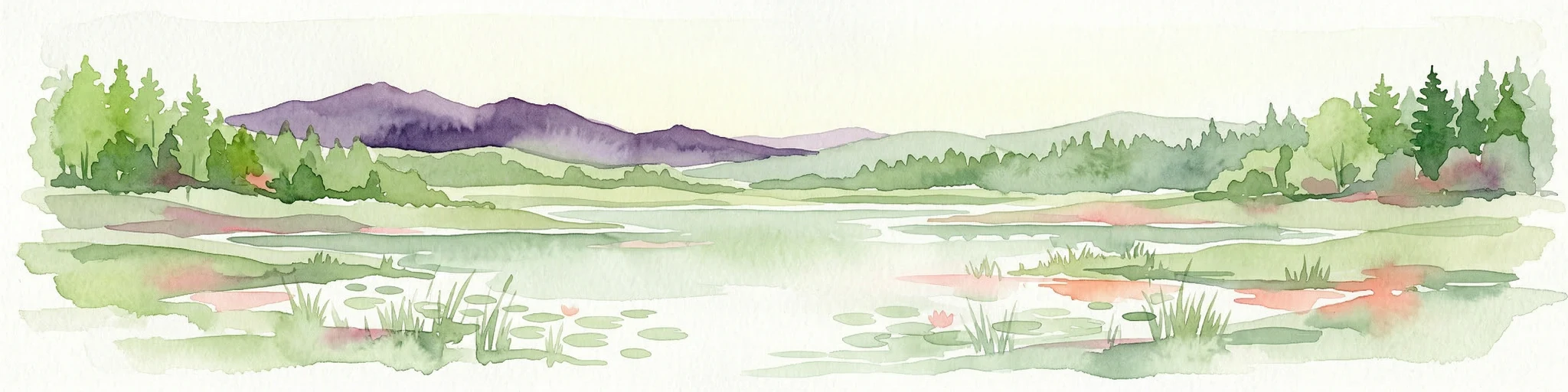
Watercolor depiction of a lake with reeds, forested shoreline, and distant mountains
National parkUkraine
About 22 km away#6 closest

Northeast

Shatsk National Natural Park: Ukraine's Deepest Lake and Wetland Protected Area Atlas

Mapped landscape and protected geography of a premier Ukrainian national park.

Shatsk National Natural Park in Ukraine is a significant protected area featuring a remarkable cluster of over thirty lakes, most notably Svitiaz Lake, the nation's deepest. This park protects vital wetland and forest ecosystems within the Polissia region, offering a rich geographic context for atlas exploration. Understanding its mapped boundaries and terrain provides insight into its importance as a Ramsar site and a key corridor for migratory birds, making it a cornerstone of conservation geography in Eastern Europe.

Area
489.77 km²
Established
1983
IUCN
II
Relief
Lowland
A horizontal watercolor illustration of a marshy landscape featuring a winding stream, soft green grasses, and clusters of wetland vegetation against a light background.
Nature reserveLubelskie Voivodeship
About 23 km away#7 closest

South

Rezerwat przyrody Bagno Serebryskie: Protected Wetland and Calcareous Fen Geography in Lubelskie

Mapped terrain and ecological boundaries of a Polish nature reserve.

Investigate the environmental character of Rezerwat przyrody Bagno Serebryskie, an expansive protected wetland in eastern Poland. This site preserves rare alkaline-loving plant communities and vital avian habitats, showcasing the complex marshy terrain and geographic significance of the Lubelskie Voivodeship region.

Area
3.766 km²
Established
1991
Relief
Lowland
Scope
Terrestrial
National parkPoland
About 24 km away#8 closest

West

Polesie National Park: Protected National Park in Poland's Eastern Lowlands

Explore its mapped wetland geography and unique glacial terrain.

Polesie National Park represents a key protected landscape within eastern Poland, notable for its vast wetland complexes, including extensive peat bogs and marshes interspersed with pine forests on sandy dunes. This national park showcases a distinct geography shaped by glacial processes, offering a unique perspective on lowland ecosystems and their conservation. MoriAtlas allows for a structured discovery of its protected boundaries and the surrounding regional context, providing an atlas-driven understanding of this vital natural territory.

Area
97.52 km²
Established
1979
IUCN
II

Common questions about visiting, size, designation, and location context for Małoziemce Nature Reserve

Małoziemce Nature Reserve FAQs for park facts, access, geography, and protected area context

Find quick answers about Małoziemce Nature Reserve, including protected-area facts, park geography, trail and visitor context, and how the park fits into its surrounding country and regional landscape.
MoriAtlas Explorer

Continue Your Protected Areas Search Across the Global Atlas

Deepen your exploration by continuing the structured search for national parks and protected areas worldwide. Utilize the comprehensive filtering capabilities to compare different conservation landscapes and refine your understanding of global park geography. Discover more about the distribution and characteristics of protected natural areas.

Global natural geography