Why Mechacz Wielki Nature Reserve stands out
Mechacz Wielki is best known for protecting a well-developed raised bog surrounded by boggy coniferous forest in the Romincka Forest. The reserve is recognized for its Sphagnum magellanicum peatland community, its carpets of cotton grass, bog rosemary, and cranberry, and for the presence of insectivorous round-leaved sundew alongside rarer peatland species such as cloudberry, small cranberry, and crowberry. The reserve is also associated with the characteristic stunted pine landscape that defines many northern European raised bogs. The thin, scattered tree layer of dwarf mountain pine forms, interspersed with solitary spruce and downy birch, gives the site a distinctive open, mossy appearance typical of boreal peatland margins in northeastern Poland.
Mechacz Wielki Nature Reserve history and protected-area timeline
Mechacz Wielki Nature Reserve was established in 1974 under a regulation published in the Polish Monitor (Monitor Polski). Its creation was part of a broader effort in late twentieth-century Poland to formally protect representative examples of the country's remaining peatlands, many of which had been altered by drainage, forestry, or peat cutting earlier in the century.
The reserve was designated specifically as a peatland reserve (rezerwat torfowiskowy), indicating that its primary conservation purpose is the preservation of peat-forming processes and the plant communities associated with raised bogs. Its location within the Gołdap forest district reflects the historical role of state forest management in administering these protected peatlands and integrating them into the wider forestry planning of the Romincka Forest region.
The reserve later became part of the surrounding Romincka Forest Landscape Park, a landscape-level protection designation that places Mechacz Wielki within a broader protected landscape framework and reinforces its role in regional conservation planning.
Mechacz Wielki Nature Reserve landscape and geographic character
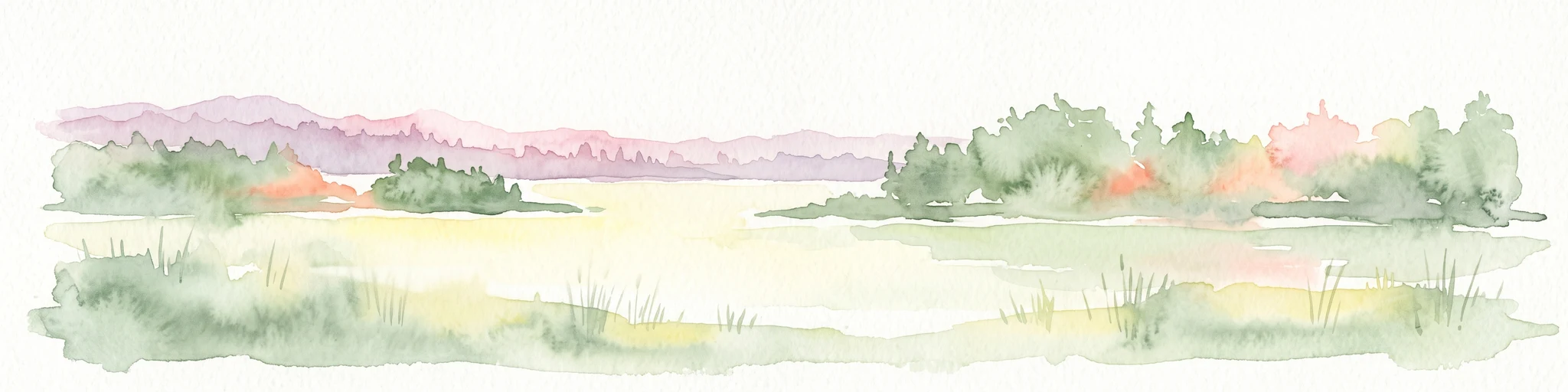
The landscape of Mechacz Wielki is defined by the gentle topography of a glacial outwash and moraine plain in the Romincka Forest, where shallow depressions have become the setting for long-term peat accumulation. The reserve does not feature dramatic relief; instead, its character comes from the interplay of flat, mossy bog surface, scattered stunted pines, and the darker, denser edge of boggy forest framing the open peatland.
The central raised bog forms a soft, spongy expanse built up by generations of Sphagnum mosses and accumulated peat. Around it, the terrain transitions into boggy pine forest, swampy spruce stands, and wet alder carrs at the lowest, wettest margins. Small patches of moss-sedge communities, including stands of bog sedge and white beak-sedge, break up the bog surface in places, adding textural variation to an otherwise continuous moss and dwarf-shrub landscape.
The reserve's appearance changes with the seasons, with cotton grass flowering in early summer and cranberries and bog rosemary coloring the bog surface later in the year. In winter, snow often accentuates the openness of the central bog against the darker surrounding forest, emphasizing the contrast between the treeless peatland core and the wooded margin.
Mechacz Wielki Nature Reserve ecosystems, habitats, and plant life
Ecologically, Mechacz Wielki is anchored by its raised bog, a rainwater-fed peatland ecosystem in which Sphagnum mosses, particularly Sphagnum magellanicum, are the dominant peat-forming organisms. Over time, these mosses have produced a thick peat deposit that raises the bog surface above the influence of mineral-rich groundwater, creating the acidic, nutrient-poor conditions characteristic of northern European raised bogs.
The flora of the reserve reflects these conditions. The bog surface is dominated by cotton grass, bog rosemary, and cranberry, with the more localized presence of round-leaved sundew, small cranberry, cloudberry, and crowberry. The sparse shrub layer consists mainly of individual spruce and downy birch, along with regrowth of pine, while along the margins the vegetation shifts into boggy pine forest, swampy spruce forest, and alder carrs, each with its own characteristic species composition.
The mosaic of open bog and forested peatland habitats supports a range of microclimates and moisture regimes within a relatively small area. This habitat diversity is important for invertebrates, mosses, and the broader peatland food web, and it gives the reserve a layered ecological structure that extends well beyond the open central bog.
Mechacz Wielki Nature Reserve wildlife and species highlights
The wildlife of Mechacz Wielki is shaped primarily by its peatland character, with fauna tied to raised bog and boggy forest habitats. The open, acidic central bog and its surrounding boggy woodland provide breeding and foraging habitat for a range of bird species associated with northern coniferous wetlands and peatlands.
The wet margins and alder carrs along the bog edge, together with the boggy spruce stands, create sheltered conditions for amphibians, dragonflies, and other invertebrates that depend on persistent, undisturbed wet habitats. Larger mammals typical of the Romincka Forest landscape, such as deer and wild boar, also use the forested parts of the reserve, while smaller predators and forest-edge species find cover in the transition zone between bog and forest.
Although the reserve is most celebrated for its plant communities, the integrity of its peatland hydrology supports the broader wildlife value of the site, since many of the animal species present are ultimately dependent on the waterlogged, acidic conditions that the bog maintains.
Mechacz Wielki Nature Reserve conservation status and protection priorities
Mechacz Wielki's conservation significance centers on the protection of an active raised bog and its associated plant communities within the Romincka Forest. Raised bogs of this kind have become increasingly rare across lowland Europe due to historical drainage, peat extraction, and land-use change, making intact examples like Mechacz Wielki important for long-term peatland conservation.
The reserve's designation as a peatland reserve underscores the importance of preserving peat-forming processes themselves, not just individual species. By maintaining the hydrological conditions that allow Sphagnum peat to continue accumulating, the reserve contributes to carbon storage, water retention, and the protection of the specialized flora and fauna tied to bog habitats.
Sitting within the larger Romincka Forest Landscape Park, Mechacz Wielki also acts as a core protected area within a broader landscape conservation framework. This layered protection helps buffer the bog against surrounding land-use pressures and supports coordinated management of the wider Romincka Forest ecosystem.
Top sights and standout views in Mechacz Wielki Nature Reserve
The standout features of Mechacz Wielki Nature Reserve are its well-developed raised bog enclosed by boggy coniferous forest, the unusually intact Sphagnum magellanicum peatland community, and the presence of characteristic northern peatland species such as round-leaved sundew, cloudberry, small cranberry, and crowberry. The open, moss-dominated central bog framed by stunted pines and boggy spruce forest gives the site a strongly sub-boreal character uncommon in lowland Poland.
As part of the Romincka Forest Landscape Park and administered within the Gołdap forest district, the reserve also serves as a key peatland reference site for the broader Romincka Forest region, illustrating how glacial depressions, peat accumulation, and northern forest vegetation combine to shape one of Poland's distinctive northeastern landscapes.
Best time to visit Mechacz Wielki Nature Reserve
Mechacz Wielki is best appreciated in late spring and summer, when cotton grass flowers across the bog surface and the dwarf shrubs and cranberries are actively growing, making the plant communities of the raised bog easiest to observe. Early summer particularly highlights the contrast between the white flowering tufts of cotton grass and the darker greens and reds of Sphagnum moss and cranberry foliage.
Late summer and early autumn can also be rewarding, when berries ripen and the bog surface takes on richer reddish and russet tones from cranberry and bog rosemary. Cooler seasons emphasize the open, quiet atmosphere of the peatland and the stark contrast between the treeless bog and the surrounding boggy forest, while winter, with snow cover, can make the shape and openness of the central bog especially visible against the darker forested margin.