Mori Atlas logo
Nature reserveRezerwat przyrody Miodne

Analyzing the ecological role of this mixed woodland site within the broader Kozienice Landscape Park.

Rezerwat przyrody Miodne: Exploring the Protected Forest Geography of Masovian Voivodeship

Rezerwat przyrody Miodne represents a compact but ecologically significant protected area in east-central Poland. Situated within the Kozienice Landscape Park, the site preserves a rare fragment of mixed woodland where European beech reaches its northern range limit. By examining the forest structure and its placement on the Równina Kozienicka plain, this entry provides a detailed look at how small nature reserves maintain forest continuity across the Masovian lowlands.

forest reservemixed woodlandbeech forestlowland forestactive conservationnature reserve

Rezerwat przyrody Miodne

Nature reserve

Park overview

Structured park overview, official facts, and landscape profile for Miodne Nature Reserve

Miodne Nature Reserve park facts, protected area profile, and essential visitor context

Review the core facts for Miodne Nature Reserve, including designation, size, terrain, visitor scale, habitats, and operating context in one park-focused overview.

About Miodne Nature Reserve

Miodne Nature Reserve is one of several smaller forest reserves that contribute to the protected-area network of the Masovian Voivodeship. Although it covers only about twenty hectares, the reserve plays a focused ecological role: it safeguards a stand of mixed forest in which beech grows alongside other deciduous and coniferous species. The site lies within the Równina Kozienicka, a plain mesoregion in east-central Poland characterized by sandy soils, post-glacial landforms, and extensive tracts of forest that have long been exploited and, in places, restored as protected landscape.

The reserve falls inside the boundaries of the Kozienice Landscape Park, a much larger protected landscape that encompasses diverse forest types, river valleys connected to the Vistula basin, and ecologically valuable transitional zones. As a dedicated nature reserve within this broader landscape, Miodne operates under a stricter protection regime than the surrounding landscape park, with the explicit aim of preserving a representative forest fragment in an essentially undisturbed state. The presence of an otulina, or protective buffer zone, further insulates the core forest from edge effects.

Ecologically, the reserve's significance is tied to its beech component. In this part of Poland, beech reaches the northern edge of its range, and scattered or marginal populations are of particular interest for understanding how central European beechwoods interface with the more continental, often conifer-rich forests farther north and east. Miodne offers one such example: a small, protected stand where beech persists within a mixed forest matrix. The reserve's active conservation status indicates that management interventions are used to maintain or restore favorable conditions for the protected forest community, rather than relying solely on passive protection.

Quick facts and research context for Miodne Nature Reserve

Miodne Nature Reserve is a forest reserve (rezerwat leśny) created on 11 April 1985 through a decision of the Minister of Forestry and the Wood Industry. It lies in Gmina Zwoleń, Zwoleń County, in the Masovian Voivodeship, within the mesoregion known as the Równina Kozienicka (Kozienice Plain). The reserve covers about 20.38 hectares and is surrounded by a small buffer zone of roughly 1.82 hectares. It lies within the boundaries of the Kozienice Landscape Park, a larger protected area of the region. The reserve's purpose is to protect a fragment of mixed forest with a notable share of beech, and it is managed under active conservation (ochrona czynna).

Protection and recognition

Examine the documented terrestrial protection framework and management parameters.

Rezerwat przyrody Miodne Protection Status and Conservation Scope

Rezerwat przyrody Miodne maintains a documented terrestrial protection status within its regional conservation framework. Official records compile the recorded management scope and available designation facts for this protected area.

Protection details

Protection scope
Terrestrial
Transboundary protection
No
Buffer area
0.02 km²
Park context

Deeper park guide and search-rich context for Miodne Nature Reserve

Miodne Nature Reserve history, landscape, wildlife, and travel context

Explore Miodne Nature Reserve through its history, landscape character, ecosystems, wildlife, conservation priorities, cultural context, and seasonal travel timing in a structured park guide built for atlas discovery and search intent.

Why Miodne Nature Reserve stands out

Miodne is best known for protecting a fragment of mixed forest in which European beech (Fagus sylvatica) occurs near the northern limit of its continuous range in Poland. The reserve functions as a small but ecologically significant reference site for the transition between beech-dominated woodland communities of central Europe and the more coniferous and mixed lowland forests typical of the Masovian lowlands. Its position within the Kozienice Landscape Park adds broader landscape-scale value to what is otherwise a modest patch of woodland.
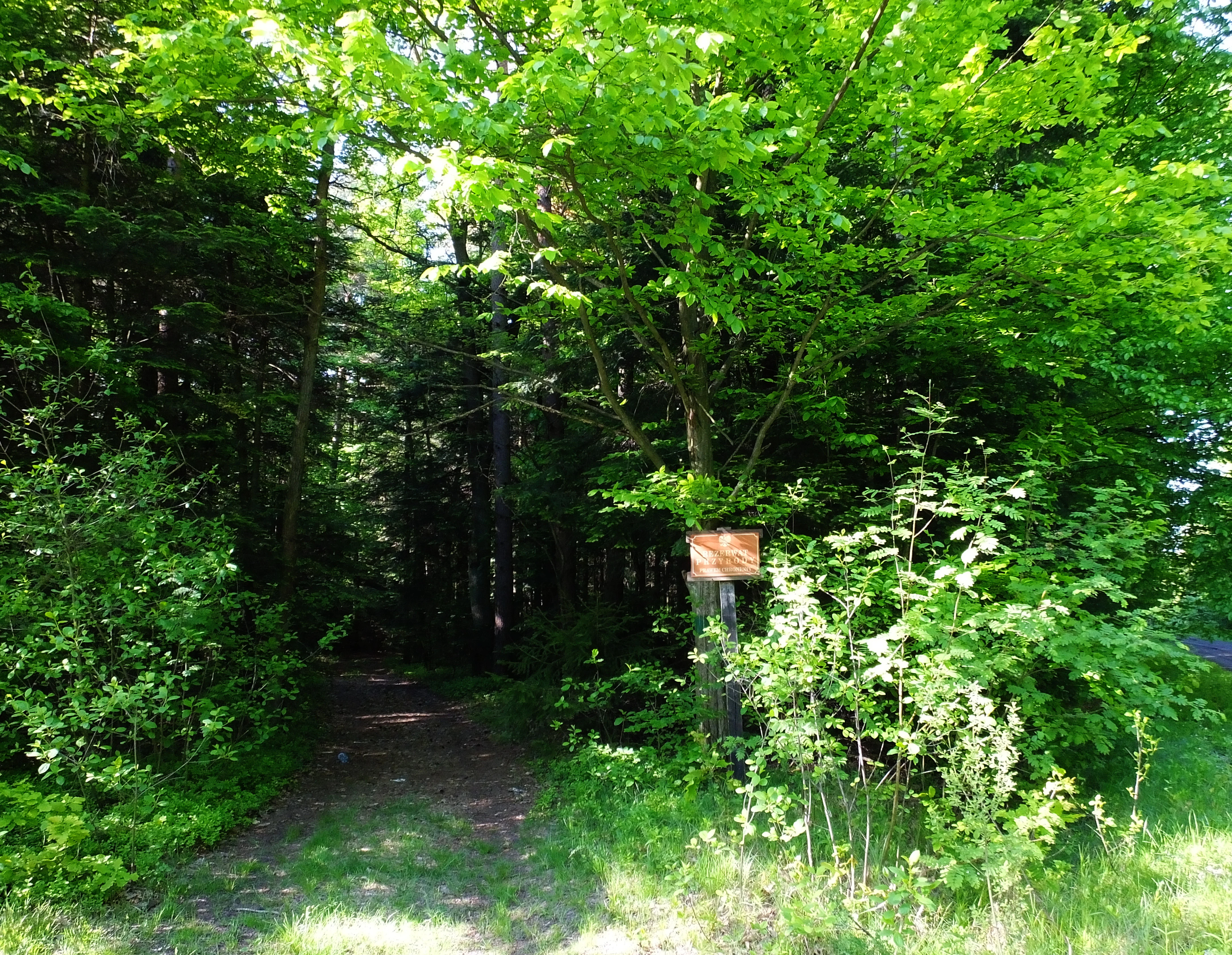
A dirt path leading into a dense green forest, with a small rectangular sign mounted on a wooden post at the edge of the trees.
A woodland path leading into the Miodne Nature Reserve.

Miodne Nature Reserve history and protected-area timeline

The reserve was formally established on 11 April 1985 by order of the Polish Minister of Forestry and the Wood Industry, which recognized several sites as nature reserves under the legal framework then in force. The founding decision was published in the Polish legal monitor (Monitor Polski) and identified Miodne as a forest reserve dedicated to protecting a mixed forest stand with significant beech presence.

In December 2001, the Governor of the Masovian Voivodeship issued a regulation consolidating the list of nature reserves located within the voivodeship that had been created by the end of 1998, formally reaffirming the legal status of Miodne among other reserves in the region. More recently, on 10 April 2017, the Regional Director for Environmental Protection in Warsaw issued an administrative order specifically concerning the Miodne reserve, reflecting the ongoing management and regulatory framework that governs protected natural areas in Poland.

These successive legal instruments illustrate the layered character of nature reserve administration in Poland, where founding decisions, regional consolidations, and modern management orders together define the present-day status and protection regime of a site such as Miodne.

Miodne Nature Reserve landscape and geographic character

The reserve sits on the Równina Kozienicka, a flat to gently undulating plain in east-central Poland shaped by glacial and post-glacial processes. Sandy soils, low morainic relief, and broad forest tracts define the regional landscape, and the Vistula river system influences local drainage and vegetation patterns nearby.

Within this plain, Miodne itself is a wooded patch embedded in a wider forested matrix. The terrain is generally level, with the structure of the reserve determined more by the composition and age structure of its trees than by dramatic landforms. Its visual character is that of a lowland mixed forest: a closed canopy, a relatively continuous forest interior, and gradual transitions to surrounding woodland.

The narrow buffer zone surrounding the core reserve area serves as a transitional landscape feature, helping to reduce the abruptness of the forest edge and to dampen external disturbances reaching the protected stand.

Miodne Nature Reserve ecosystems, habitats, and plant life

The natural value of the reserve centers on its forest vegetation. Miodne protects a fragment of mixed woodland that combines broadleaved species, notably beech, with other deciduous trees and conifers typical of the lowland forests of central Poland. Such mixed forests are ecologically richer than single-species stands and support a more complex understorey and soil community.

The presence of beech is particularly notable. European beech favors cooler, more humid conditions and reaches the northern edge of its continuous range in this part of Poland. Where beech persists near the limit of its distribution, protected sites like Miodne serve as refuges and reference points for the species, and they preserve forest communities that may differ structurally from the pine-dominated forests common elsewhere in the Masovian region.

Active conservation management at the site reflects an understanding that forest composition here is not static; management interventions can be used to favor the persistence of beech and its associated community against competing successional trends or past forestry legacies.

Miodne Nature Reserve conservation status and protection priorities

Miodne's conservation value lies in its function as a small, strictly protected reference site for mixed lowland forest with beech near the northern edge of the species' range. By isolating a representative forest fragment from broader forestry influence, the reserve helps maintain the genetic and ecological continuity of beech and associated woodland species in a region where such stands are relatively uncommon.

The reserve's placement within the Kozienice Landscape Park strengthens its conservation role: the surrounding landscape park provides a wider matrix of protected and semi-natural habitat, while the reserve itself offers a higher level of protection for its core forest. Active conservation management (ochrona czynna) signals that the responsible authorities view the site as one where deliberate interventions may be necessary to maintain the desired forest composition and structure over time.

Top sights and standout views in Miodne Nature Reserve

Miodne Nature Reserve stands out as a compact example of the Polish approach to protecting small but ecologically meaningful forest patches. Its defining features are the mixed forest composition, the presence of beech at the edge of its range, the strict protection status overlaid on a broader landscape park, and the active conservation regime under which the site is maintained. Together these features make the reserve a useful reference point for understanding mixed lowland forests in east-central Poland.

Monthly climate preview

Track representative monthly averages from NASA climatology data for Masovian Voivodeship

Rezerwat przyrody Miodne Climate Normals, Long Term Temperature and Precipitation Rhythm

Long term temperature and precipitation measurements reveal a distinct annual rhythm with freezing winter lows and warm summer maximums recorded at a representative coordinate. Reviewing the complete twelve month dataset provides deeper analytical context on baseline climatic patterns across the protected area.
Annual mean8 °C
-4 °C20 °C
Jan-4°
Feb-2°
Mar
Apr
May14°
Jun18°
Jul20°
Aug20°
Sep14°
Oct
Nov
Dec-2°
Warmest month
July

20.4 °C

Coolest month
January

-3.5 °C

Wettest month
July

2.6 mm/day

Driest month
January

1.2 mm/day

Park location guide

Geography guide, regional context, and park location map for Miodne Nature Reserve

Miodne Nature Reserve park geography, regions, and map view in Poland

Understand where Miodne Nature Reserve sits in Poland through a broader geographic reading of the surrounding landscape, nearby location context, and its mapped position within the national park landscape.

How Miodne Nature Reserve fits into Poland

Poland, officially the Republic of Poland, is a Central European country spanning from the Baltic Sea in the north to the Carpathian Mountains in the south. It borders Germany, Czech Republic, Slovakia, Ukraine, Belarus, Lithuania, and Kaliningrad Oblast. The country has a temperate climate, diverse landscapes, and is known for its rich history, cultural heritage, and strong economic position within the EU.

Wider geography shaping Miodne Nature Reserve in Poland

Poland occupies 312,696 km2 in Central Europe, extending from the Baltic Sea coast in the north to the Sudetes and Carpathian Mountains in the south. It borders Germany to the west, Czech Republic and Slovakia to the south, Ukraine and Belarus to the east, and Lithuania and Kaliningrad Oblast to the northeast. The landscape includes lowland plains, uplands, and mountain ranges.

Map view of Miodne Nature Reserve

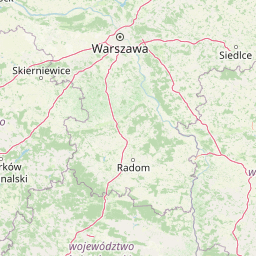
Use this park location map to pinpoint Miodne Nature Reserve in Poland, understand its exact geographic position, and read its mapped placement within the surrounding landscape more clearly.

Pigeon | © OpenStreetMap contributors

Location context for Miodne Nature Reserve

Masovian Voivodeship

Visual reference of lowland mixed forest habitats and protected terrain character

Rezerwat przyrody Miodne Photos and Landscape Scenery Exploration

Visual records capture the dense canopy, mixed woodland composition, and flat terrain characteristic of Rezerwat przyrody Miodne. Detailed photographs reveal the ecological transition zones and forest structure defining this protected lowland refuge in east-central Poland.

A dirt path leading into a dense green forest, with a small rectangular sign mounted on a wooden post at the edge of the trees.

Park atlas

Compare adjacent lowland forests and regional protected landscapes across east-central Poland.

Explore Protected Areas and Parks Near Rezerwat przyrody Miodne

Browse other protected areas and regional reserves situated near Rezerwat przyrody Miodne within the Masovian lowlands. Comparing adjacent forest tracts provides a broader geographic perspective on the lowland ecosystems of east-central Poland.
Nature reserveLublin Voivodeship
About 32 km away#1 closest

East

Rezerwat przyrody Mięćmierz: Protected Xerothermic Habitats and Vistula River Geography

Nature reserve landscape and ecological atlas overview

Rezerwat przyrody Mięćmierz represents a critical fragment of xerothermic grassland in the Lublin region of Poland. Formed in 2023, this nature reserve protects calcium-rich slopes and rare plant populations overlooking the Małopolska Vistula Gorge. Examine the geography of its dual-enclave structure, where steep loess and limestone terrain creates open habitats for diverse protected species within the Kazimierski Landscape Park.

Area
0.117 km²
Established
2023
Relief
Upland
Climate
Temperate
Nature reserveMazovia Voivodeship
About 35 km away#2 closest

North

Rezerwat przyrody Dęby Biesiadne im. Mariana Pulkowskiego: Mazovia Region Nature Reserve

Ancient oak-hornbeam forest and lowland protected landscape

This nature reserve in the Mazovia Voivodeship protects a dense mosaic of riparian and upland deciduous forest. Centered on a 220-year-old oak stand, the protected area offers a clear look at the classic woodland ecology of the Polish lowlands, providing significant value for those mapping regional forest remnants and natural vegetation zones.

Area
0.172 km²
Established
2006
Water
Minor water
Nature reserveŚwiętokrzyskie Voivodeship
About 40 km away#3 closest

South

Rezerwat przyrody Modrzewie: Protected Oak-Lime and Polish Larch Forest Reserve

Forest landscape discovery in the Świętokrzyskie region of Poland.

Located in the Kamienna Valley, Rezerwat przyrody Modrzewie acts as a vital protected area for mature, near-primary oak-lime forest. This nature reserve provides essential botanical context for the Polish larch, embedding a rich woodland fragment within the wider geographical tapestry of the Świętokrzyskie Voivodeship.

Area
0.047 km²
Established
1971
Relief
Lowland
Climate
Temperate
Protected areaŚwiętokrzyskie Voivodeship
About 42 km away#4 closest

South

Wzgórza Kunowskie: Geographic Atlas of an Essential Polish Protected Area and Habitat Mosaic

Mapping riparian forests and inland dunes in Świętokrzyskie

Wzgórza Kunowskie serves as a crucial Natura 2000 site in Poland, blending sand grasslands, oak-hornbeam forests, and riverine floodplains within a compact landscape. This overview analyzes the topographical gradients and habitat distribution that define the area, from elevated dunes to the moisture-rich valley floors of the Świętokrzyskie region, reflecting the interplay between sandy substrate and river regulation.

Area
18.687 km²
Water
Major water bodies
Protected landscapeLubelskie Voivodeship
About 46 km away#5 closest

Southeast

Wrzelowiecki Park Krajobrazowy: Geographic Atlas and Protected Landscape Overview

Mapped upland terrain and Vistula valley geomorphology

Analyze the landform composition of Wrzelowiecki Park Krajobrazowy through its loess ravines, Cretaceous fossil exposures, and wetland river systems. This protected landscape preserves the regional integrity of the Wzniesienia Urzędowskie, offering a structured look at the interplay between highland forests and historic Polish river valley settlements.

Area
49.89 km²
Established
1990
Relief
Upland
Climate
Temperate
Protected landscapeŚwiętokrzyskie Voivodeship
About 54 km away#6 closest

Southwest

Suchedniowsko-Oblęgorski Park Krajobrazowy: A Protected Landscape in Świętokrzyskie

Geographic terrain, forest ecosystems, and industrial heritage

Located in the Świętokrzyskie Voivodeship, this protected area preserves significant forest stands and historic industrial remnants. The terrain captures the intersection of plateau geology and hill country, hosting the headwaters of the Bobrza and Krasna rivers within a culturally layered, heavily forested environment.

Area
198.95 km²
Established
1988
Relief
Mountain
Climate
Temperate
Watercolor illustration of rolling hills with green forests in the foreground and purple, green, pink, and yellow mountain ranges in the background
National parkŚwiętokrzyskie Voivodeship
About 58 km away#7 closest

Southwest

Świętokrzyski National Park: Protected Mountain Terrain in Świętokrzyskie Voivodeship

Geography and landscape mapping for Poland's oldest mountain range

Świętokrzyski National Park encompasses the highest ridges of the Świętokrzyskie Mountains, showcasing a landscape defined by expansive granite boulder fields and primeval fir forests. This atlas entry provides a detailed look at the park's topography, ranging from the prominent Łysica peak to the protected valley floors, highlighting the geological and biological diversity preserved within this central Polish sanctuary.

Area
76.26 km²
Established
1950
IUCN
II
Visitors
168K annual
National parkŚwiętokrzyskie Voivodeship
About 58 km away#8 closest

Southwest

Świętokrzyski Park Narodowy: Protected Forests and Mountain Geography in Central Poland

A preserved landscape of ancient fir forests and rubble fields

Situated within the Świętokrzyskie Voivodeship, this protected area guards the Łysogóry range and its rare forest associations. The landscape is characterized by its dramatic gołoborza rubble fields and dense mixed-woodland terrain, providing a unique look into the natural geography of the region.

Area
76.26 km²
Established
1950
Visitors
168K annual
Relief
Mountain

Common questions about visiting, size, designation, and location context for Miodne Nature Reserve

Miodne Nature Reserve FAQs for park facts, access, geography, and protected area context

Find quick answers about Miodne Nature Reserve, including protected-area facts, park geography, trail and visitor context, and how the park fits into its surrounding country and regional landscape.
MoriAtlas Explorer

Continue Your Protected Areas Search Across the Global Atlas

Deepen your exploration by continuing the structured search for national parks and protected areas worldwide. Utilize the comprehensive filtering capabilities to compare different conservation landscapes and refine your understanding of global park geography. Discover more about the distribution and characteristics of protected natural areas.

Global natural geography