Why Monumento Natural Piedra La Tortuga stands out
Piedra La Tortuga is best known for its dramatic Precambrian granite outcrops within the Serranía del Parhuaza and for hosting the largest petroglyph yet documented in Venezuela, alongside caves, ancient indigenous cemeteries, and an exceptional collection of rock paintings. Equally distinctive is the convergence of geology, archaeology, and living indigenous heritage, as two communities of Hiwi (Guahibo) and Piaroa (Wothuha) peoples reside within the protected area.
Monumento Natural Piedra La Tortuga history and protected-area timeline
Piedra La Tortuga was officially designated as a natural monument by decree number 2,351, issued on June 5, 1992, and published in the official gazette number 35089 on November 11, 1992. The protection recognized both the geological singularity of the granite outcrops of the Serranía del Parhuaza and the cultural value of the petroglyphs, caves, ancient cemeteries, and rock art concentrated on and around the formation.
On July 22, 2005, the site was additionally declared a Bien de Interés Cultural (Cultural Asset of Interest), reflecting its standing not only as a natural landmark but as a heritage site of national relevance. This dual recognition underscored the importance of preserving the archaeological record and indigenous cultural presence alongside the natural environment.
Monumento Natural Piedra La Tortuga landscape and geographic character
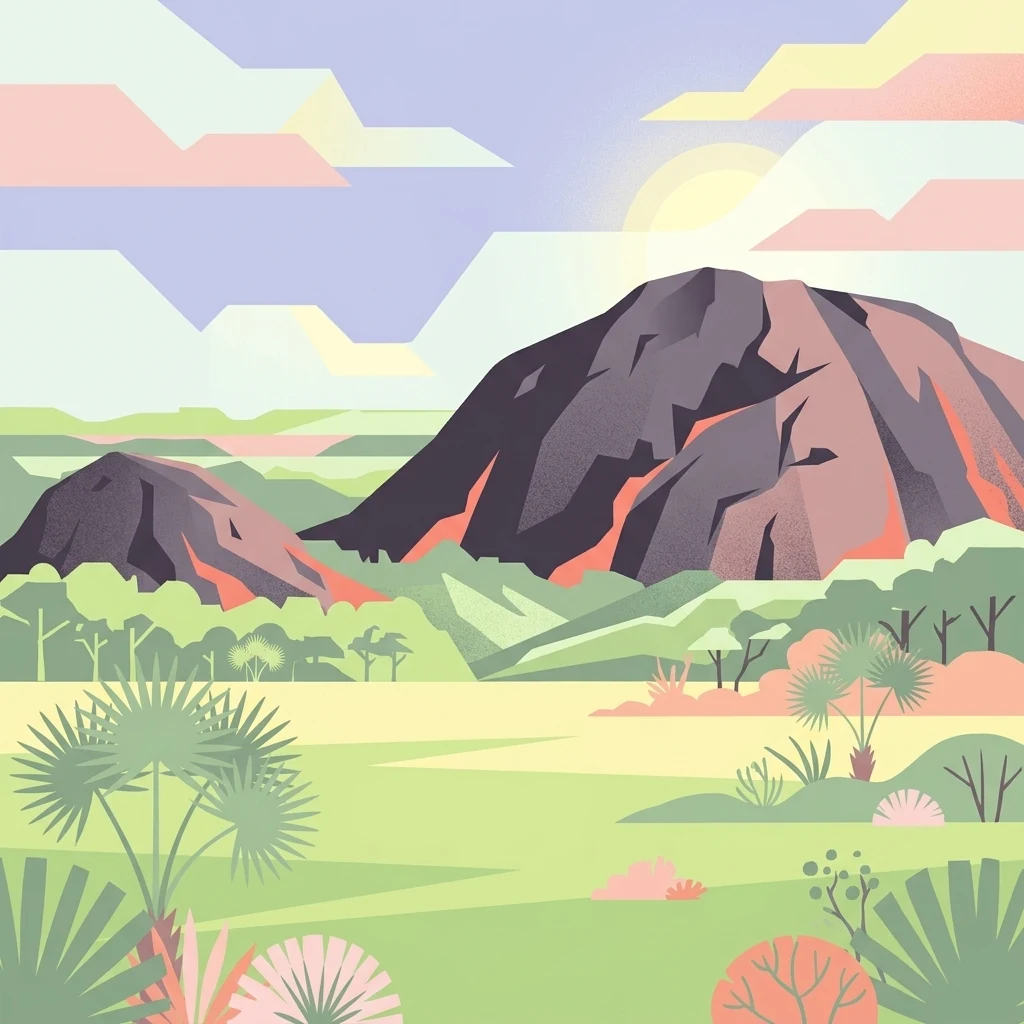
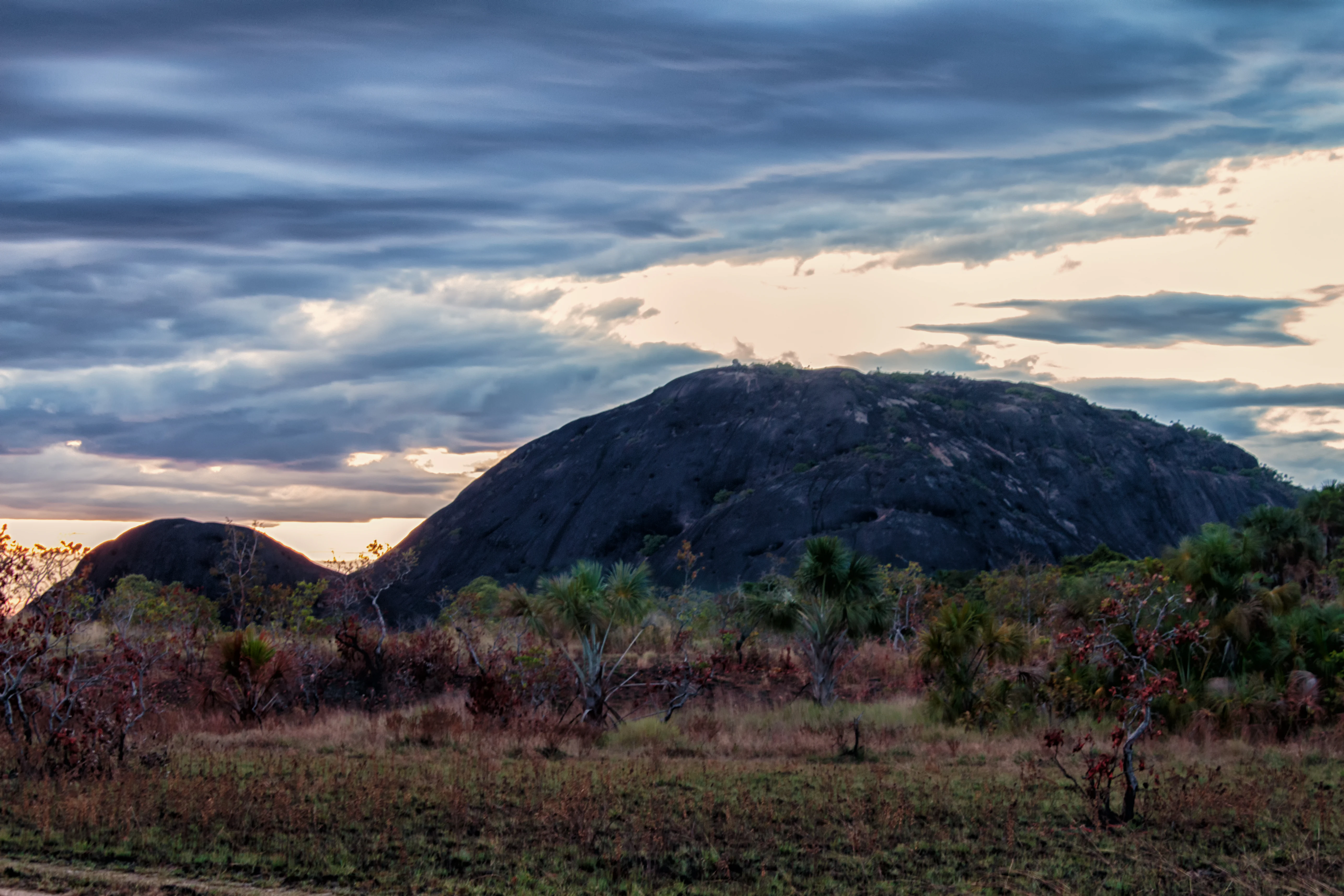
The landscape of Piedra La Tortuga is defined by two large granite outcrops that rise abruptly from the surrounding lowlands, forming one of the most recognizable geological features of the southern Amazonas region. These outcrops belong to the Serranía del Parhuaza, a formation composed of acidic Precambrian igneous rocks roughly 1.5 billion years old, making the rock itself among the oldest exposed surfaces in Venezuela.
The elevations within the protected area range roughly between 100 and 400 meters above sea level, although the dramatic visual impression comes more from the contrast of exposed stone against flat savanna and riparian corridors than from sheer altitude. Around the rock, the terrain shifts into tropical dry forest and graminoid savannas of llanos character, while the Cataniapo River and Caño Pintao carve gallery forest lines through the broader plain. The result is a striking mosaic of rock, savanna, palm stands, and water, all compressed within a relatively compact protected footprint.
Monumento Natural Piedra La Tortuga ecosystems, habitats, and plant life
Plants and habitats at Piedra La Tortuga reflect the unusual combination of exposed ancient rock, dry lowland climate, and nearby watercourses. The vegetation associated with the lajas, or lithosolic outcrop surfaces, is dominated by pyrophilous species adapted to fire-prone conditions, and the broader landscape includes tropical dry forest and graminoid savannas typical of the llanos.
Common woody species in the drier formations include chaparro (Curatella americana), manteco (Bowdichia virgilioides), and alcornoque (Byrsonima crassifolia), along with chaparral and transitional scrub communities. A notable botanical highlight is the picatón (Platicarpium orinocense), considered endemic to the savannas of Amazonas state, and the pyrophytic cacho e' venao (Vellozia tubiflora), which grows directly on the rocky outcrops.
On the upper slopes and in depressions of the rock, dense vegetation develops, including stands of cucurito palm (Maximiliana regia) and coroba palms (Scheelea species). Along the riverbanks, morichales, riparian forests, and gallery forests create corridors of wetter habitat that contrast with the drier upland communities and significantly increase the ecological diversity of the site.
Monumento Natural Piedra La Tortuga wildlife and species highlights
The protected area supports around 300 recorded bird species, a remarkable figure given its relatively compact size, reflecting the diversity of habitats from rocky outcrops and savanna to gallery forest. Birdlife includes the striking gallito de las rocas (Rupicola rupicola), the semillero chirri (Oryzoborus crassirostris), the widespread roadside hawk known locally as gavilán habado (Buteo magnirostris), the oripopo (Cathartes melambrotus), the carpintero real (Dryocopus lineatus), and the gavilán pita venado (Heterospizias meridionalis).
Among mammals, the area hosts rabbits (Sylvilagus floridanus), the common nine-banded armadillo known locally as cachicamo (Dasypus novemcinctus), and the much larger giant armadillo (Priodontes maximus). Reptiles include the common lancehead mapanare (Bothrops atrox) and the boa constrictor, locally known as tragavenado. The combination of rocky terrain, savanna, and riverside forest allows a wide range of species to coexist within the monument.
Monumento Natural Piedra La Tortuga conservation status and protection priorities
The conservation significance of Piedra La Tortuga lies in the unusual convergence of geological, archaeological, ecological, and cultural values within a single protected area. The Precambrian granite of the Serranía del Parhuaza represents an irreplaceable geological record, while the petroglyphs, caves, rock art, and ancient burial sites preserved on the rock constitute a heritage asset of national importance, recognized through its Cultural Asset of Interest designation in addition to its natural monument status.
Ecologically, the site protects a distinctive mosaic of dry forest, savanna, rock outcrop vegetation, palm communities, and morichales, supporting a high bird diversity for its area and a characteristic lowland Amazonian fauna. The continued presence of indigenous Hiwi and Piaroa communities also gives the site long-term cultural value, linking the protection of nature with the protection of traditional ways of inhabiting the landscape.
Monumento Natural Piedra La Tortuga cultural meaning and human context
Piedra La Tortuga is inseparable from the indigenous heritage of the Atures region. Two indigenous communities, the Hiwi, also known as Guahibo, and the Piaroa or Wothuha, live within the protected area, maintaining a long-standing relationship with the land and the rock itself.
The site is also one of the most important rock art locations in Venezuela. It contains the largest known petroglyph in the country, along with caves, ancient cemeteries, and a rich body of rupestrian paintings, testifying to centuries of human presence on and around the outcrops. The site's dual recognition, both as a natural monument and as a Cultural Asset of Interest, reflects the way this indigenous and archaeological heritage is treated as inseparable from the natural value of the place.
Top sights and standout views in Monumento Natural Piedra La Tortuga
The defining features of Piedra La Tortuga are its billion-year-old granite outcrops, the largest petroglyph recorded in Venezuela, and an exceptional concentration of caves, burial sites, and rock art. The convergence of ancient geology, deep archaeological record, and continued indigenous presence in the Hiwi and Piaroa communities gives the site a uniquely layered identity. Ecologically, the mosaic of dry forest, savanna, rock outcrop vegetation, palm stands, and morichales along the Cataniapo River supports around 300 recorded bird species despite the area's modest size.
Best time to visit Monumento Natural Piedra La Tortuga
The tropical climate of Amazonas state means that Piedra La Tortuga can be visited throughout much of the year, but conditions vary with the dry and rainy seasons typical of the region. The drier period tends to offer clearer views of the rocky outcrops and easier access through the savanna and forest tracks, while the wetter months bring higher water levels along the Cataniapo River and Caño Pintao, fuller foliage, and more active wildlife observation, particularly for birds and river-associated species. Visitors interested in rock art and the exposed geology often favor drier windows, while those drawn to birdwatching and lush vegetation may appreciate the greener season.