Why Mount Royal National Park stands out
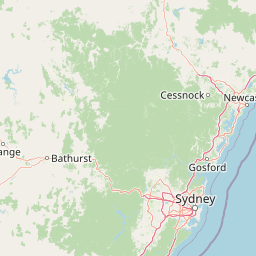
Mount Royal National Park is best known for its dramatic eucalypt-covered mountain ridges within the Barrington Tops group of protected areas. The park protects a significant transitional landscape between lowerelevation forests and subalpine zones, with Mount Royal standing as a prominent sentinel peak. Its proximity to the Gondwana Rainforests World Heritage Site underscores its ecological importance, as the area serves as a buffer and connector for species adapted to the ancient rainforest ecosystems. The park's endangered fauna, particularly the parma wallaby and the glossy black-cockatoo, contribute to its conservation significance within the Australian park system.
Mount Royal National Park history and protected-area timeline
Mount Royal National Park was formally gazetted on 1 January 1997, establishing permanent protection for this mountainous landscape in the Hunter region. Prior to national park designation, parts of the area had been subject to commercial timber extraction. In 1989, community opposition to logging activities led to a blockade that disrupted harvesting operations, reflecting growing public awareness of the ecological values in the Barrington Tops region. The park was subsequently declared as part of broader conservation efforts in northern New South Wales. In 2019, the park was impacted by the Mount Royal 1 fire during the catastrophic Australian bushfire season, resulting in damage to significant portions of the protected area.
Mount Royal National Park landscape and geographic character
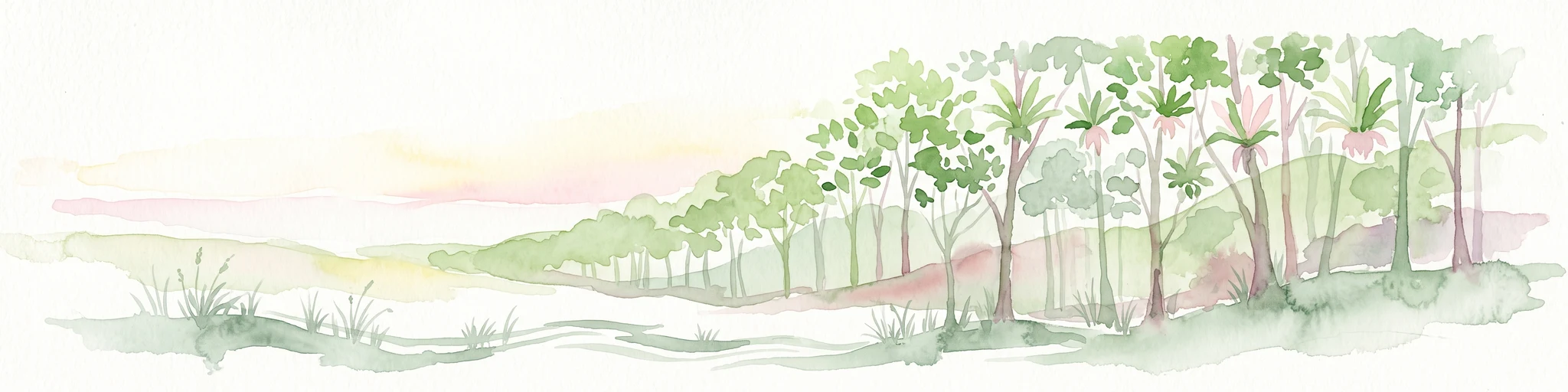
The Mount Royal National Park landscape is dominated by steep ridgelines and mountain terrain rising sharply from the surrounding valleys. The eucalypt forest covers the slopes in dense stands, with the trees clinging to the ridges and creating a rugged, pastoral backdrop typical of the Barrington Tops region. Mount Royal reaches 1,186 metres elevation as the park's highest point, while Pieres Peak at 986 metres provides a secondary summit in the southern portion of the protected area. The terrain creates a sense of enclosure and wilderness, with the mountain form defining the park's visual character and ecological distinctiveness.
Mount Royal National Park ecosystems, habitats, and plant life
The park sits within a transition zone between the temperate eucalypt forests of the Sydney basin region and the subalpine environments of the higher Barrington Tops. While the adjacent Gondwana Rainforests preserve ancient Antarctic beech and other relict species, Mount Royal National Park protects the eucalyptdominated slopes that form the broader matrix of this significant landscape. The forest composition includes various eucalypt species adapted to the cooler mountain conditions, creating habitat that supports species found in both lower and higher elevation zones.
Mount Royal National Park wildlife and species highlights
Mount Royal National Park supports several endangered animal species that depend on the forest and mountain habitats within the park. The parma wallaby, a small macropod species, inhabits the forested areas, along with the Hastings River mouse which occupies specific habitat niches within the park. The rufous scrub bird, a ground-dwelling bird species listed as endangered, is found in the dense understorey vegetation. The paradise riflebird, a striking bird of paradise species, inhabits the taller forest canopy. The glossy black-cockatoo, distinguished by its dark plumage and powerful beak, is present in the eucalypt forests. The source notes that several of these species appear to have retained ancient characteristics, showing little evolutionary change from their fossil ancestors.
Mount Royal National Park conservation status and protection priorities
The park's conservation significance is amplified by its position adjacent to the Gondwana Rainforests of Australia World Heritage Site, which was inscribed in 1986 and added to the Australian National Heritage List in 2007. While Mount Royal National Park itself is not part of the World Heritage boundary, it functions as an important buffer and connector within the greater Gondwana landscape. The protection of endangered species including the parma wallaby, rufous scrub bird, paradise riflebird, Hastings River mouse, and glossy black-cockatoo underscores the park's role in biodiversity conservation. The 2019 bushfire impact demonstrated the vulnerability of these ecosystems to climate-related disturbances and reinforces the importance of ongoing protection and management.
Mount Royal National Park cultural meaning and human context
The park is situated within the traditional lands of Aboriginal peoples, though the source material does not provide specific details about indigenous connections to Mount Royal itself. The broader Barrington Tops region has been recognised as having cultural significance, though this park profile focuses on the ecological and administrative context provided in available sources.
Top sights and standout views in Mount Royal National Park
The Mount Royal National Park offers a rugged mountain wilderness experience centred on eucalypt-covered ridgelines and prominent peaks. The summit walks to Mount Royal and Pieres Peak provide panoramic perspectives across the Barrington Tops landscape. The park's proximity to the Gondwana Rainforests World Heritage Site creates opportunities to explore both forest types in a single regional visit. Endangered wildlife viewing, particularly for the glossy black-cockatoo and parma wallaby, represents a significant draw for naturalists. The park functions as a less-visited alternative to the more heavily trafficked sections of the Barrington Tops region.
Best time to visit Mount Royal National Park
The cooler months from late autumn through winter and into early spring typically offer the most comfortable conditions for walking and wildlife observation in the Barrington Tops region. Summer months can bring thunderstorm activity and higher temperatures in the valley floors, though the elevated park areas may remain pleasant. The park can be accessed year-round though visitors should check current conditions, particularly following the 2019 bushfire impacts which may have affected trail accessibility and vegetation recovery.