Mori Atlas logo
National parkNoel Kempff Mercado National Park

Discover the geographic context and mapped boundaries of this national park in Santa Cruz Department.

Noel Kempff Mercado National Park: Bolivia's Protected Landscape Atlas

(Parque Nacional Noel Kempff Mercado)

Noel Kempff Mercado National Park represents a significant protected landscape within the Santa Cruz Department of Bolivia. This page serves as a detailed atlas entry, focusing on the park's geographic scope and its mapped natural features. Explore the protected area's boundaries and understand its place within the broader regional geography, providing a foundation for structured landscape discovery.

UNESCO World Heritage SiteCerrado ProtectionHuanchaca PlateauAmazon-Cerrado TransitionMegafauna ConservationBird Diversity

Noel Kempff Mercado National Park

National park

Park overview

Structured park overview, official facts, and landscape profile for Noel Kempff Mercado National Park

Noel Kempff Mercado National Park park facts, protected area profile, and essential visitor context
Review the core facts for Noel Kempff Mercado National Park, including designation, size, terrain, visitor scale, habitats, and operating context in one park-focused overview.

About Noel Kempff Mercado National Park

Noel Kempff Mercado National Park occupies a remarkable position in northeastern Bolivia, spanning the transition between the Amazon basin and the vast cerrado ecosystems of central South America. The park's defining feature is the Huanchaca Plateau, a vast tabular mountain covering approximately 42,000 hectares that rises precipitously from the surrounding lowlands with cliffs reaching 200 to 700 meters in height. This ancient landscape is composed of Proterozoic sandstones deposited around one billion years ago, later intruded by igneous formations and overlain by Cretaceous sandstone and laterite duricrusts. The park shares its eastern and northern border with Brazil along the Iténez River, and adjoins the Serra Ricardo Franco State Park in Mato Grosso, creating a transfrontier conservation complex of international significance. The area was first explored in 1908 by Percy Fawcett during a frontier survey for the Bolivian government, and the photographs he later shared with Arthur Conan Doyle are said to have inspired the novel The Lost World. The park was established as Parque Nacional Huanchaca in 1979 and renamed in 1988 to honor Noel Kempff Mercado, a pioneering Bolivian biologist and conservationist who was murdered in the park by drug traffickers after discovering a clandestine cocaine laboratory on the Huanchaca Plateau.

Quick facts and research context for Noel Kempff Mercado National Park

Noel Kempff Mercado National Park is located in the Santa Cruz Department of Bolivia, bordering Brazil along the Iténez River. The 15,523 square kilometer park centers on the Huanchaca Plateau, a Proterozoic sandstone formation with dramatic cliffs and several notable waterfalls including the 88-meter Arcoiris Falls. The park protects a transitional ecosystem where Amazon rainforest meets cerrado savanna, supporting approximately 4,000 species of vascular plants, 139 mammal species, 620 bird species, 74 reptiles, and 62 amphibians. Mean annual precipitation is around 1,500 millimeters with a pronounced dry season from June to September.

Park context

Deeper park guide and search-rich context for Noel Kempff Mercado National Park

Noel Kempff Mercado National Park history, landscape, wildlife, and travel context
Explore Noel Kempff Mercado National Park through its history, landscape character, ecosystems, wildlife, conservation priorities, cultural context, and seasonal travel timing in a structured park guide built for atlas discovery and search intent.

Why Noel Kempff Mercado National Park stands out

The park is best known for the Huanchaca Plateau, one of the largest protected areas of intact cerrado habitat in the world. This enormous tabular mountain with its towering cliffs and spectacular waterfalls represents a critical conservation landscape where Amazon rainforest and tropical savanna converge. The park's global significance lies in its mosaic of habitats supporting viable populations of threatened megafauna including jaguars, lowland tapirs, giant anteaters, and maned wolves, as well as remarkable bird diversity with 620 documented species including nine macaw species and twenty parrot species.

Noel Kempff Mercado National Park history and protected-area timeline

The history of Noel Kempff Mercado National Park is deeply intertwined with exploration, scientific discovery, and conservation tragedy. The region was first systematically explored in 1908 by Percy Fawcett, the famous British explorer conducting a frontier survey for the Bolivian government. His photographs and accounts of the dramatic Huanchaca Plateau later influenced Arthur Conan Doyle's writing of The Lost World, embedding this landscape in literary imagination. The protected area was officially established on June 28, 1979, originally named Parque Nacional Huanchaca to reflect the plateau that dominates the region. In 1988, the park was renamed Parque Nacional Noel Kempff Mercado to honor the memory of Noel Kempff Mercado, a pioneering Bolivian biologist who conducted extensive research in the area and made significant discoveries about its biodiversity. Tragically, Mercado was murdered in the park by drug traffickers in 1988 when he inadvertently discovered a secret cocaine laboratory high on the Huanchaca Plateau. His death brought international attention to both the park's ecological significance and the challenges facing conservation in regions affected by narcotics trafficking. In 2000, the park achieved global recognition when UNESCO designated it a World Heritage Site, citing its exceptional array of habitat types containing high biodiversity and viable populations of many globally threatened large vertebrates.

Noel Kempff Mercado National Park landscape and geographic character

The landscape of Noel Kempff Mercado National Park is dominated by the Huanchaca Plateau, a massive tabular mountain that represents one of the most distinctive geological features in Bolivia. This enormous tableland covers approximately 7,000 square kilometers, with the Bolivian portion known as Serrania Huanchaca and the Brazilian extension called Sererania Ricardo Franco. The plateau rises to elevations between 600 and 900 meters above sea level and is bounded by spectacular precipitous cliffs ranging from 200 to 700 meters in height. The geological foundation consists of ancient Proterozoic sandstones laid down roughly one billion years ago, intruded by tholeiitic igneous sills and dykes, and overlain by Cretaceous sandstones and laterite duricrusts marking Tertiary uplift events. The plateau surface supports distinct ecological communities compared to the surrounding lowlands, with deep, nutrient-rich soils supporting evergreen forest in contrast to the thin-soiled sandstone areas maintaining open savanna. The western boundary of the park transitions across the adjacent Cenozoic alluvial plain blanketed by wet rainforests that gradually give way to dry forests at the southern border. Several dramatic waterfalls cascade from the plateau cliffs, including the 88-meter Arcoiris Falls, the 25 to 45-meter Frederico Ahlfeld Falls, and the 80-meter El Encanto Falls.

Noel Kempff Mercado National Park ecosystems, habitats, and plant life

The ecological significance of Noel Kempff Mercado National Park stems from its position in a transition zone where the Amazon rainforest meets the cerrado, creating a mosaic of diverse habitats within a single protected area. The park encompasses upland evergreen forest, semi-deciduous tropical forest, deciduous forest, liana-dominated forests, palm-dominated brakes, flooded forests, termite plains, flooded savanna, muddy plains with forest islands, palm swamps, and the characteristic cerrado dry forests and savannas. Pollen core analysis has revealed that the current evergreen rainforests are a relatively recent development, with the area having undergone progressive vegetation succession since the mid-Holocene as savanna gave way first to semi-deciduous forest and then to evergreen rainforest. This forest expansion is attributed to increased atmospheric carbon dioxide, higher annual precipitation, and a reduction in dry season severity. The park is estimated to contain approximately 4,000 species of vascular plants, with 2,705 species currently identified including 1,500 in moist forest, 800 in cerrado, 700 in dry forest, 500 in savanna wetlands, and 500 in aquatic and disturbed habitats. The Fabaceae family is the most taxonomically diverse in the park, occurring across all ecosystems, while families like Rubiaceae, Melastomataceae, Bignoniaceae, and Apocynaceae thrive throughout various habitats.

Noel Kempff Mercado National Park wildlife and species highlights

Noel Kempff Mercado National Park supports remarkable wildlife diversity, particularly notable given its position at the Amazon-cerrado interface. The park is home to at least 139 mammal species, including significant populations of megafauna such as lowland tapir, brocket deer, jaguar, spider monkey, and howler monkey. The mammal community includes river dolphins in the park's waterways, giant armadillos, giant anteaters, pumas, and several species listed in the Red Book of Bolivian Vertebrates including pampas deer, marsh deer, maned wolf, and greater rhea. The bird fauna is exceptionally diverse, with 620 species documented making the park one of the most bird-rich areas in the Americas, including nine species of macaw and twenty species of parrot. The reptile fauna includes approximately 74 species such as green anaconda, yellow anaconda, yacare caiman, black caiman, and various turtle species including the yellow-spotted river turtle and Charapa turtle. Amphibians are represented by approximately 62 species. Most mammal species are found in the humid forest areas, though bat diversity remains poorly studied.

Noel Kempff Mercado National Park conservation status and protection priorities

Noel Kempff Mercado National Park represents one of the most important conservation areas in Bolivia and South America, recognized globally for its exceptional biodiversity and intact ecosystems. The park was designated a UNESCO World Heritage Site in 2000 based on natural criteria (ix and x), specifically its array of habitat types containing high biodiversity and viable populations of many globally threatened large vertebrates. The Huanchaca Plateau contains one of the largest protected tracts of undisturbed cerrado in the world, making the park critically important for conservation of this increasingly threatened ecosystem. The park forms a transfrontier conservation complex with Brazil's Serra Ricardo Franco State Park, creating a protected landscape of international significance. The region features latitudinal landscape corridors that facilitate species movement, which provides resilience against climate change impacts that could potentially reverse the recent rainforest expansion and shift ecosystems back toward dry forest. Conservation challenges include the tragic history of the park's namesake, who was murdered by drug traffickers, highlighting the complex relationship between protected areas and regional socioeconomic issues.

Noel Kempff Mercado National Park cultural meaning and human context

While Noel Kempff Mercado National Park is primarily significant for its ecological and geological values, the region carries historical importance stemming from early exploration and the tragic fate of the park's namesake. The area was first explored in 1908 by Percy Fawcett during a frontier survey, and his subsequent accounts and photographs of the dramatic Huanchaca Plateau are credited with inspiring Arthur Conan Doyle's classic novel The Lost World, which fictionalized the landscape as a hidden world of prehistoric creatures. The park was renamed in 1988 to honor Noel Kempff Mercado, a pioneering Bolivian biologist who conducted extensive research in the region and was murdered by drug traffickers after discovering a clandestine cocaine laboratory on the Huanchaca Plateau. This history has made the park symbolic of both the scientific legacy and the dangers facing conservationists in regions affected by narcotics production and trafficking.

Best time to visit Noel Kempff Mercado National Park

The optimal time to visit Noel Kempff Mercado National Park depends on the type of experience sought, with the park experiencing a marked dry season from June to September when rainfall drops below 30 millimeters per month. The wet season from October through May brings the majority of the approximately 1,500 millimeters of annual precipitation, with most rainfall occurring during the austral summer months when convective activity over the Amazon basin and the Intertropical Convergence Zone bring regular storms. During the dry season, temperatures can drop significantly when cold Patagonian air masses reach the area, sometimes falling to around 10 degrees Celsius for several days, though mean annual temperatures remain warm at 25 to 26 degrees Celsius. The dry season offers easier access to some areas and clearer visibility for wildlife observation, while the wet season provides a different experience with lush vegetation and full waterfalls. Visitors should be aware that the park is remote and access requires careful planning.
Park location guide

Geography guide, regional context, and park location map for Noel Kempff Mercado National Park

Noel Kempff Mercado National Park park geography, regions, and map view in Bolivia
Understand where Noel Kempff Mercado National Park sits in Bolivia through a broader geographic reading of the surrounding landscape, nearby location context, and its mapped position within the national park landscape.

How Noel Kempff Mercado National Park fits into Bolivia

Bolivia, officially the Plurinational State of Bolivia, is a landlocked country in central South America. It features diverse geography including the Andean mountain range, Amazonian plains, Gran Chaco, and the Pantanal wetland. The country has a population of approximately 11.4 million and is administratively divided into nine departments, with La Paz as the seat of government and Sucre as the constitutional capital.

Wider geography shaping Noel Kempff Mercado National Park in Bolivia

Bolivia is located in central South America, bordered by Brazil to the north and east, Paraguay to the southeast, Argentina to the south, Chile to the southwest, and Peru to the west. The country is divided between a western Andean region and tropical lowlands to the east and north. It includes the Amazonian plain, Gran Chaco, temperate valleys, the high-altitude Altiplano plateau, and part of the Pantanal wetland along its eastern border.

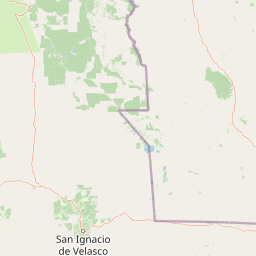
Map view of Noel Kempff Mercado National Park

Use this park location map to pinpoint Noel Kempff Mercado National Park in Bolivia, understand its exact geographic position, and read its mapped placement within the surrounding landscape more clearly.

Pigeon | © OpenStreetMap contributors

Location context for Noel Kempff Mercado National Park

Santa Cruz Department
Park atlas

Compare conservation landscapes and mapped geography around Bolivia's famed Huanchaca Plateau.

Explore Other National Parks and Protected Areas Near Noel Kempff Mercado National Park
Continue your discovery of Noel Kempff Mercado National Park by exploring other protected areas and national parks across the wider region, including neighboring Amazon rainforest and cerrado savanna ecosystems. Broaden your understanding of regional park geography and conservation landscapes through comparative atlas exploration, tracing connected habitats and protected boundaries.
National parkSanta Cruz Department

Amboró National Park: Its Protected Area Identity and Geographic Context

Mapped boundaries and regional landscape details.

Amboró National Park is a designated national park situated within the Santa Cruz Department, Bolivia. This entry provides detailed insights into its protected landscape, focusing on its geographical significance and mapped boundaries. Users can explore how Amboró National Park fits into the broader regional geography, enhancing their understanding of conservation areas and mapped natural terrains for atlas-based research and discovery. Its specific location and protected status are crucial for understanding its ecological and geographic role.

Area
4,425 km²
Established
1984
IUCN
II
Relief
Mountain
National parkBolivia

Kaa-Iya del Gran Chaco National Park and Integrated Management Natural Area: Bolivia's National Park and Protected Landscape

Explore the mapped geography and regional natural landscape.

Kaa-Iya del Gran Chaco National Park and Integrated Management Natural Area stands as a crucial component of Bolivia's protected lands, offering a distinct entry point for exploring its natural geography. This page details the park's status as a national park and integrated management natural area, providing context for its mapped boundaries and its role within the country's diverse landscapes. Engage with structured information designed to illuminate the park's geographic setting and its significance for atlas-style exploration and understanding of Bolivia's protected areas.

Area
34,411.1 km²
Established
1995
Relief
Upland
Climate
Subtropical
National parkCochabamba Department

Carrasco National Park: National Park Status and Protected Landscape Geography

Explore mapped boundaries within Cochabamba Department.

Carrasco National Park, situated within the Cochabamba Department, represents a critical national park entity. This focus provides users with an atlas-centric view of its protected landscape, detailing its geographic significance and mapped features. Understand the park's terrain and regional context, offering a clear perspective on its conservation value and mapped presence.

Area
6,226 km²
Established
1991
IUCN
II
Relief
Mountain
National parkBolivia

Isiboro Sécure National Park and Indigenous Territory: Bolivian Protected National Park Atlas

Mapped protected boundaries and regional landscape context.

Investigate Isiboro Sécure National Park and Indigenous Territory as a key protected national park within Bolivia's expansive geography. This resource offers detailed views of its mapped natural landscape and its regional significance as a protected area. Understand the park's geographic attributes and its contribution to the country's conservation atlas through structured map-based exploration.

Area
13,721.8 km²
Established
1965
IUCN
II
Relief
Mixed relief
National parkSanta Cruz Department

Otuquis National Park and Integrated Management Natural Area: Mapped Protected Landscape in Santa Cruz Department

Bolivia's designated national park for atlas exploration.

Gain detailed geographic context for Otuquis National Park and Integrated Management Natural Area, a significant protected landscape within Bolivia's Santa Cruz Department. This page serves as a dedicated entry point for understanding the park's mapped boundaries, its role as a national park, and its natural terrain within the regional atlas. Explore its unique geographic features and its place within Bolivia's network of protected areas.

Area
10,059.5 km²
Established
1997
IUCN
II
Relief
Lowland
National parkChuquisaca Department

Iñao National Park and Integrated Management Natural Area: Bolivia National Park and Protected Landscape

Explore the Serranía del Iñao's geography and conservation role.

Iñao National Park and Integrated Management Natural Area is a protected territory located within Chuquisaca Department, Bolivia, centered on the prominent Serranía del Iñao mountain range. This page offers detailed geographic context and an atlas perspective on the park's landscape, its role as a national park, and its contribution to regional conservation efforts in the Andean foothills.

Area
2,630.9 km²
Established
2004
IUCN
II
Scope
Terrestrial
Watercolor illustration showing a mountain range with green fields, a river, and soft pastel colors
National parkCochabamba Department

Tunari National Park: Protected Landscape Atlas and Geographic Context

Mapped boundaries within Cochabamba Department's geography.

Tunari National Park represents a vital protected landscape within the Cochabamba Department of Bolivia. This page offers an atlas-centric exploration of the park's geographic boundaries, its relationship to the surrounding regional terrain, and its significance as a national park. Delve into the mapped context of Tunari National Park to understand its protected area status and its contribution to Bolivia's diverse geography.

Area
3,090 km²
Established
1992
IUCN
II
Relief
Mountain
National parkPotosí Department

Torotoro National Park: Paleontology and Karst Landscape Exploration in Bolivia

Discover prehistoric footprints within dramatic Andean canyon geography.

Torotoro National Park in the Potosí Department is a protected area distinguished by its rich paleontological significance and unique semi-arid mountain terrain. Featuring dramatic canyon systems plunging hundreds of meters deep, the park showcases thousands of Cretaceous dinosaur footprints alongside its complex karst topography, complete with caves and sinkholes, offering a profound glimpse into both ancient life and sculpted natural geography.

Area
165 km²
Established
1989
IUCN
II
Relief
Mountain

Common questions about visiting, size, designation, and location context for Noel Kempff Mercado National Park

Noel Kempff Mercado National Park FAQs for park facts, access, geography, and protected area context
Find quick answers about Noel Kempff Mercado National Park, including protected-area facts, park geography, trail and visitor context, and how the park fits into its surrounding country and regional landscape.
MoriAtlas Explorer

Continue Your Protected Areas Search Across the Global Atlas

Deepen your exploration by continuing the structured search for national parks and protected areas worldwide. Utilize the comprehensive filtering capabilities to compare different conservation landscapes and refine your understanding of global park geography. Discover more about the distribution and characteristics of protected natural areas.

Global natural geography