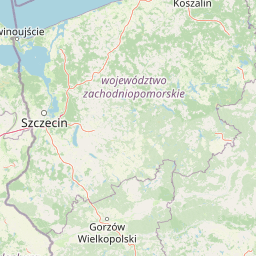

Why Ostoja Ińska stands out
Ostoja Ińska is best known for its exceptionally rich breeding bird community in a postglacial mosaic of lakes, bogs, farmland, and forest. It is recognized as one of the most important inland bird sanctuaries in northwestern Poland. The area is especially valued for hosting breeding pairs of large raptors such as the white-tailed eagle and the lesser spotted eagle, alongside marshland and wet-meadow species, woodland specialists, and migratory waterbirds. The combination of rugged moraine terrain, large relative height differences, and abundant small wetlands produces a high diversity of breeding niches across a relatively compact area.
Ostoja Ińska history and protected-area timeline
Ostoja Ińska was formally established as a Special Protection Area in 2004, when the Polish Minister of the Environment issued a regulation designating it under the Birds Directive of the European Union. The site's creation reflected Poland's broader obligation to safeguard the most important breeding and migratory bird populations within the Natura 2000 framework, and it was built on the pre-existing foundation of the Iński Landscape Park and its surrounding buffer zone.
The underlying Iński Landscape Park had already given the area a long-standing protected status focused on landscape character, with educational materials and field infrastructure developed in subsequent years by the park staff of the Drawieński and Iński Landscape Park complex headquartered in Złocieniec. Brochures, educational booklets, and interpretive boards produced by these teams, particularly around 2008, helped raise awareness of the area's natural heritage, including the network of nature reserves that now lie within the bird sanctuary.
Since its formal designation, Ostoja Ińska has functioned as a key component of the Natura 2000 network in West Pomeranian Voivodeship, providing continuous protection for its breeding bird populations and their habitats and embedding them within the wider system of reserves, ecological sites, and landscape parks that characterise the region.
Ostoja Ińska landscape and geographic character
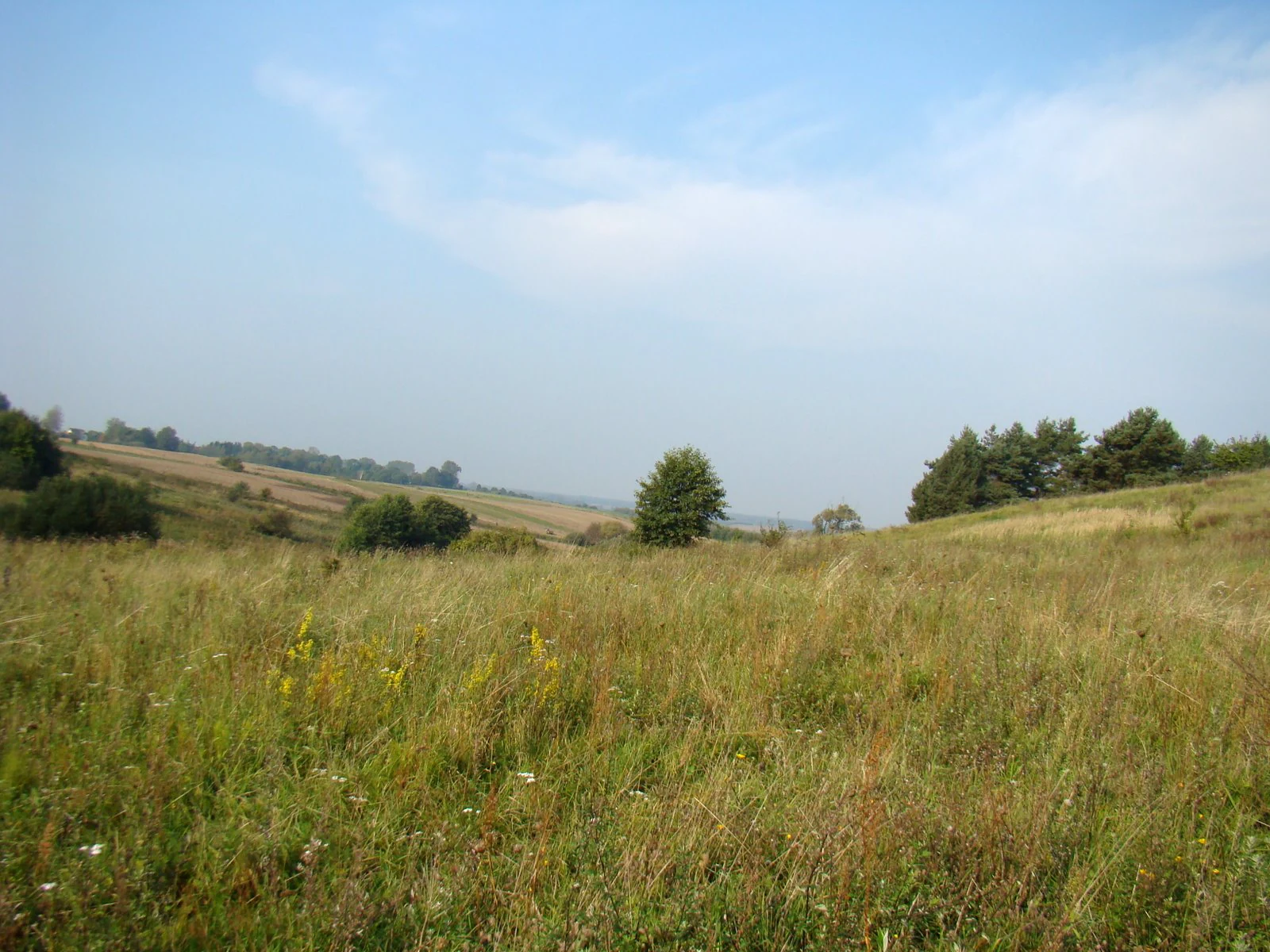
The landscape of Ostoja Ińska is dominated by features left behind by the last glaciation. The area lies within the Ińskie Lake District, a mesoregion of northern Poland defined by moraines, kettle depressions, meltwater channels, and a dense network of lakes and small water bodies. Local elevation reaches approximately 180 meters above sea level, while the surrounding low-lying areas descend sharply from these ridges, producing a strongly undulating relief.
The Ina River and its tributaries, along with tributaries of the Rega, drain the area and tie together the patchwork of forests, post-agricultural land, peatlands, and small standing waters. The combination of relatively high ridges and basin wetlands gives the sanctuary its most distinctive visual character: a landscape of sudden transitions between dry, forested uplands and damp, open lowlands.
Despite its inland character, the impression of the area is shaped by the abundance of water in its many forms, from larger lakes and small ponds to peat bogs and sedge marshes. The mosaic of post-agricultural land, remnant forest patches, and regenerating fields gives the landscape a transitional, recovering appearance, with open and wooded habitats intermingling at fine scale.
Ostoja Ińska ecosystems, habitats, and plant life
Ostoja Ińska protects a richly varied postglacial ecosystem. Forests, post-agricultural land, peat bogs, small water bodies, and river valleys all occur within its borders, creating a habitat mosaic of considerable ecological value. The dry uplands carry woodland communities on glacial deposits, while the basin areas retain bog and wet-meadow vegetation typical of the Pomeranian lake country.
The hydrological network shaped by the Ina and the Rega and their tributaries maintains a system of permanent and seasonal wetlands, including bogs, marshes, and small pools. These wetlands support specialised plant communities, while the regenerating farmland and rough grassland provide additional habitat structure for the area's fauna.
The combination of forest patches, wetland basins, and open ground produces strong ecological gradients across the sanctuary. This mosaic is what allows such a high diversity of breeding niches to persist within a single protected area, and it is the foundation upon which the area's conservation importance rests.
Ostoja Ińska wildlife and species highlights
The wildlife profile of Ostoja Ińska is dominated by its exceptional breeding bird community. More than 140 bird species have been recorded nesting within the sanctuary, making it one of the most diverse inland bird sites in northwestern Poland.
The area is particularly important for large raptors, with species such as the white-tailed eagle and the lesser spotted eagle breeding in the area, alongside the black kite and red kite as regular nesting species. Marshland and wet-meadow species are also well represented, including the bittern, marsh harrier, common crane, spotted crake, and both white and black storks, while woodland specialists such as the middle spotted woodpecker and the red-backed shrike find habitat in the mosaic of forest and scrub.
Migratory and water-associated species round out the avifauna, with the whooper swan, common kingfisher, black tern, and common tern recorded in the area, as well as nocturnal species like the Eurasian eagle-owl and the European nightjar, and passerines such as the barred warbler, ortolan bunting, and red-breasted flycatcher. The honey buzzard also breeds here, taking advantage of the mixed woodland structure.
Beyond the birds, the area's mosaic of forests, bogs, abandoned farmland, and small water bodies supports a wide range of other fauna typical of the Pomeranian lake region, including mammals, amphibians, and invertebrates associated with wetland and forest-edge habitats. The complex of six nature reserves and additional protected sites within Ostoja Ińska provides stricter protection for particularly sensitive habitat types and species.
Ostoja Ińska conservation status and protection priorities
Ostoja Ińska is designated as a Special Protection Area under the European Union Birds Directive, with conservation objectives focused on maintaining breeding populations of threatened and protected bird species and ensuring that their habitats remain in favorable condition. The site sits at the heart of the Natura 2000 network in West Pomeranian Voivodeship, contributing to the long-term protection of bird populations across the wider Pomeranian lake region.
By overlapping with the entire Iński Landscape Park and most of its buffer zone, the area layers EU-level bird protection onto an existing network of national and regional conservation measures. This combination gives the sanctuary both a broad landscape-scale protection regime and targeted protection for the specific features that make it valuable, including its mosaic of forests, peatlands, bogs, and small water bodies.
Within Ostoja Ińska there are six nature reserves, a natural-landscape complex, and several ecological-use sites, each providing an additional tier of protection for habitats and species of particular concern. These reserves safeguard representative examples of the area's most valuable vegetation and habitats, while the broader Protected Area designation maintains the ecological processes and habitat connectivity that support the sanctuary's rich bird community.
Ostoja Ińska cultural meaning and human context
Ostoja Ińska lies within a region of northern Poland whose cultural identity has been shaped by its lakes, forests, and postglacial terrain. The broader Ińskie Lake District has long supported rural communities based on small-scale agriculture, forestry, and fishing, with settlement patterns adapting to the irregular mosaic of lakes, wetlands, and moraine ridges.
The protected area itself overlaps with the Iński Landscape Park, which has developed an educational and interpretive role alongside its conservation function. Educational brochures, booklets, and field signs produced for the park have helped connect local communities and visitors with the natural heritage of the area, framing the landscape as a shared regional asset. While Ostoja Ińska is primarily a conservation designation rather than a cultural site, its location within a landscape park means that it shares in the broader narrative of how the Pomeranian lake country is interpreted and valued.
Top sights and standout views in Ostoja Ińska
Ostoja Ińska's standout features include its unusually large size for an inland bird protection area, its total containment within an existing landscape park and buffer zone system, and its exceptionally high breeding bird diversity. With more than 140 nesting bird species recorded, it ranks among the richest inland avian sites in northern Poland.
The sanctuary's postglacial mosaic of moraine ridges, peat bogs, lakes, small ponds, forest patches, and post-agricultural land provides a remarkable variety of breeding habitats within a single protected area. The presence of multiple nature reserves and additional smaller protected sites adds further layers of strict protection, while the surrounding landscape park framework provides educational and interpretive infrastructure for visitors.
Best time to visit Ostoja Ińska
Spring and early summer are the most rewarding periods for experiencing Ostoja Ińska's birdlife, when breeding activity peaks and species such as raptors, marshland specialists, and woodland birds are most active and vocal. The mix of forest, wetland, and open habitats makes it possible to encounter a wide range of species across a single day.
Late spring and early summer also offer the most pleasant conditions for exploring the landscape, with the lakes, bogs, and forest patches of the Ińskie Lake District combined into a relatively green and accessible scenery. As the source material does not provide detailed seasonal access or operational information, visitors are best advised to plan around the ornithological and ecological rhythms of the area rather than fixed event timings.