Why Otyń Natura 2000 Site stands out
Otyń is known above all for being a designated breeding colony site for the greater mouse-eared bat (Myotis myotis). The attic of the Church of the Exaltation of the Holy Cross in the village of Otyń offers a sheltered, relatively undisturbed roosting space that has supported a maternity colony for many years, including periods surrounding a major roof restoration and a later reconstruction of the church tower. The site is also notable within Lubuskie as one of the more important confirmed bat maternity roosts in the voivodeship. Even though the protected footprint is extremely small, the regular presence of breeding females and juveniles gives Otyń a disproportionately high ecological value relative to its area, making it a useful case study in how Natura 2000 designations can protect single buildings as wildlife habitat.
Otyń Natura 2000 Site history and protected-area timeline
The protected status of Otyń under Natura 2000 is relatively recent, as it reflects the broader implementation of the European Union Habitats Directive in Poland during the 2000s and 2010s. The site's formal designation as PLH080040 was driven specifically by the recognition that the attic of the village church had long hosted a breeding colony of Myotis myotis.
The church building itself has its own longer physical history. It underwent a major roof renovation in 2003, during which the bat colony continued to use and at times enter the building. In 2004, ecologists recorded roughly 250 bats in the attic, providing one of the higher early population benchmarks for the site. Later, the church tower was lost in a structural catastrophe and was rebuilt in 2014, an event that reshaped the building's silhouette without eliminating the colony's use of the attic.
In July 2015, a follow-up survey confirmed 142 bats, including 98 females and 44 juveniles, validating the continued reproductive function of the roost. This survey, together with an evaluation of surrounding foraging habitat, formed part of the scientific basis for cementing the site's role within the Natura 2000 network and for flagging management needs such as guano clearance and regular population monitoring.
Otyń Natura 2000 Site landscape and geographic character
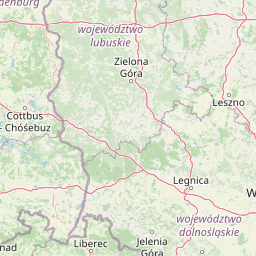
The geographic setting around Otyń is broadly lowland western Poland, characterized by gentle terrain shaped by glacial and post-glacial processes typical of the Lubuskie region. The locality itself lies in a rural zone of villages, agricultural fields, woodlands, and the network of small settlements that connect the Nowosolski area to nearby towns.
The area mapped for the site is strongly associated with an ecclesiastical structure rather than with surface landforms, and the coordinate reference marks the church location rather than any contiguous natural landscape polygon. For visitors approaching the village, the visual landscape is therefore defined by ordinary village architecture, surrounding farmland, and the forested belt that frames much of the Lubuskie countryside.
Even though the Natura 2000 designation is anchored to a man-made building, the broader landscape matters ecologically. Sustaining the bat population requires adequate foraging grounds within flight range of the roost, which is why the site's evaluation considered both the attic itself and the surrounding feeding habitat when assessing the colony's prospects.
Otyń Natura 2000 Site ecosystems, habitats, and plant life
Ecologically, Otyń is defined almost entirely by its function as a roosting microhabitat rather than by a suite of natural habitats on the ground. The attic of the church offers the sheltered, temperature-stable, dark, and undisturbed conditions that breeding female greater mouse-eared bats require for raising their young.
The surrounding countryside contributes complementary habitat: open ground, woodland edges, and mixed agricultural land that support the insect prey base on which the colony feeds at night. The Natural 2000 assessment for the site specifically noted that potential foraging areas around the colony were considered suitable, which is critical because even a robust roost will decline if feeding habitat within commuting distance is lost.
In practical terms, the site's ecological value therefore rests on the combination of a functioning maternity roost and adequate landscape around it. Management actions identified for the site, including periodic guano removal, aim to preserve the roost in good condition, which in turn preserves the broader ecological relationship between the building and its feeding territory.
Otyń Natura 2000 Site wildlife and species highlights
The wildlife story of Otyń centers on a single species: the greater mouse-eared bat, Myotis myotis. This species is the sole bat explicitly named in the Natura 2000 designation rationale, and the protection of its breeding population is the overarching conservation purpose of the site.
Greater mouse-eared bats are cave- and building-roosting bats that form maternity colonies in warm, enclosed spaces where females gather to give birth and rear pups. The Otyń church attic fits this profile, allowing a colony to persist through major structural interventions. The recorded counts illustrate the dynamics of such a colony: 250 bats in 2004, followed by 142 individuals in July 2015, with that later figure including 98 females and 44 juveniles.
Otyń Natura 2000 Site conservation status and protection priorities
From a conservation standpoint, Otyń matters because it protects an active maternity colony of a bat species that has experienced significant decline in parts of Europe. The designation as a Special Area of Conservation under the Natura 2000 framework ties the site directly to the Habitats Directive's broader goal of maintaining favorable conservation status for species listed under the directive, of which Myotis myotis is a member.
The site's conservation framework acknowledges both the roost's strengths and its vulnerabilities. The attic itself has been judged a suitable breeding habitat, and the surrounding foraging grounds were assessed favorably. At the same time, the official evaluation flagged two practical management needs: ongoing regular monitoring of the colony's numbers, and the removal of accumulated guano from the attic, which can otherwise degrade both roost quality and building integrity.
The history of the building also informs the conservation picture. The bat colony survived a substantial roof renovation in 2003 and continued to use the attic following the 2014 reconstruction of the church tower, suggesting a degree of behavioral resilience and adaptability on the part of the population. Protecting that resilience through continued monitoring and habitat care is the core conservation task associated with PLH080040.
Otyń Natura 2000 Site cultural meaning and human context
Otyń's identity as a Natura 2000 site is intimately bound up with the cultural landscape of the village. The protected subject is not a wild meadow or cliff but a working church, the Church of the Exaltation of the Holy Cross, which remains a place of worship and a focal point of community life even as its attic serves as a bat roost. The relationship between human religious practice and bat conservation is a notable aspect of the site's character.
This cultural linkage is reinforced by the recorded behavior of bats entering the body of the church during services around the time of the 2003 roof renovation. Such overlap between ecclesiastical use and roosting habitat is unusual and gives Otyń a distinctive cultural-ecological profile, in which the protection of a European wildlife species depends on the continued, careful coexistence of building users and a protected breeding colony.
Top sights and standout views in Otyń Natura 2000 Site
Otyń's strongest point of distinction is its role as a designated Natura 2000 maternity colony site for the greater mouse-eared bat inside a village church attic, a combination that concentrates significant conservation value into an extraordinarily small surface area. The site is recognized within Lubuskie as one of the more important bat roosts in the voivodeship, with documented counts of hundreds of individuals across multiple survey years.
Another highlight is the colony's persistence through structural upheaval. Despite a major roof restoration in 2003 and the later loss and reconstruction of the church tower in 2014, the bats continued to use the attic, demonstrating behavioral flexibility that makes ongoing protection worthwhile. The site's combination of architectural heritage, religious use, and ecological function sets it apart from typical habitat-based protected areas and makes it a useful reference case for urban and peri-urban bat conservation in Europe.
Best time to visit Otyń Natura 2000 Site
Most interest in Otyń is ecological rather than recreational, and seasonal timing for any site visit would ideally align with the bat activity cycle. Late spring and summer are the most ecologically relevant window, because this is when maternity colonies are active and when surveys, such as the July 2015 count that recorded both females and juveniles, are typically carried out.
For visitors with a more general interest in the village and its church, the milder months of late spring through early autumn would normally offer more comfortable conditions for exploring the rural Lubuskie setting around the site. Winter conditions, when bats are absent from the attic, would offer little insight into the protected feature itself.