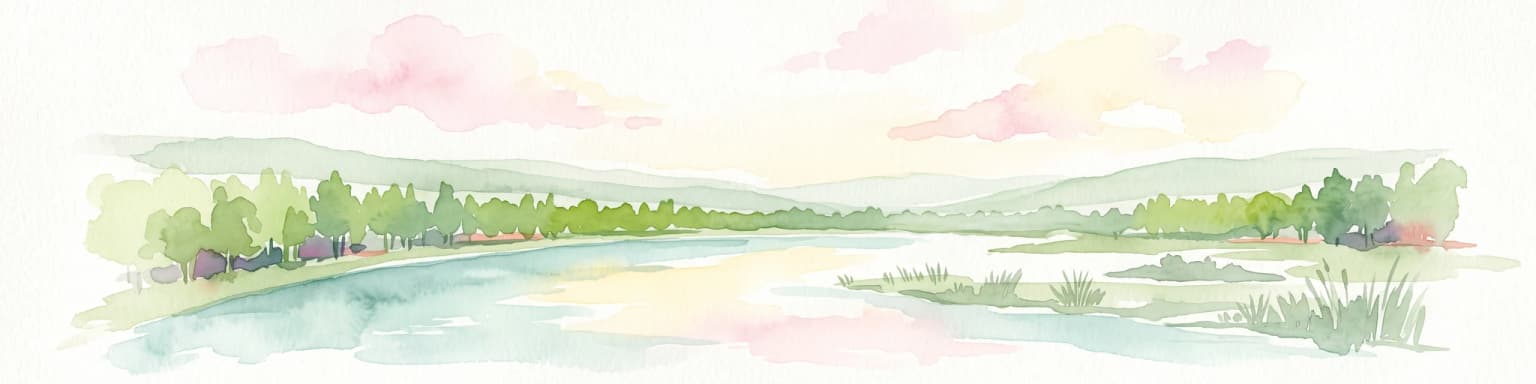
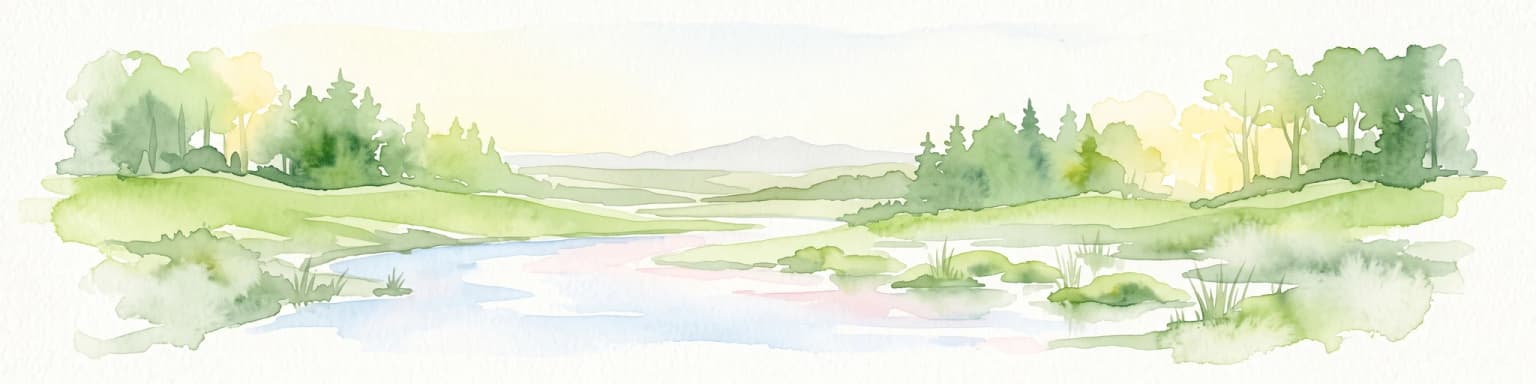
A free-flowing river corridor of gravel bars, islands, and rich alluvial wildlife in central France.
Val d'Allier National Nature Reserve
The Val d'Allier National Nature Reserve protects a long stretch of the Allier River in central France, upstream of the city of Moulins in the Allier department, within the Auvergne-Rhône-Alpes region. Established in 1994, the reserve covers about 1,450 hectares along roughly twenty kilometers of river, including both banks and a width that ranges from a few hundred meters to about two kilometers.
The Allier is one of the rare European rivers that remains almost entirely free to move across its floodplain, continuously eroding and reshaping its banks. This natural dynamism creates a varied mosaic of habitats: dead arms, large islands, sand and gravel bars, and adjacent alluvial forests. The reserve thus functions as an ecological corridor of national importance, supporting a remarkably diverse flora and fauna whose richness has been compared to that of the Camargue.
At its core, the Val d'Allier reserve is a working example of how a large lowland river and its floodplain can be conserved together. It protects habitats shaped by natural river behavior rather than by engineered control, and it is administered jointly by LPO Auvergne, the regional branch of the French bird protection league, and the Office National des Forêts, making it both a wildlife sanctuary and a showcase of alluvial river conservation in France.