
Mori Atlas logo
Regional parkRéserve naturelle régionale des Grads de Naves

Mapping the ecological evolution of limestone landscapes and relict agricultural dry-stone walls in southern France

Réserve naturelle régionale des Grads de Naves: A Protected Limestone Plateau and Mediterranean Habitat

The Réserve naturelle régionale des Grads de Naves protects a limestone plateau in the southern Ardèche department of Auvergne-Rhône-Alpes, France. This regional nature reserve preserves a distinct Mediterranean mosaic of garrigue, oak woodlands, and juniper scrub where old dry-stone walls outline former agricultural plots. The area serves as a critical biological corridor, linking diverse karst ecosystems between the local Naves plateau and the nearby Bois de Païolive.

regional nature reservegarriguelimestone plateauMediterranean habitatdrystone wallsold farmland
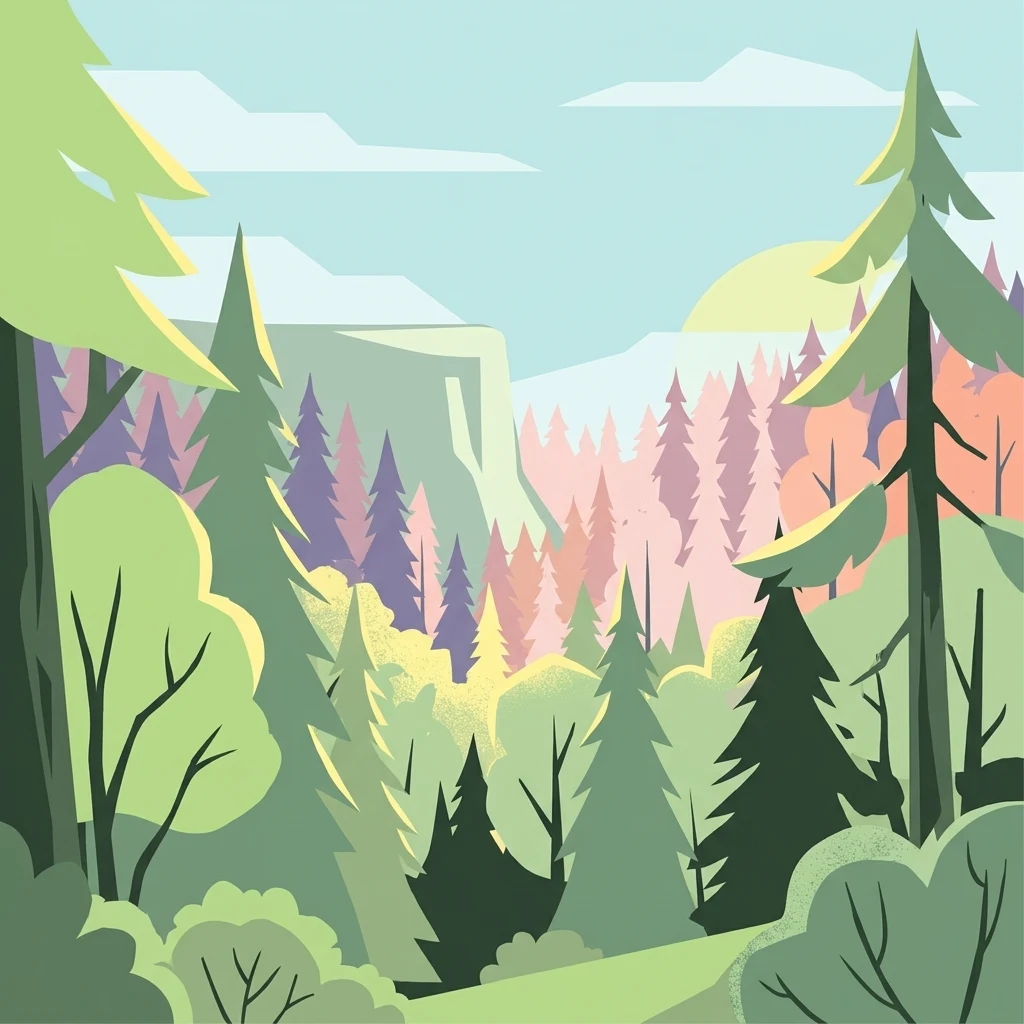
A flat-style digital illustration depicting a dense forest of evergreen and deciduous trees with a pale, rocky cliff face in the background under a soft blue sky.

Réserve naturelle régionale des Grads de Naves

Regional park

Park overview

Structured park overview, official facts, and landscape profile for Réserve naturelle régionale des Grads de Naves

Réserve naturelle régionale des Grads de Naves park facts, protected area profile, and essential visitor context

Review the core facts for Réserve naturelle régionale des Grads de Naves, including designation, size, terrain, visitor scale, habitats, and operating context in one park-focused overview.

About Réserve naturelle régionale des Grads de Naves

Réserve naturelle régionale des Grads de Naves is a compact regional nature reserve set on a limestone plateau in the southern foothills of the Massif Central, within the Ardèche department of southeastern France. Although it covers only about 12 hectares, it concentrates a remarkable cross-section of Mediterranean and sub-Mediterranean landscapes typical of the transitional zone between the Cévennes and the Rhône Valley.

The plateau on which the reserve sits was shaped by geology and by centuries of human land use. Hard limestone bedrock, dry summer conditions, and historical clearing created open habitats dominated by garrigue, white and green oaks, juniper, box, and Mediterranean shrubs. After cultivation was abandoned in the mid-twentieth century, the old field mosaic gradually returned to scrub and open woodland, giving the site both natural heritage value and traces of its agricultural past in the form of dry-stone walls.

Ecologically, the reserve functions as an important refuge for warmth-loving species within a predominantly hill-and-mountain region. Its bird community reflects southern European biogeography, while its butterfly and lichen inventories underline its conservation significance at the regional scale. Despite its small size, the reserve also plays a meaningful role in landscape connectivity, standing between the Naves plateau and the larger Païolive woodland, a renowned area for karst landforms and old-growth oak forest.

Management of the reserve is overseen by FRAPNA Ardèche, which has guided it from its origins as a voluntary nature reserve in 1981 to its current regional status. Public access to the protected perimeter is restricted because of the dense vegetation, but the broader context is appreciated by walkers and naturalists exploring the trails of southern Ardèche.

Quick facts and research context for Réserve naturelle régionale des Grads de Naves

Réserve naturelle régionale des Grads de Naves is a 12-hectare regional nature reserve located in the commune of Les Vans, in the department of Ardèche, within the Auvergne-Rhône-Alpes region of southeastern France. It lies on a hard limestone plateau between the village of Naves and the Bois de Païolive, an area strongly influenced by Mediterranean climate and vegetation.

The site was first protected in 1981 as a voluntary nature reserve (réserve naturelle volontaire) and was reclassified as a regional nature reserve (réserve naturelle régionale) on 16 May 2012. It is administered by FRAPNA Ardèche, the local branch of the regional nature protection federation. Under IUCN categories, it is classified as a Category IV protected area, corresponding to a habitat and species management reserve.

Protection and recognition

Explore official terrestrial protection scope and documented records for this regional reserve.

Réserve naturelle régionale des Grads de Naves Protection Status and Designation History

Terrestrial protection status for Réserve naturelle régionale des Grads de Naves establishes a documented conservation scope established in 2012. Structured registry records track formal recognition metrics without implying broader management outcomes or international listings.

Protection details

Protection scope
Terrestrial
Designated year
2012
Transboundary protection
No
WDPA ID
555513708
Park context

Deeper park guide and search-rich context for Réserve naturelle régionale des Grads de Naves

Réserve naturelle régionale des Grads de Naves history, landscape, wildlife, and travel context

Explore Réserve naturelle régionale des Grads de Naves through its history, landscape character, ecosystems, wildlife, conservation priorities, cultural context, and seasonal travel timing in a structured park guide built for atlas discovery and search intent.

Why Réserve naturelle régionale des Grads de Naves stands out

The Grads de Naves reserve is best known for conserving a relict limestone plateau landscape where abandoned Mediterranean farmland has been reclaimed by garrigue. Old dry-stone walls, once bordering small cultivated plots, now stand within oak and juniper scrub, creating a distinctive cultural-ecological mosaic. It is also recognized for its rich Mediterranean biodiversity within a very small area, particularly its breeding bird community, butterfly fauna, and lichen flora. Beyond its own ecological value, the reserve is appreciated as a stepping stone linking the plateau habitats with the nearby Bois de Païolive, one of the most remarkable karst and woodland landscapes of southern Ardèche.
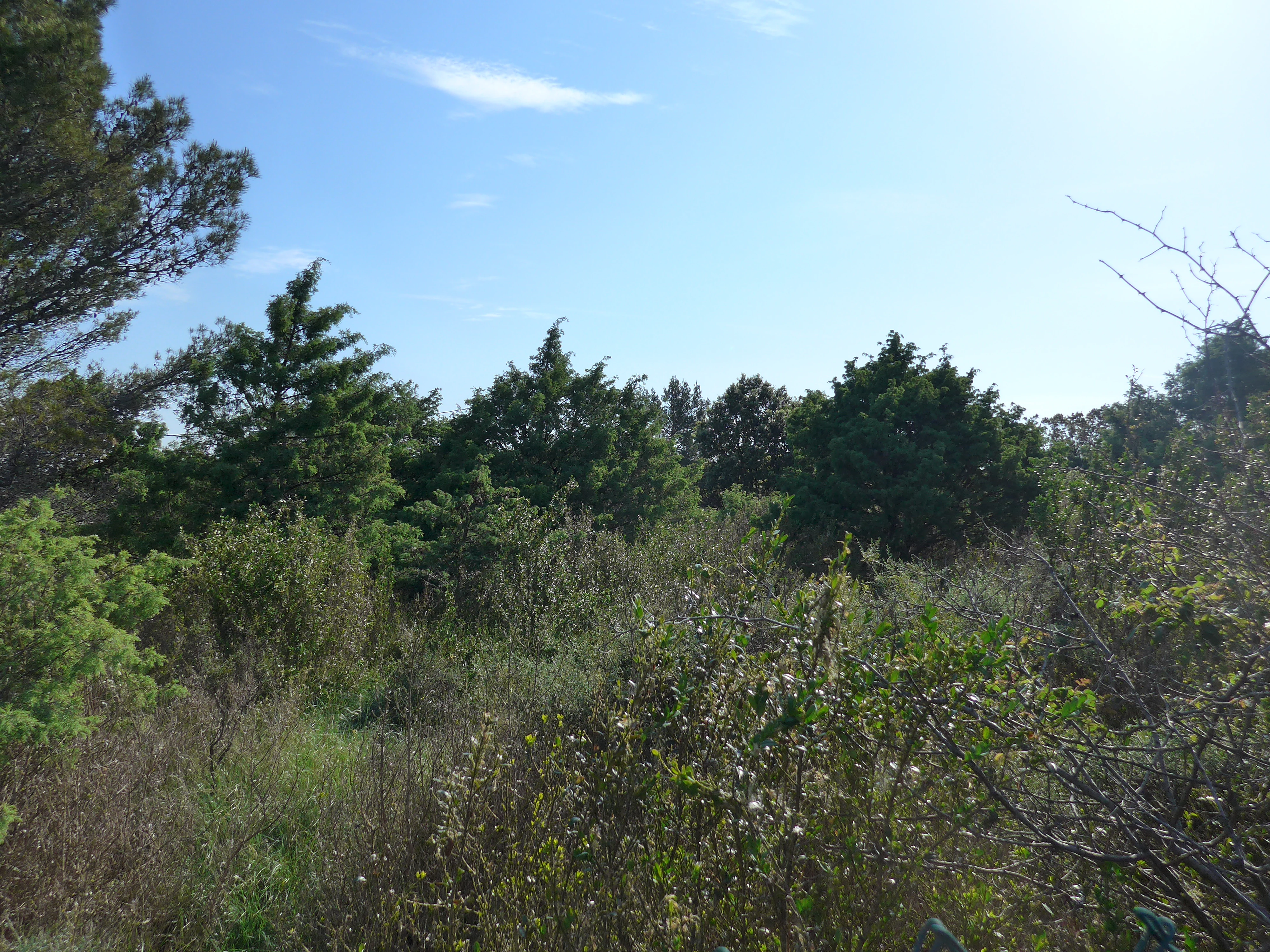
A view of a Mediterranean limestone plateau covered in low-lying shrubbery and evergreen trees under a bright blue sky.
Woodland and garrigue vegetation within the Grads de Naves nature reserve.

Réserve naturelle régionale des Grads de Naves history and protected-area timeline

The plateau of Grads de Naves was inhabited and used for agriculture for centuries, with cultivation maintained on the limestone surface until the 1940s. Small terraced parcels separated by dry-stone walls shaped the cultural landscape right up until the period of rural abandonment that followed World War II.

In response to the ecological value of this relict agricultural plateau, a voluntary nature reserve (réserve naturelle volontaire) was created on 27 January 1981. This first form of protection laid the foundation for long-term monitoring and ecological management by the local branch of the regional natural protection federation. Decades later, on 16 May 2012, the site was officially reclassified as a regional nature reserve (réserve naturelle régionale, code RNR73), giving it a stronger and more durable legal status within the French system of protected areas.

The transition from voluntary to regional designation reflects the site's growing recognition as a key element of the Mediterranean ecological heritage of Ardèche, and it also marked a renewed commitment to conservation planning, habitat management, and biodiversity monitoring on the plateau. Throughout this history, FRAPNA Ardèche has remained the managing organization, ensuring continuity of conservation effort across the change in legal status.

Réserve naturelle régionale des Grads de Naves landscape and geographic character

The reserve occupies a high limestone plateau, part of the broader Grads plateau that extends from Naves toward the Bois de Païolive. Its terrain is shaped by hard limestone bedrock, which produces thin, rocky soils and contributes to the dryness that supports Mediterranean vegetation rather than denser forest cover.

Visually, the landscape combines open stretches of garrigue with patches of oak-dominated woodland. White oaks (Quercus pubescens) and green oaks (Quercus ilex) emerge from a continuous shrub layer of box, Mediterranean viburnum, and juniper. Large junipers (genévriers cades) act as an emblematic structural element of the plateau, contributing to its distinctly southern character.

Below the plateau and around its edges, the relief gradually descends toward the valleys and woodland corridors that connect to Païolive. The combination of open, sun-exposed rock, low scrub, and scattered trees produces a luminous, semi-arid atmosphere in sharp contrast with the denser forests found further north in the Cévennes. Old dry-stone walls and micro-terraces continue to shape the surface, reminding visitors that this is a cultural as well as a natural landscape.

Réserve naturelle régionale des Grads de Naves ecosystems, habitats, and plant life

Ecologically, Réserve naturelle régionale des Grads de Naves represents a Mediterranean-influenced ecosystem pushed to the north of its typical climatic range. Limestone geology, shallow soils, and a clear sky climate combine to produce garrigue and oak woodland habitats more typical of southern France or northern Spain.

The vegetation is dominated by evergreen and deciduous oaks, with a diverse understory of Mediterranean shrubs. The mosaic of open garrigue, shrubby edges, and irregular woodland creates a range of microhabitats that support different groups of species. Lichens are particularly abundant on the exposed limestone, reflecting the air quality, rock exposure, and Mediterranean microclimate of the site.

Despite its very small size of 12 hectares, the reserve functions as an ecological island within a larger rural and forested context. Its presence contributes to habitat continuity between Naves and the Bois de Païolive, supporting species that depend on Mediterranean habitat rather than on the cooler, wetter forests that dominate the wider Ardèche region.

Réserve naturelle régionale des Grads de Naves wildlife and species highlights

The fauna of Grads de Naves reflects the warmth and openness of its Mediterranean habitats. The reserve supports more than 50 nesting bird species, including warmth-loving passerines such as the Orphean warbler, the Dartford warbler, the European golden oriole, and the hoopoe, species whose presence clearly signals the southern biogeographic character of the plateau.

Invertebrate diversity is also notable for such a small protected area. The reserve harbors more than 70 species of butterflies, among them the scarce swallowtail species Proserpine, the Mercurial fritillary-like species Mercure, the Zygaena rhadamanthus burnet moth, and the Marsh fritillary complex represented by the Damier de la succise. The orthopteran fauna is also well represented, with 29 recorded species including the distinctive Magicienne dentelée, a bush-cricket typical of Mediterranean scrub.

Together, the bird and invertebrate communities highlight the importance of the reserve for warmth-dependent fauna at the northern edge of their Mediterranean range in France.

Réserve naturelle régionale des Grads de Naves conservation status and protection priorities

The reserve conserves a small but ecologically significant fragment of Mediterranean habitat within a region where Mediterranean conditions occur only locally, on south-facing limestone plateaus and in sheltered valleys. Protecting this fragment helps maintain populations of plant and animal species that are otherwise at the edge of their range in southeastern France.

Its legal trajectory from voluntary reserve in 1981 to regional nature reserve in 2012 reflects a strengthening of protection commitments over time. Management by FRAPNA Ardèche includes biodiversity monitoring, habitat preservation, and coordination with the wider network of protected natural areas in Ardèche and in the Auvergne-Rhône-Alpes region.

By maintaining the open garrigue and woodland mosaic on the plateau, the reserve also contributes to landscape-level conservation objectives, supporting ecological connectivity with the nearby Bois de Païolive. Its small size is offset by its role as a refuge and a stepping-stone for Mediterranean biodiversity in the southern Ardèche.

Réserve naturelle régionale des Grads de Naves cultural meaning and human context

Although it is primarily a natural heritage site, Réserve naturelle régionale des Grads de Naves also preserves an important cultural landscape. The plateau was shaped by generations of subsistence agriculture, and the old dry-stone walls surrounding tiny former fields form a tangible record of rural life in southern Ardèche before the mid-twentieth century depopulation of upland areas.

The presence of these man-made features within a returning Mediterranean ecosystem illustrates the broader historical pattern of rural abandonment in the Ardèche hinterland, where terraces and small fields were once maintained by hand and have since been progressively recolonized by garrigue and open oak woodland. The site thus links natural heritage to the memory of human communities that once worked the limestone plateau.

Top sights and standout views in Réserve naturelle régionale des Grads de Naves

The reserve stands out for combining a relict agricultural landscape with full Mediterranean ecological recovery. Old dry-stone walls, micro-parcels, and terraces from the 1940s sit within a thriving community of garrigue plants, junipers, and Mediterranean oaks, producing a hybrid cultural-natural landscape of considerable interpretive value.

It is also distinctive for the density of biodiversity it supports relative to its surface area. A checklist of more than 50 breeding bird species, over 70 butterfly species, 29 orthopterans, and 150 lichen species demonstrates that compact sites can host remarkably rich ecological communities when geology, climate, and history align. Its position between Naves and Païolive further enhances its conservation importance as a Mediterranean ecological corridor.

Best time to visit Réserve naturelle régionale des Grads de Naves

The Grads de Naves area is best experienced in late spring and early summer, when Mediterranean garrigue is in flower, bird activity is at its peak, and butterflies and other insects are most visible. Conditions at this time of year best capture the Mediterranean character of the plateau, with warm light on limestone rocks and aromatic shrubs in bloom.

Autumn brings softer light and fruiting junipers, while winter visits are generally mild in this part of southern Ardèche. Because the reserve itself is not open to visitors due to dense vegetation, the recommended approach is to explore the surrounding landscape, particularly the GR 4 trail and trails around Naves and Païolive, during mild and clear weather that suits Mediterranean flora and fauna observation.
Monthly climate preview

Long-term representative point measurements tracking monthly temperature ranges and precipitation patterns

Réserve naturelle régionale des Grads de Naves Climate Normals and Annual Temperature Rhythm

Representative coordinate sampling from 1991 to 2020 documents the measured annual temperature and precipitation rhythm across Réserve naturelle régionale des Grads de Naves. Examining the complete twelve-month climatological profile provides detailed insight into long-term averages without relying on forecasts or live weather data.
Annual mean11 °C
3 °C22 °C
Jan
Feb
Mar
Apr10°
May14°
Jun19°
Jul22°
Aug22°
Sep17°
Oct12°
Nov
Dec
Warmest month
July

22 °C

Coolest month
January

2.6 °C

Wettest month
November

3.7 mm/day

Driest month
July

1.5 mm/day

Park location guide

Geography guide, regional context, and park location map for Réserve naturelle régionale des Grads de Naves

Réserve naturelle régionale des Grads de Naves park geography, regions, and map view in France

Understand where Réserve naturelle régionale des Grads de Naves sits in France through a broader geographic reading of the surrounding landscape, nearby location context, and its mapped position within the national park landscape.

How Réserve naturelle régionale des Grads de Naves fits into France

France is a unitary semi-presidential republic and one of the world's largest economies. It borders Belgium, Luxembourg, Germany, Switzerland, Italy, Monaco, Andorra, and Spain, with a maritime border to the United Kingdom. The country is known for its cultural influence, art, cuisine, and political history spanning centuries.

Wider geography shaping Réserve naturelle régionale des Grads de Naves in France

France is located in Western Europe. Metropolitan France extends from the Rhine to the Atlantic Ocean and from the Mediterranean Sea to the English Channel and North Sea. The country borders Belgium, Luxembourg, Germany, Switzerland, Italy, Monaco, Andorra, Spain, and has a maritime border with the United Kingdom.

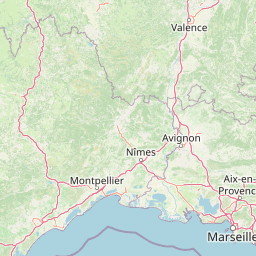
Map view of Réserve naturelle régionale des Grads de Naves

Use this park location map to pinpoint Réserve naturelle régionale des Grads de Naves in France, understand its exact geographic position, and read its mapped placement within the surrounding landscape more clearly.

Pigeon | © OpenStreetMap contributors

Location context for Réserve naturelle régionale des Grads de Naves

Auvergne-Rhône-Alpes

Photographic records of limestone terrain, garrigue habitats, and Mediterranean scrub.

Visualizing Réserve naturelle régionale des Grads de Naves: Landscapes and Scenery

Visual records illustrate the rocky terrain, oak woodland, and juniper scrub defining Réserve naturelle régionale des Grads de Naves. Photographic coverage helps researchers examine habitat patterns and limestone plateau characteristics across the protected landscape.

A view of a Mediterranean limestone plateau covered in low-lying shrubbery and evergreen trees under a bright blue sky.

Park atlas

Compare limestone plateaus, garrigue habitats, and southern French regional reserves.

Explore Protected Areas Near Réserve Naturelle Régionale des Grads de Naves

Browse neighboring protected areas and regional reserves connected to the limestone landscapes around Réserve Naturelle Régionale des Grads de Naves. Comparing adjacent ecosystems reveals broader ecological corridors and terrain patterns across southern Ardèche.
A watercolor illustration of a serene landscape with rolling hills, a meandering river, and soft light.
Regional parkAuvergne-Rhône-Alpes
About 0.5 km away#1 closest

North

Parc naturel régional des Monts d'Ardèche: Protected Landscapes and Geographic Map Context

Volcanic highland terrain within the Auvergne-Rhône-Alpes region

Covering over 248,000 hectares, Parc naturel régional des Monts d'Ardèche represents a significant protected area in the southern Massif Central. The region is marked by its distinctive volcanic sucs, including Mont Gerbier-de-Jonc, and a complex network of Cévenol river valleys. It remains a focal point for understanding the transition between high volcanic plateaus and traditional terraced agricultural slopes in southeastern France.

Area
2,280 km²
Established
2001
IUCN
V
Watercolor illustration of green fields, a river, and mountains under a soft pink and yellow sky
National parkOccitanie
About 16 km away#2 closest

Southwest

Cévennes National Park: Explore its Mapped Terrain and Protected Landscape in Occitanie

Discover the unique geographic context and park boundaries.

Cévennes National Park, situated in Occitanie, France, offers a rich exploration of mid-mountain Mediterranean geography. As a protected landscape, its mapped terrain features dramatic limestone plateaus, deep river gorges, and distinct granite massifs. This entry provides essential geographic context for Cévennes National Park, highlighting its unique natural features and its significance as a protected area within the broader regional atlas.

Area
937 km²
Established
1970
IUCN
V
Visitors
800K annual
A wide watercolor illustration showing a river flowing through a green valley with distant purple mountains and a large reddish rock formation on the right bank.
Protected areaFrance
About 28 km away#3 closest

Northeast

Ripisylve et lit majeur de l'Ardèche: Protected Area and Alluvial River Geography

A vital riparian corridor in the French Ardèche valley.

This protected area centers on the active Ardèche river channel and its adjacent floodplain. The site features a rich diversity of humid habitats, ranging from quiet pools and side channels to sediment rich gravel deposits. It serves as an ecologically significant corridor for riparian woodland, providing a habitat structure that is central to the environmental health of the region.

Area
2.87 km²
Established
1999
Relief
Lowland
Climate
Temperate
A soft watercolor painting of a winding river flowing through a gentle, rolling green valley with hills in the background.
Nature reserveOccitanie
About 56 km away#4 closest

Southeast

Réserve naturelle régionale des gorges du Gardon: Geography and Protected Area Overview

Mediterranean river valley and raptor conservation corridor

Examine the distinct topography of the Réserve naturelle régionale des gorges du Gardon. The protected area features steep limestone cliffs and a river corridor that sustains dense Mediterranean oak forests. This site remains a critical node for raptor conservation, specifically supporting nesting Egyptian vultures and Bonelli eagles within its structured valley geography.

Area
4.913 km²
Established
2007
IUCN
IV
Nature reserveAuvergne-Rhône-Alpes
About 77 km away#5 closest

East

Réserve naturelle régionale du réseau de grottes à chauves-souris en Drôme et en Ardèche: Protected Area Overview

Subterranean habitat protection within the Auvergne-Rhône-Alpes regional geography.

This regional nature reserve secures vital karst cavities serving as essential refuges for multiple bat species. By bridging administrative boundaries in southeastern France, the protected area demonstrates a precise focus on underground ecology and the preservation of irreplaceable subterranean environments across the departments of Drôme and Ardèche.

Area
0.49 km²
Established
2019
IUCN
IV
Relief
Mixed relief
A horizontal watercolor illustration showing a marshy, grassy landscape with soft green and muted pink tones against a white background.
Regional parkProvence-Alpes-Côte d'Azur
About 83 km away#6 closest

South

Parc naturel régional de Camargue: Mapping the Rhône Delta Protected Wetland Landscape

Regional park geography and wetland conservation zones

Parc naturel régional de Camargue is a sprawling protected landscape at the confluence of the Rhône and the Mediterranean. This regional park contains significant saline lagoons, coastal dunes, and fertile marshes that serve as a crucial site for waterbird migration. Understand the interplay between traditional salt-making, pastoral ranching, and the strictly protected nature reserves that shape this delta territory.

Area
856.9 km²
Established
1970
IUCN
V
Relief
Lowland
A soft watercolor illustration depicting layered rolling hills, distant mountain silhouettes, and clusters of trees in a pale color palette.
Regional parkProvence-Alpes-Côte d'Azur
About 88 km away#7 closest

Southeast

Parc naturel régional du Luberon: Regional Park Boundaries and Protected Landscape Atlas

Geology, mountain ridges, and Mediterranean ecosystems of Provence

Parc naturel régional du Luberon serves as a vital protected corridor in southeastern France. The park features three parallel limestone massifs, dramatic ochre formations, and fossil-rich plateaus. Its geography offers a case study in integrating sustainable land use with rich biodiversity across the Vaucluse and Alpes-de-Haute-Provence departments.

Area
1,747.26 km²
Established
1977
IUCN
V
Visitors
350K annual
Watercolor painting of a marshy wetland scene with grassy foreground, scattered trees, and distant hills.
Nature reserveGard
About 89 km away#8 closest

South

Réserve naturelle régionale du Scamandre: Mapped Boundaries and Wetland Geography in Gard

Protected marshlands and salt steppe in southern France.

Deep dive into the ecological layout of Réserve naturelle régionale du Scamandre. Situated in the Gard department, this protected site preserves a mosaic of prairie, sansouïre, and marshland, creating a high-density wetland corridor essential for regional biodiversity and landscape analysis.

Area
1.467 km²
Established
2006
IUCN
IV
Relief
Lowland

Common questions about visiting, size, designation, and location context for Réserve naturelle régionale des Grads de Naves

Réserve naturelle régionale des Grads de Naves FAQs for park facts, access, geography, and protected area context

Find quick answers about Réserve naturelle régionale des Grads de Naves, including protected-area facts, park geography, trail and visitor context, and how the park fits into its surrounding country and regional landscape.
MoriAtlas Explorer

Continue Your Protected Areas Search Across the Global Atlas

Deepen your exploration by continuing the structured search for national parks and protected areas worldwide. Utilize the comprehensive filtering capabilities to compare different conservation landscapes and refine your understanding of global park geography. Discover more about the distribution and characteristics of protected natural areas.

Global natural geography